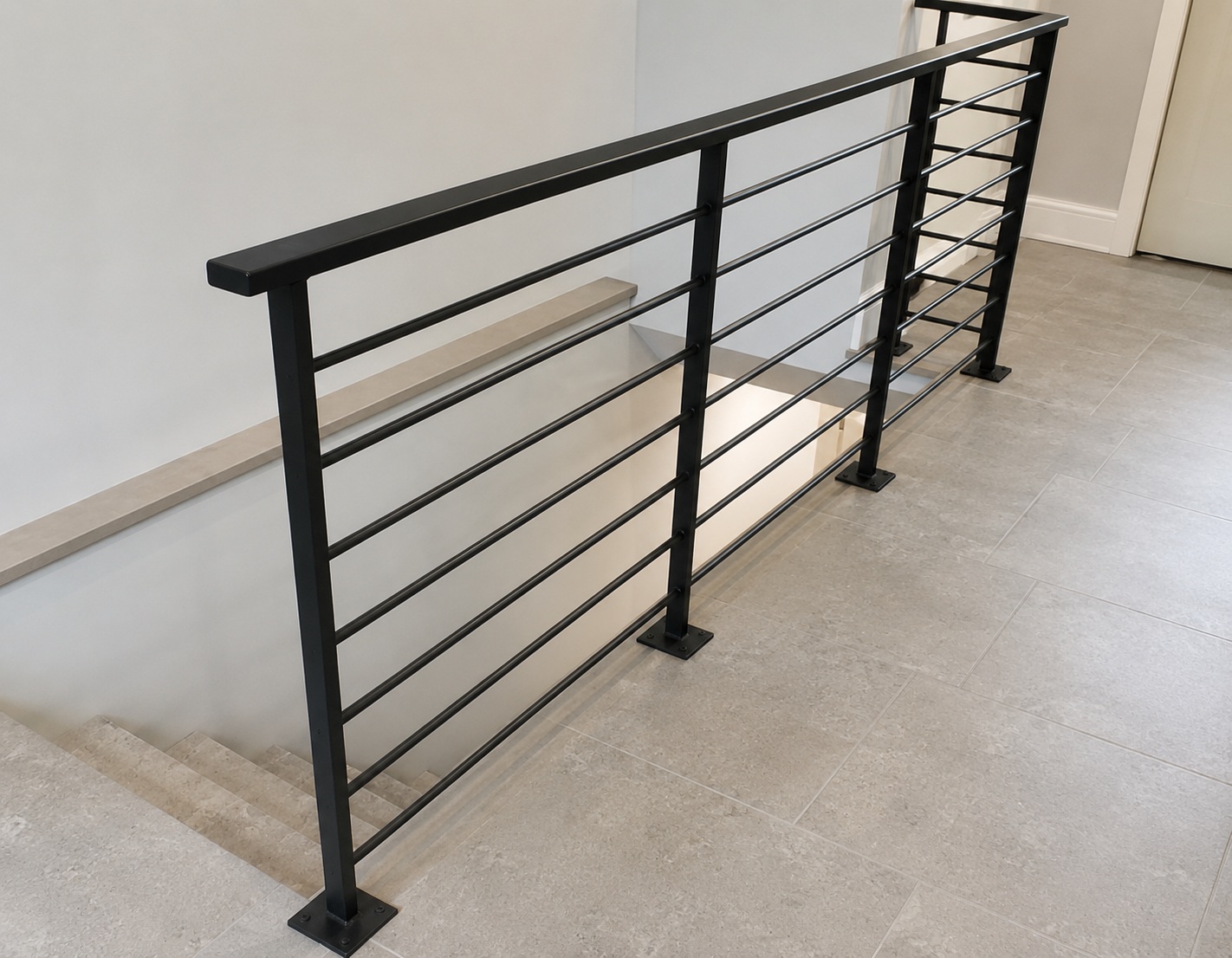





Stainless Steel Rod Balustrade
STAINLESS ROD RAILING
vertical rods as engineered restraint — a calm line at the stair
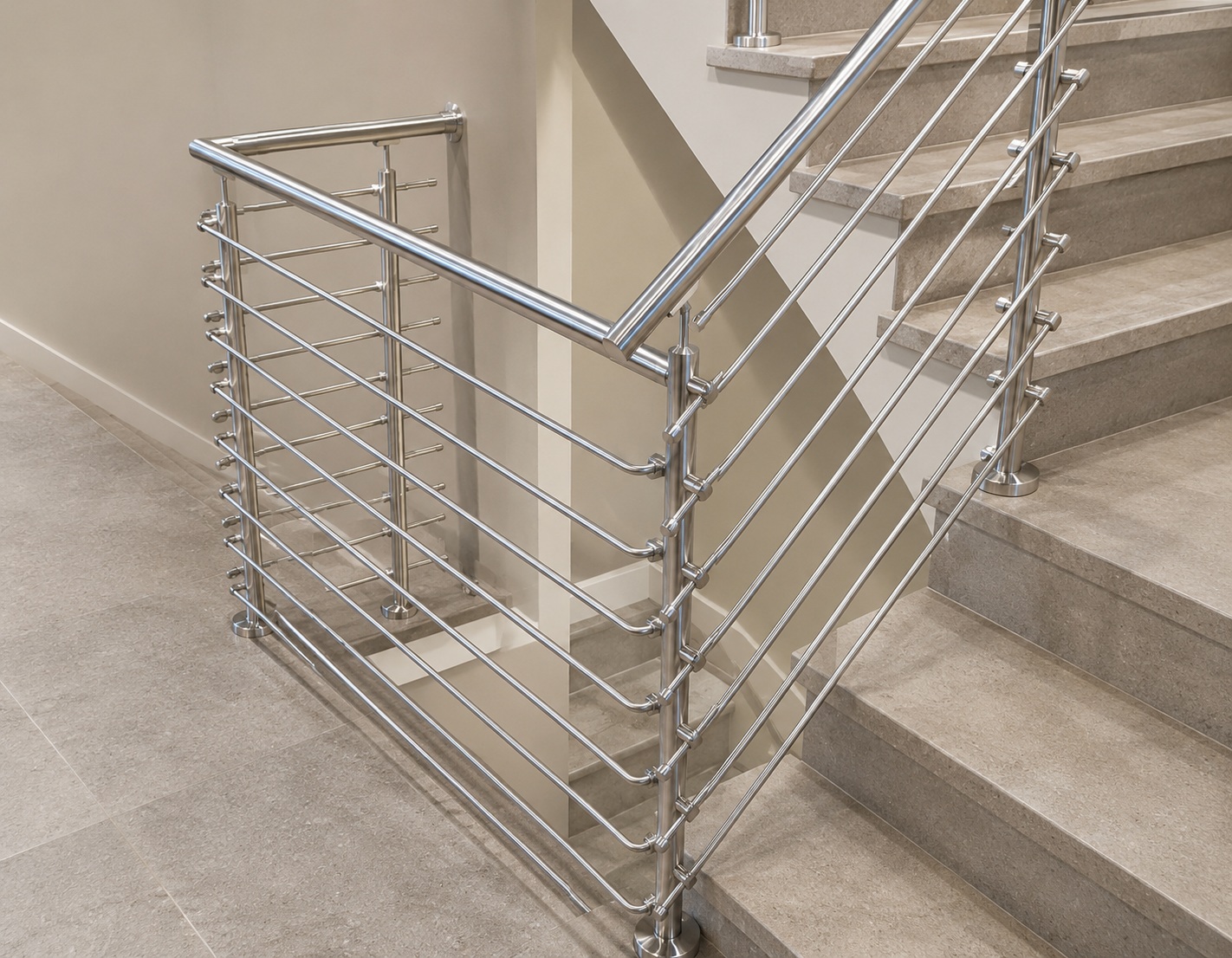
Vertical rods read as engineered restraint — a calm line at the stair, slightly heavier than cable but lighter than a baluster wall. Rod railing uses solid stainless rods threaded through the posts instead of tensioned cables — no swage fitting, no tensioner, no re-tension after a season. The rod is rigid and sits dead-straight between end posts. Horizontal rod is the most-asked-for format; vertical rod is the architect's call where the local certifier flags horizontal climbability. Black, brushed, and mirror stainless are the three finishes most owners pick from. Designed in Guangdong, rod and posts machined in our owned workshop, then crated for export to your site.
Villa & Country Home
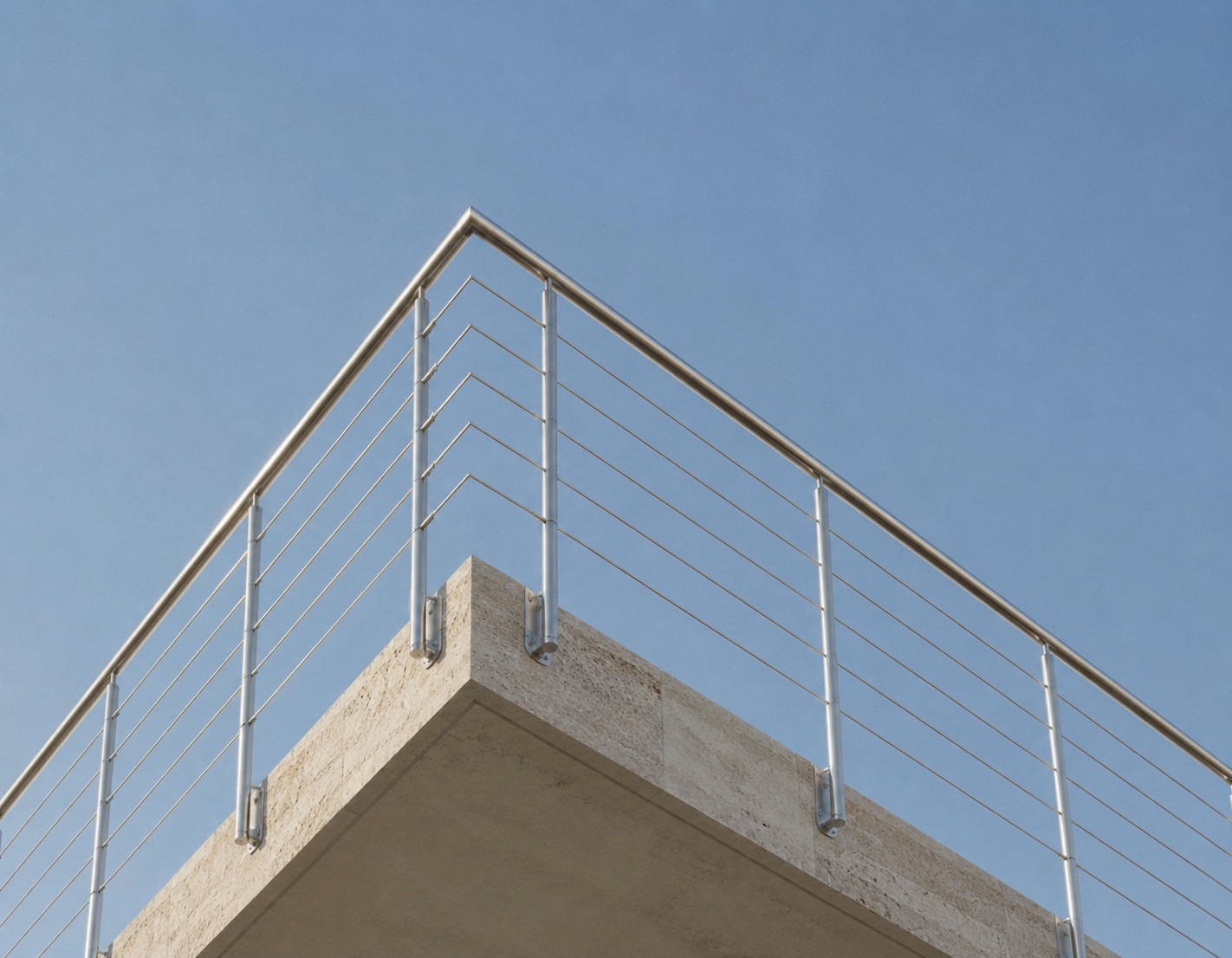
Sculptural villa stairs, ocean-edge terraces, and pool surrounds in salt-air environments often call for 316 stainless rod with mirror or satin finish. The architect specifies the rod diameter style — slim and dense, or chunkier with wider spacing. The welded fittings stay clean against a stone or hardwood deck cap.
New Home Build
For a new-home back deck or front porch that has outgrown the cable spec, rod railing reads as the next step. The homeowner who prefers not to re-tension cables, or a deck span long enough to make rod the steadier line, lands here. Rod railing is the "set and forget" choice when the homeowner wants the open-sight read without seasonal upkeep.
Apartment & Condo
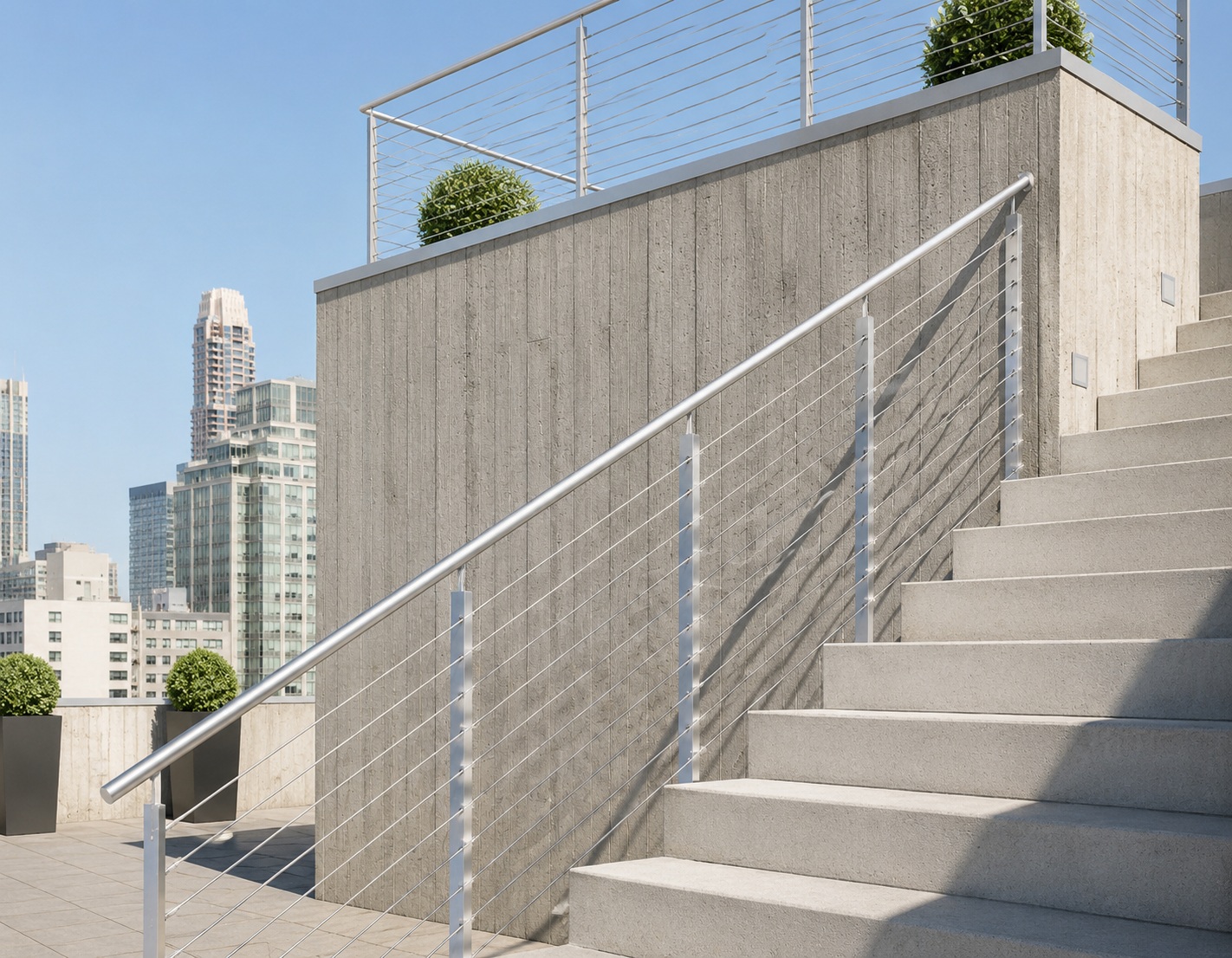
For an apartment balcony or condo terrace where cable would catch wind load, rod railing keeps the line steady. Brushed-stainless rod with black-coated posts is the most-asked combination — same post profile every balcony, same rod count, same finish across the floors.
Batch Renovation & Multi-Unit Development
Across multi-unit developments where every balcony follows the same elevation, rod railing keeps the vertical rhythm consistent — same post profile, same rod count, same finish. Color-matched kits ship pre-organized so each balcony lands with the same rhythm.
Rod Railing Range
| System | Rod Style | Finish | Best For |
|---|---|---|---|
| Horizontal Rod Run | Solid horizontal stainless rod | Brushed, mirror, or black-coated | Mid-rise balconies, terraces |
| Vertical Rod Run | Solid vertical stainless rod | Brushed or satin stainless | View-line runs, climb-restrictive codes |
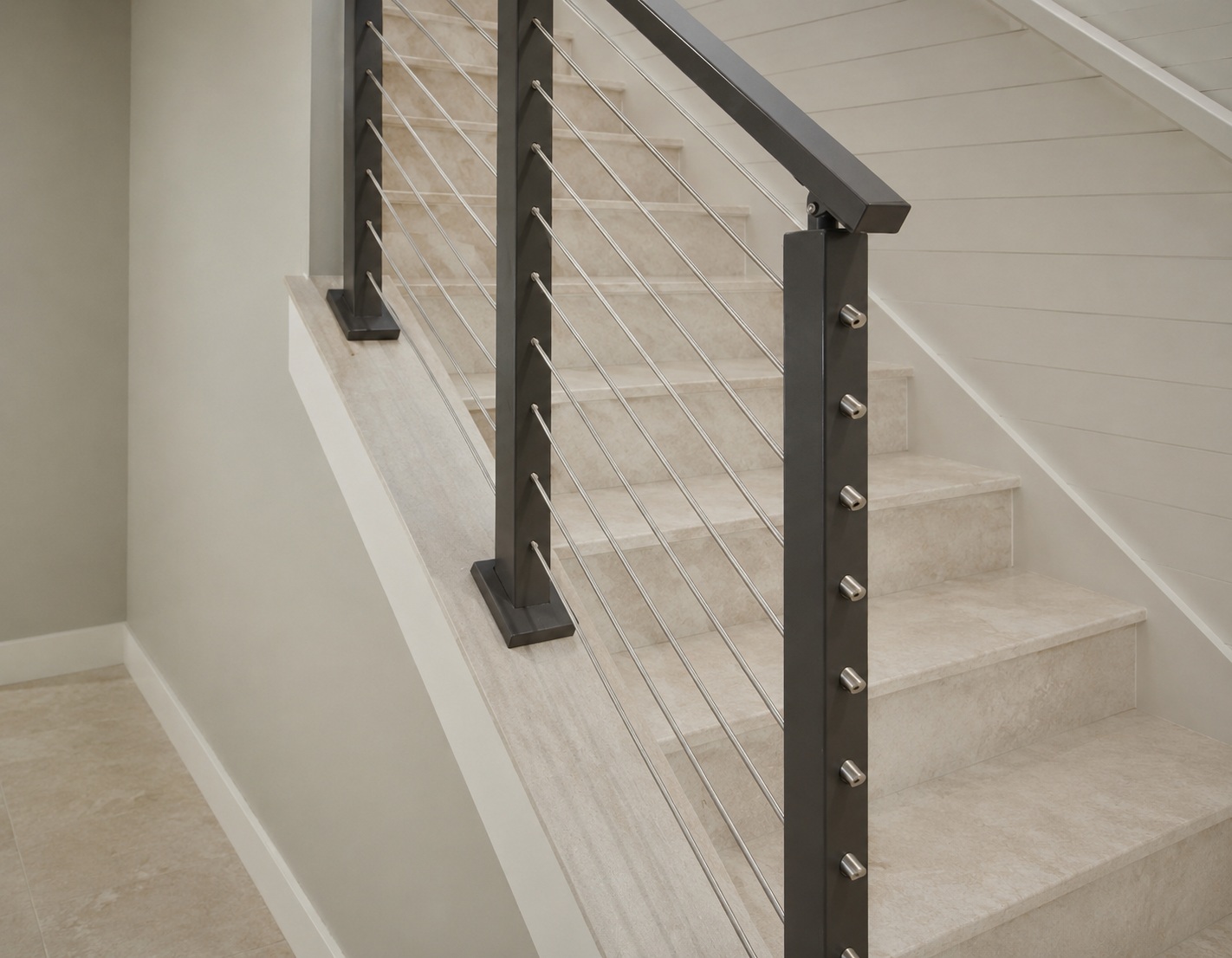
| Stair Run Rod Kit | Raked horizontal rod | Brushed stainless | Interior & exterior stair runs |
| 316 Coastal Rod | Horizontal or vertical, 316 grade | Mirror or satin stainless | Coastal villas, pool surrounds |
About Our Stainless-Steel Rod Railing
For the homeowner specifying a vertical-rod stair or balcony rail as a feature line, and the contractor executing it. Double Building Materials makes stainless rod railing for owners who want the open-sight read without tensioning hardware. The product also suits projects where long mid-rise balcony lines need a steadier line than cable. UK and Australian specs use the term "rod balustrade" for the same system. Our DBM rod balustrade kits pair solid stainless rod infill with welded post fittings. The kit contents stay the same either way. Rod sits dead-straight from end post to end post: same horizontal-line aesthetic as cable, same minimal post profile, no seasonal re-tensioning. Most outdoor rod railing ships in 304 stainless with brushed or black finish; pool-edge and coastal projects upgrade to 316 stainless.
We thread the rod through receiver fittings welded to the posts at the workshop. The team then grinds the joint flush and finishes the assembly as one piece. No field welding. No on-site grinding marks. Horizontal rod is the most-asked-for format. Vertical rod is the option for view-line villas and climb-restrictive jurisdictions. Stair runs ship with raked posts pre-cut to the stringer angle. The rod arrives cut to the rake, and the receiver fittings come welded at the correct rake angle. Black-coated stainless is the popular outdoor finish; brushed and mirror are the indoor choices. Send a stair drawing, a balcony elevation, or a development unit count. Shop drawings come back with the post layout, the rod count, and the receiver schedule. After delivery, your contractor or installer handles fitting. We provide an assembly guide and a step-by-step video. Where local installation is available in your region, we help you find a vetted installer.
Spec Snapshot — Stainless-Steel Rod Railing
A plain-language summary of what owners typically choose before sending a stair drawing or balcony brief. Final dimensions and code references come from the shop drawings.
How to Spec Stainless-Steel Rod Railing for Your Project
The owner view: what to measure, what to send, and how to settle the orientation question before we draw.
- Measure the run end-to-end. Post-to-post distance along the balcony edge or stair stringer — that sets the rod length and the receiver count.
- Send a stair drawing or balcony elevation. A phone photo of the framed opening works for a first pass; a CAD elevation or unit plan is even better.
- Pick horizontal or vertical. Horizontal reads as the modern open-line look; vertical sidesteps climb-restrictive jurisdictions and suits view-line villas.
- Decide the grade question. Coastal or pool-edge — 316 stainless. Inland deck and suburban porch — 304. Tell us the site address and we'll recommend.
- Tell us the finish read. Brushed indoor, mirror for lobbies, black-coated for outdoor — the finish locks when you sign the shop drawing.
- Send it through. We return shop drawings with the post layout, the rod count, and the receiver schedule. Your local engineer signs off, and your installer drops the kit on as drawn.
Frequently Asked Questions
Horizontal vs vertical rod orientation — which suits my code?
Many US/AU jurisdictions accept horizontal rod with the spacing called out on the shop drawings. Some municipalities still flag horizontal infill as "climbable" — check with your local certifier before you commit. Vertical rod sidesteps that conversation, at a slightly higher cost per linear foot.
How is rod different from cable in terms of install effort?
Rod is faster to install but heavier to handle. No tensioning, no swage, no re-check after a season. Trial assembly at the workshop confirms the receivers line up across the run before shipping.
Do I need 316 stainless for a coastal job, or is 304 fine?
Within close range of salt spray we recommend 316. Pool decks where chlorine vapor is constant — also 316. Inland decks and suburban porches — 304 is the standard. The engineering quote covers either; tell us the site address and we'll recommend the grade.
Can the rod be cut on site if the post-to-post span changes?
A chop saw cuts rod to length on site, but we finish the receiver-fitting end of each rod at the workshop. We strongly prefer the site survey reaches us with the final span before fabrication so you don't lose the finished end.
What does a trial assembly of a rod kit actually check?
Trial assembly confirms post plumbness and that the receivers line up across the run. We perform this check before crating the kit for export. The rods then seat clean on site.
Explore Related Collections