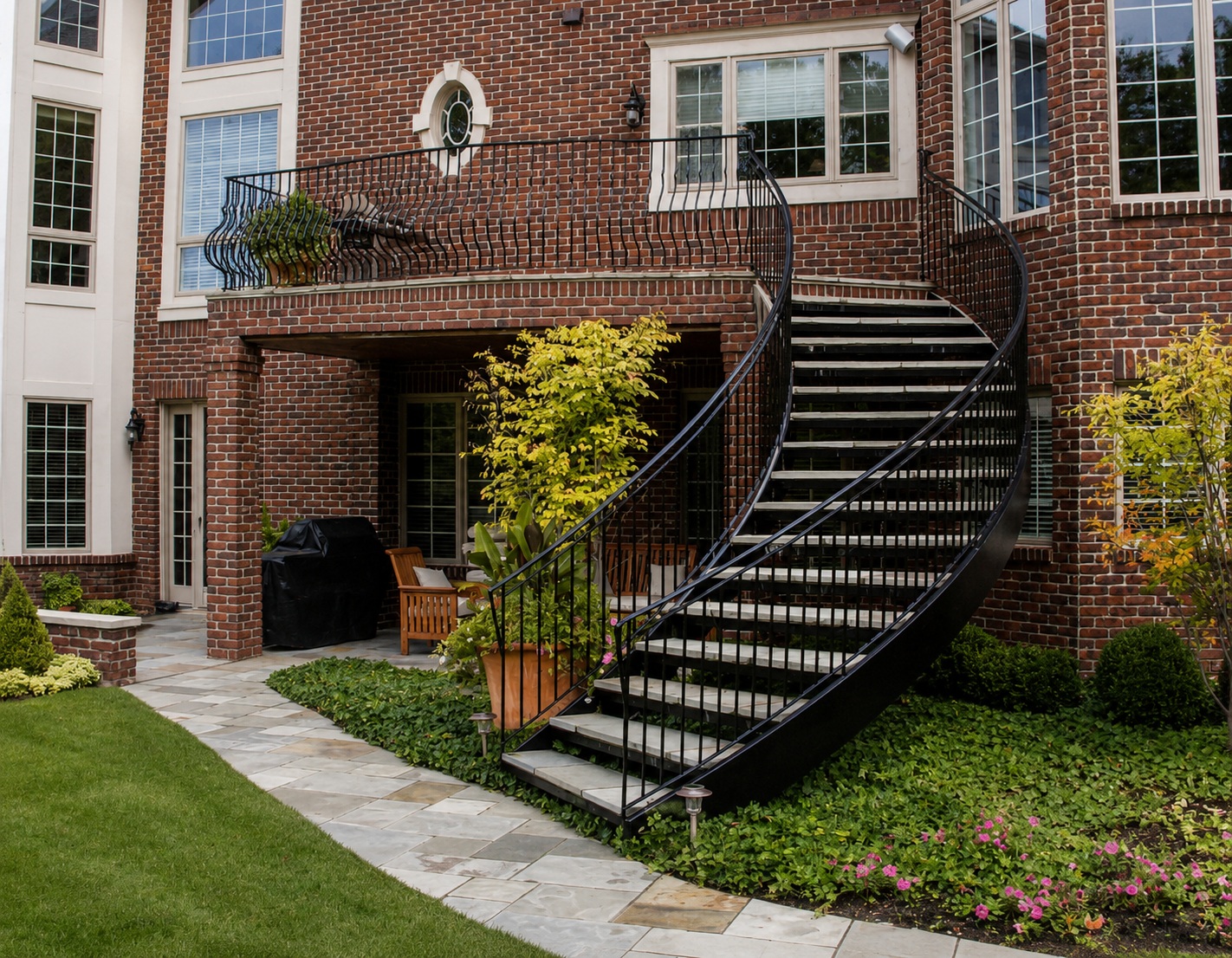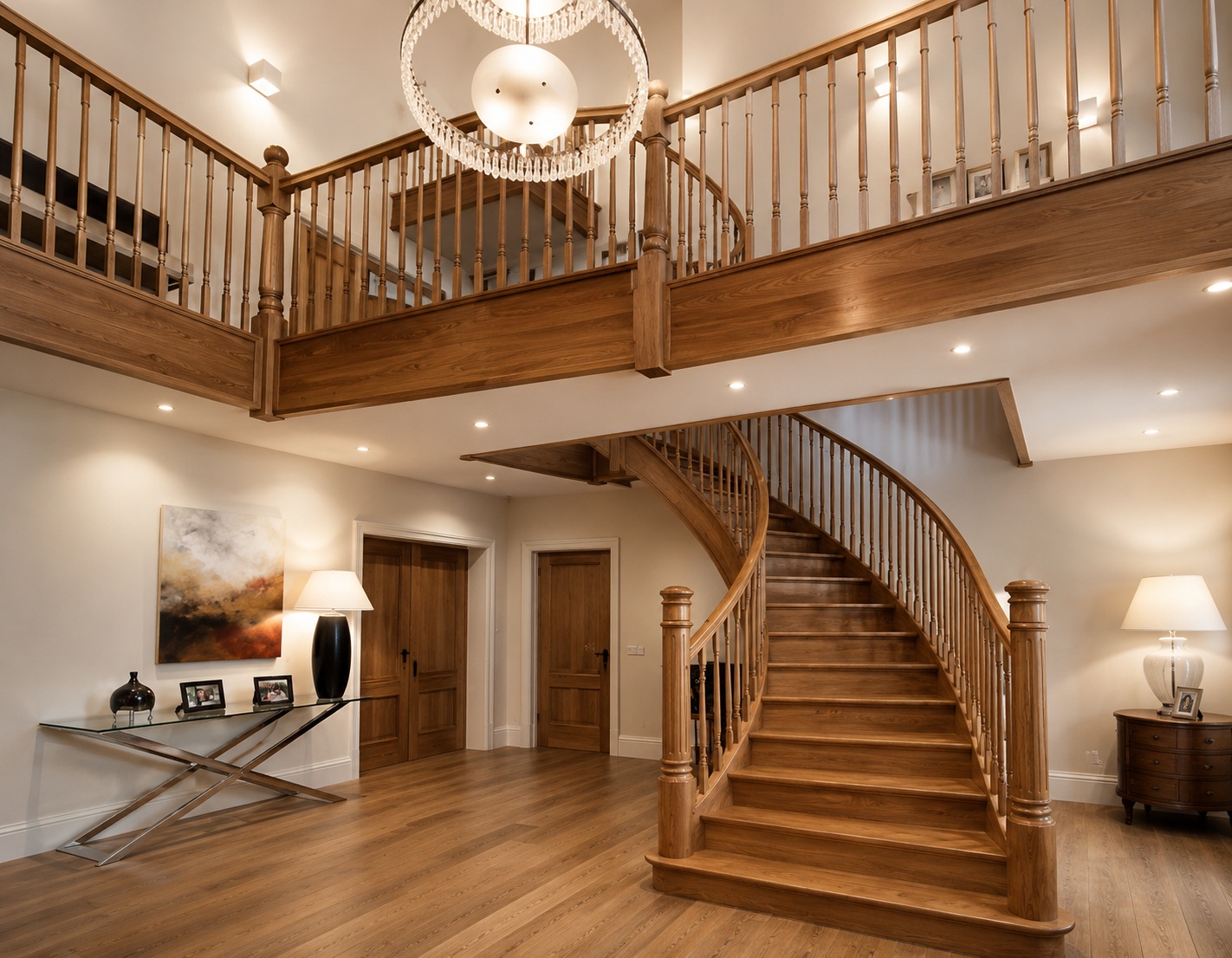





Curved Stairs
Custom curved staircase, rolled and built in our factorySingle sweep · Double sweep · Hidden stringer · Glass
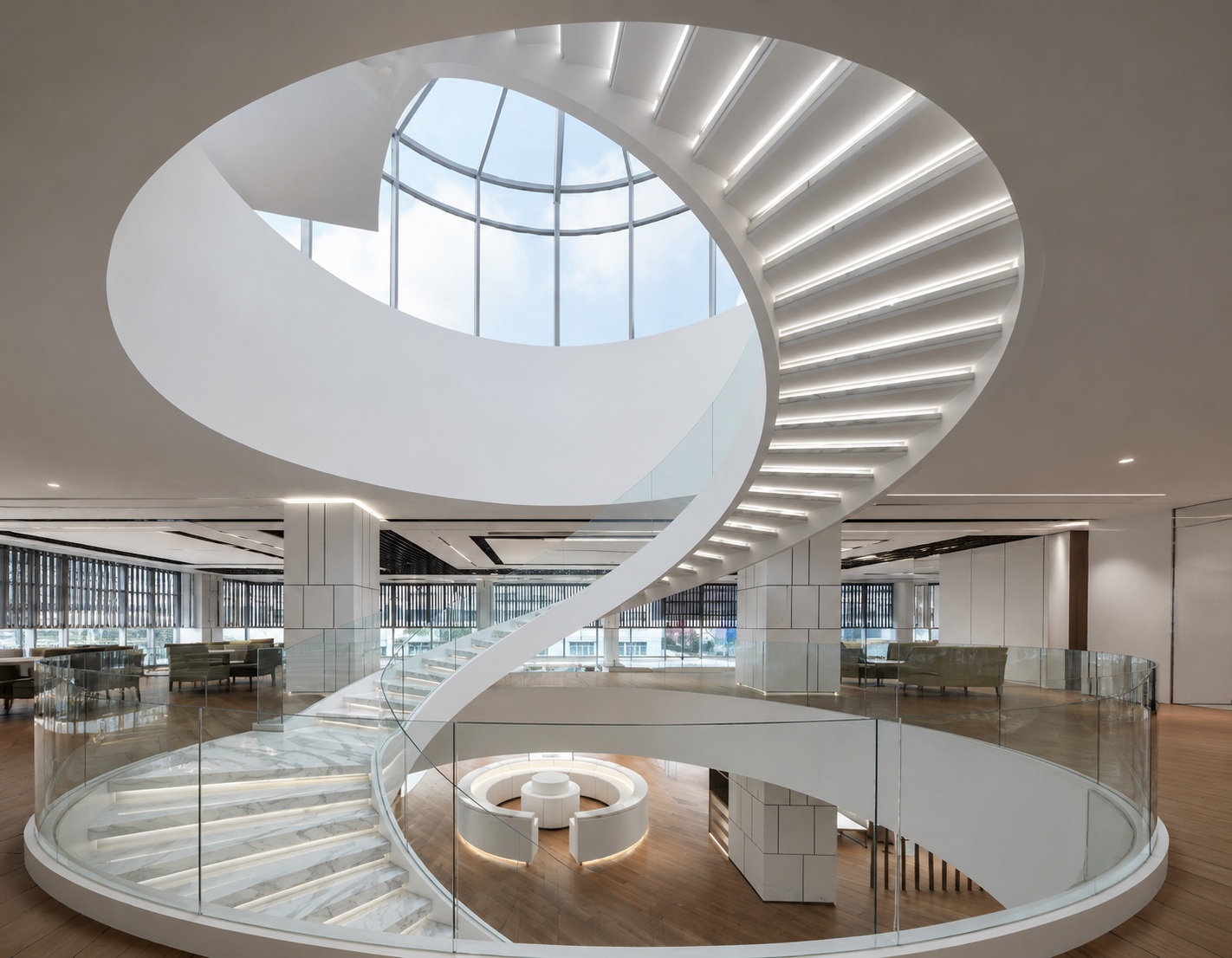
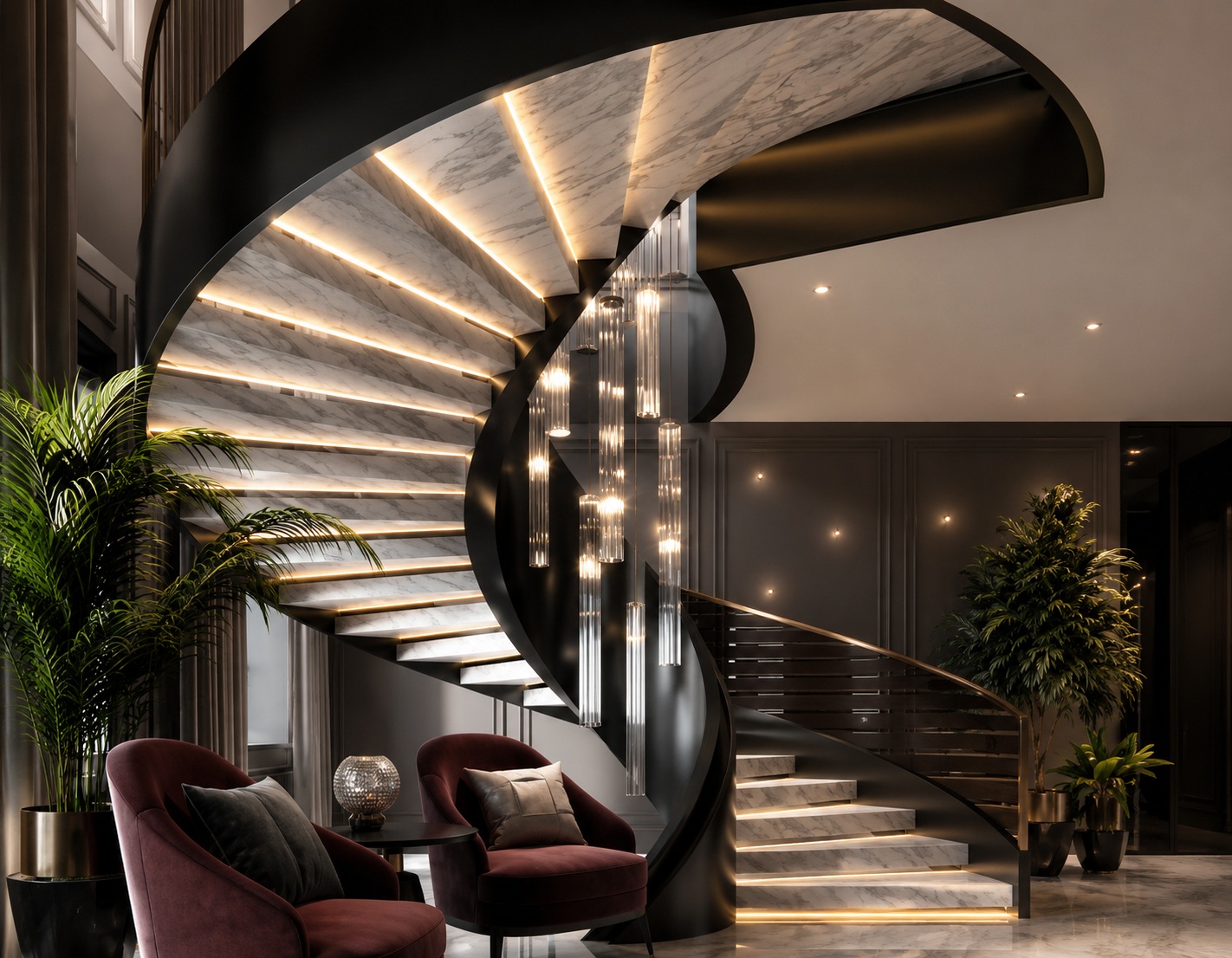
A modern curved staircase is the first arc you see from the front door — one radius across the foyer, with no center column.
Double Building (DBM) is a staircase factory in Foshan, Guangdong. We draw the radius first and send shop drawings. After you sign off, we roll the steel stringer, trial-assemble the stair, and crate it in labelled install order. Your local contractor installs it; we do not install on site.
Shop drawings · factory quote
Send floor opening and rise. We reply with shop drawings.
A curved staircase that has already been fitted once
Custom curved stairs are not a catalog pick. Ours is rolled to your radius, stood up complete in our workshop with its treads and infill, then labelled and crated in install order.
Radius drawn first
Send a floor plan, a sketch or a foyer photo. Shop drawings come back with the radius, the rise and the opening.
Rolled-radius stringer
We bend one steel stringer on a section roller to your radius. The curve is the stringer, not straight segments joined into an arc.
Trial assembly
We stand the rolled stringer, treads and infill on the workshop floor before packing.
Labelled crate
The radius stringer, treads and top rail leave labelled for ocean freight, in install order for your contractor.
Single sweep, double sweep, or glass
As curved staircase manufacturers, we roll every shape in our own workshop. Some architects call these helical stairs; a double sweep is also called a double curved staircase.
Single-Sweep Curved Staircase
One radius across the foyer on a rolled-steel stringer, with hardwood, stone-cap or steel-plate treads.
Double-Sweep Staircase
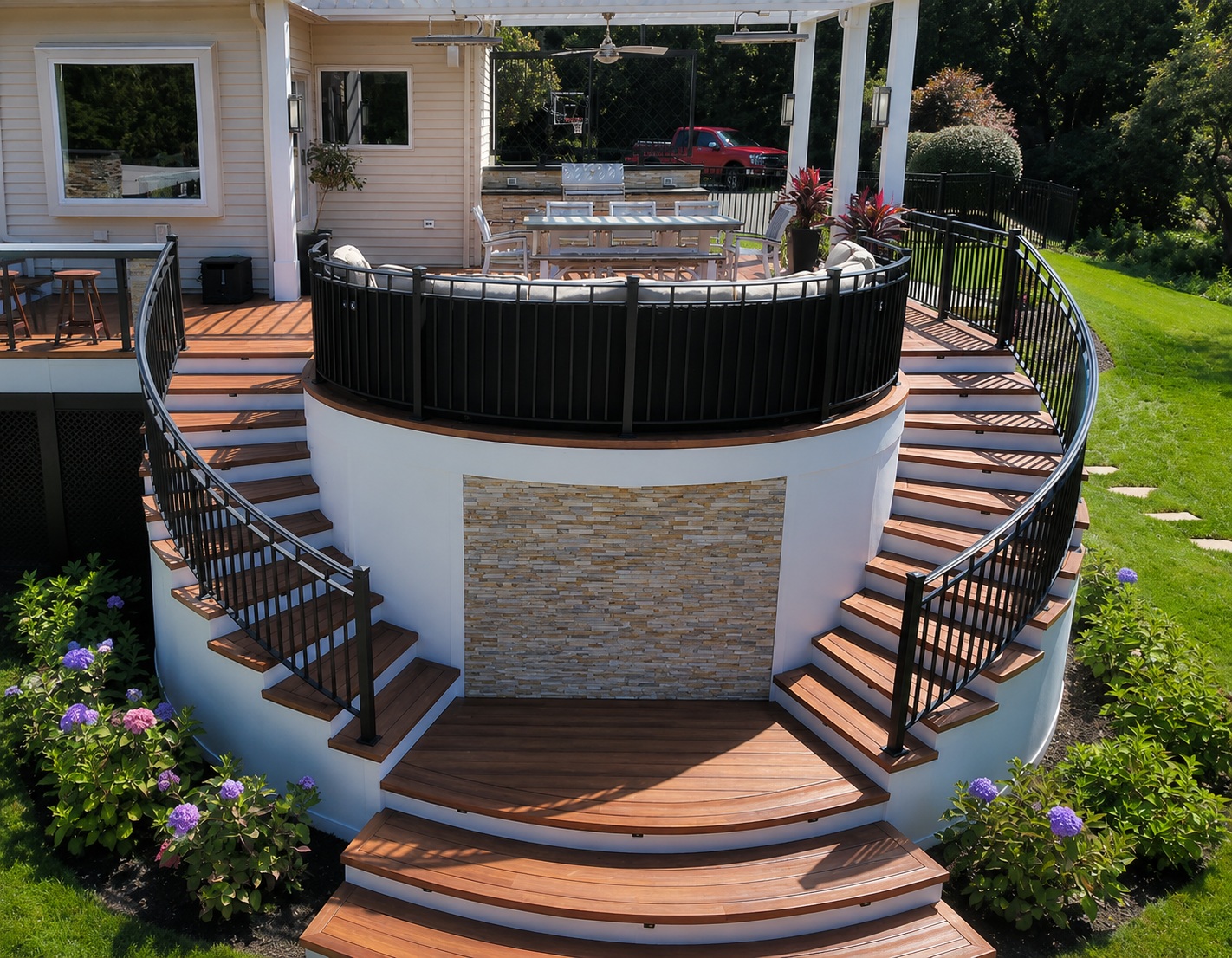
Twin curved runs rising to one landing — the grand entrance of a villa center hall.
Glass Curved Staircase
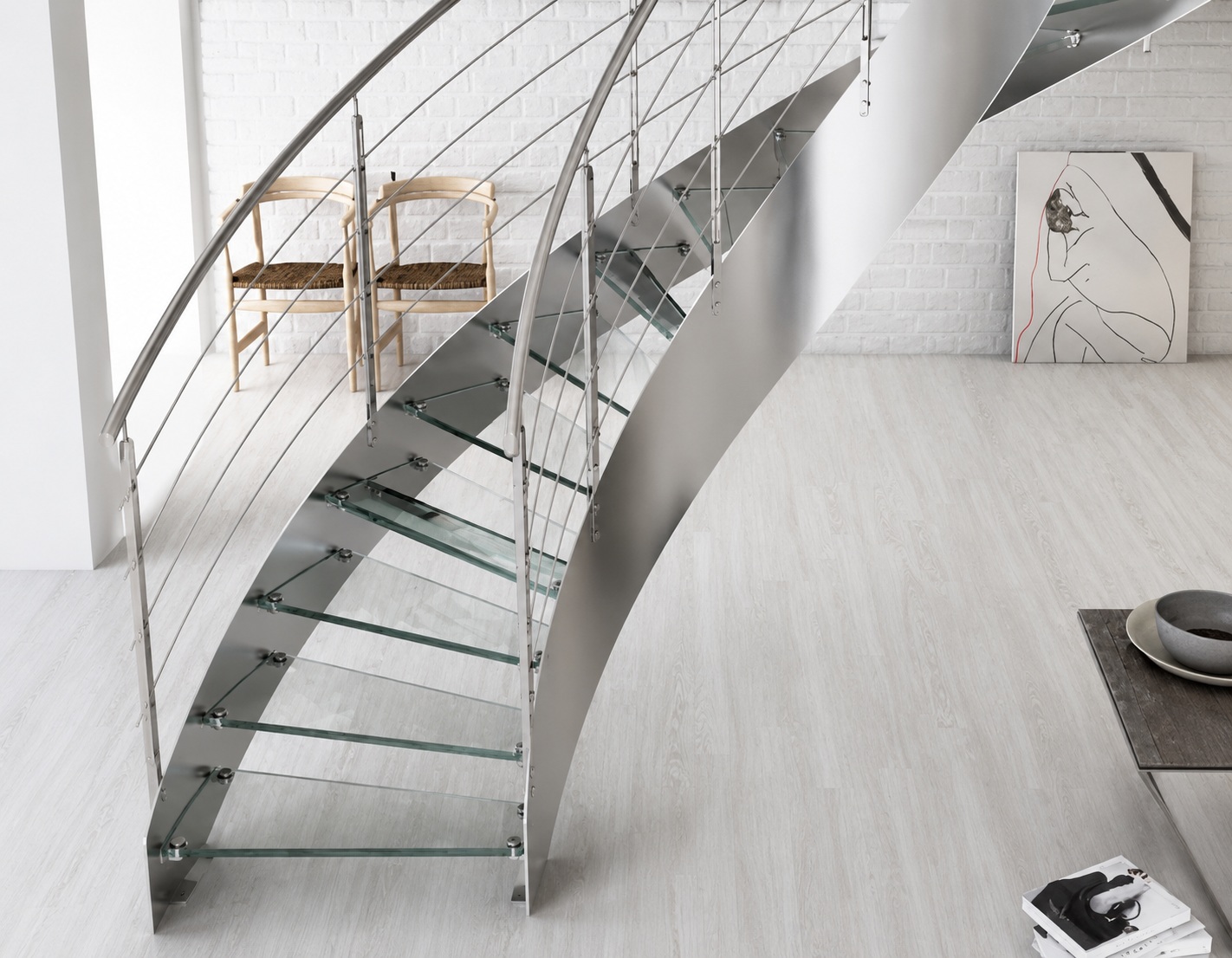
A hidden stringer with glass infill for a light, open sweep; laminated glass treads where the brief asks.
A curved staircase is not a spiral
A spiral climbs around a center column inside a tight circle; see spiral stairs. Curved stairs have no pole. The rolled stringer is the curve, and the arc opens across the room.
Some drawings call this a helical staircase. The staircase curve is still that rolled radius, not a helix on a pole.
If the floor plan wants a single run with no arc, see straight stairs. As curved staircase manufacturers, we build each curved metal staircase to order: we roll the stringer in our Guangdong workshop and trial-assemble the stair before packing.
Curved staircase range
The foyer sweep, from villa to condo
Villa & Country Home
A villa foyer wants the stair to read as the arrival. Twin runs to a center landing make a double sweep; a single arc reads quieter. Hardwood treads with glass infill are a common pairing.
New Home Build
The foyer width is often fixed before the slab is poured. That width sets the radius, and the floor-to-floor rise sets the climb. Send the floor plan, and we draw the sweep to it.
Apartment & Condo
A townhouse or condo entry often has a tight corner rather than a grand hall. We draw a small-radius sweep to that opening; rolled sections often pass through an ordinary interior door.
Batch Renovation & Multi-Unit
When several entries share one radius, we draw one template and repeat it. Each unit’s stair is factory-built to that drawing and crated separately.
Rolled steel, then the treads you live with
A curved staircase is an interior stair on a rolled-steel stringer bent to one radius. We roll mild steel on a section roller and weld the stringer, then powder-coat it or clad it in hardwood.
Curved stair treads follow that arc in oak, walnut or ash, or in stone-cap, steel plate or laminated glass when the brief asks. Infill runs in stainless cable, frameless glass, wrought iron or hardwood spindles, drawn to the same radius.
Treads, stringer and infill
Four steps, every curved stair
Radius for approval
Radius, tread arc, opening and headroom, drawn to your foyer.
Rolling & welding
Stringer rolled to the radius, welded and finished in our Foshan workshop.
Trial assembly
The full sweep stood on our workshop floor with treads and infill, checked, then taken down.
Labelled crate
Packed in install order with an assembly manual; your local contractor installs.
Curved stairs on our workshop floor
A rolled stringer, arc-cut treads and infill fitted to the radius before crating. Tap a clip to play it here.
Before we roll a stringer
Single or double sweep?
A single sweep follows one radius across the foyer and reads quieter. A double sweep pairs two mirrored runs rising to one landing and needs a wider hall. Send the foyer opening and we can draw both.
Can the treads or infill be glass?
Yes. Glass infill is drawn to the same radius, and laminated glass treads are available where the brief asks. A hidden stringer keeps the sweep light.
Can you roll a radius around an existing column?
Send the column centerline, wall offset and rise on a top-down sketch. We draw the stringer to clear the column, with tread arc and headroom shown before fabrication.
The floor is not built yet. What do we send?
The architect’s drawings: the upper opening, finished-floor rise, and any wall or column the stair must clear. A section view speeds the headroom check.
Who checks the drawings against my local code?
A licensed engineer in your country reviews and signs off the drawings; we do not. Shop drawings list IRC, IBC, AS 1657, AS 1288, NCC and CSA.
How does a rolled stringer ship, and who does the installation?
We crate the radius stringer for ocean freight; treads and top rail bundle in install order with an assembly manual. We do not install on site; your local contractor installs.
Explore related