

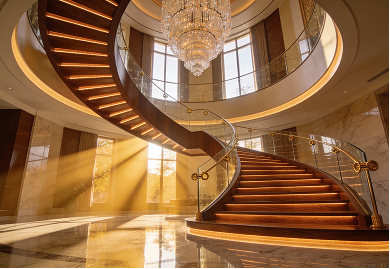
Stainless Steel Cable Balustrade
STAINLESS CABLE RAILING
the lake view lives in the room, not cut by metal
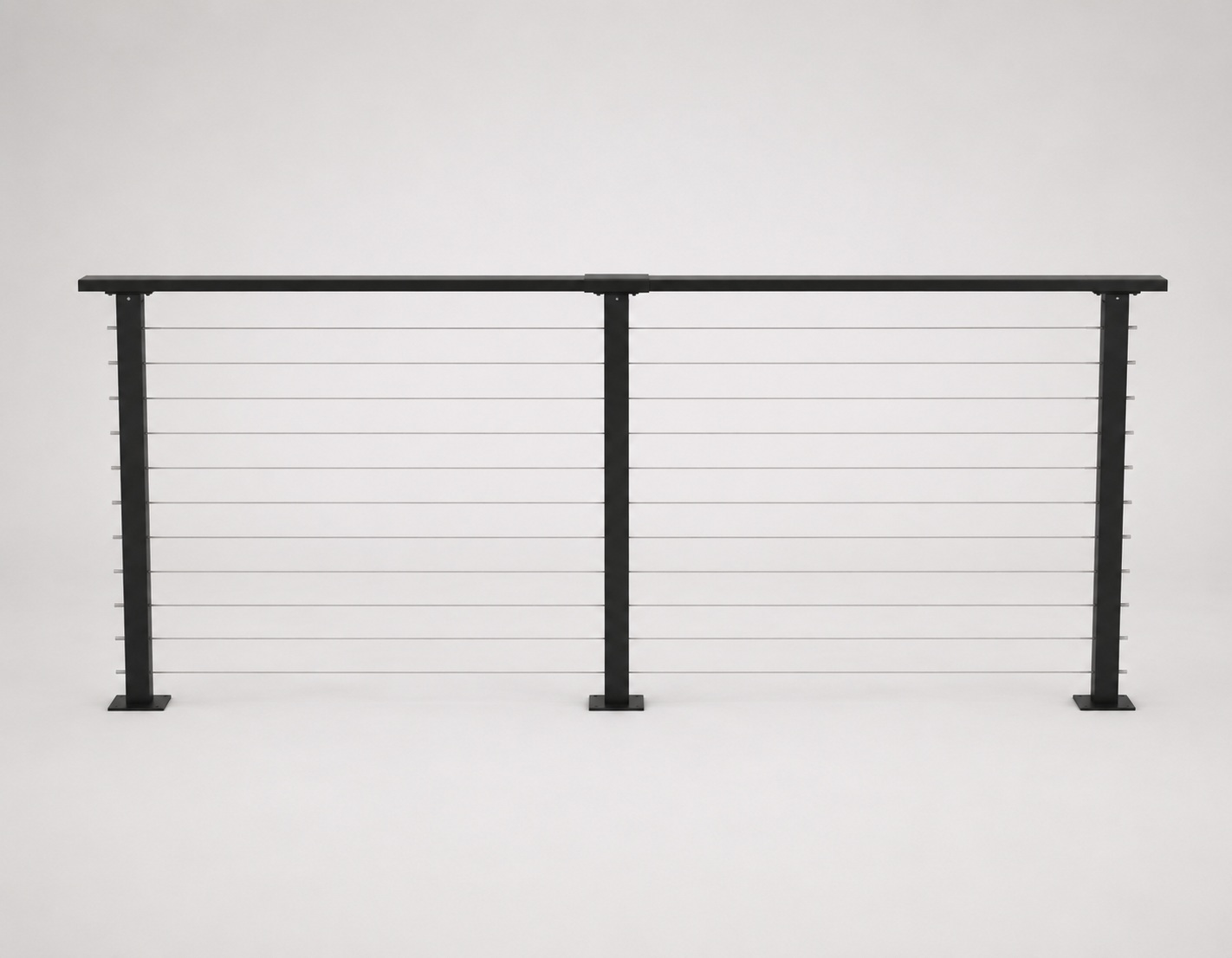
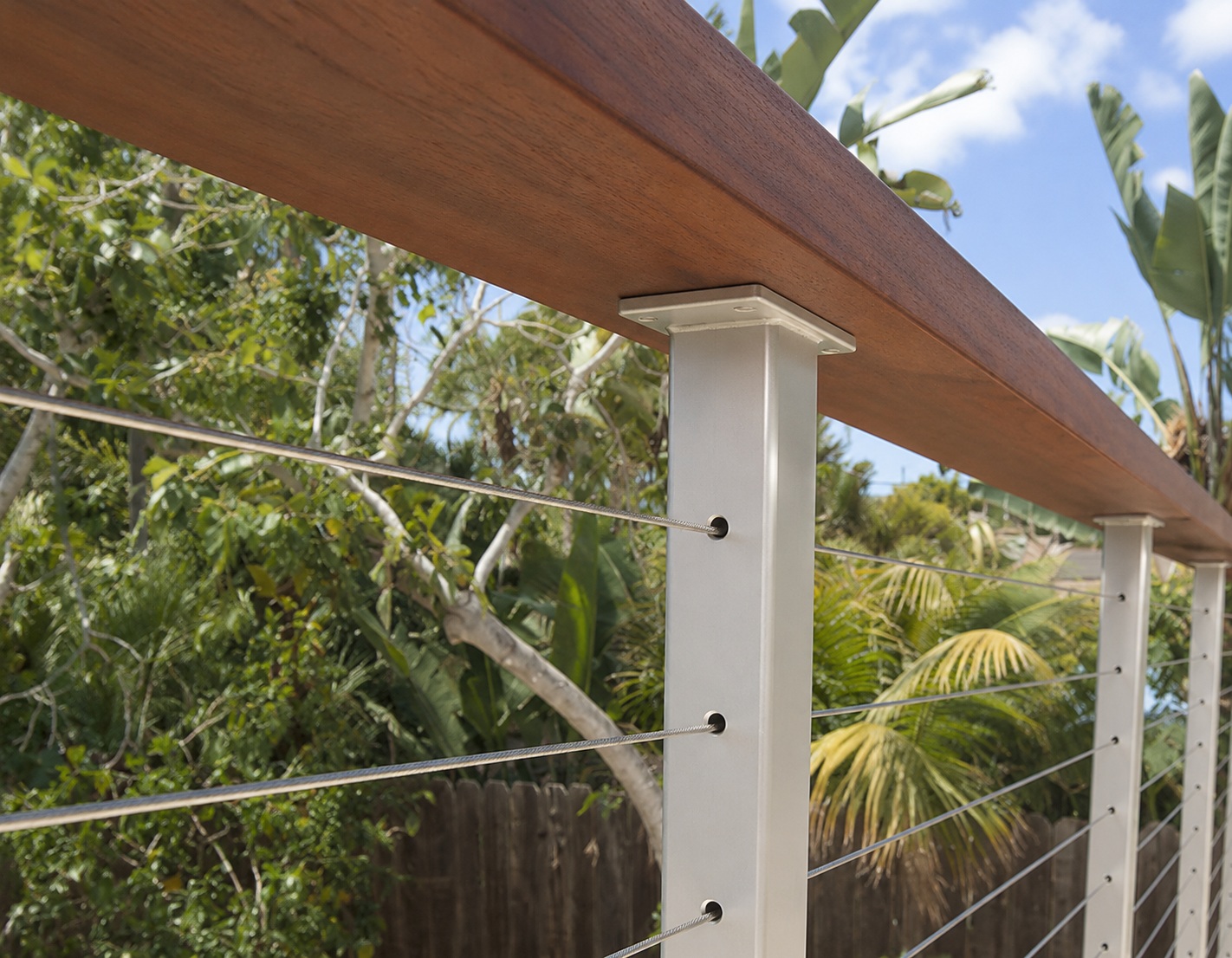
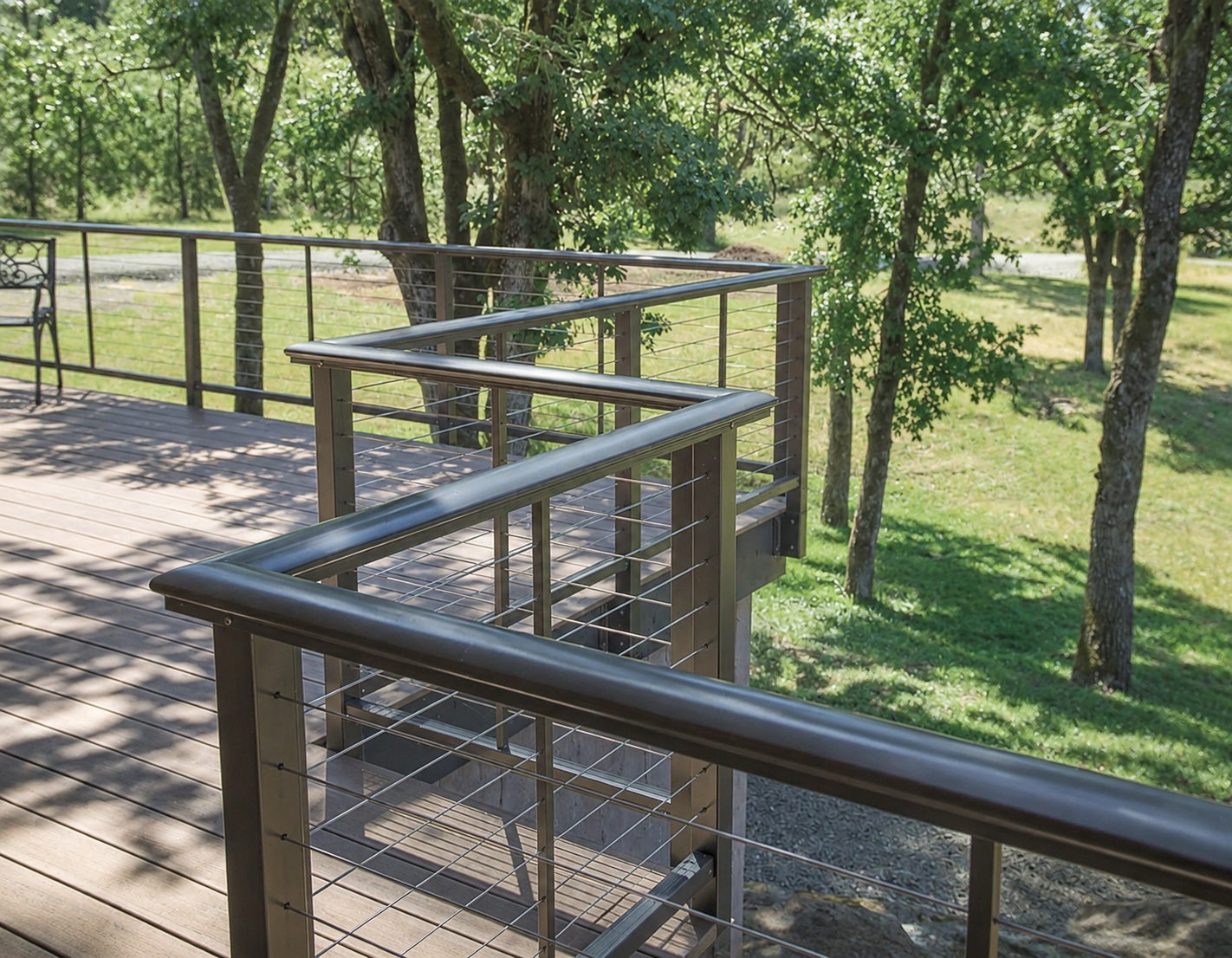
Horizontal stainless cable runs strung tension-wise between metal or wooden posts. Swage fittings sit at the terminations. An intermediate post goes wherever the cable would otherwise deflect. Each cable terminates in a tensioner concealed inside the end post. The run reads as a row of fine horizontal lines — the lake view lives in the room, never interrupted by metal. Black-coated posts are the popular choice for deck cable railing; raw 304 stainless is the standard for coastal cable rail.
Villa & Country Home
For ocean-view villas and ridge-line country homes, the cable rail nearly disappears against the horizon. The line reads finer than a glass panel edge, lower in visual weight than a baluster. Vertical cable railing is the architect's option when the run crosses the view at eye level. Horizontal lines would catch the sightline there.
New Home Build
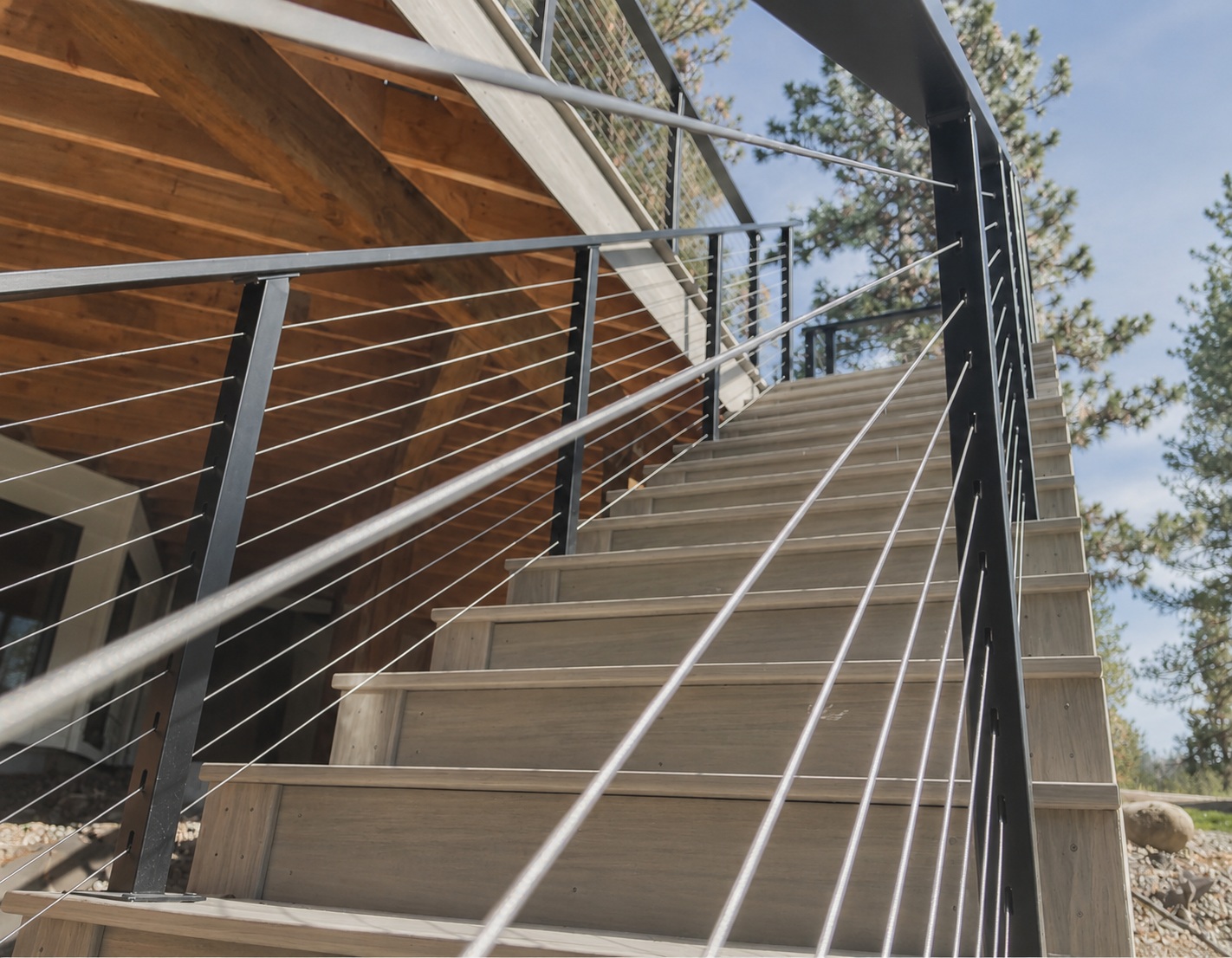
For a new lake home, mountain home, or coastal build, cable railing for decks is the spec that keeps the view in the room. Cable rail stairs run on the same line — raked end posts with cable angled to the stringer. Deck cable railing pairs with cedar, IPE, and composite deck surfaces.
Apartment & Condo
For an apartment terrace or condo balcony where the view is the point, cable rail keeps the sightline open. Black cable railing on black-coated posts is the popular look for contemporary towers; raw stainless cable railing reads cleaner against glass-and-steel facades. High-traffic use requires an engineer-of-record cable-deflection check; shop drawings reference the typical IRC / IBC / AS 1657 spacing your engineer reviews against.
Batch Renovation & Multi-Unit Development
When walk-up balcony cable rail repeats unit after unit, the same post height and cable count carry across each balcony. Color-matched black runs through the development. Pre-tensioned cable railing kits ship pre-organized. The per-balcony rhythm stays consistent.
Cable Railing System Range
| System | Cable Layout | Post Type | Best For |
|---|---|---|---|
| Horizontal Cable Deck Kit | Horizontal tensioned runs | Stainless or black-coated steel post | Decks, balconies, terraces |
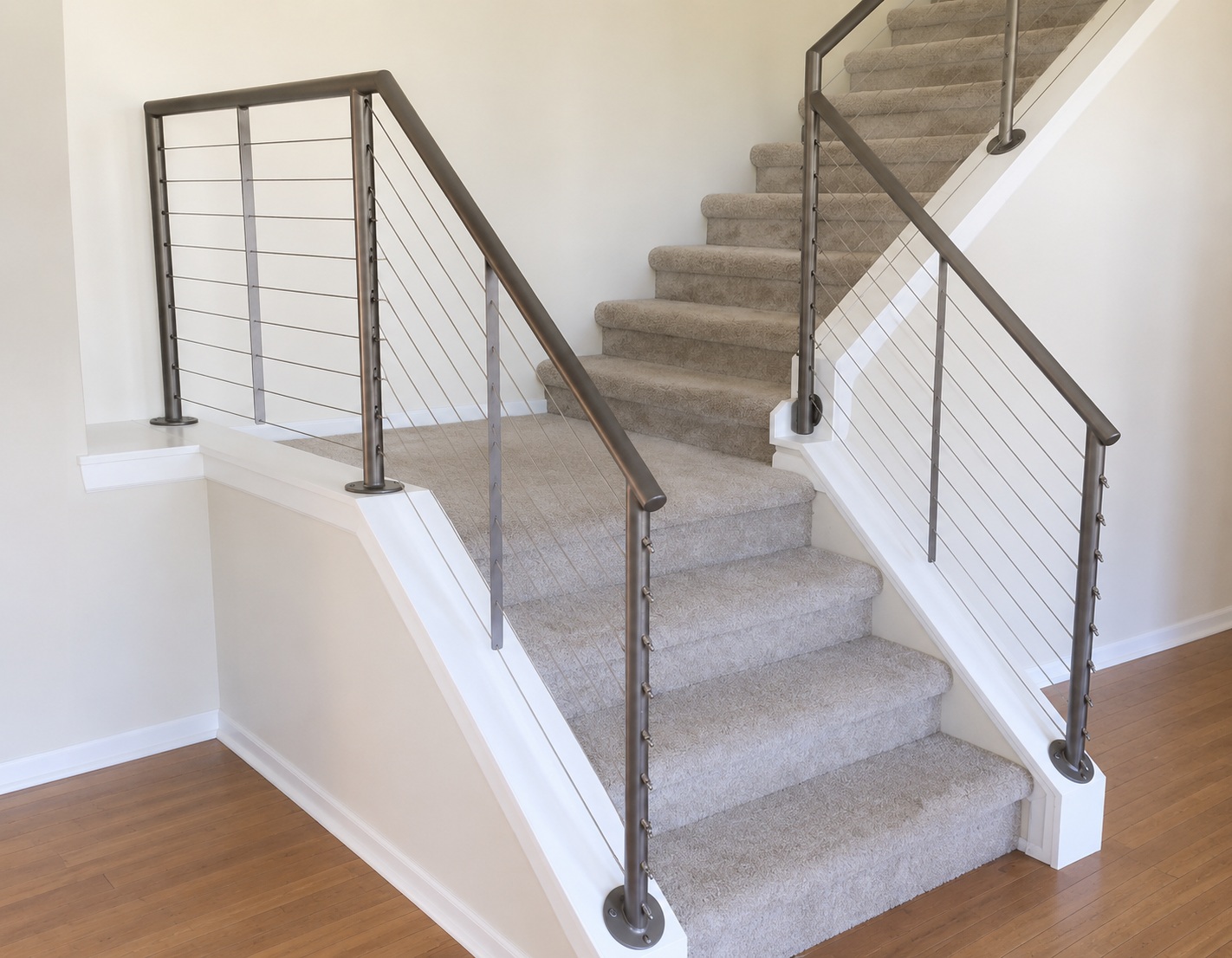
| Stair Run Cable Kit | Raked horizontal runs | Stair-angled end posts | Interior & exterior stairs |
| Vertical Cable Kit | Vertical tensioned cables | Top + bottom rail with cable channel | View-line runs, villa terraces |
| Cable Kit for Wood Posts | Horizontal, pass-through fittings | Buyer's wood posts | Cedar / IPE deck retrofits |
About Our Cable Railing Systems
Cable railing uses horizontal stainless cables between posts — the lake view stays uninterrupted, never obscured by metal. Double Building Materials manufactures cable railing kits where the cable lines define the design, not the posts. In markets that use British terminology, the same system is specified as a stainless steel cable balustrade; the kit contents are identical. The line covers cable railing for decks, deck cable railing kits, and stainless steel cable railing for porches. It also covers cable balustrade runs for terraces and cable rail stairs. The popular seller is the horizontal cable rail kit with black-coated posts; raw stainless cable handrail follows close behind for coastal projects. Cable railing posts ship with the swage fittings pre-installed; the installer drops the cable in, tensions at the end post, and trims the tail.
Our cable rail system range covers horizontal and vertical cable layouts. The line includes level-deck and raked-stair runs, plus cable rail wire kits that pair with the buyer's own wood posts. Every kit ships with the cable rail wire pre-swaged at one end and tensioners pre-set at the other. A tensioning instruction sheet directs the installer to the specified cable load on site. Stair runs add the raked end post pre-cut to your stringer angle. Steel cable railing on metal posts is the standard specification for contemporary residential builds. Cable railing kits for wood posts suit cedar-and-IPE decks. Black cable railing remains the popular finish — we coat the posts in a single batch with the rest of the kit. Shop drawings reference IRC R312, IBC 1015 (US), AS 1170.1, AS 1288 (Australia) and NCC (Canada) — your engineer of record cross-checks before stamping.
Engineered in Guangdong, fabricated at our owned 4,500 m² workshop, and crated for export delivery across 60+ countries. After delivery, your contractor or installer handles installation. We provide an assembly guide and a step-by-step instructional video. Where local installation is available in your region, we connect you with a vetted installer.
Browse the full Stainless Steel Balustrade collection → | Compare Stainless Rod → | Compare Stainless Baluster + Glass →
Spec Snapshot
Cable: 304 stainless for inland decks, 316 stainless for coastal and pool-edge installations. Swage fittings press-set at the workshop, tensioner pre-installed at the end-post termination.
Post: stainless or black-coated steel; intermediate posts placed where the cable deflection check on the shop drawings calls for them.
Wood-post variant: same tensioner family with pass-through fittings sized to the post bore your install crew confirms.
How to Spec for Your Project
Send the deck plan or elevation, the longest end-to-end cable span, the post material (metal or wood), and whether the project is inland or coastal.
Shop drawings come back with the cable count for the run, intermediate-post spacing, and the tensioning instruction sheet. Your engineer of record reviews against the as-built before sign-off.
Frequently Asked Questions
How tight do the cables run, and do you supply pre-tensioned cable kits?
Cables ship pre-swaged at one end with a tensioner pre-set at the other. The installer threads the cable through the intermediate posts, terminates at the end post, and turns the tensioner to the load on the instruction sheet. We don't ship cables under full tension — that's an install-step on site.
Can I use my own wood posts and just order the cable kit?
Yes. The cable railing kit for wood posts ships with pass-through swage fittings sized to your post bore. Send the wood post species, bore diameter, and post spacing — the kit arrives matched to that layout.
How is the intermediate post spaced to keep the cables straight?
Intermediate post spacing references typical IRC / IBC and AS 1657 deflection guidelines. On long deck cable railing runs the intermediate count follows from the cable load and end-to-end span. Your shop drawings call it out. Your local engineer reviews against the as-built.
Vertical cable railing or horizontal — which suits my project?
Horizontal is the default for decks, stairs, and most balconies. It matches what owners picture when they say cable rail. Vertical cable railing is the architect's choice when the run crosses the view at eye level. Villa terraces and view rooms suit the vertical layout. It also suits projects where local code reads stricter on horizontal climbability. Check with your local certifier.
What happens if a cable loosens after a season?
Re-tension at the end post. The tensioner is accessible without removing trim. We include a spare tensioning tool with every kit, and the assembly manual walks the installer (or the owner) through a 5-minute re-tension.
Explore Related Collections