

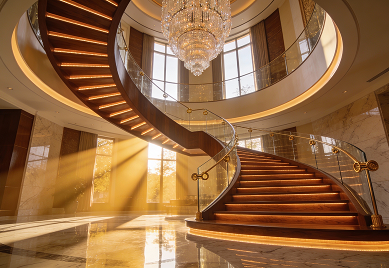
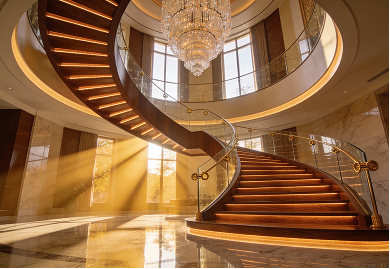
Stainless Steel Balustrade
Stainless Steel Railing Systems
Cable · Rod
Marine-grade 316 stainless posts and infill engineered in Guangdong. For villa pool decks, coastal homes, new home patios and apartment balconies across the USA, Australia and Canada.
316 stainless steel is often chosen for waterfront, pool deck and salt-air projects. Built to take chloride conditions where standard finishes fail early. The two sub-systems share the same 316 post extrusion and differ only in infill. Horizontal tensioned cables for unobstructed views. Vertical rods for an industrial-minimal look. We build for villa owners, new home builders, and the architects and contractors who execute their projects. Designed in our Guangdong studio and welded in our owned workshop, then crated for export.
Choosing your stainless infill
Same 316 post, different infill story. Cable for the open-view loft look, rod for the structured industrial-modern look.
System schematics, by infill
Each diagram links to the corresponding system page. Our complete stainless-railing catalog and project photos stay private to protect client confidentiality. Reach out through the side panel (WhatsApp preferred) — we return a tailored solution and quote as quickly as possible.
SYSTEM 01 / CABLE
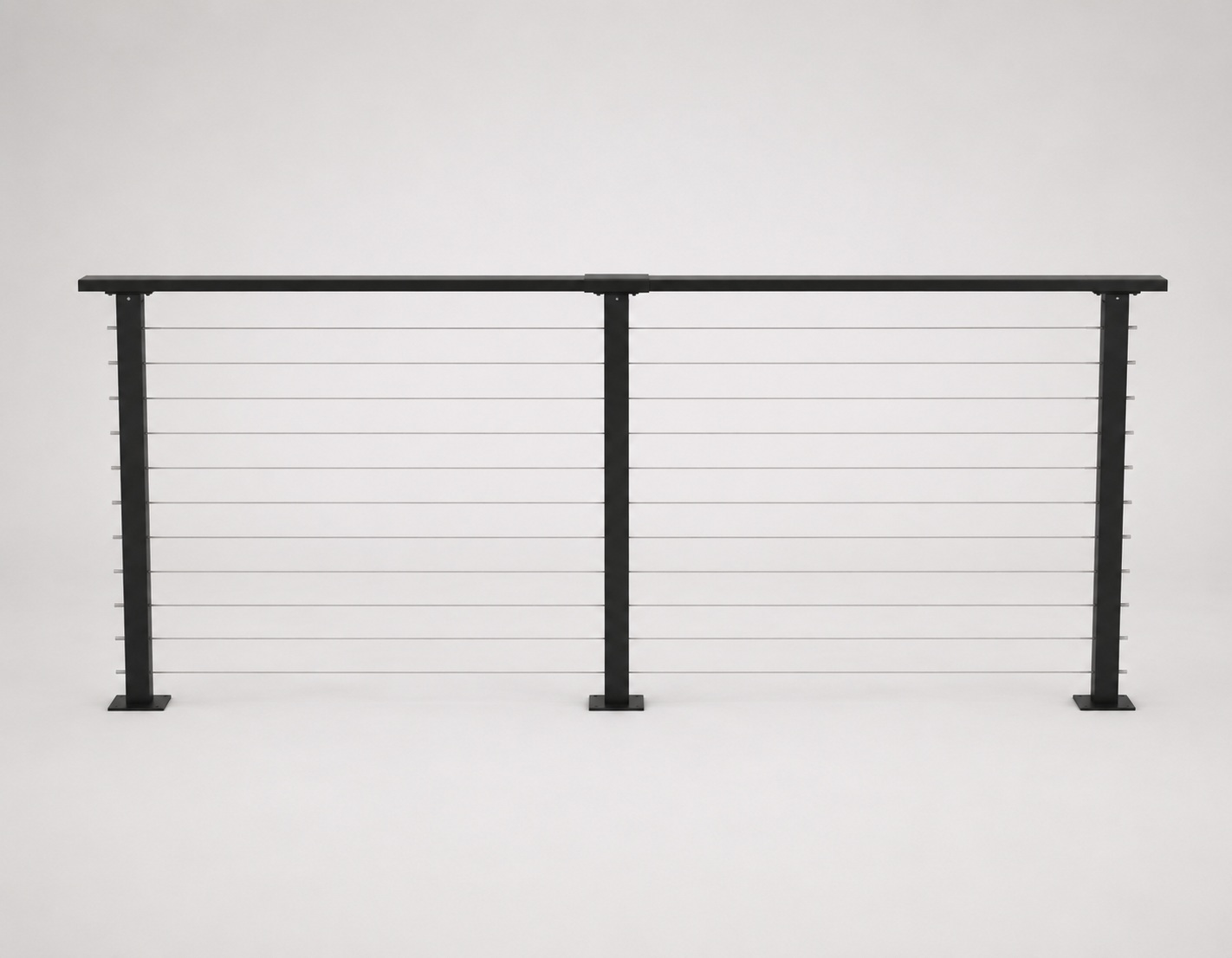
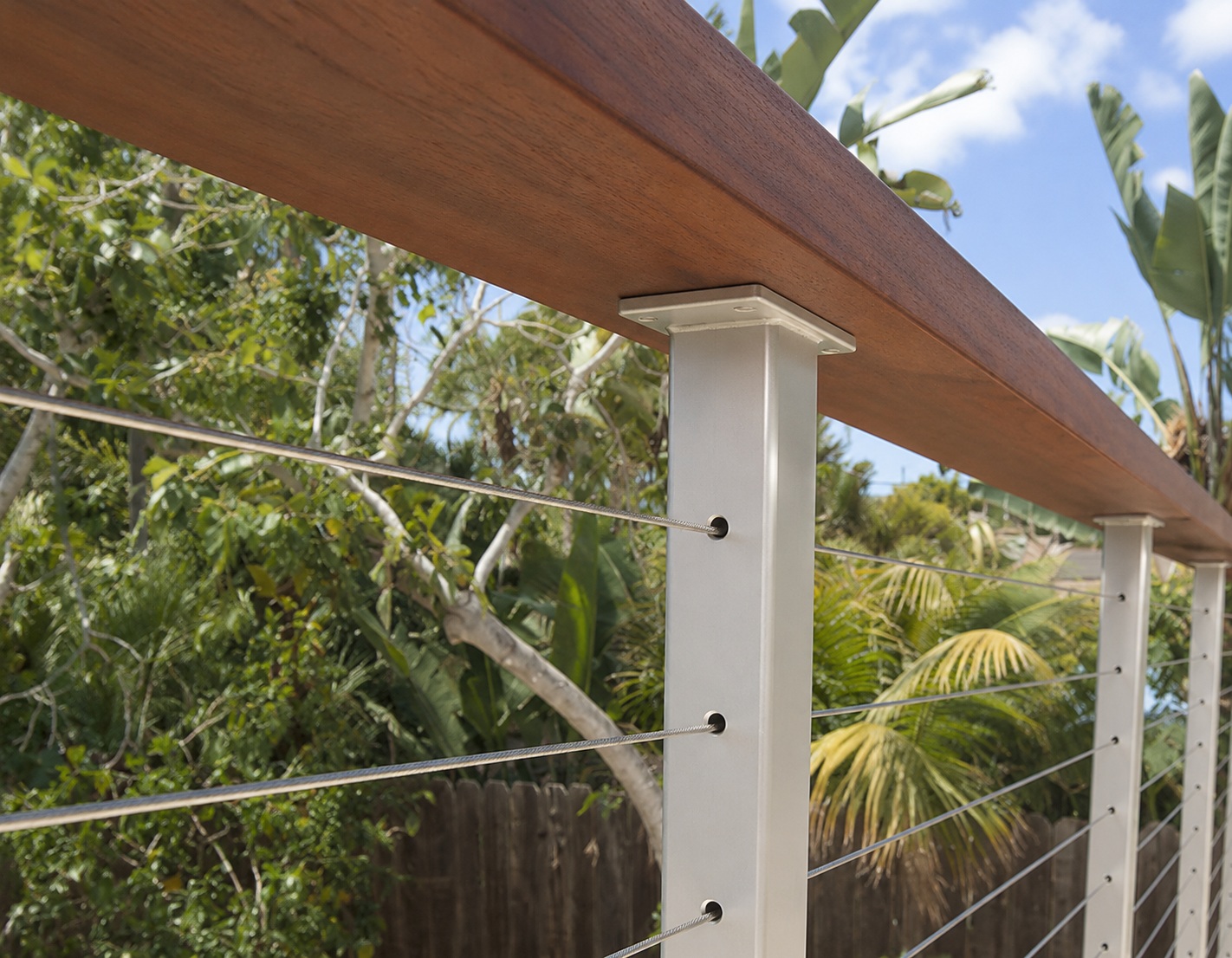
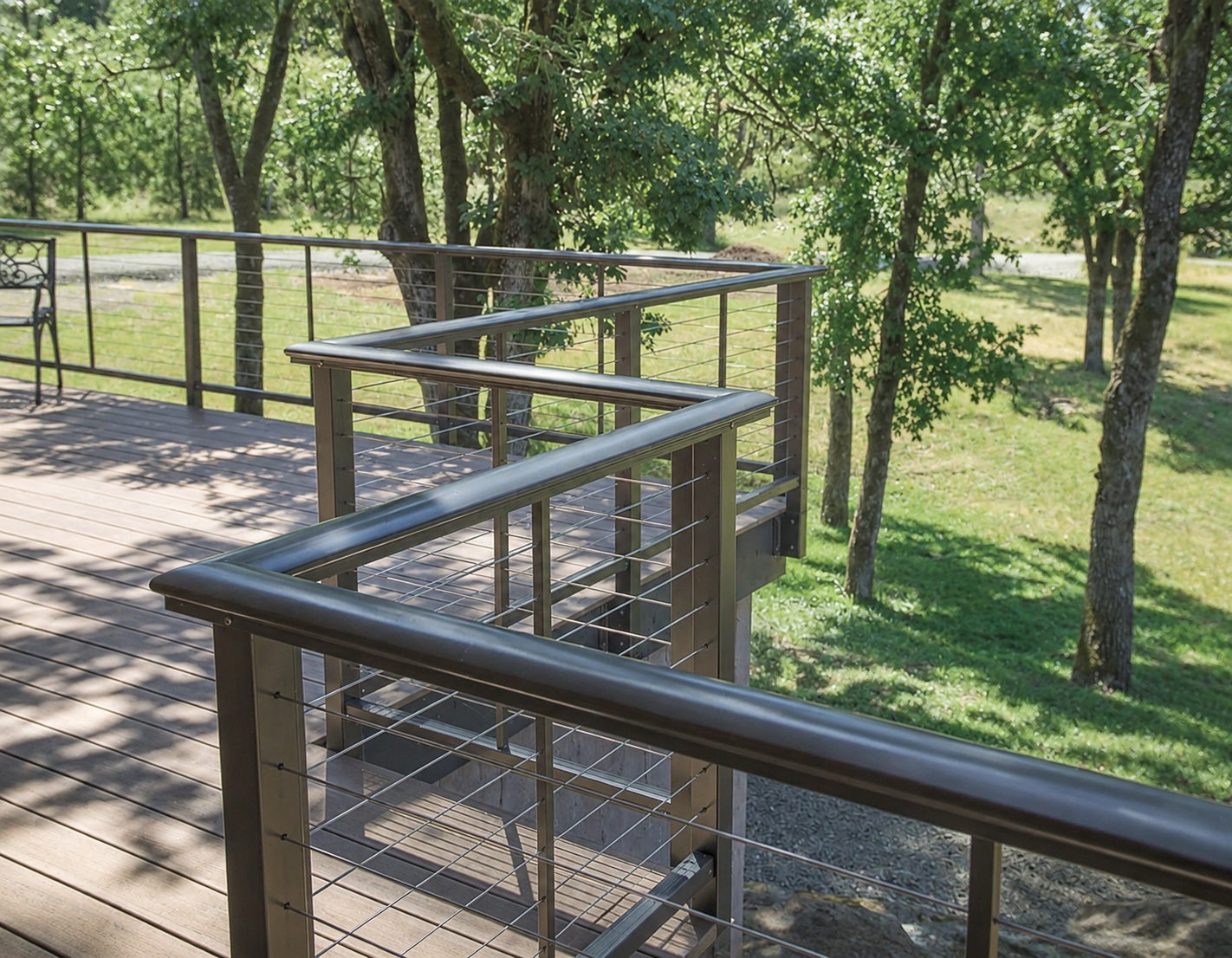
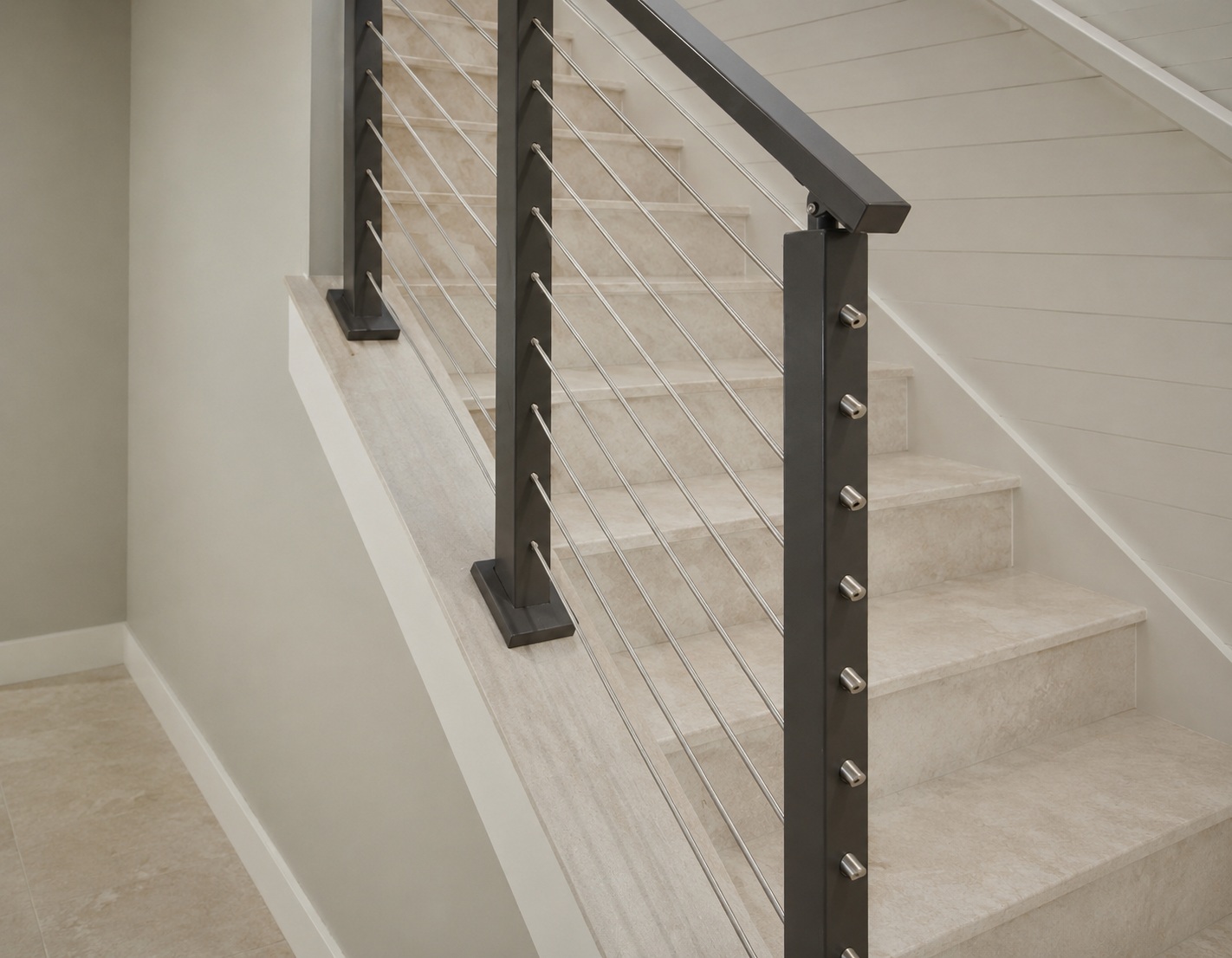
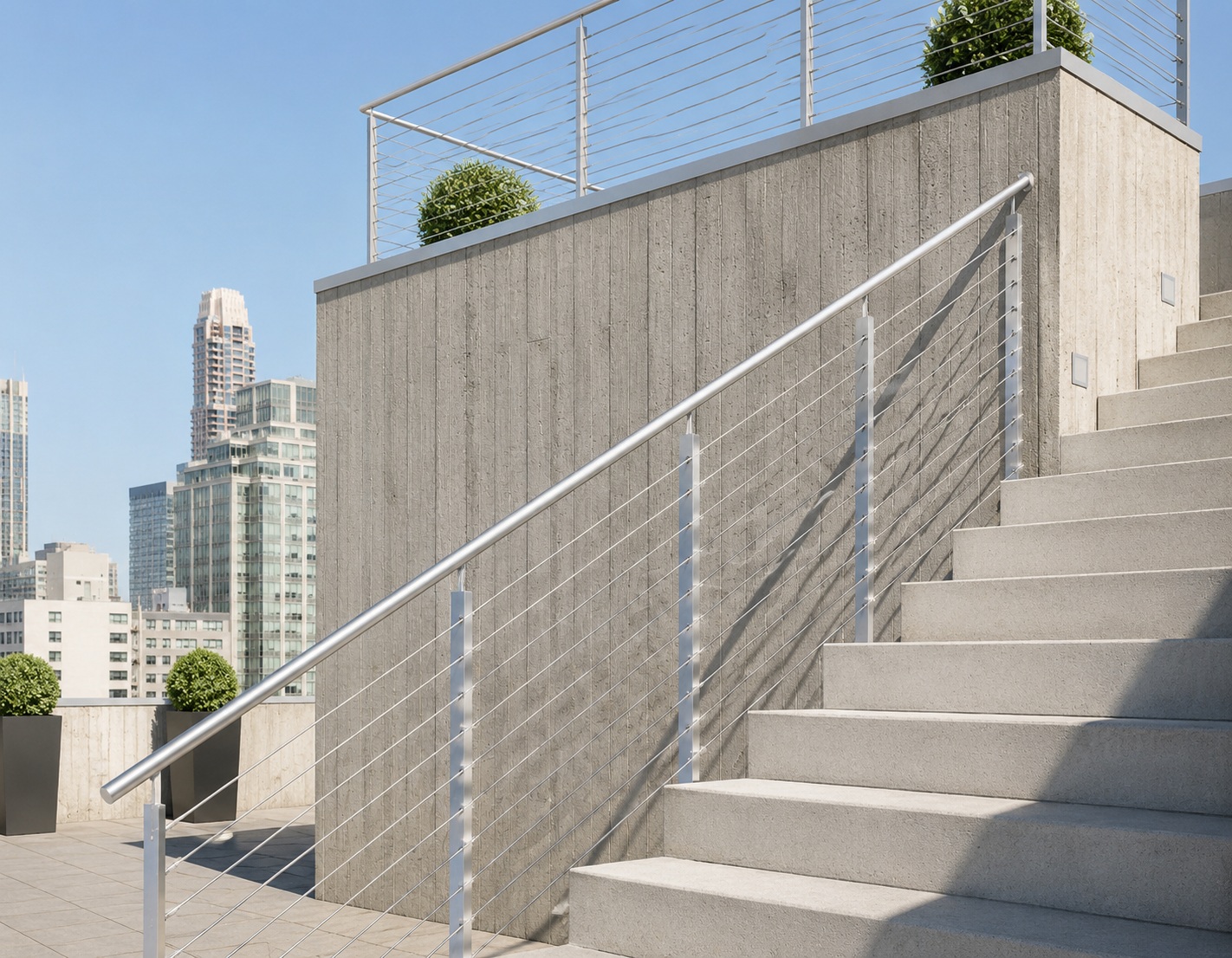
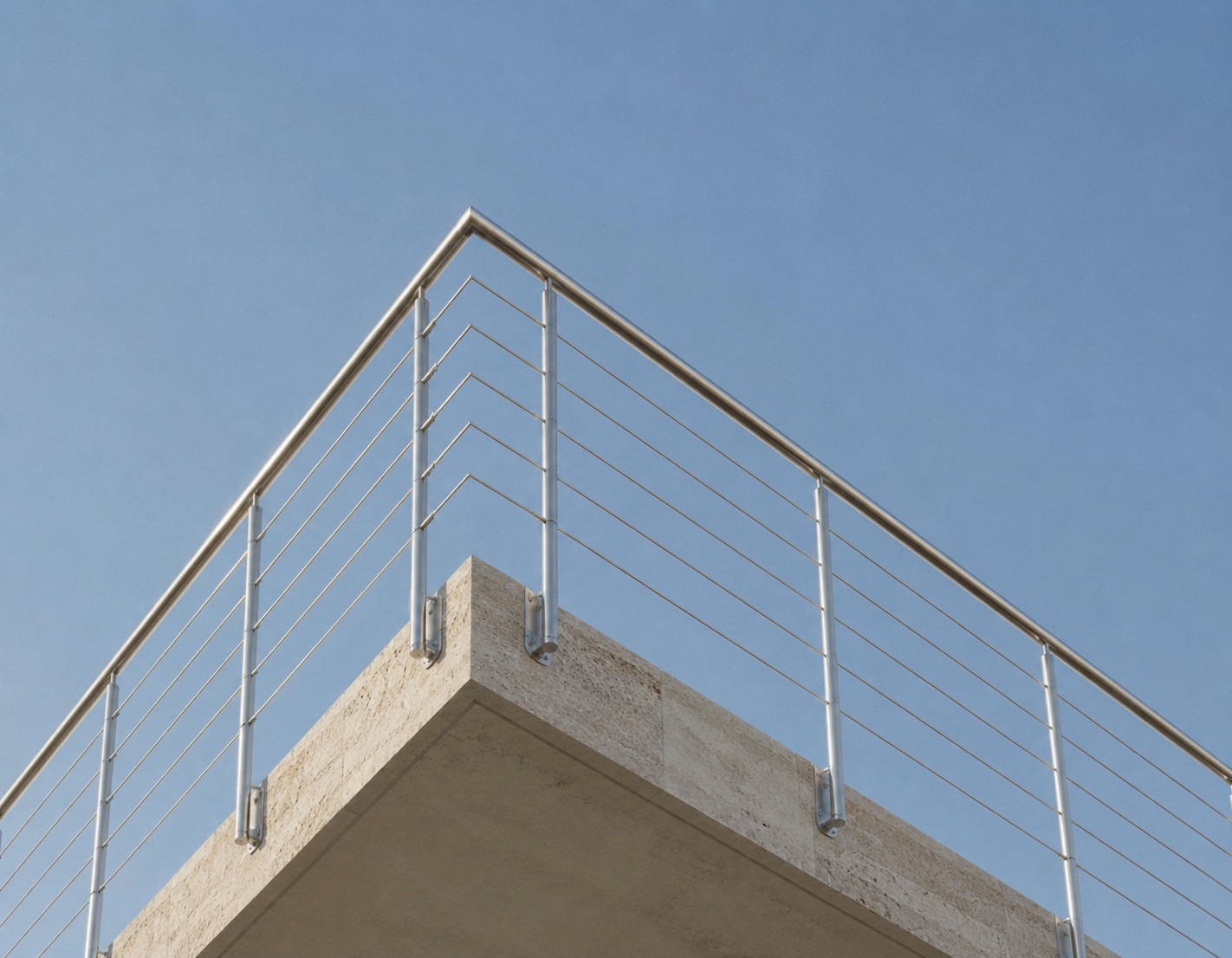
Stainless Steel Cable Balustrade
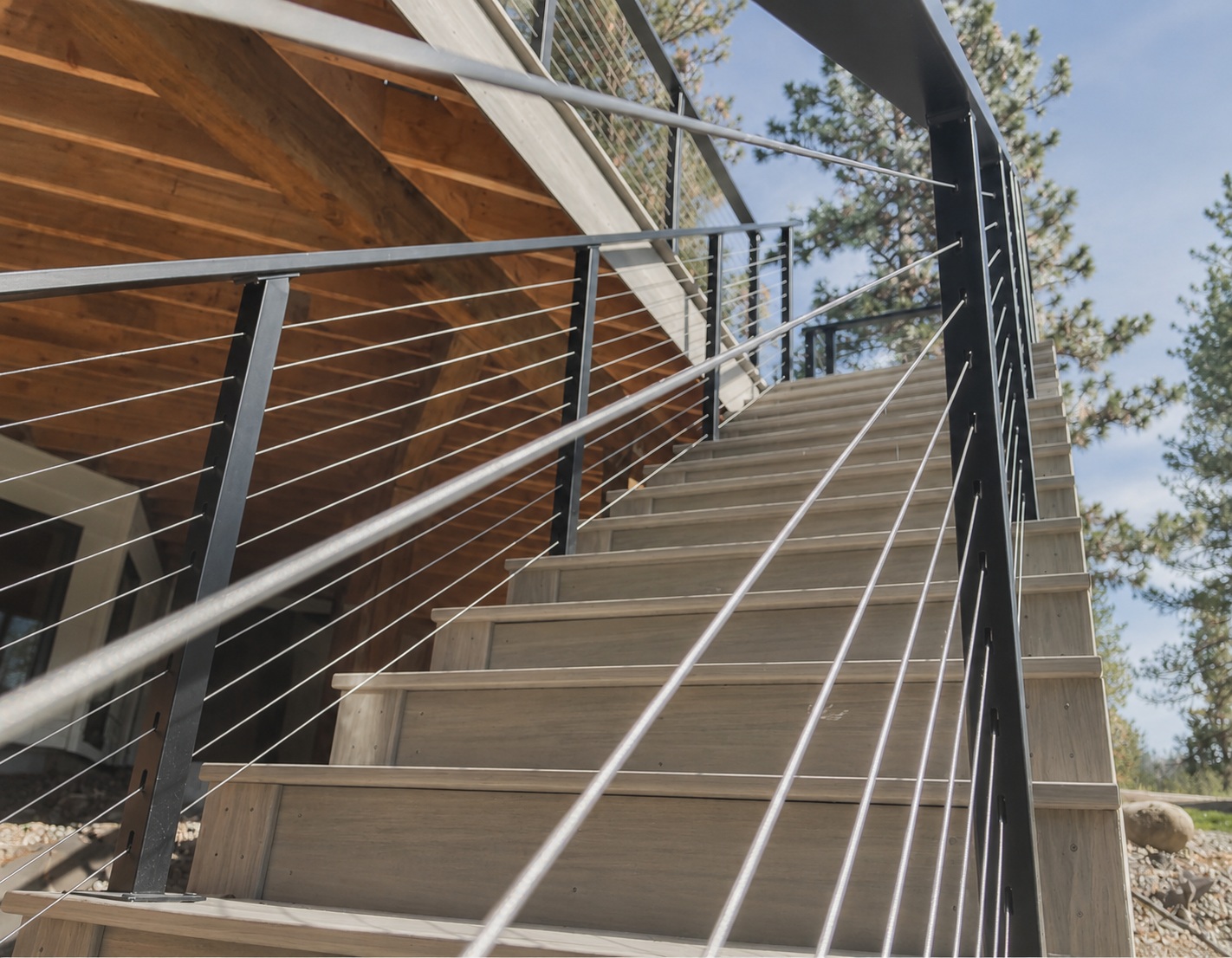
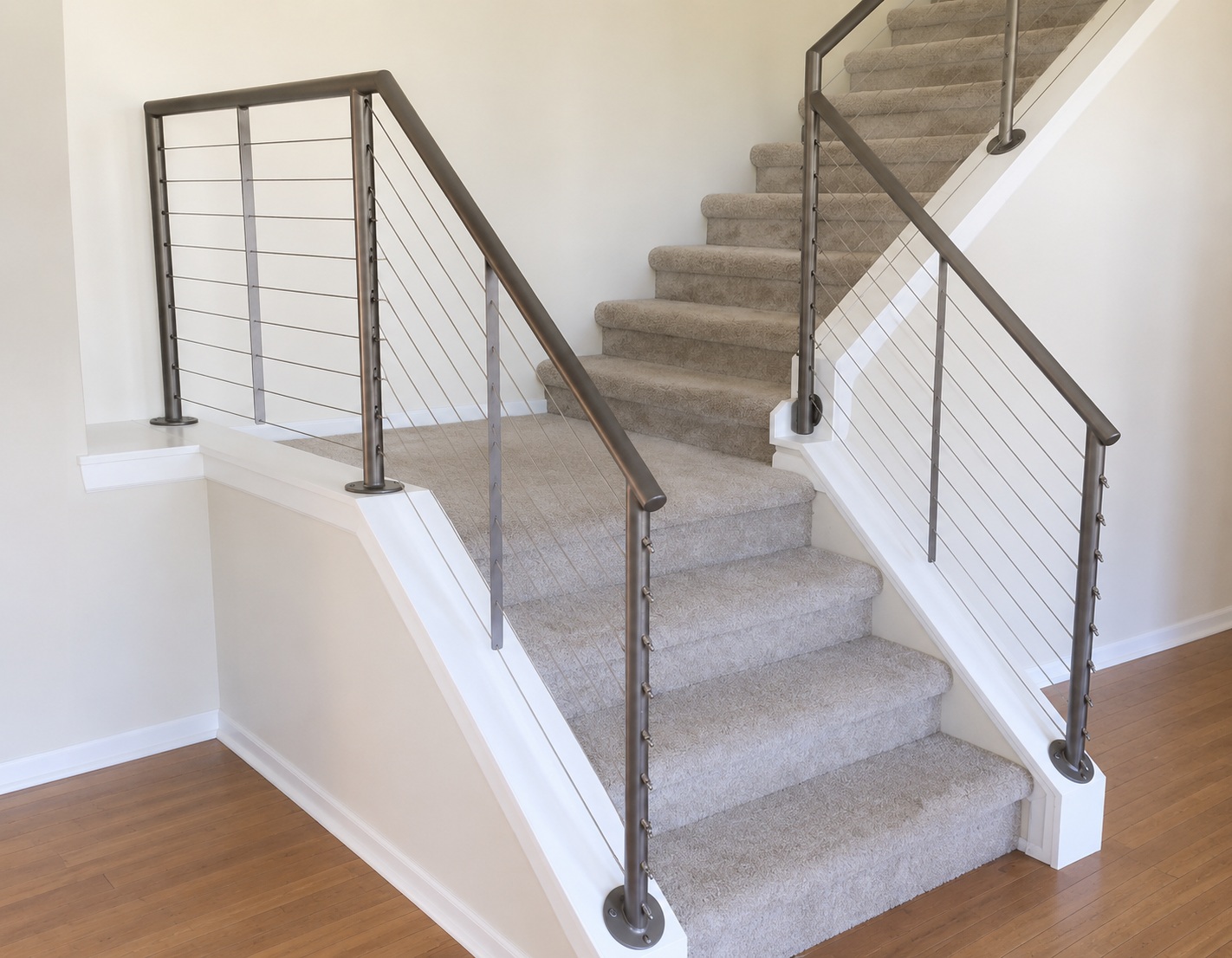
316 stainless posts with horizontal tensioned cables. A classic open-view choice for villa pool decks, modern apartment balconies and loft-home stair runs — minimal silhouette, opening dimensions sized to local guard codes.
- Cable diameter options engineered per run
- Top-mount, side-mount, deck-mount posts
- Brushed, mirror or black-coated finish
SYSTEM 02 / ROD
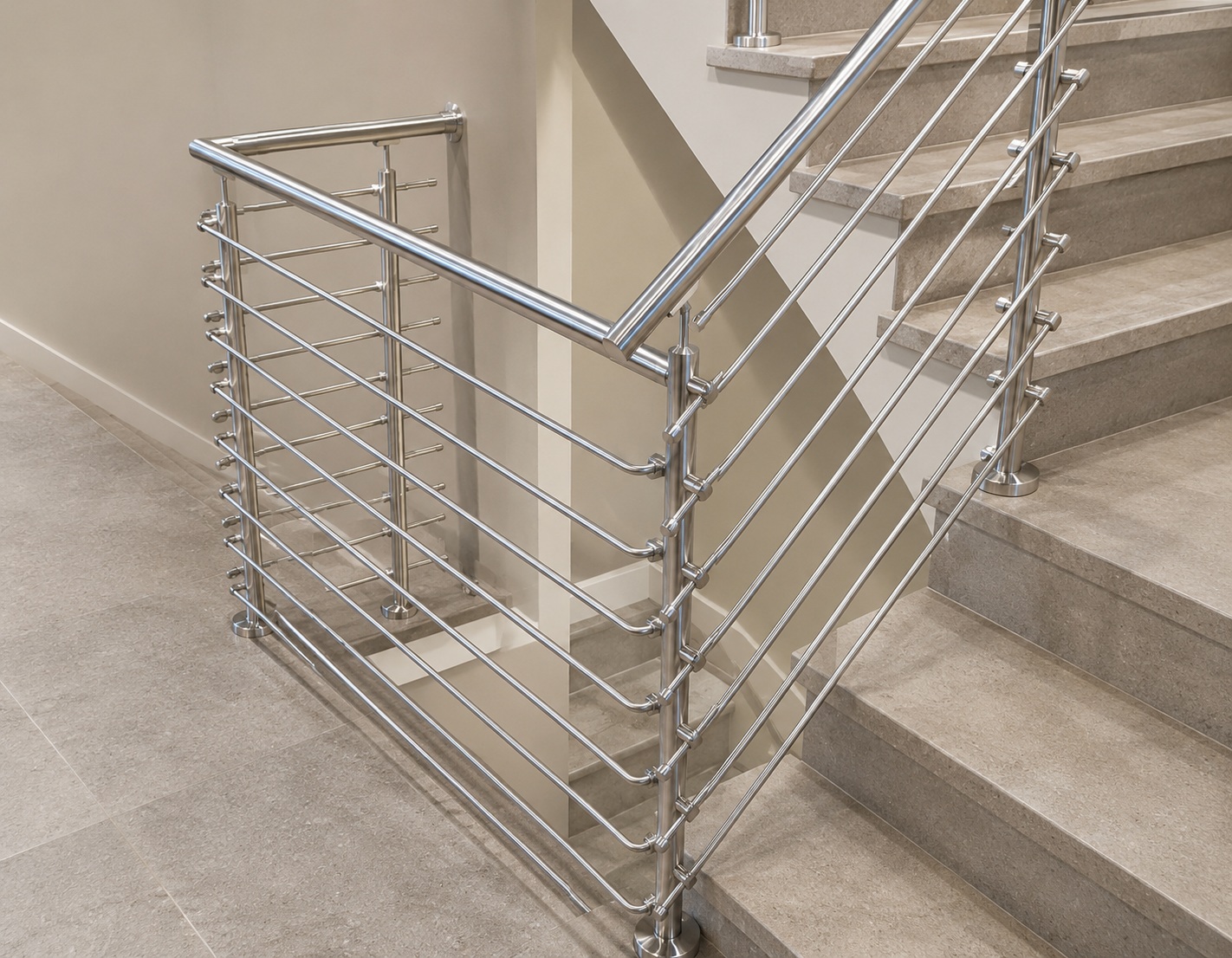
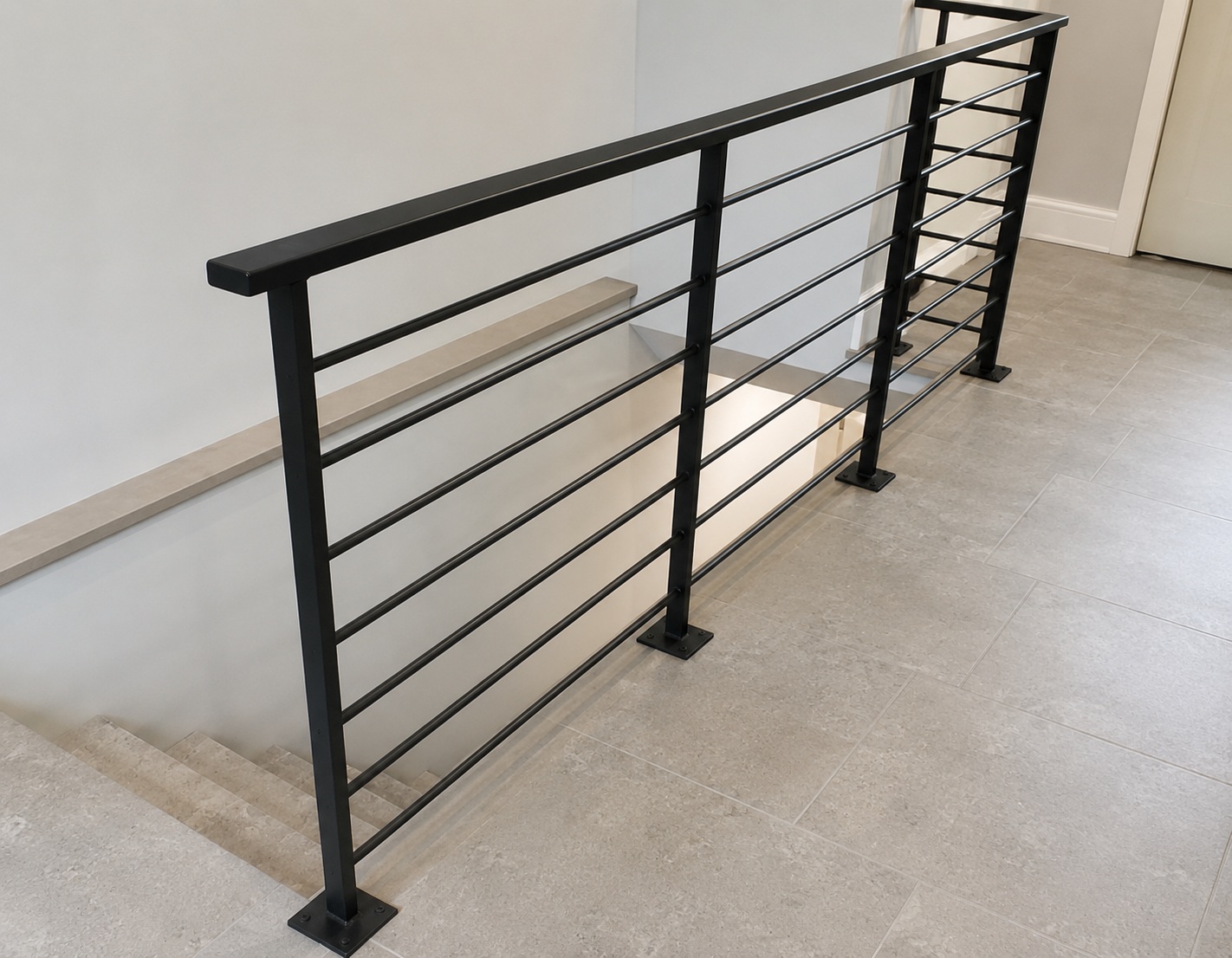
Stainless Steel Rod Balustrade
316 stainless posts with vertical solid rods at code-compliant spacing. Stronger visual rhythm than cable, easier to child-proof than wide cable spacing — often used on modern villa stairs, architect-led new homes and apartment balconies.
- Solid round-rod options sized per run
- Spacing engineered to local guard code
- Stair, deck, outdoor & black-coated variants
Drawings cite the codes your engineer of record reviews against
Cable spacing and rod opening dimensions are subject to local inspector review at site. Every drawing package we issue references the relevant code family for the destination jurisdiction. Your engineer of record cross-checks against local rules before stamping.
U.S. Residential Guards
For one- and two-family dwellings — sets guard height, opening limit and live-load criteria that drive cable-tension and rod-spacing decisions on each sub-system page.
U.S. Commercial Guards
For apartments, multifamily and high-rise — higher minimum guard height, stricter concentrated-load criteria and tighter opening limits than residential.
Australian Live Loads
Australian structural-load standard — sets handrail and barrier load criteria that determine cable tension, rod section and post foundation requirements.
Australian Class 2–9
The Australian framework for multifamily, hotel and assembly buildings — the access-and-egress framework that AS 1170.1 plugs into for balustrade design.
From elevation drawing to site delivery
Four principles that apply to every stainless steel railing run we ship — cable tension or rod cut, villa or apartment scale.
Drawing-First Coordination
Send a deck elevation, stair detail or CAD reference — we return shop drawings with post layout and engineering rationale before any quote is locked.
Trial Assembly Before Packing
Posts are dry-fitted and the full assembly is checked against drawing before crating. Issues are fixed in the Guangdong workshop, not on your jobsite.
Export-Ready Crating
Posts pre-drilled, cables coiled with end fittings attached, rods pre-cut, hardware in labelled bags. Brushed and mirror surfaces wrapped against transit abrasion.
Code-Framework Citation
Drawings reference the relevant code families (IRC R312 / IBC 1015 / AS 1170.1 / NCC). Your engineer of record cross-checks against your jurisdiction before stamping.
Stainless-railing selection questions
Cable or Rod — which should I choose?
Cable for the most-open view: cables almost disappear at a distance, and the look is contemporary. Popular on villa pool decks, lakefront homes and modern loft stair runs. Rod when child-proofing is the priority — vertical rods are harder for kids to climb than horizontal cables. Or when a more structured architectural look suits the new home or apartment.
Do you use 316 or 304 stainless?
Marine-grade 316 by default for all coastal, pool-deck and exterior applications — it resists chloride pitting where 304 will stain over time. For interior loft or stair applications away from chlorine and salt, 304 is available as a cost-saving option. We only recommend it when site exposure supports it.
How do you handle cable tension at long runs?
We calculate cable tension in the drawing-review stage based on run length, post centres and the cable diameter sized per project. For runs over the cable's natural-tension span we add intermediate transition posts that resist mid-run deflection. The shop drawing specifies them so site assembly stays in sequence.
What is the typical lead time?
Schedules vary by post count, cable run length, finish complexity and destination port. Send your linear-foot estimate, target finish and destination. We return a milestone schedule — drawing review, fabrication, trial assembly, port-to-port shipping — before the order is locked.
Is there a minimum order quantity?
One villa stair run is enough — we are a custom fabricator, not a stocked retailer. For apartment, multifamily or batch renovation projects with repeating identical balcony runs, we offer repeat-cut tooling. Send your run count and linear feet — we confirm whether tooling-level pricing applies and quote accordingly.
Send a deck elevation. Receive shop drawings before any quote is locked.
CAD, SketchUp, hand sketch or a Pinterest reference — we will work with whatever you have and confirm feasibility before the first invoice.