

Wrought Iron Balcony Railing | Custom by DBM Factory


Wrought Iron Balcony Railing
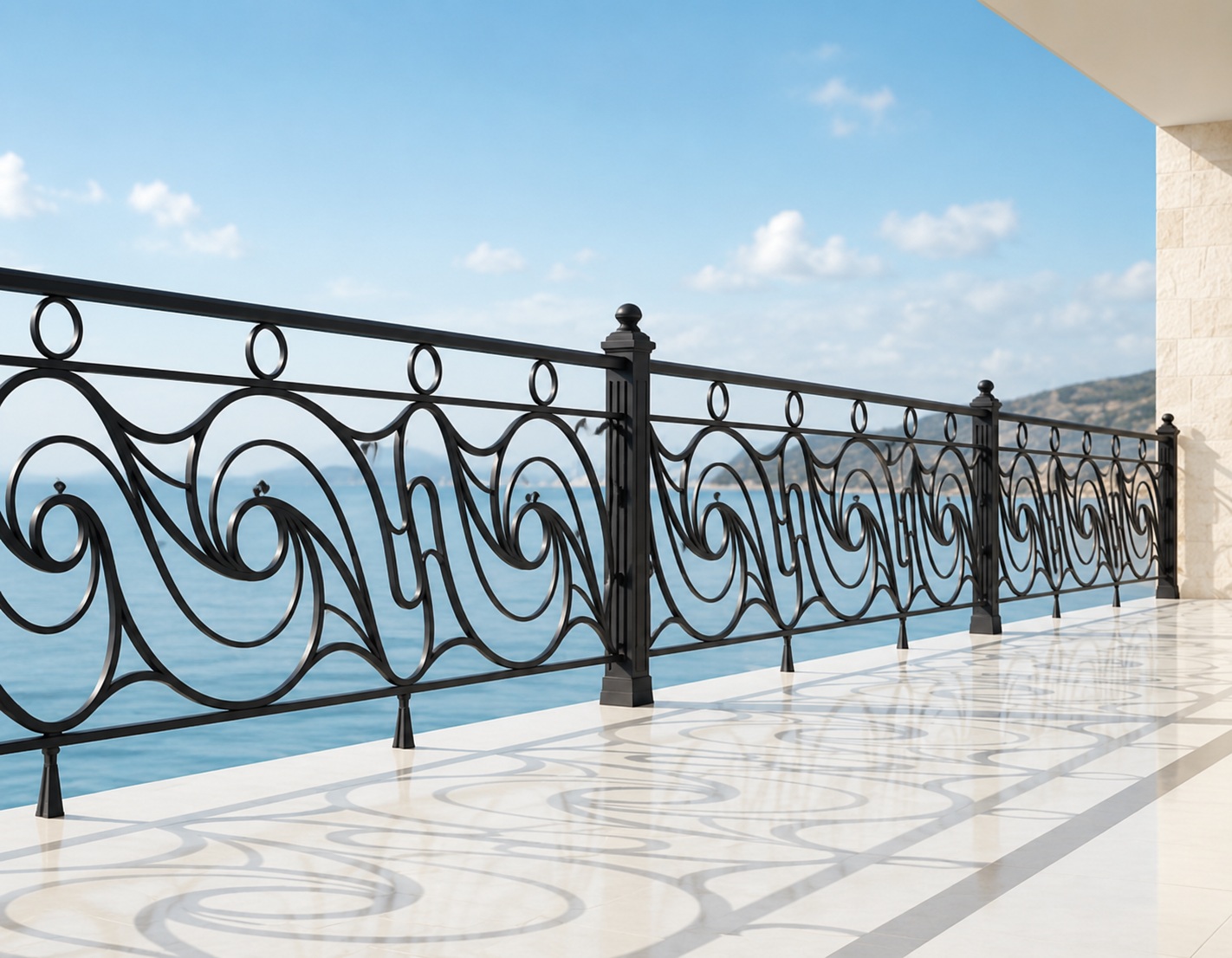
An iron balcony railing carries the eye up the facade. The forged pickets catch sunlight against stucco or stone; the cap rail draws a clean horizontal line at the upper floor. It is the railing for a balcony that wants to read as part of the building, not bolted on afterwards.
DBM designs and produces each iron balcony railing run around your project. Share a sketch, a photo of the facade, or an elevation drawing. We turn it into a working drawing, then build the panels, brackets, and cap rail ready for shipment.
Choose the Right Iron Balcony Build
Balcony Bracket — Juliet / Cantilever / Floor-Mount
Juliet balcony where the railing sits flush against a French door. Decorative cantilever brackets where the balcony reads as a feature on the facade. Floor-mount panels for full-depth balcony decks.
Forged Pattern — Scroll / Geometric / Custom
Scroll-and-leaf for the Mediterranean facade. Geometric pickets where the balcony leans modern-heritage. Custom motifs drawn from a heritage reference or an architect’s sketch where the balcony is a feature element.
Color — Black / Bronze / Custom
Matte black against white stucco for the Mediterranean reading. Antique bronze on a stone facade. Custom RAL color where the building palette is set. Galvanized base under the powder coat for outdoor service.
Cap Rail — Iron / Wood / Profiled
A flat iron cap rail keeps the balcony reading clean. A profiled cap with a small return adds the heritage touch. A wood handrail above the iron is the classic detail on a French-door balcony.
Where Iron Balcony Railing Fits — Four Common Project Types
Mediterranean Villa
Stucco facade, terracotta tiles, arched openings. Scroll-and-leaf pickets in matte black or antique bronze answer the Mediterranean palette. Common on a Juliet balcony at the bedroom door, or a full-depth balcony off the living room.
Heritage Apartment
A brownstone facade, a French-window apartment, a heritage building above a shopfront. The iron railing carries the building’s period detail without trying to compete with it.
Coastal Heritage
A seaside villa, a colonial-style coastal home, a stucco residence near the water. The galvanized base under the powder coat is the common pick where salt air is daily weather, and a Mediterranean-style pattern keeps the heritage character.
Boutique Residence
Owner’s top-floor balcony, custom apartment refit, small boutique residential build. Where the balcony is a feature and the pattern is drawn to a specific design brief, not picked from a catalogue.
From Sketch to Site — Three Stages
Share a balcony sketch, a facade elevation, or a photo of the opening — that’s enough to start. We turn it into a working drawing covering picket pattern, bracket detail, cap-rail profile, and how the panel meets the door frame or balcony slab.
Panels, brackets, and cap rail are trial-fit and photographed in our Guangdong workshop before crating. Each part comes labeled and finish-protected, so on-site work is typically bolt-up and touch-up — not field-welding.
Wooden crates built for ocean freight, packed in the order your installer will assemble. Shipped to 60+ countries — including the USA, Australia, the EU, and across Asia.
After delivery, your contractor or installer handles fitting. We provide an assembly guide and a step-by-step video. Where local installation is available in your region, we can help you find a vetted installer.
Wrought Iron Balcony Railing
When the French Door Opens to a Juliet, With No Deck to Stand On.
An upper bedroom opens onto a pair of tall French doors with no floor beyond them. A Juliet guard sits across that opening, so the doors can swing wide for ventilation and light while the edge stays protected. There is no walking deck here at all. The railing is the entire balcony.
Owners reach us when the doors are set and the opening needs its guard. The run sits flush against the facade and frames the doorway from the street, so it reads as an ornamental feature on the elevation. So the brief is a short, shallow panel that guards the doors and decorates the face of the building at once.
Why the Juliet Is About the Fixing, Not the Floor.
A Juliet has no deck, so all of its strength comes from how it fixes to the building. The guard either spans across the door reveal or bolts to the wall face on each side of the opening, and that connection carries every structural load the railing sees. The fixing is the engineering question, and we resolve it on the drawing first.
The ornamental pattern matters just as much, because the Juliet is on permanent display. Forged scrollwork or a clean picket run reads beautifully against stucco or stone, where the railing frames the open doors like a picture. The decoration and the fixing share the same panel, so neither becomes an afterthought.
A forged Juliet is a common choice where the facade carries a period or Mediterranean character. Where the opening leads onto a genuine deck, a full floor-mounted configuration suits the project instead. We confirm the opening has no floor beyond it before the drawing begins, so we detail the fixing correctly.
How the Juliet Changes With the Opening.
The Fixing Type Comes First.
A Juliet fixes either into the sides of the door reveal or onto the wall face beside it. We draw the fixing to the wall the opening actually has, whether that is masonry, rendered blockwork, or a framed partition. We detail the bracket plates into the panel, so the guard arrives ready to fix without on-site fabrication.
The Door Swing Comes Next.
A French door usually opens outward over the line of the guard, so the panel has to sit clear of its travel. We position the railing beyond the door swing, so the leaves open fully without striking the iron. The drawing sets that clearance precisely, so the doors and the railing share the opening without fouling each other.
The Weather Exposure Comes Last.
A Juliet sits on the exposed face of the building, weathered on every side. Inland, a galvanized base under the powder coat handles the rain and frost across the seasons. On a coastal facade, we add a zinc-rich primer beneath the topcoat, because salt air reaches an elevated opening with nothing to shelter it.
What Coordination Looks Like for a Juliet Balcony.
Drawing-First Coordination begins with the door opening and the surrounding wall. We confirm the opening width, the wall material, and the door swing before any iron is cut, because the fixing depends on all three. The working drawing sets out the bracket plates and the panel dimensions, so the guard lands ready to bolt to the exact opening you have.
Trial Assembly Before Packing then stands the panel upright on our Guangdong workshop floor. We check the bracket positions against the opening dimensions, apply the finish, and review the scrollwork as it will read across the doors. Then we protect the panel and label the fixings for the build.
Export-Ready Crating packs the panel and its brackets together, ready to lift to the opening. We protect the finish for the long ocean passage and pack the fixings with the guard they belong to. The shipment arrives as one unit, ready to fix straight across the doorway.
What to Send Us About Your Opening.
A photo of the French doors from outside tells us a great deal. Add the width of the opening, the type of wall on each side, and the way the doors swing. A note on the floor level inside helps us set the guard at the right height across the doorway.
One more line helps us finish the picture. Tell us how close the facade sits to the coast, and the pattern character you want against it. From there we turn your notes into a working drawing and a Juliet guard ready to ship.
After delivery, fitting is on your side. On site, your contractor or installer handled fitting directly from our drawings, with our assembly guide and step-by-step video to follow — or use your own local installer where needed.
Chat on WhatsApp →Compare the Wrought Iron Deck Railing → · see the Wrought Iron Stair Railing → · browse the full Wrought Iron Railing range → · or explore all our railings →