

Back Bar Cabinet | Custom by DBM Factory


Back Bar Cabinet
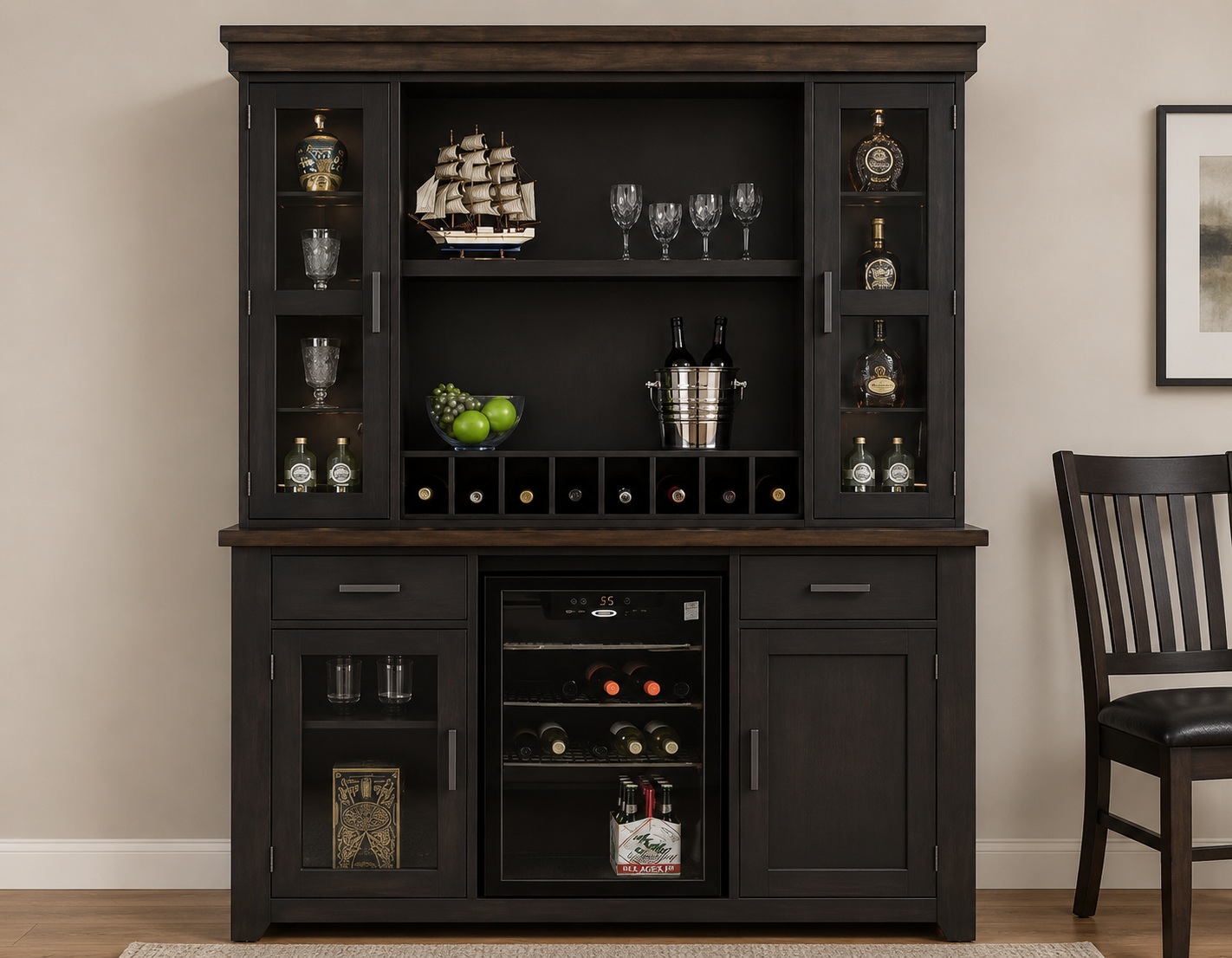
A back bar cabinet for boutique hospitality and private clubhouse settings. This heavier-build cabinet handles a property that hosts every evening, while still reading as part of the room. The species and finish stay considered. The storage runs deeper than a home bar. The carcass carries the traffic an owner-operator sees in a small hotel, a private clubhouse, or a mixed-use ground floor.
We design and produce each back bar around your property. Share a sketch, a room photo, or a design reference. We turn it into a working drawing, fabricate the cabinet to the species and finish you choose, and prepare everything for shipment.
Choose the Right Build for Your Property
Heavier-Duty Species — Oak / Walnut / Maple
Solid white oak, walnut, or hard maple are the species owners pick when the bar sees nightly use. We build the carcass in thicker stock than a home cabinet so the hinges and runners hold their line over years.
Finish — Catalyzed Lacquer
Catalyzed lacquer or hard-wax oil is the common spec where the bar wipes down nightly. We match the stain depth to the room palette — warmer for a clubhouse lounge, cleaner for a mixed-use bar.
Bottle Storage — Visible & Reserve
Back-of-bar bottle shelving sits at the right height for the bartender. Reserve storage runs behind closed doors or below the counter. We size it to the booking volume the owner expects.
Glass Rack & Drawer Config — Layout to Suit
Stem-glass and rocks-glass racks set across the back-bar. The working drawing locks the drawer layout (ice, garnish, service) so the bartender's reach stays short and the service flow holds.
Where It Fits — Four Common Property Types
Boutique Hotel Bar
Small hotel properties where the bar is part of the guest experience. The cabinet reads as considered millwork. The species matches the lobby joinery, and the finish holds up under nightly service.
Private Clubhouse
Members-only clubs and golf or estate clubhouses where a back bar anchors the lounge. Walnut or oak in a deeper stain reads warm and signals the room is for the members it serves.
Owner Hospitality Property
Owner-operated restaurant or wine-bar properties where the owner is also the host. We build the bar to the property's character — not a chain template. Species, finish, and storage follow how the owner runs the service.
Mixed-Use Ground Floor
Residential developments with a ground-floor bar or lounge for residents and their guests. The developer specifies the cabinet alongside the rest of the amenity joinery so the spaces read as one design.
From Sketch to Site — Three Stages
Share a sketch, room photo, or design reference — that’s enough to start. We turn it into a working drawing for the back bar. The drawing covers species, finish, bottle and glass-rack layout, drawer configuration, and the rough-in details your trades will need.
We assemble the carcass, doors, shelving, drawer banks, glass rack, and hardware in full. The team photographs the unit in our Guangdong workshop before taking it apart for shipping. Each component ships labeled, so on-site assembly stays straightforward — typically bolt-together, not site-fabricated.
Wooden crates built for ocean freight, lined to protect finished surfaces, packed in the order your installer will assemble. Shipped to 60+ countries — including the USA, Australia, the EU, and across Asia.
After delivery, your contractor or installer handles fitting. We provide an assembly guide and a step-by-step video. Where local installation is available in your region, we can help you find a vetted installer.
Back Bar Cabinet
The Anchor of a Basement Lounge — a Back-Bar Run Below Grade.
A finished basement is where many households do their real entertaining. The screen goes on one wall, the sofa faces it, and the games table fills the open floor. The bar then runs along the rear wall and anchors the entire interior. It serves the drinks, displays the glasses, and gives the lounge a defined centre.
Owners usually approach us once the basement converts from storage into a finished room. They want a proper back-bar wall, not a folding table in the corner. The difficulty sits in the location itself, because a basement operates by its own rules. The ceiling hangs lower, the only access is a narrow stair, and the atmosphere below grade carries more moisture than the levels above.
Why the Back Wall Suits a Basement Bar.
A back-bar run sits flat against one wall, so it keeps the open floor clear for the sofa and the table. The lower cabinets contain the refrigerator, the sink, and the bottle store. The upper shelves carry the glasses and the display against a finished rear panel. The entire wall operates as one composition, and the interior stays open in front of it.
A wall configuration also accommodates the low ceiling well. We position the upper shelves to the height the interior genuinely has, rather than a standard that assumes a taller level. The display stays within comfortable reach, and nothing crowds the head of a standing guest.
The trade-offs stay honest, as ever. A continuous run delivered in one piece would never negotiate the turn of a basement stair. So the configuration separates into sections proportioned for that stair, which demands careful planning beforehand. Where the wall is long and the access is restricted, though, a sectioned back-bar run remains the sensible solution.
How the Run Adapts to the Basement.
The Low Ceiling Comes First.
A basement ceiling often hangs lower than the rooms above, and a duct or beam can descend lower still. We measure the true clear height under any obstruction before we size the upper cabinets. The top shelf then lands where hands can reach it comfortably, so the stretch for a glass stays short and the run never feels compressed.
Getting It Down the Stair.
The basement stair determines the dimension of every section we ship. We divide the run into segments that negotiate the turn and clear the doorway at the bottom. Each section arrives ready to join its neighbour on the wall, so a narrow stair never obstructs a long bar. We establish the division points on the elevation drawing, well before we cut.
The Damper Air Below Grade.
The atmosphere below grade tends to carry more moisture than the living levels above, and it rises from the ground rather than blowing in off the sea. Where the basement runs damp, we can specify a carcass board rated for humid interiors and seal the cut edges against that steady ground-borne moisture. We also leave a ventilation clearance behind the run so air moves rather than stagnates against a cool wall. The finish then holds its line through the seasons.
What Coordination Looks Like for a Basement Run.
Drawing-First Coordination begins with the room nobody enjoys measuring. We confirm the clear ceiling height, the stair turn, and the doorway at the bottom before anyone cuts board. The sink and refrigerator connections get positioned on the same specification drawing so your trades prepare the wall once. The working drawing resolves the restricted access on paper first.
Trial Assembly Before Packing then stands the full run upright on our Guangdong workshop floor. We join the sections, fit the sink and refrigerator bays, and confirm that the wall reads as one composition. Then we separate it back into stair-sized sections and label each one. The assembly in your basement becomes an ordered join-up rather than a scramble.
Export-Ready Crating packs the sections in the sequence your installer will carry them down. We seat the heavy bases low and protect the finished faces for the long ocean leg. The crate arrives ready to open, sort by label, and move section by section to the wall.
What to Send Us About Your Basement.
A photo of the rear wall and a rough plan of the interior give us plenty to begin. Add the clear ceiling height, measured under any duct or beam that descends below it. Then give us the width of the wall the bar will run along.
One more measurement matters more here than anywhere. Tell us the width of the basement stair and the doorway at the foot of it, and whether the interior runs damp. From there we develop your notes into a working drawing and a run ready to ship.
After delivery, fitting is on your side. On site, your contractor or installer handled fitting directly from our drawings, with our assembly guide and step-by-step video to follow — or use your own local installer where needed.
Chat on WhatsApp →Compare the Home Wet Bar Cabinet → · see the Wine Bar Cabinet → · or browse the full Bar Cabinet range → and all our cabinetry →