




Sliding Shower Door | Custom by DBM Factory


Sliding Shower Door
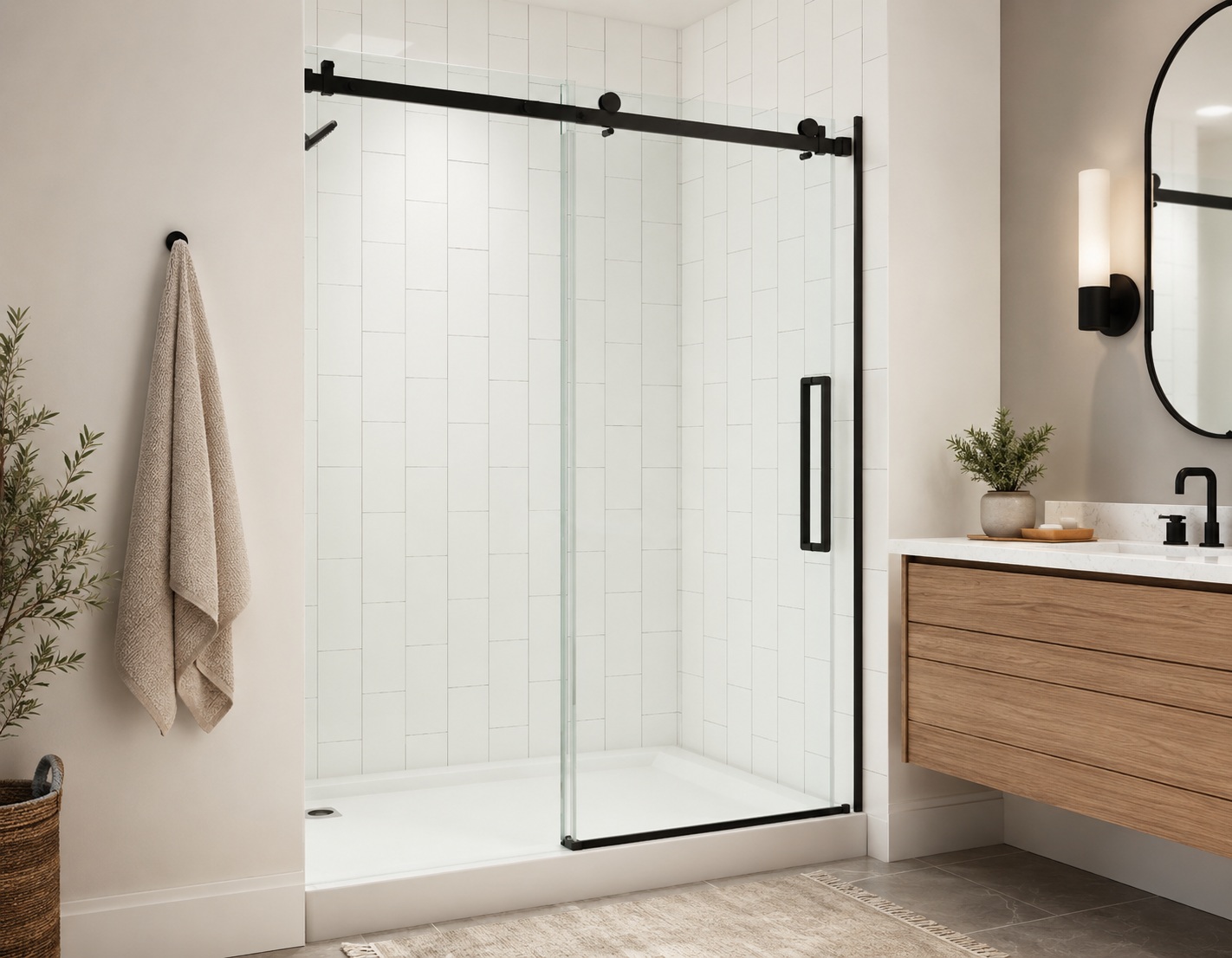
A sliding shower door glides along a slim track instead of swinging out into the bathroom. The action is almost silent, and the door asks nothing of the floor space outside the enclosure. A black or brushed-brass top rail gives the bathroom a quiet design moment of its own.
We design and produce each sliding shower door around your project. Share the bathroom layout, a floor plan, or a designer reference. We turn it into a working drawing and build the glass, track, and rollers ready for shipment.
Spec the Door to the Bathroom
Track Hardware — Exposed / Concealed
Exposed top track with visible rollers reads as the “barn-door” look that many contemporary bathrooms reach for. Concealed track for a calmer, framed-but-quiet read. Stainless-steel rollers under the door in both cases.
Tempered Safety Glass — Drawing-Set
Standard tempered safety glass for residential sliding doors; a heavier gauge where the door is wider or where the track style asks for it. Frosted bands at the bottom on request.
Frame Finish — Matched Hardware
Track, rollers, and handle finished as one matching set — matt black, brushed brass, brushed nickel, polished chrome. Most owners match the door hardware to the room tapware so the bathroom reads as one designed piece.
Handle — Bar / Knob / Inset
Bar handle for the everyday spec. Inset finger-pull where the look should sit completely flush. Long pull-bar where the design language wants a feature handle. Finish matched to the rest of the bathroom hardware.
Where It Fits — Four Common Project Types
Apartment Bathroom
Where a swinging door would steal floor area from a tight bathroom plan. A sliding door asks nothing from the outside floor, so the bathroom feels larger even when the footprint has not changed.
Compact New Home
Smaller-format new builds where every metre of bathroom area counts. A sliding door over the bath or against a wall return delivers the modern look without asking for swing clearance.
Family Bath
Children’s bathrooms and shared family bathrooms where the door has to be friendly to small hands. The smooth track-and-roller action is forgiving, and the exposed barn-door style is a popular feature here.
Vacation Residence
Holiday-home bathrooms where the brief is “ready when the family arrives, quiet when they are away.” A sliding door is easy to clean, easy to use, and the visual rail gives the bathroom a feature without much hardware in view.
From Sketch to Site — Three Stages
Share a bathroom plan, room dimensions, or a designer reference — that’s enough to start. We turn it into a working drawing for the sliding door. It covers door panel size, track length, roller positions, and the wall returns your contractor will need to allow for.
Every sliding-door system is fully assembled and photographed in our Guangdong workshop before being taken apart for shipping. Door, track, rollers, and hardware come labeled and matched, so on-site assembly is straightforward — typically bolt-and-fix, not site-cutting.
Wooden crates built for ocean freight, with glass panels protected between foam-faced inner frames. Shipped to 60+ countries — including the USA, Australia, the EU, and across Asia.
After delivery, your contractor or installer handles fitting. We provide an installation guide and a step-by-step video. Where local installation is available in your region, we can help you find a vetted installer.
Sliding Shower Door
No Room to Swing — The Slider Over a Bath or in a Tight Alcove, Running on a Top Track.
Some bathrooms simply have no floor to spare. A shower sits over the end of a bath, or tucks into a tight alcove, and a swinging door would collide with the vanity or the wall opposite. The slider answers that exact problem: the panel travels sideways along a top track instead of opening out into the room.
Owners reach us once they have measured the swing and found it does not clear. The footprint cannot grow, yet the shower still needs a clean, easy opening. A sliding configuration requires nothing of the floor outside the enclosure, so the bathroom feels larger without changing its dimensions. So the brief is about reclaiming the space a swing would otherwise waste.
Why a Slider Beats a Swing in a Tight Bathroom.
The sliding configuration works for one geometric reason: the door travels within its own width rather than sweeping an arc. A swinging door requires clear floor equal to its full radius, which a small bathroom rarely possesses. The slider removes that demand entirely, so the panel operates without ever crossing into the dry side of the room.
The trade-offs are honest, and they belong in the conversation early. A slider opens to roughly half its run, since one panel overlaps the other, so the clear entry is narrower than a swing of equal width. The top track also carries the door, which makes its specification and its rollers the components that matter most. We evaluate that exchange with you before drawing.
So the right answer turns on what the bathroom can actually give. Where the floor cannot spare a swing arc, the slider typically earns its place and frees the room. Where the space allows a swing and the owner wants the widest possible entry, a pivot or hinged door may suit the room better, and we map both out first.
How the Track Adjusts to Each Tight Layout.
Over a Bath vs in an Alcove.
The opening type sets the first variation. A slider over the end of a bath runs its track above the bath rim, so the panels clear the tub edge and the seal meets the bath line cleanly. A slider in a wall alcove runs between two returns, where the track spans the full opening wall to wall. The track length and the panel division change between the two configurations, and we draw each to the actual opening.
An Exposed Track vs a Concealed One.
The track style sets the second variation. An exposed top track with visible rollers gives the contemporary barn-door appearance many owners ask for by name. A concealed track tucks the running gear away for a calmer, quieter read. Both carry the door on stainless rollers, and we specify the track section to the panel weight so the slide remains smooth over years of daily operation.
A Single Slider vs a Bypass Pair.
The panel count sets the last variation. A single sliding panel over a fixed one suits a narrower opening, where one moving leaf is sufficient. A wider opening can accommodate a bypass pair, where two panels slide past each other for a more generous entry. We size the panels and the track to the opening you have, so the door reads balanced rather than cramped.
What Coordination Looks Like for a Sliding Door.
Drawing-First Coordination begins with the part a tight bathroom most often gets wrong. We pin the track length, the roller positions, and the panel overlap against your opening before anyone cuts glass. A bath rim or an alcove return leaves little margin, so the working drawing resolves the running line early and saves a clash on site.
Trial Assembly Before Packing then hangs the door on its track on our Guangdong workshop floor. We run the panel along the full track, confirm the slide and the seal, photograph the result, and take it apart for transport. We label the glass, track, rollers, and hardware as they come off, so the build in your bathroom becomes a clean bolt-and-fix job.
Export-Ready Crating packs the parts in the order your fitter will raise them on site. We pad every glass edge and protect the track and rollers for the long ocean leg ahead. The crate lands ready to open, with the heavy panel seated low and the running gear bagged for a safe, sorted lift.
What to Send Us About Your Bathroom.
A bathroom plan or a quick phone photo of the space gives us plenty to begin with. Add the opening width and height where the door will run, and tell us whether the shower sits over a bath or inside a wall alcove. That single detail shapes how the track and the seal are drawn.
One more line of detail helps us set the look. Tell us whether you want an exposed barn-door track or a concealed one, and the hardware finish you have chosen. From there we turn your notes into a working drawing and a door ready to ship.
After delivery, fitting is on your side. On site, your contractor or installer handled fitting directly from our drawings, with our assembly guide and step-by-step video to follow — or use your own local installer where needed.
Chat on WhatsApp →Compare the Pivot Shower Door → · see the Semi-Frameless Shower → · browse the full Shower Room range → · or pair with a Vanity Cabinet →