

Metal Staircase Outdoor | Custom by DBM Factory
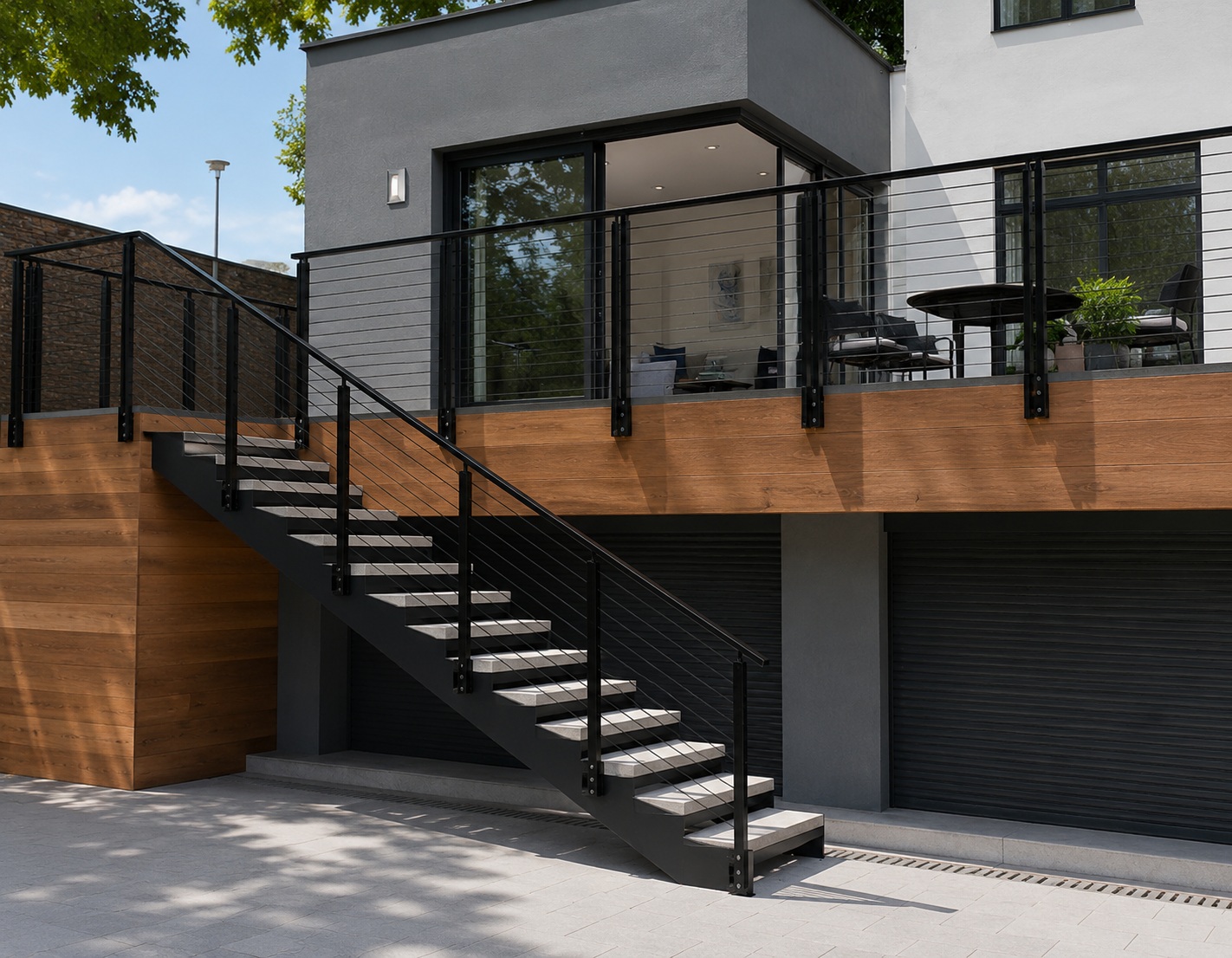


Metal Staircase Outdoor
A metal staircase outdoor takes a beating and keeps working. Think apartment service decks, back-of-house entries, batch-renovation buildings where the stair sees daily traffic.
We build to your drawing in galvanized or coated steel. Share a sketch or photo, and we turn it into a working drawing and a ready-to-ship stair.
Pick the Finish That Matches Your Site
Hot-Dip Galvanized Steel — Inland Daily Use
The workhorse finish for everyday outdoor stairs. Zinc-coated for long rust resistance. The common choice when value and durability matter more than colour.
Powder-Coat over Steel — Colour-Matched Entry
When the stair belongs to a designed exterior, a powder-coat finish in your chosen colour pulls it into the palette. Often used over galvanized steel for extra protection.
Stainless Steel — Coastal & Salt-Air
For homes near the coast or buildings exposed to salt air. A common upgrade where the everyday galvanized finish would wear faster than the owner wants.
Tread Choice — Bar Grating / Plate
Open bar grating lets wind, rain, and snow pass through — typical on rooftop or windy decks. Closed checker plate gives a solid step feel for entries and back-of-house.
Where It Fits — Four Common Project Types
Apartment & Condo Service Decks
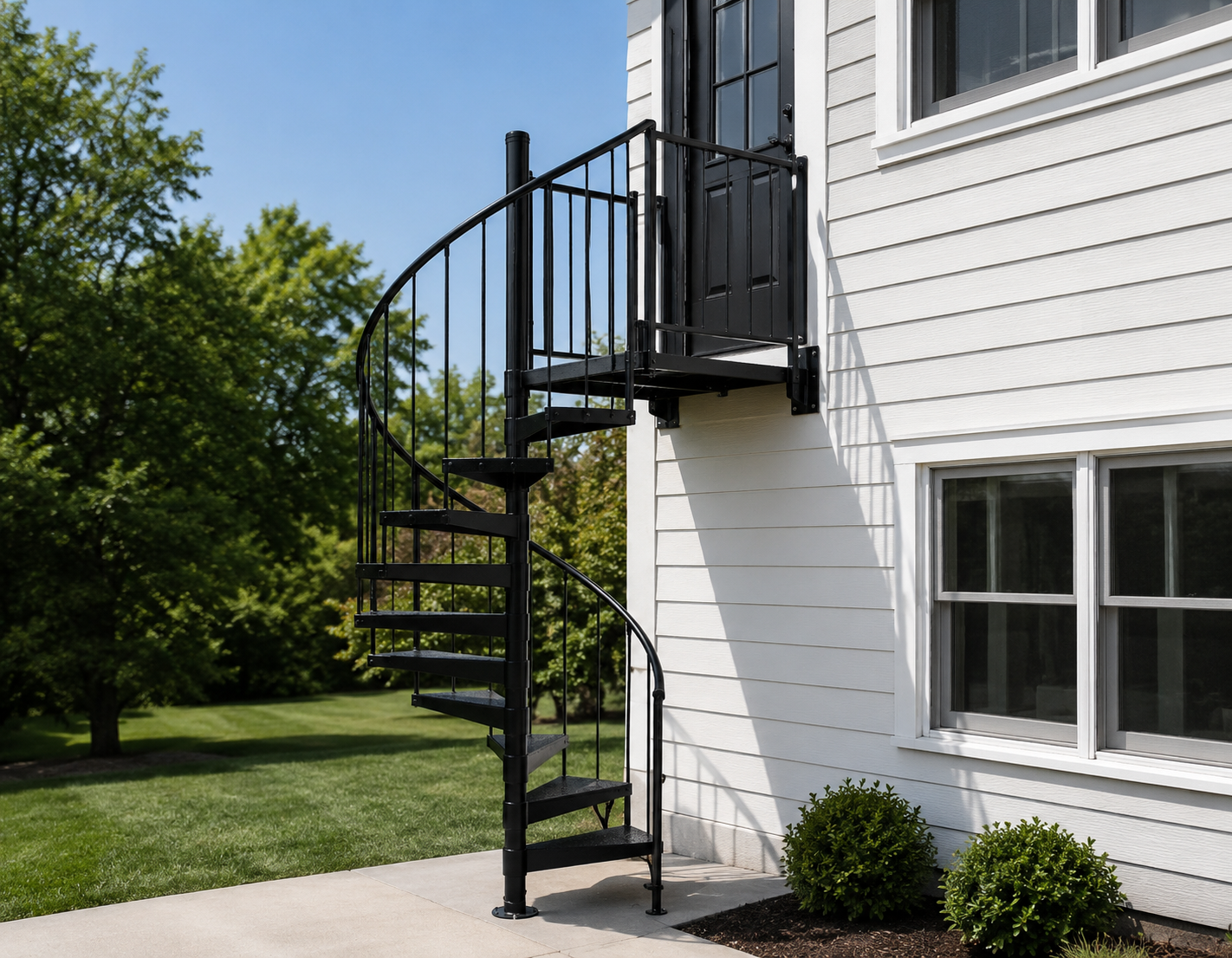
Side entries, fire escapes, rooftop access. An outdoor metal staircase here needs to handle daily foot traffic without the owner thinking about it twice.
New Home Build — Back-of-House
Garden levels, basement walkouts, service entries. Galvanized or powder-coat keeps it neat without competing with the front-of-house design.
Batch Renovation & Multi-Unit Property
When dozens of buildings need the same outdoor steel staircase replaced or added. We build to one drawing and repeat to the same finish across the run.
Light Commercial-Adjacent Owner Property
Boutique hotels, small workshops attached to the home, garden studios. An exterior metal staircase that lives outdoors and ages well without constant repainting.
From Sketch to Site — Three Stages
Share a sketch, photo, or CAD — that's enough to start. We turn it into a working drawing covering tread layout, stringer type, guardrail, and the key connection details.
Every staircase is dry-assembled and photographed in our Guangdong workshop before being taken apart for shipping. Each component arrives labeled, so on-site assembly is straightforward — typically bolt-together.
Wooden crates built for ocean freight, packed in the order your installer will assemble. Shipped to 60+ countries — including the USA, Australia, the EU, and across Asia.
After delivery, your contractor or installer handles fitting. We provide an assembly guide and a step-by-step video. Where local installation is available in your region, we can help you find a vetted installer.
Metal Staircase Outdoor
When the Stair Lives Fully Outdoors — Surviving the Weather and the Daily Traffic.
Some outdoor staircases stand exposed every hour of the year. They carry a service entry, a rooftop access route, or a fire-escape descent, and nobody shelters them from rain, frost, or afternoon sun. The structure has to keep working through all of it without constant attention from the owner.
Owners usually reach us once they accept that this climb will face the weather all year. The look still matters, yet the deeper concern is how long it lasts. They want a build that resists rust, sheds the rain, and stays sure underfoot across many demanding seasons of daily traffic.
Why the Surrounding Air Sets the Specification.
The air around the staircase drives the material choice long before the look does. An inland courtyard with dry, settled air stays gentle on a galvanized structure for many years. A coastal property thick with salt spray instead pushes the build toward stainless fixings, because the salt attacks ordinary coatings far faster than the owner expects.
The tread surface then has to handle the weather it meets daily. Open bar grating lets rain, snow, and wind pass straight through, so water never pools and the steps stay clear in a downpour. A solid checker plate feels firmer underfoot, yet it needs a slight fall and a good drainage detail, so standing water cannot linger and freeze.
So the real question turns on the conditions the staircase must survive, not merely the shape it presents. We study the exposure, the drainage, and the traffic together first. The working drawing then follows that practical review toward a finish built for the site.
How One Steel Stair Adapts to Different Sites.
A Wall-Hung Flight vs a Free-Standing One.
How the flight is supported shapes the whole structure. A stair bolted to the building hangs off a wall anchor, so we detail that junction to stay tight and shed water where the steel meets the facade. A free-standing flight in the open instead carries its load down its own posts to footings your side prepares. We determine which way the stair stands early, since the support route reconfigures the stringer, the connections, and the groundwork beneath it.
Where the Water Wants to Sit.
Outdoors, the places water accumulates decide where corrosion starts. The base of each stringer, the landing junctions, and the bolt pockets all collect rain unless the detail sends it away. We drain and seal those low points on the drawing, and angle the surfaces so nothing holds a standing puddle through a freeze. A stair that sheds water at every joint preserves its finish far longer than one that simply wears a protective coating.
Occasional Use vs Constant Traffic.
How hard the staircase works guides the structural weight behind it. A back-of-house route climbed a few times a day asks less of the steel than a busy shared escape used by many residents. Where the traffic runs heavy, we strengthen the stringer and the connection detail, so the climb stays solid and quiet underfoot long after the surrounding building has settled into routine.
What Coordination Looks Like for an Exposed Steel Stair.
Drawing-First Coordination begins with the exposure and the connections to the building. We pin down the floor levels, the wall anchor, and the footing before we cut any metal. We also set the finish here, so the galvanized or stainless treatment genuinely suits the air the staircase will stand in for years.
Trial Assembly Before Packing then stands the whole flight upright across our Guangdong workshop floor. We grind the welds smooth, apply the finish, and confirm every tread and joint beneath our own roof. We photograph the result and take it apart with care, labelling each part, so the build on your side becomes a clean bolt-together job rather than field welding in the weather.
Export-Ready Crating then protects the finished steel against impact and moisture across the long ocean passage. We pack the parts in the exact order your installer will raise them, seating the heaviest pieces low for a stable lift. The crate arrives ready to open, sort, and stack straight against the working drawing.
What to Send Us About the Site.
A rough sketch or a quick phone photo of the spot gives us a solid starting point. Add the floor-to-floor height, which simply means the climb from the lower surface up to the upper one. Then note the run you can give the flight, set by the wall, the walkway, or whatever structure stands nearest to it.
One further note helps us match the build to the conditions. Tell us how close you sit to the coast, how exposed the position feels, and how heavily the staircase will be travelled. From there we turn your notes into a working drawing and a stair ready to ship.
After delivery, fitting is on your side — on site, your contractor or installer handled fitting directly from our drawings. Follow our assembly guide and step-by-step video, or use your own local installer where needed.
Chat on WhatsApp →Compare the Prefab Stairs Exterior → · see the Exterior Floating Stairs → · browse the full Outdoor Staircase range → · or explore all our staircases →