

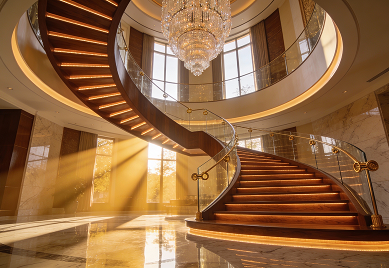
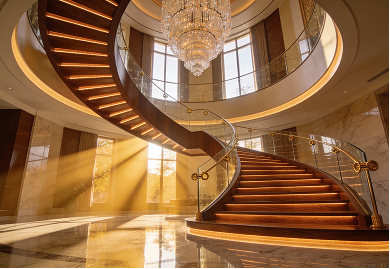
Metal Spiral Staircase | Custom by DBM Factory


Metal Spiral Staircase
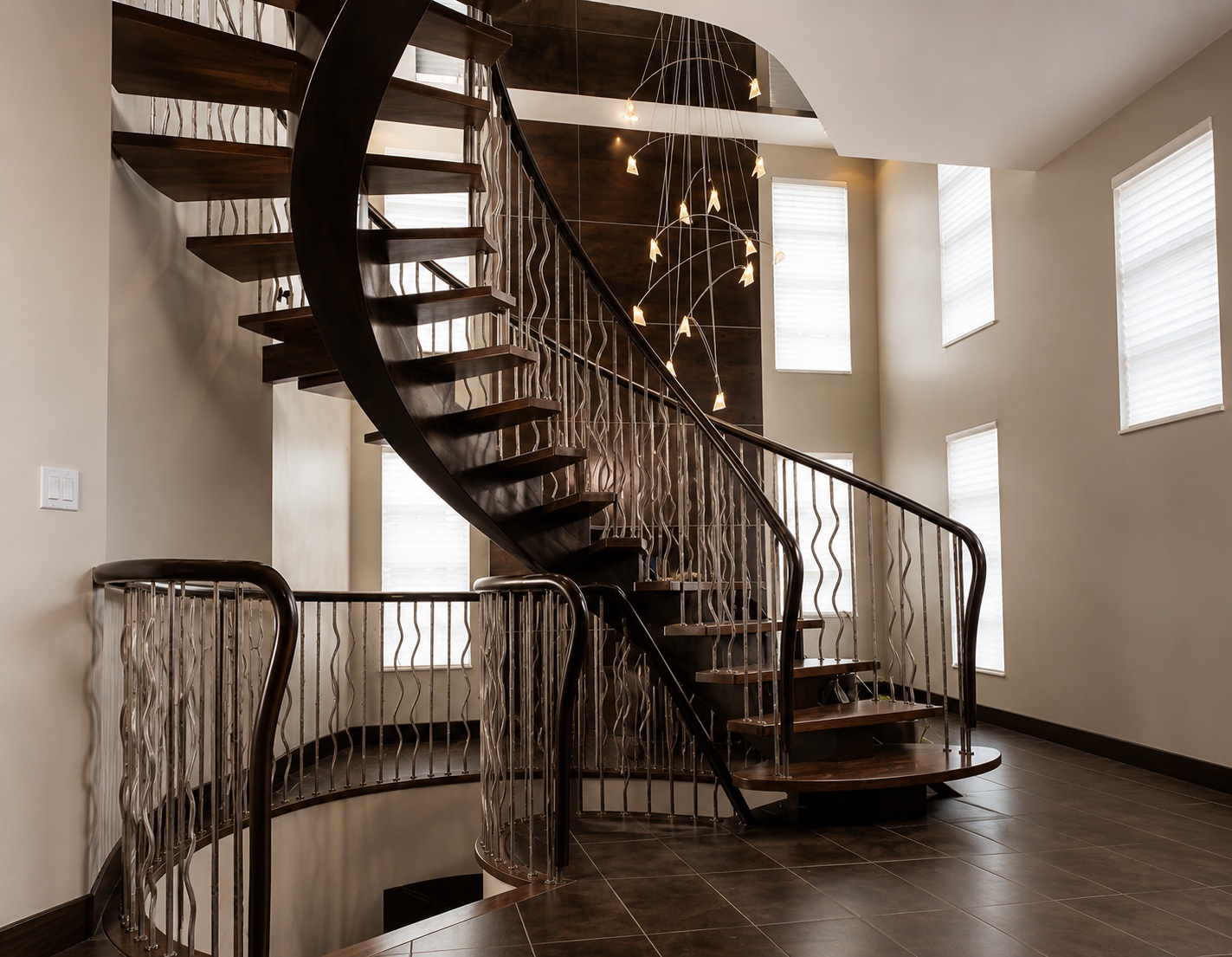
A metal spiral staircase brings a structural line into a room. One continuous helix of steel that asks to be seen rather than hidden in a wall. It's the spiral you choose when the climb itself is meant to be a feature of the interior.
We build each steel spiral around your drawing and finish. Send us your plans, sketch, or design reference and we turn it into a working drawing and a stair ready to ship.
Choose How the Steel Should Read
Carbon Steel Frame — The Structural Core
Welded centre post and stringer in carbon steel. Finished smooth in the workshop before the coating goes on, so the surface reads clean from any angle.
Powder-Coat Finish — Designed Interior
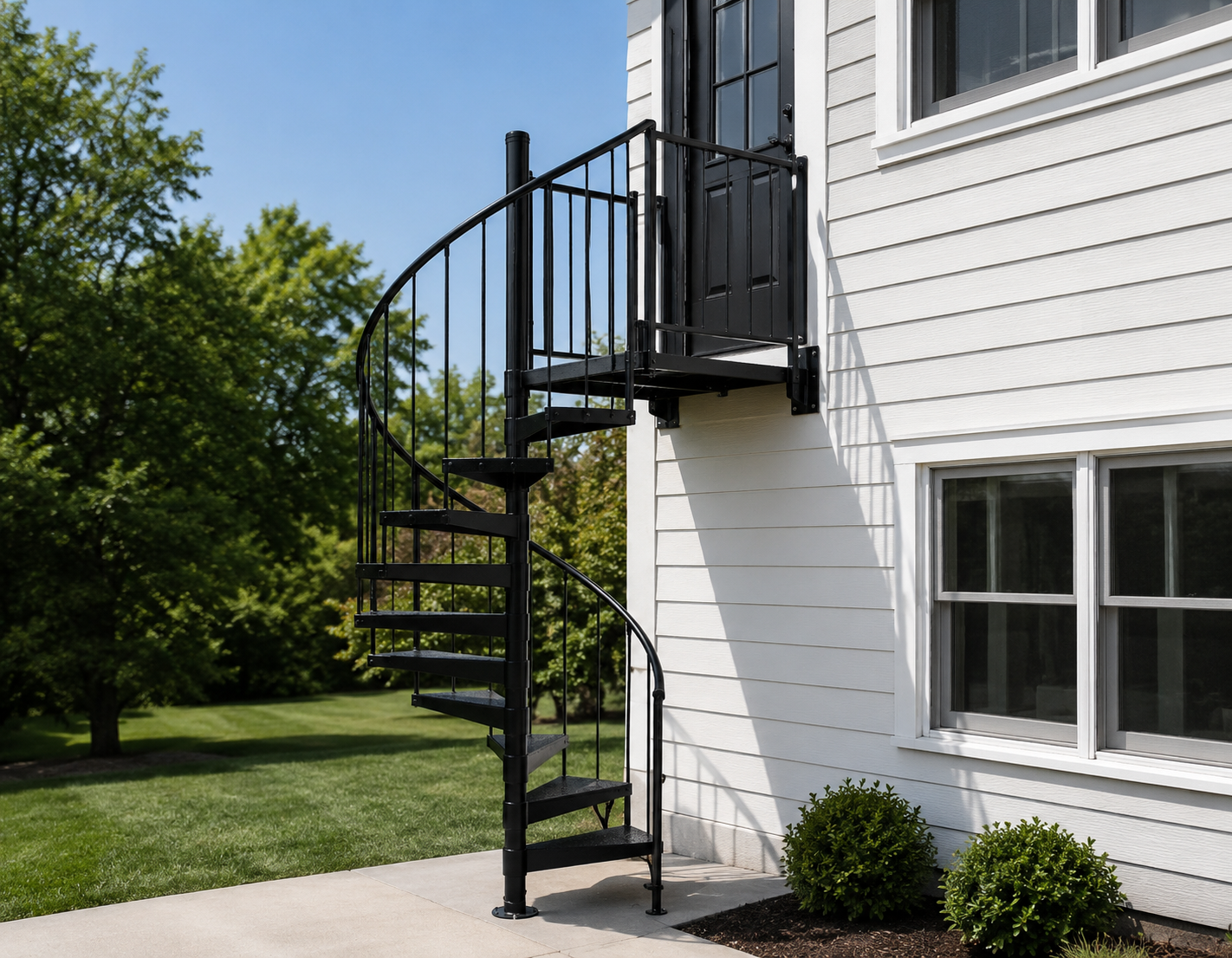
Matte black for the modern foyer look. Soft grey or a custom RAL where the spiral sits inside a designed palette. The coating is fired on, not painted.
Stainless Variant — Polished or Brushed
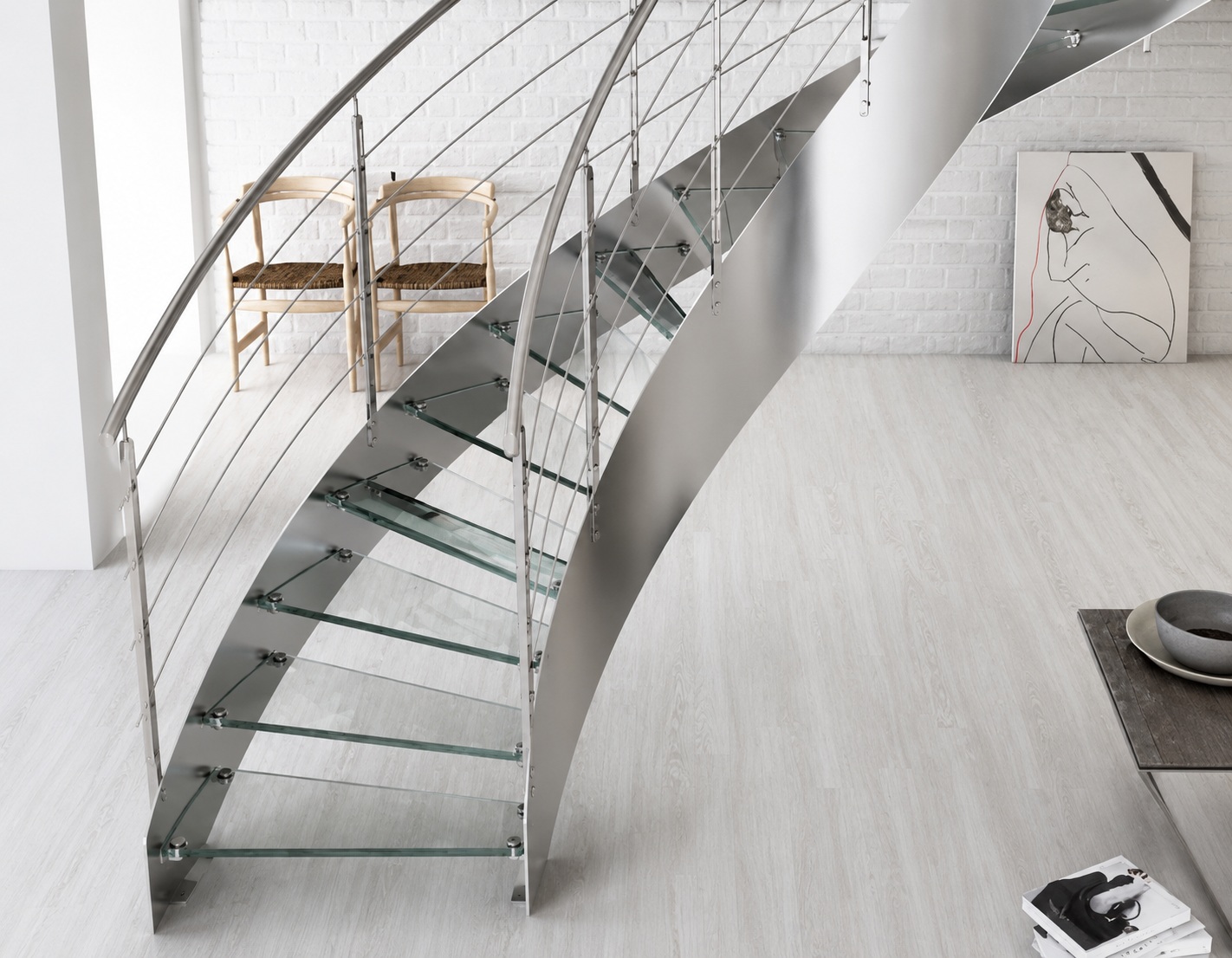
Brushed or polished stainless where the steel is meant to stay light and reflective. Common in apartment foyers and entry-floor spirals.
Tread Choice — Hardwood / Stone / Steel Plate
Solid oak or walnut tread for warmth underfoot. Honed stone for villa entries. Bare steel plate where the spiral belongs to a loft conversion and the metal is the architecture.
Where It Fits — Four Common Project Types
Villa Foyer & Entry-Floor Statement
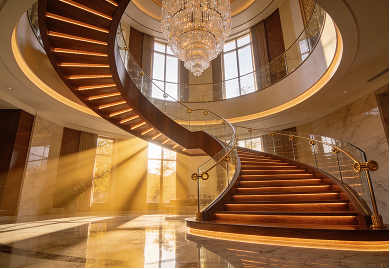
A steel spiral staircase as the central object of the entry hall. Stone or hardwood tread on a powder-coat frame — the structure is the architecture, drawn into the plans rather than tucked away.
New Home Loft & Mezzanine
Where the second-floor loft is part of the living room and the stair needs to belong in the room. A metal spiral staircase in matte coat keeps the line clean without taking floor area.
Apartment Feature Stair
Duplex apartment runs, penthouse interior climbs. Brushed stainless or matte powder-coat — the spiral is the design moment in an otherwise quiet floor plan.
Modern Penthouse & Designed Conversion
Industrial-style conversion, modern penthouse with a private upper floor. The spiral becomes a finished sculptural element — not a service stair, an object.
From Sketch to Site — Three Stages
Share your architect's drawing, a sketch, or a design reference. We turn it into a working drawing covering diameter, centre post profile, tread layout, railing style, and the top and bottom landing connections.
We fully dry-assemble and photograph every spiral in our Guangdong workshop. Our team finishes the welds smooth, applies the coating, and checks the helix end-to-end before breaking it down for shipment.
We build wooden crates for ocean freight and protect the finished steel surface. We ship to 60+ countries — including the USA, Australia, the EU, and across Asia.
After delivery, your contractor or installer handles fitting. We provide an assembly guide and a step-by-step video. Where local installation is available in your region, we can help you find a vetted installer.
Metal Spiral Staircase
When the Steel Itself Has to Do the Work — Choosing the Build for a Stair Meant to Last.
Some round stairs are a quiet detail tucked into a corner. Others become the spine of the interior, climbed every day and visible from every angle. When a steel helix takes that second role, the metal under the finish matters as much as the silhouette on the drawing.
Owners usually reach us once the appearance is settled but the build is not. They already know they want a clean, flowing steel line. What they are still weighing is which steel, which finish, and how solid the climb should feel underfoot across decades of regular use.
Carbon Core or Stainless — What the Choice Really Turns On.
A welded carbon-steel core is the usual choice for an interior that stays reliably dry. The centre post and stringer are shaped, ground smooth, and sealed beneath a fired powder coating. The finish then carries the appearance, while the structural steel quietly carries the load.
Stainless enters the picture whenever the surrounding air turns harsher. Think of a glazed atrium that sweats through summer, a sheltered entry open to the weather, or a humid spa landing thick with moisture. Each pushes the specification toward a metal that resists corrosion on its own, rather than leaning on the coating alone.
The real question, then, is rarely about the appearance of the steel. It concerns the atmosphere the stair must stand in daily, once the interior around it is finished and lived in. We study that setting together first, and afterwards the working drawing follows the answer.
How One Steel Spiral Reads Across Different Interiors.
A Quiet Line vs a Bold Object.
The same helix can either recede or stand out, and the finish ultimately decides which. A matte black coating reads as a firm graphic edge against a pale wall, deliberately drawing the eye upward along the climb. A muted grey instead lets the steel settle back, so the interior around it stays calm. We tune the coating to whichever role the owner wants the steel to perform.
A Light Touch vs Constant Daily Traffic.
A stair serving an occasional study sees a gentler routine than one a busy household climbs all day. Where the circulation is heavy, the tread surface deserves extra attention, because a bare polished step can slowly turn slippery and noisy underfoot. A timber facing or a finely textured tread keeps the climb sure and quiet, while the frame underneath stays the same firm steel.
A Sealed Interior vs a Damp One.
Two rooms can share one floor plan yet hold strikingly different atmospheres. A sealed, heated hallway stays kind to a coated carbon build for many years. A glazed garden room or a humid wellness floor instead asks for stainless fixings and a tougher finish specification, so the metal copes with the constant moisture. We match the build to the particular interior rather than to a fixed formula.
What Coordination Looks Like for a Steel Helix.
Drawing-First Coordination begins at the joints where the steel meets the building. We pin down the floor levels, the upper opening, and the wall it leans toward before any metal is cut. The finish spec is also set here, so the coating truly suits the air the stair will stand in.
Trial Assembly Before Packing then stands the whole spiral upright across our Guangdong workshop floor. Our team grinds the welds smooth, fires on the coating, and checks the helix turn by turn beneath our own roof. We photograph the result and take it apart with care, labelling every part, so the build on your side becomes a clean bolt-together job instead of field welding.
Export-Ready Crating afterwards protects the finished steel against impacts and moisture across the long ocean passage. We pack the parts in the exact order they reassemble, seating the heaviest pieces low for a stable lift. The crate then arrives ready to open, sort, and stack straight against the working drawing.
What to Send Us About the Room.
A rough sketch or a quick phone photo of the spot gives us a solid starting point. Add the floor-to-floor height, which simply means the climb from the lower finished floor up to the upper one. Then note the clear circle you can give the stair, bounded by the nearest wall or whatever furniture sits closest.
One further note helps us recommend the right build. Tell us how the atmosphere in that room generally behaves, whether it stays dry and heated or turns damp and humid. Mention how heavily the stair will be travelled as well. From there we turn your notes into a working drawing and a stair ready to ship.
After delivery, fitting is on your side. On site, your contractor or installer handled fitting directly from our drawings, with our assembly guide and step-by-step video to follow — or use your own local installer where needed.
Chat on WhatsApp →Compare the Wooden Spiral Staircase → · see the Indoor Spiral Staircase → · browse the full Spiral Staircase range → · or explore all our staircases →