

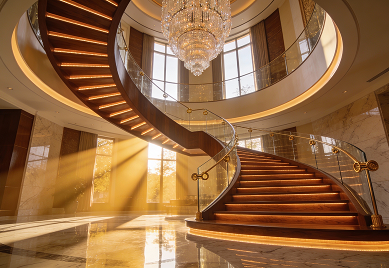
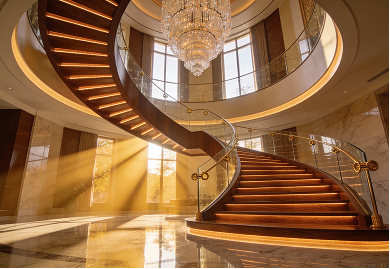
Industrial Stairs | Custom by DBM Factory
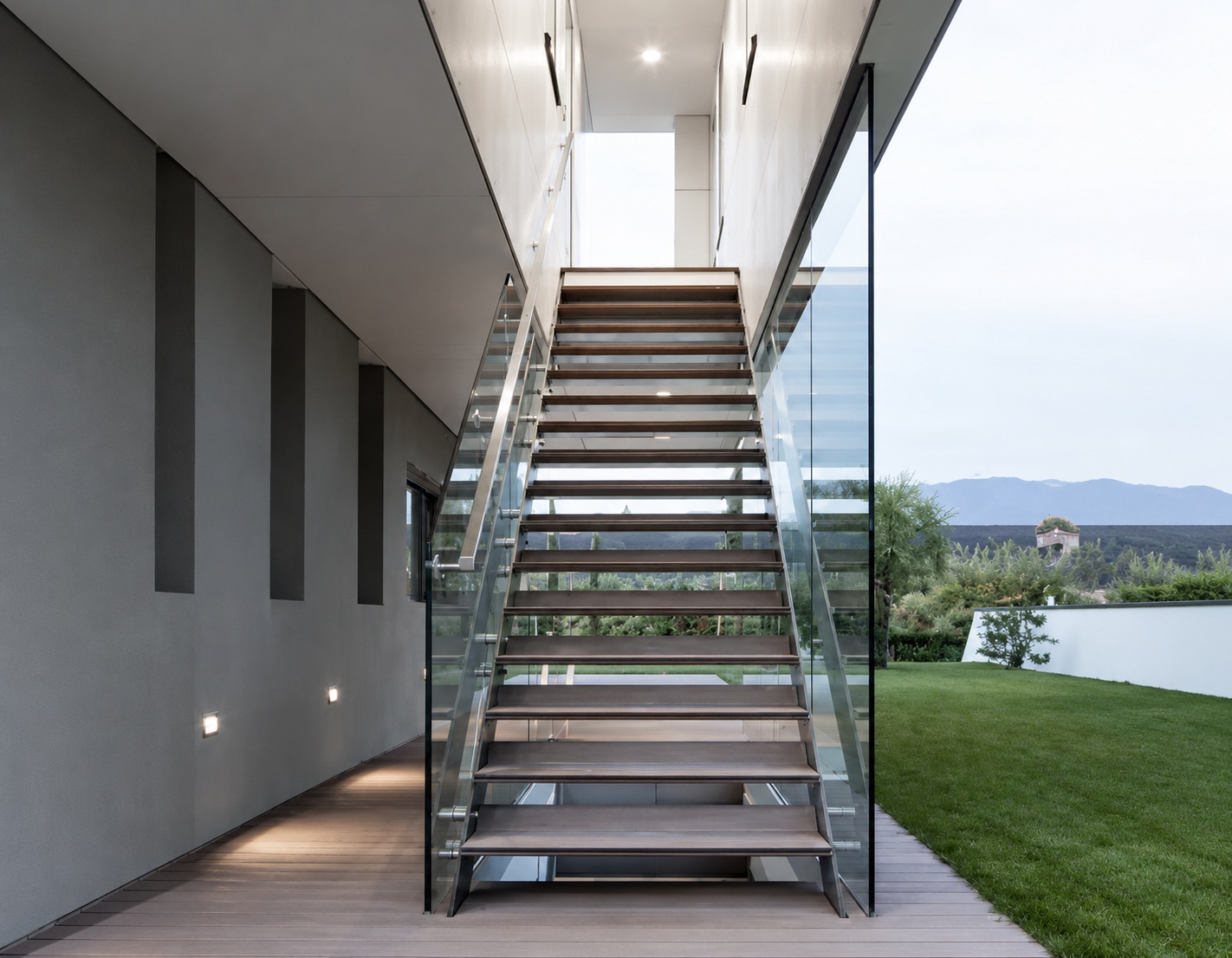
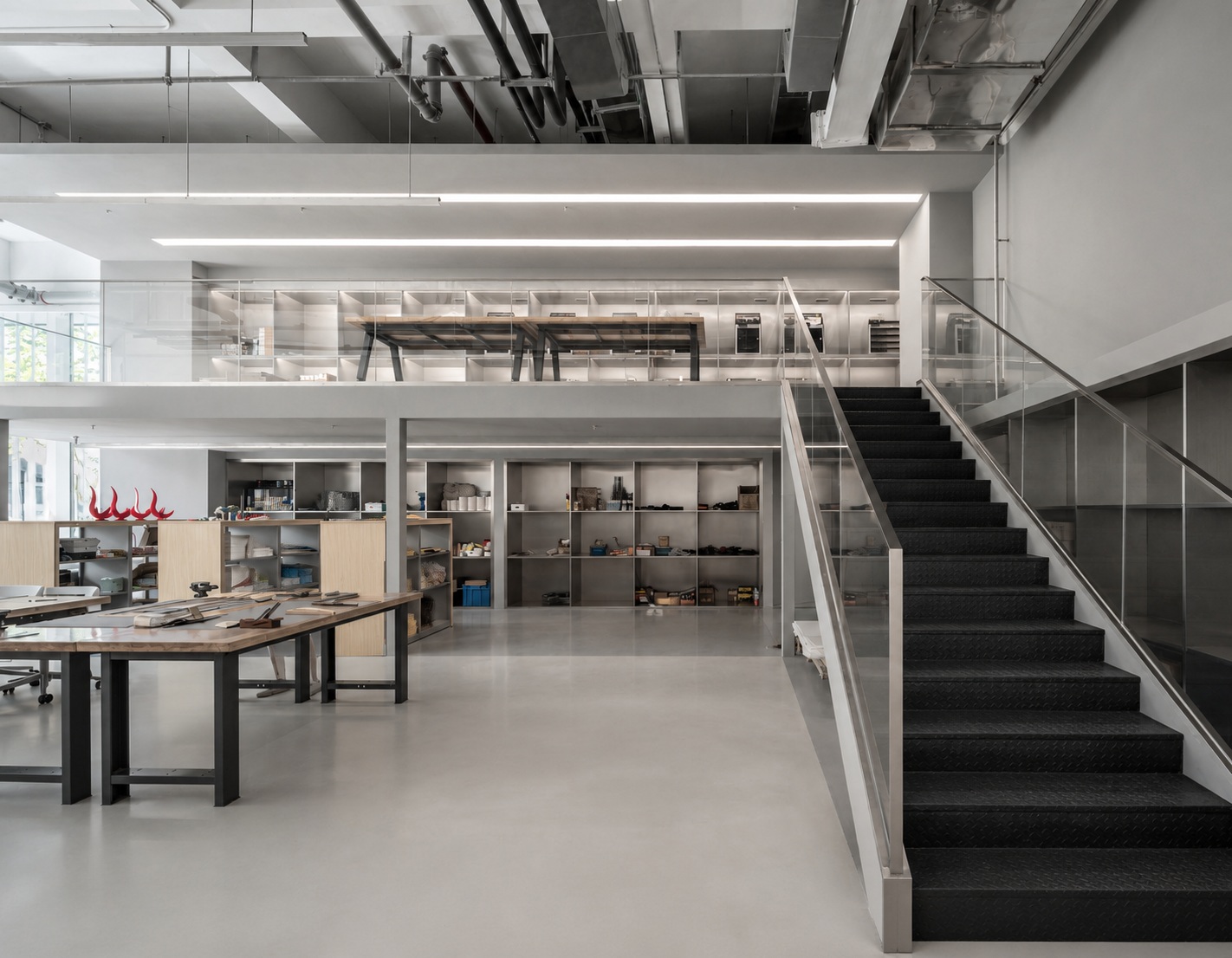
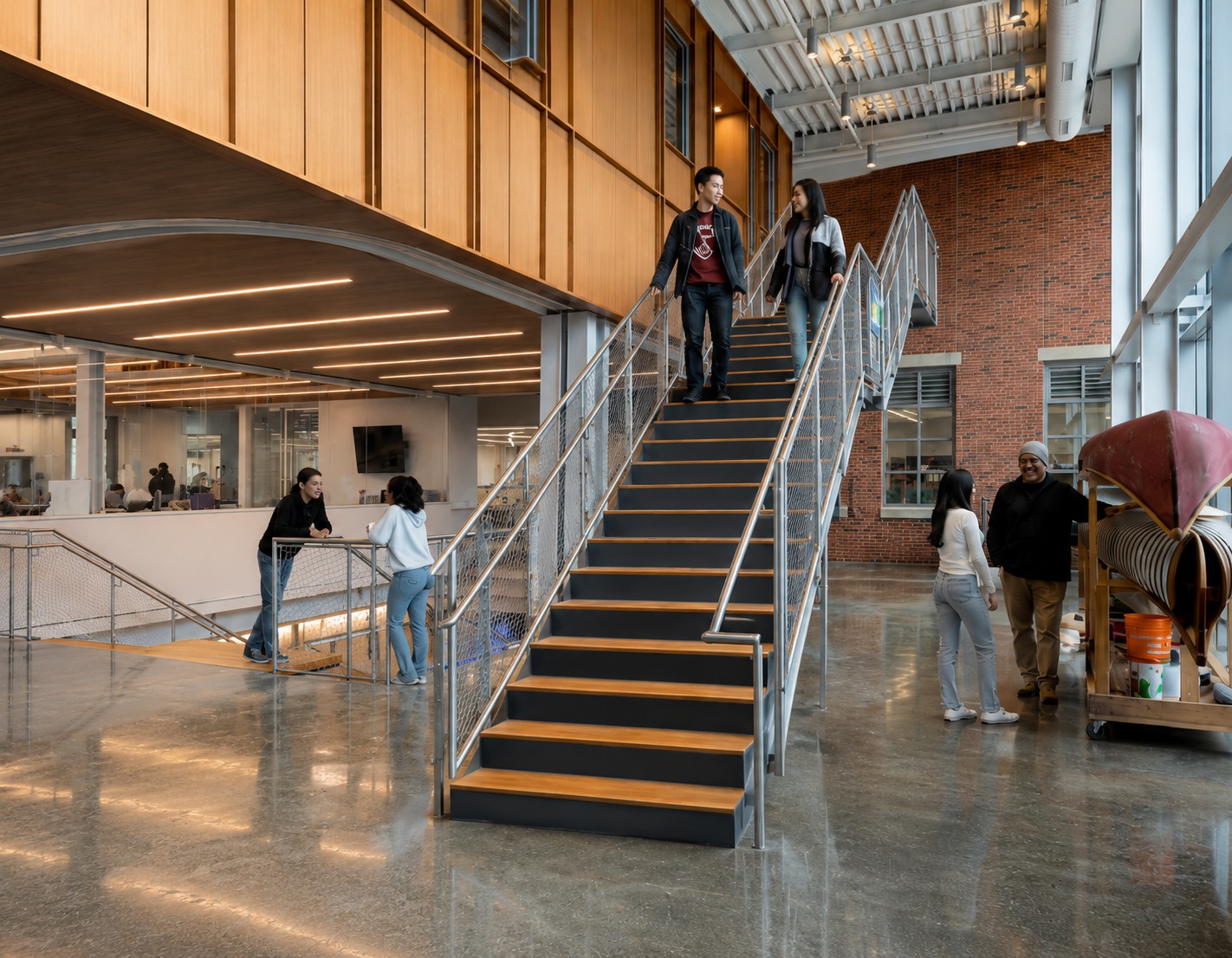


Industrial Stairs
Industrial straight stairs sit in warehouse-conversion lofts, art studios, mixed-use buildings, and commercial-adjacent owner properties where the heavy look is part of the design. Open treads, exposed stringers, a stair that earns its place rather than hides.
We build to your drawing in heavy-gauge steel. Share the floor plan, a sketch, or a CAD; we turn it into a working drawing and a stair built for daily traffic. Drawings can reference OSHA 1910.25 or AS 1657 where your project needs that anchor.
Built for Daily Use, Finished for the Room
Hot-Dip Galvanized Steel — Service & Exposed Use
Zinc-coated stringers built to take traffic without surface decay. The common choice for service entries, mezzanine access, and back-of-house stairs.
Powder-Coat over Steel — Loft & Studio Look
Matte black is the default for converted lofts and art studios. The coating sits over a primed stringer so the surface stays even.
Treaded Pan / Bar Grating — Anti-Slip Step
Closed checker plate gives a solid step feel. Open bar grating lets light and air pass through — common in studios and roof-deck access where the floor below stays bright.
Code Anchors — OSHA 1910.25 / AS 1657
Drawings can reference OSHA 1910.25 for the US or AS 1657 for Australia where your project needs that anchor. Your local engineer signs off for permit; we provide the dimensioned drawing they review.
Where It Fits — Four Common Project Types
Warehouse-Conversion Lofts
Old shop floors and warehouse buildings turned into homes or live-work spaces. Industrial straight stairs match the building's bones — heavy steel stringers, open treads, the stair as part of the existing language.
Mixed-Use & Commercial-Adjacent Owner Property
Ground-floor shop with apartment above, boutique workshop attached to the home, garden-level studio with separate entry. The straight industrial stair gives a clean access route between uses.
Art Studio & Maker Space
Mezzanines above a working studio, second-floor offices in a workshop. Open bar grating keeps the studio bright underneath the stair; matte black coating ties it to the room's palette.
Service Access in Owner Property
Roof-deck access, rear plant rooms, basement workshops. A straight industrial stair handles the duty without being asked to do more than that.
From Sketch to Site — Three Stages
Share a floor plan, sketch, or CAD — that's enough to start. We turn it into a working drawing covering the run length, stringer profile, tread type, and guardrail. Drawings can reference OSHA 1910.25 or AS 1657 for your engineer to sign off.
We dry-assemble and photograph every stair in our Guangdong workshop. Our team finishes the welds, applies the coating, and checks the whole run before breaking it down. We label each component, so your installer can bolt the stair together on site rather than field-weld it.
We crate heavy-gauge steel sections for ocean freight and protect the coated surface. We ship to 60+ countries — including the USA, Australia, the EU, and across Asia.
After delivery, your contractor or installer handles fitting. We provide an assembly guide and a step-by-step video. Where local installation is available in your region, we can help you find a vetted installer.
Industrial Stairs
When One Run Will Not Fit — the Switchback Half-Landing Brief.
Sometimes the straight run simply runs out of floor. A converted workshop or a studio mezzanine often lacks the length for one clean flight, so the staircase has to fold back on itself partway up. That fold turns a footprint problem into a landing problem, and the landing position becomes the heart of the brief.
Owners usually reach us once the floor plan refuses a single straight staircase. A low beam crosses the route, or the wall arrives before the climb is finished. So the question shifts from the flight to the turn. They want a sure switchback that fits the tight footprint and still maintains clearance at the head of every step.
Why a Mid-Landing Solves the Tight Footprint.
A half-landing lets the staircase change direction without a wider footprint. The first flight climbs to a flat resting platform, the run reverses, and a second flight finishes the climb above it. That fold packs a full storey of rise into a compact rectangle, which is precisely what a tight industrial floor can offer.
The trade-offs are honest, and they shape the configuration early. A switchback needs enough width for two stacked flights positioned side by side, and the mid-landing occupies a little floor of its own. The turn also slows a heavy carry, since one flight has to be cleared before the next begins.
So the right call follows what the floor and the ceiling allow. Where a single run cannot fit the length, the switchback typically earns its place against the alternatives. Where the footprint stays long and open, a straight flight may still serve the space better, and we work through the geometry before a line is drawn.
How the Turn Changes With the Space.
A U-Turn vs an L-Turn.
The shape of the floor sets the shape of the turn. A half-turn switchback doubles straight back on itself, so the staircase returns parallel and stacks into the narrowest plan. A quarter-turn instead breaks at ninety degrees, which suits a corner where the climb wraps one wall onto another. We size the landing dimension to the turn the floor can actually give.
Headroom Over the Landing.
A low beam or a sloped roof often hangs directly where the upper flight begins. We position the landing and the turn so the head height stays clear as someone steps through, never forcing an awkward duck. We resolve this clearance on the working drawing, well before any steel is cut, because the turn point is generally where the headroom is tightest.
A Service Run vs a Visible One.
A back-of-house plant route asks only for galvanized steel and open grating underfoot. A switchback that becomes visible in a converted loft instead wants a matte powder-coat and a cleaner edge, since it reads as part of the room. The same folded geometry carries either finish, while the specification shifts to match the particular setting.
What Coordination Looks Like for a Switchback.
Drawing-First Coordination begins at the landing and the turn, not the flight. We confirm the floor-to-floor climb, the landing position, and the head height through the turn before anyone cuts steel. A folded stair leaves a narrow margin, so the working drawing resolves the two flights and the mid-landing on paper first. Drawings can reference OSHA 1910.25 or AS 1657 for your engineer to sign off.
Trial Assembly Before Packing then stands the whole switchback upright on our Guangdong workshop floor. We check that both flights meet the landing square, finish the welds, and apply the coating before we break it down. We label every part as it comes apart, so the build on your floor becomes an ordered bolt-together job rather than a field weld around the turn.
Export-Ready Crating packs the flights and the landing in the order your installer will raise them. We seat the heaviest pieces low and protect the coated steel for the long ocean leg ahead. The crate lands ready to open, sort, and assemble straight against the drawing.
What to Send Us About Your Floor.
A floor plan or a couple of photographs of the space gives us a solid start. Add the floor-to-floor height, which is the climb from the lower floor up to the upper one. Then note the footprint you can give the staircase, marking the wall the climb has to fit against.
One more detail helps us shape the turn. Tell us about any low beam or sloped ceiling near the climb, and whether the staircase is a back-of-house run or becomes visible in the room. From there we turn your notes into a working drawing and a stair ready to ship.
After delivery, fitting is on your side. On site, your contractor or installer handled fitting directly from our drawings, with our assembly guide and step-by-step video to follow — or use your own local installer where needed.
Chat on WhatsApp →Compare the Prefabricated Stairs → · see the Straight Metal Staircase → · browse the full Straight Staircase range → · or explore all our staircases →