

Aluminum Awning Window | Custom by DBM Factory


Aluminum Awning Window
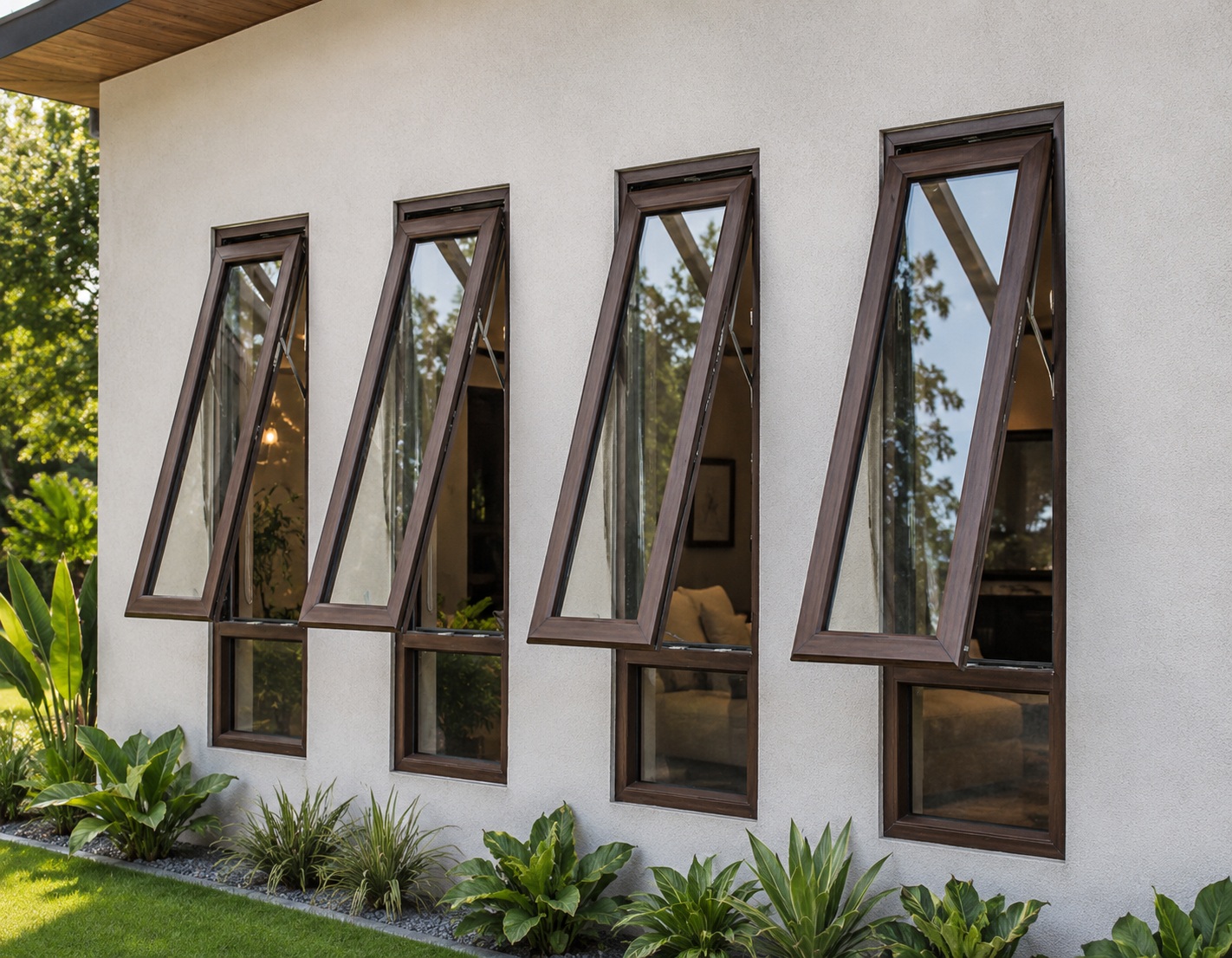
An awning window hinges at the top and opens outward at the bottom — so the sash itself becomes a small canopy. Rain runs off the outside while the room below keeps its breeze. It is the window that stays open through a passing shower, in coastal kitchens, in bathrooms, on first-floor bedrooms.
We design and produce each awning window around your project. Share the elevation, a floor plan, or a designer reference. We turn it into a working drawing and build the window ready for shipment.
Spec the Window to the Elevation
Frame Finish — Powder-Coat / Anodized
Anthracite, matt black, bronze, off-white, or anodized silver to match the rest of the window suite. Marine-grade powder-coat where the home faces the coast or where airborne salt is a daily reality.
Glass — Double IGU / Frosted
Double-glazed insulating units for thermal comfort. Frosted or sandblasted glass for bathrooms and ground-floor windows where privacy is more useful than the view. Laminated glass where the elevation calls for it.
Hinge Style — Friction Stay
Top-hung friction stays hold the sash open at the chosen angle without needing a stay arm. The sash sits steady on a breezy day; closes flush with a single pull on the handle.
Hardware — Cam Handle / Lock
A single cam handle at the sill closes the sash tight against the seal. Lockable handle options are available for ground-floor and bathroom locations where the owner wants the extra reassurance.
Where It Fits — Four Common Project Types
Coastal Villa
Sea-facing kitchens and breakfast rooms where the owner wants the salt breeze without the rain. The sash-as-canopy detail is the reason awning windows show up so often in coastal villa elevations.
New Home Upper Level
First-floor bedrooms and high-set bathroom windows. The top hinge keeps the opening high enough for safety and lets the breeze enter from above. This suits elevations that need ventilation but not a person-height view.
Bathroom & Utility Rooms
Where frosted or sandblasted glass gives privacy and an awning sash gives the steady ventilation a wet room needs. Powder-coated frames in white or anthracite are the usual finish.
Vacation Residence
Holiday home where leaving a window cracked open in passing weather is part of the daily routine. The awning shape keeps the room dry while the breeze keeps moving through.
From Sketch to Site — Three Stages
Share an elevation, a window schedule, or a designer reference — that’s enough to start. We turn it into a working drawing for the awning window. It covers sash sizes, hinge positions, and the structural opening your contractor will need to frame.
Every window unit is fully assembled, glazed, and photographed in our Guangdong workshop before being prepared for shipping. Sashes, hardware, and seals come matched to each frame, so on-site installation is straightforward — typically set-and-fix, not site-cutting.
Wooden crates built for ocean freight, packed in the order your installer will set the windows. Shipped to 60+ countries — including the USA, Australia, the EU, and across Asia.
After delivery, your contractor or installer handles fitting. We provide an installation guide and a step-by-step video. Where local installation is available in your region, we can help you find a vetted installer.
Aluminum Awning Window
When the Window Has to Stay Open in the Rain — Set High or Over the Bench.
A top-hinged window earns its place where the air has to keep moving through a passing shower. The sash opens outward at the bottom and tilts down like a small canopy, so rain runs off the outside while the room below keeps its breeze. The opening stays useful in weather that would force other windows shut.
Owners usually reach us with a clear placement already in mind. They want fresh air high on a wall, or above a kitchen bench, or in a bathroom where the window sits out of easy reach. So the brief is about steady airflow in an awkward spot. The sash has to vent well, shed water, and work from below without a stretch.
Why a Top-Hinged Sash Wins the Rain-Open Brief.
The awning configuration suits this brief for one plain reason: the open sash becomes its own weather cover. Because the pane hinges at the top and lifts outward at the base, the glass angles over the gap and deflects rain away from the opening. That single geometric trait is what lets the window stay cracked open during the kind of light weather other sashes cannot handle.
The trade-offs are worth naming early in the conversation. An awning sash opens to a limited angle rather than swinging fully clear, so it ventilates steadily rather than dramatically. The sash projects outward, which means it suits a wall without an immediate path beneath it. We weigh those points against the placement before the design is settled.
So the right answer turns on where the window sits and what the weather does. Where reliable ventilation through changeable weather is the goal, an awning sash typically earns its place against the alternatives. Where a fully open sash and a person-height view matter more, a casement may suit the room better, and we discuss the two openly before committing.
How the Awning Flexes Across Difficult Placements.
High on the Wall vs Over a Bench.
The placement governs how the sash gets reached and operated. Set high on a wall, an awning brings ventilation in above head height while daylight enters from above, and a long cam handle or a winder keeps it operable from the floor. Set over a kitchen bench, the same sash clears the worktop so a reach across the counter still closes it easily. We position the handle and the opening angle to the placement you have.
A Private Bathroom vs an Open Kitchen.
The room decides the glass and the locking. In a bathroom, frosted or sandblasted glass gives privacy while the awning sash keeps the steady airflow a wet room needs. In an open kitchen, clear glass and a lockable cam handle suit a ground-floor or reachable opening. The top-hinged sash stays the same, while the glass and the locking shift to match the room.
A Sheltered Courtyard vs an Exposed Coast.
The surrounding environment sets the finish and the stay hardware. On a sheltered courtyard, a standard powder-coat frame and an ordinary friction stay carry the sash comfortably. On a sea-facing wall, a marine-grade coating and a robust stay hold their condition against the salt and the wind that push on a projecting sash. The canopy-style configuration stays the same, while the finish and the stay shift to match the exposure.
What Coordination Looks Like for an Awning Run.
Drawing-First Coordination starts with the placement and the reach within each room. We pin down the sill height, the opening angle, and the handle position before anyone cuts metal. A high or over-bench window has to operate from below, so the working drawing resolves the hardware reach early and saves a scramble on site.
Trial Assembly Before Packing then builds and glazes each window unit on our Guangdong workshop floor. We hang the sash, open it to its stay angle, and photograph the result before we prepare it for transport. Each frame ships with its matched sash, stay, and seals labelled together, so the build on your wall becomes a measured set-and-fix job rather than a site puzzle.
Export-Ready Crating packs the windows in the order your installer will set them along the elevation. We protect the glazed faces and the coated frames against knocks and salt spray for the long ocean leg. The crate lands ready to open by opening, with the units cushioned and the heavier frames seated low for a safe lift.
What to Send Us About Your Placement.
A rough elevation sketch or a quick phone photo gives us plenty to begin with. Add the rough opening sizes and the sill height, plus a note on how high each window sits and whether a bench or fixture sits below it. Then tell us which rooms need privacy glass.
One more line of detail helps us understand your particular site. Tell us how exposed each wall is to weather, and how you would prefer to reach a high sash. From there we turn your notes into a working drawing and an awning run ready to ship.
After delivery, fitting is on your side. On site, your contractor or installer handled fitting directly from our drawings, with our assembly guide and step-by-step video to follow — or use your own local installer where needed.
Chat on WhatsApp →Compare the Aluminum Casement Window → · see the Aluminum Tilt-Turn Window → · browse the full Aluminum Window & Door range → · or compare Wooden Doors →