

Aluminum Sliding Door | Custom by DBM Factory


Aluminum Sliding Door
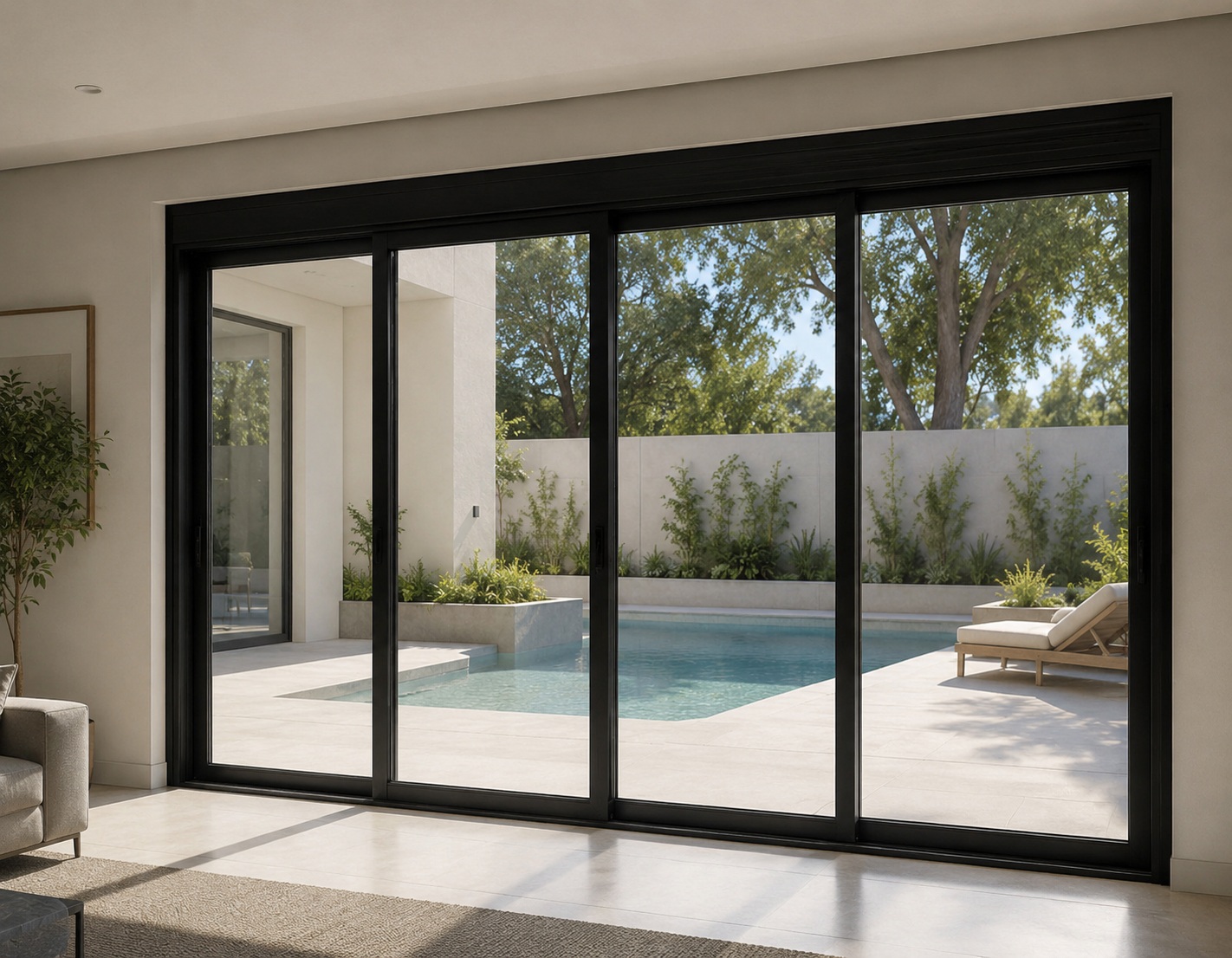
A sliding door moves a large pane of glass horizontally along a track — almost silent, no swing arc, the view stays front and centre. Where a bifold folds and stacks, a sliding door simply slips aside. It is the calm choice when the priority is uninterrupted glass and a quiet daily action.
We design and produce each sliding door around your project. Share the opening dimensions, a floor plan, or a designer reference. We turn it into a working drawing and build the door system ready for shipment.
Spec the Door to the Opening
Panel Layout — 2 / 3 / 4 Track
Two-panel for a single living-room opening. Three- and four-track layouts stack the panels to one side so the daylight opening is wider — useful for villa terraces and pool decks.
Glass — Double IGU / Low-E
Double-glazed insulating units with a low-emissivity coating are the everyday spec for residential sliding doors. Tinted or low-iron glass is available where the view, the sun, or the look needs the finer choice.
Track Hardware — Stainless Rollers
Stainless-steel rollers under each panel, riding a smooth track so the door glides under finger pressure even at large sizes. Anti-lift and soft-close options are quoted where the home calls for them.
Threshold & Frame — Flush Sill
Flush sill where the floor finish reads continuously inside-out. Recessed sill detail for projects where the architect wants the panels to look like they emerge from the floor itself. Frame finishes match the window suite.
Where It Fits — Four Common Project Types
Villa Pool & Garden Side
The living wing opens onto the pool deck or formal garden through a single long sliding run. Three- or four-track layouts pocket the panels and leave the wider opening clear during long entertaining afternoons.
Modern New Home
Slim aluminum frames in matt black or anthracite read as a single thin line at the head and sill, with the view sitting between. Common on architect-led homes where the brief is “as much glass as possible, as quietly as possible.”
Apartment Terrace & Balcony
A sliding door suits balconies where a swinging panel would steal floor area. The almost-silent action also reads well in apartment living — the door opens for fresh air without a noisy operation.
Coastal Modern Residence
Sea-facing living rooms where the view is the room. Marine-grade powder-coat finishes on the frame and stainless hardware in the track sit better against salt air than untreated alternatives.
From Sketch to Site — Three Stages
Share an opening dimension, a floor plan, or a designer reference — that’s enough to start. We turn it into a working drawing for the sliding door. It covers panel sizes, track layout, and the structural opening your contractor will need to frame.
Every door system is fully assembled and photographed in our Guangdong workshop before being taken apart for shipping. Each panel, track section, and hardware kit comes labeled, so on-site assembly is straightforward — typically bolt-and-set, not site-cutting.
Wooden crates built for ocean freight, packed in the order your installer will assemble. Shipped to 60+ countries — including the USA, Australia, the EU, and across Asia.
After delivery, your contractor or installer handles fitting. We provide an assembly guide and a step-by-step video. Where local installation is available in your region, we can help you find a vetted installer.
Aluminum Sliding Door
When the View Is the Room — A Large Glass Slider That Stays Out of the Way.
A big glass slider earns its keep when the view itself is the reason for the room. The panel glides aside along a track, so daily access never disturbs the glass that frames the outlook. The opening reads as a quiet horizontal line, not a stack of moving parts.
Owners usually reach us with one priority above the rest. They want as much uninterrupted glass as possible, and they want the daily action to stay calm and almost silent. So the brief here is a view-first one. The frame should recede, the interlock should read as a hairline, and the threshold should sit flat underfoot.
Why a Slider Wins the View-First Brief.
The sliding configuration suits this brief for one practical reason: the panels stay flat against the opening and never swing into the room. Large glass areas become achievable because each panel carries its weight on rollers rather than on hinges. The slim interlock where two panels meet keeps the visible frame minimal, so the glass dominates the elevation.
The trade-offs deserve naming early in the conversation. A slider opens only to the width of its parked panels, so the clear opening is roughly half the run on a two-panel layout. The panels are heavy at large sizes, which makes the track quality and the roller specification matter more than on a small door. We talk those points through before the design is settled.
So the right answer turns on what the room is really for. Where an unbroken view through stationary glass is the goal, a large slider typically earns its place against the alternatives. Where a fully clear, walk-through opening is the priority, a folding wall may suit the property better, and we compare both configurations openly before committing.
How the Slider Adapts Across Conditions.
A Flush Threshold vs a Drained Sill.
The threshold detail shapes both the look and the weather behaviour. A flush sill keeps the inside floor and the outside surface on one continuous plane, which suits a sheltered terrace and the seamless look most owners picture. A drained sill adds a discreet channel that carries wind-driven rain away from an exposed opening. The threshold is specified to the shelter the door actually has, not to a fixed default.
A Modest Bay vs a Pocketing Wall.
The opening width drives the panel layout directly. A two-panel slider answers a single living-room bay, parking one panel behind the other for a clear half-width opening. A three or four-track layout stacks the panels to one side, or pockets them into a wall cavity, so the daylight opening widens considerably. We size the layout to the structural span and the parking room you can realistically give.
A Sheltered Terrace vs an Exposed Coast.
The surrounding environment sets the finish and the running gear. On a sheltered courtyard, a standard powder-coat frame and ordinary stainless rollers carry the panel comfortably. On a sea-facing terrace, a marine-grade coating and corrosion-resistant track hardware hold their condition against the salt. The sliding configuration stays identical, while the finish and the rollers shift quietly to match the exposure.
What Coordination Looks Like for a Large Slider.
Drawing-First Coordination starts with the genuinely demanding part of a wide glass run. We pin down the structural opening, the head support, and the threshold level before anyone cuts metal. A heavy panel needs a true, well-supported track, so the working drawing resolves the sill detail and the head fixing early and saves trouble on site.
Trial Assembly Before Packing then sets the whole door upright on our Guangdong workshop floor. We hang each panel, run it across the track through a full cycle, and photograph the result before we take it down for transport. We label every panel, roller carriage, and track section as it comes apart, so the build on your wall becomes a measured set-and-glide job rather than a site puzzle.
Export-Ready Crating packs the panels and the track in the order your installer will set them. We protect the large glass faces and the coated frames against knocks and salt spray for the long ocean leg. The crate lands ready to open in sequence, with the heaviest panels seated low for a safe and steady lift.
What to Send Us About Your Opening.
A rough sketch or a quick phone photo of the wall gives us plenty to begin with. Add the rough opening width and the head height, plus a note on the floor levels inside and outside. Then tell us which side the panels can park toward, or whether a wall cavity can pocket them away.
One more line of detail helps us understand your particular site. Tell us how sheltered the opening is, and how much clear glass the view really needs. From there we turn your notes into a working drawing and a sliding door ready to ship.
After delivery, fitting is on your side. On site, your contractor or installer handled fitting directly from our drawings, with our assembly guide and step-by-step video to follow — or use your own local installer where needed.
Chat on WhatsApp →Compare the Aluminum Bifold Door → · see the Aluminum Tilt-Turn Window → · browse the full Aluminum Window & Door range → · or compare Wooden Doors →