

Flat Panel Kitchen Cabinets | Custom by DBM Factory


Flat Panel Kitchen Cabinets
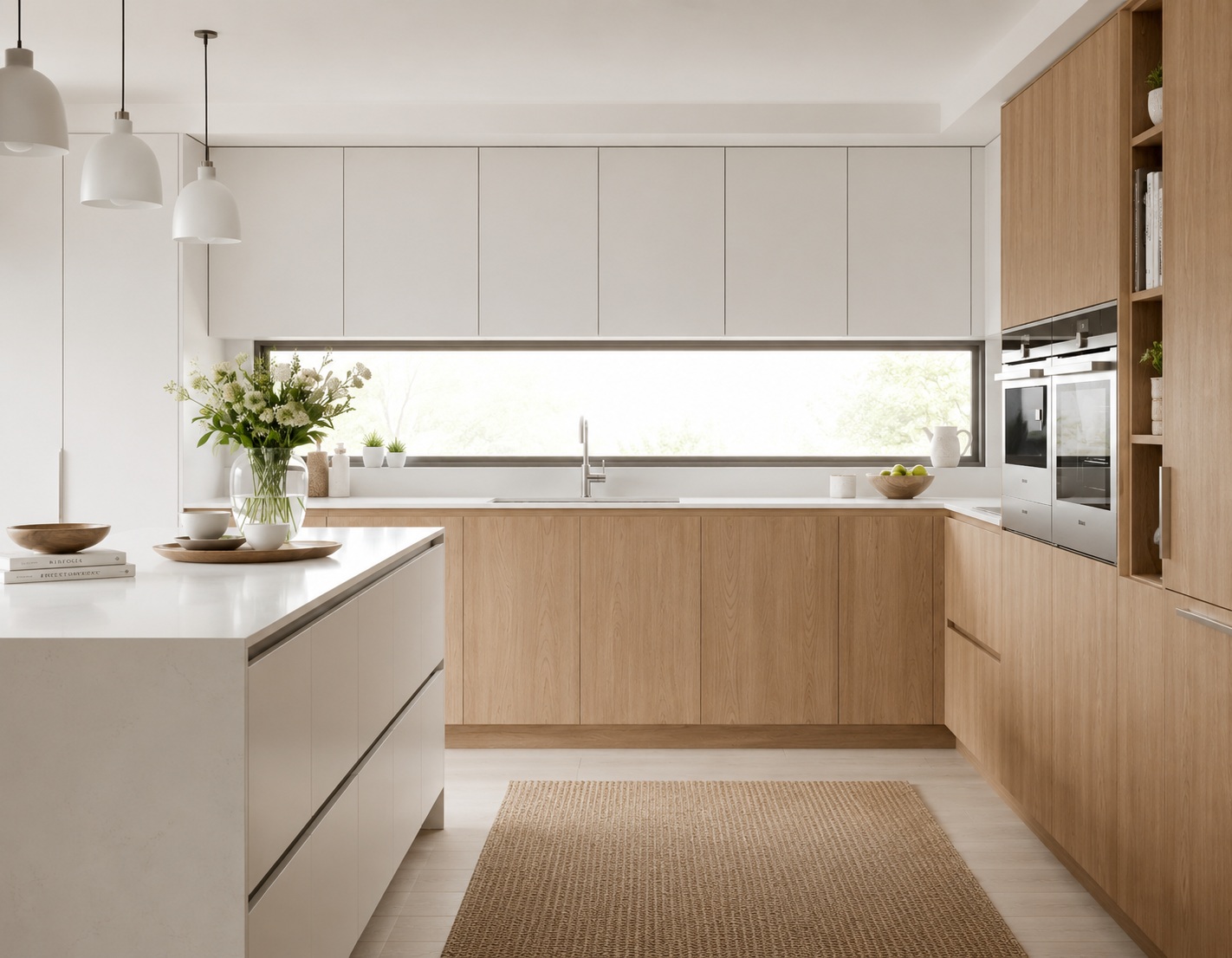
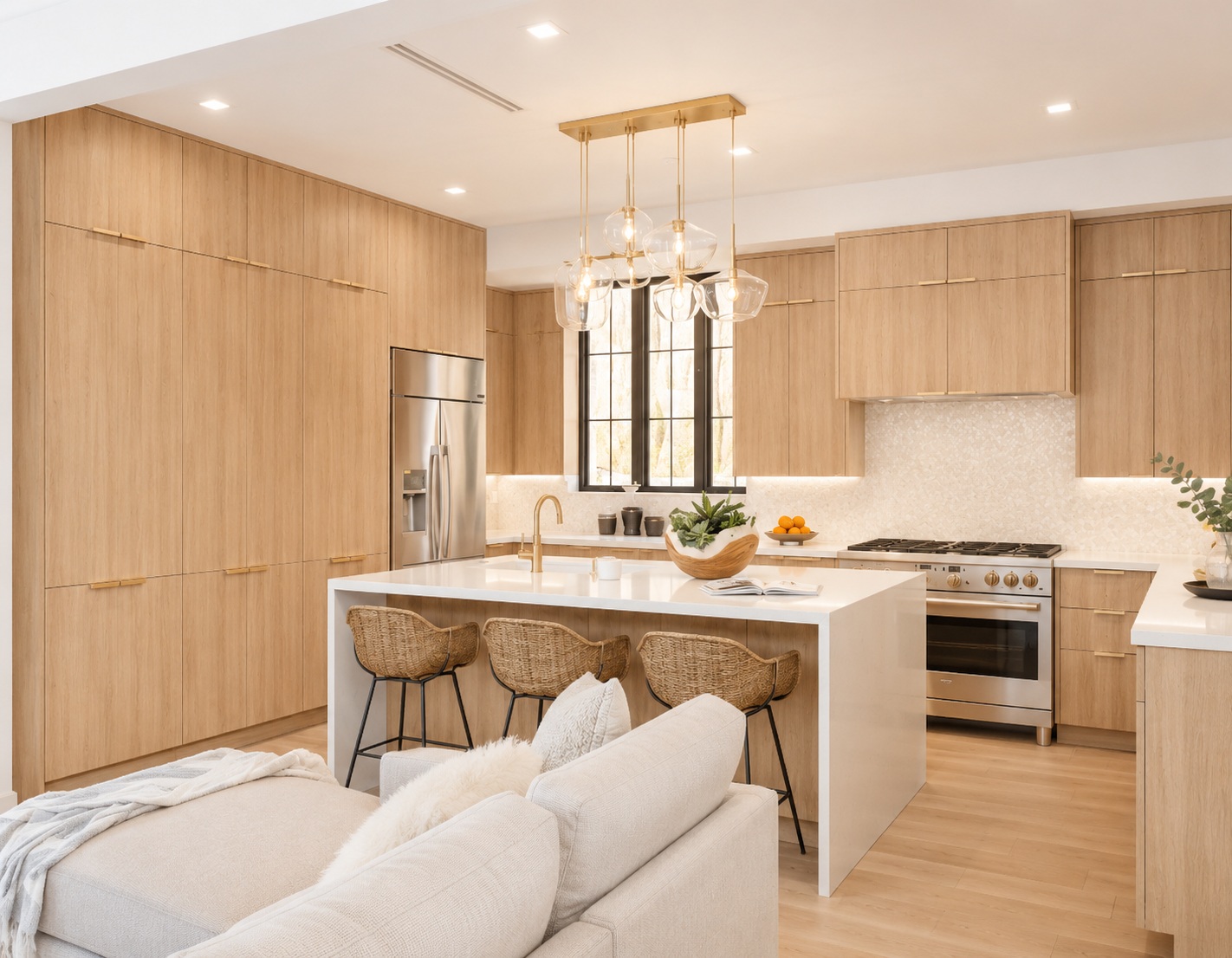
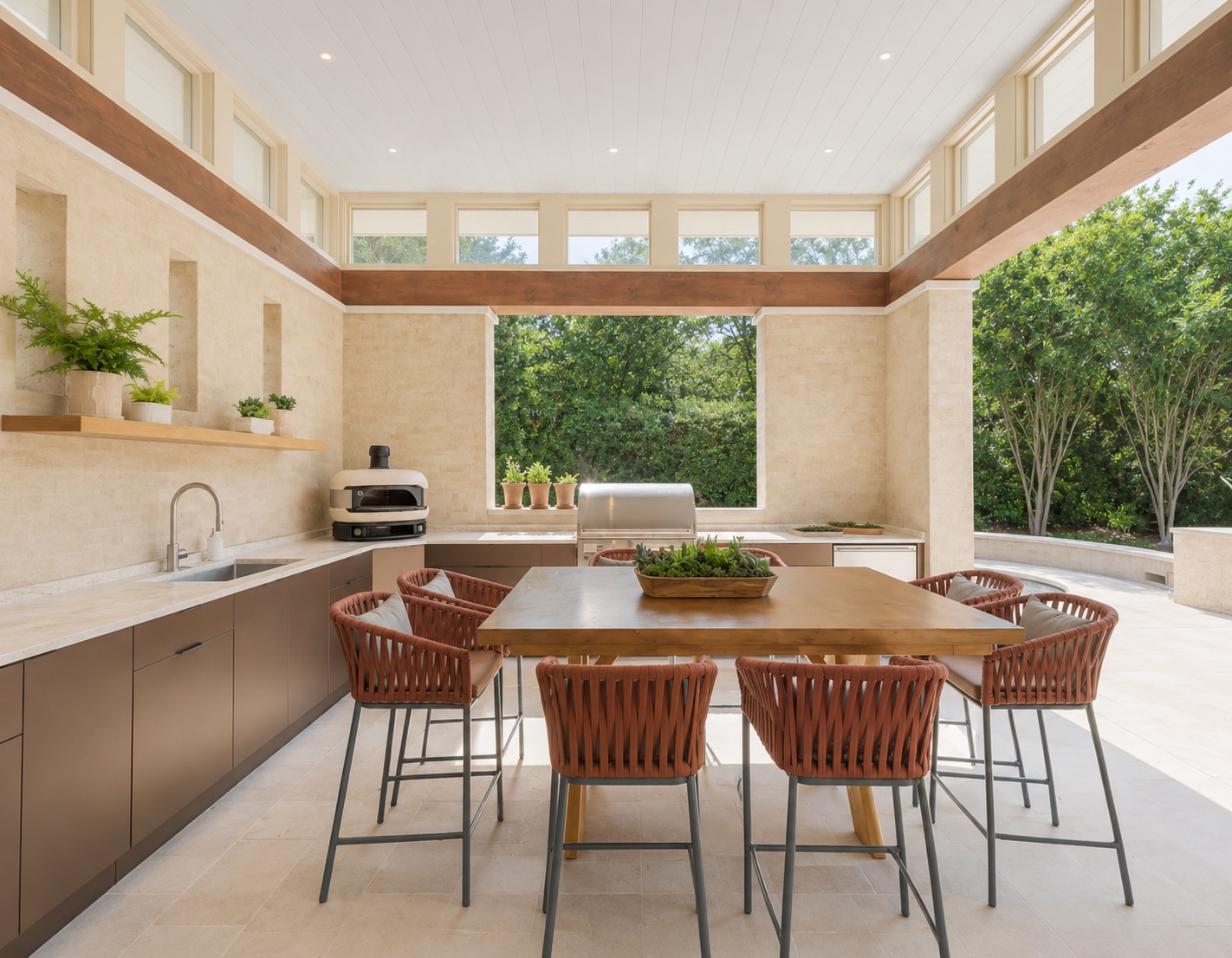
A flat-panel kitchen reads as one clean face across the room. No frames, no insert detail, no shadow lines. Just a quiet plane of cabinet that lets the counter, the splashback, and the appliances do the talking. It is the modern kitchen that wants to be calm rather than busy.
DBM designs and produces each flat-panel kitchen run around your project. Share a kitchen plan, an elevation, or a reference picture. We turn it into a working drawing, then build the boxes, doors, and trim ready for shipment.
Choose the Right Flat-Panel Build
Door Material — Veneer / Lacquer / Laminate
Wood veneer slab door for the grain-led modern kitchen. Lacquered MDF door for the colour-led smooth finish. High-pressure laminate for the everyday durable run that has to live through real family use.
Finish — Matte / Satin / Gloss
Matte for the quiet, fingerprint-friendly kitchen that does not reflect the room. Satin for the middle ground that still picks up some light. Gloss for the bright kitchen that wants to feel polished — reads bigger and brighter in smaller rooms.
Edge Profile — Square / Mitered / Soft
A simple square edge for the everyday flat-panel run. A mitered edge where the door wraps thinner and reads as one solid piece. A softly eased edge where the kitchen sees real daily traffic.
Hardware — Bar Pull / J-Pull / Push-Open
A long bar pull in matte black or brushed nickel is the workhorse hardware. A J-pull integrated into the top edge of the door hides the hardware while keeping the open. Push-to-open hardware for the fully handleless modern run.
Where Flat-Panel Cabinets Fit — Four Common Project Types
Modern Villa
A larger modern villa kitchen where the run carries across multiple walls and the island reads as a featured slab. A walnut veneer slab on the island against matte white perimeter is a common villa move.
Contemporary New Home Build
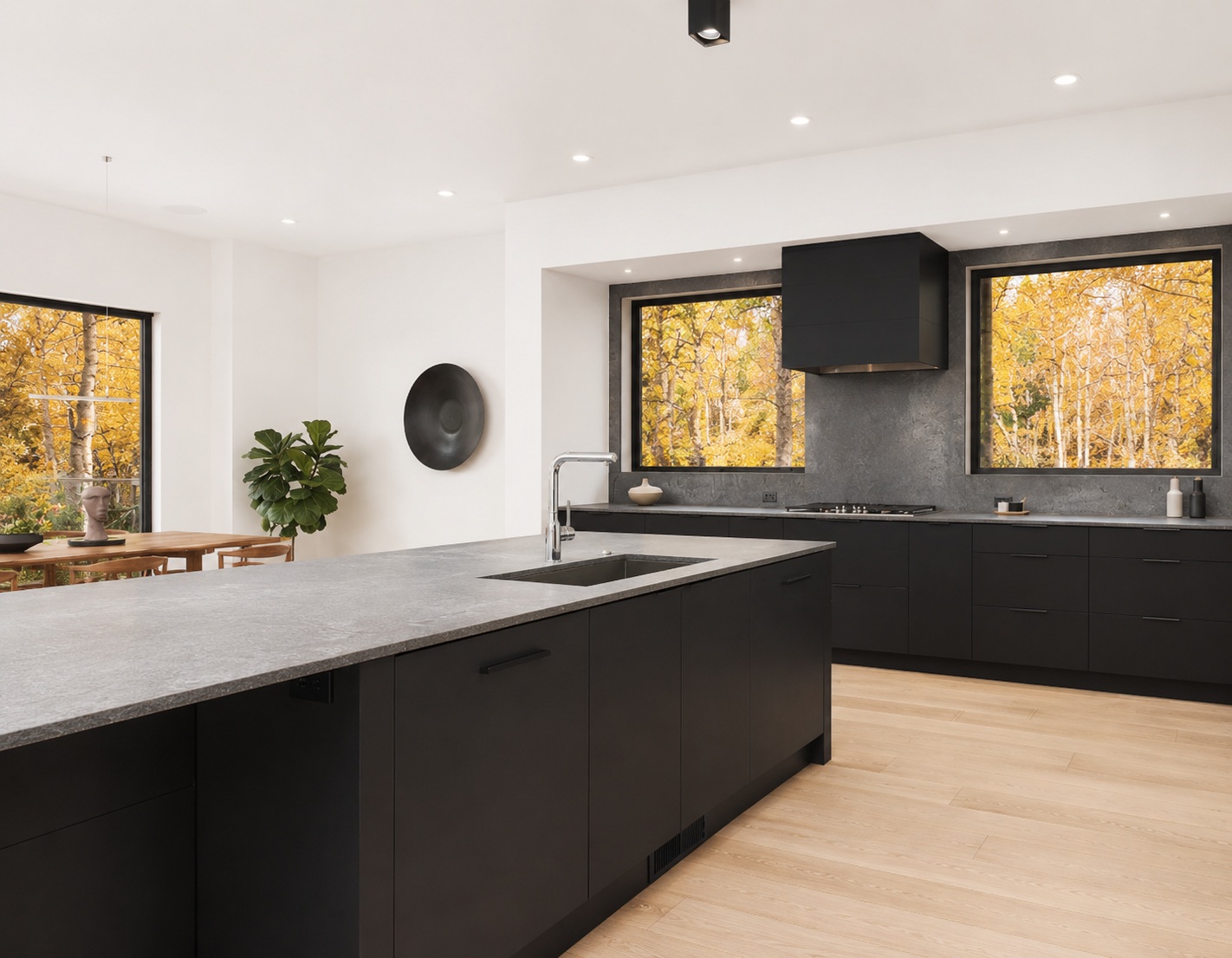
A new build with a contemporary brief — open plan kitchen, dining, living. Flat-panel doors in a single calm tone keep the kitchen reading as part of the room rather than its own zone.
Apartment Minimalist
A smaller apartment kitchen where the calm flat-panel face reads bigger than it is. Matte light tones or a single rich color across the whole run make the room feel resolved rather than crowded.
Loft Conversion
A warehouse loft, an industrial conversion, an exposed-beam apartment. Flat-panel doors in walnut veneer or dark lacquer answer the brick and timber with the right weight without dressing the room up.
From Sketch to Site — Three Stages
Share a kitchen plan, an elevation, or a photo of the room — that’s enough to start. We turn it into a working drawing covering cabinet box sizes, door layout, drawer split, and how the run meets walls and appliances.
Boxes, doors, and trim are trial-fit and photographed in our Guangdong workshop before crating. Each part comes labeled and finish-protected, so on-site work is typically setting and adjusting rather than field-fabricating.
Wooden crates built for ocean freight, packed in the order your installer will set the kitchen. Shipped to 60+ countries — including the USA, Australia, the EU, and across Asia.
After delivery, your contractor or kitchen installer handles fitting. We provide an assembly guide and a step-by-step video. Where local installation is available in your region, we can help you find a vetted installer.
Flat Panel Kitchen Cabinets
Matching New Cabinets to a Worktop and Appliances You Already Have.
Not every kitchen starts from a blank page. Often the owner already owns the appliances and has chosen the stone for the worktop, yet the cabinets still need building. A clean flat-panel run is the calm backdrop that lets that fixed worktop and those appliances read as the feature.
Owners usually reach us with a key constraint already settled. A wide American fridge, a pro range, or a slab of chosen marble has fixed the kitchen before the cabinets are drawn. So the brief here is precise: build a flat-panel run that frames those existing pieces and meets their exact sizes.
Why the Fixed Pieces Lead the Drawing.
The appliances set the openings, so we draw them before the cabinets around them. A fridge needs its stated width plus a vent gap, a range needs its exact opening, and a dishwasher needs a clear panel run beside the sink. We work from the model numbers, because a guessed opening is the one mistake a flat-panel kitchen cannot hide.
The worktop then governs the base cabinet heights across the run. An existing stone slab has a set thickness, so we drop the base boxes to suit it and keep the finished surface level. Where the owner wants a waterfall end, we draw the cabinet to receive that returning panel cleanly at the corner.
A flat-panel face is the right choice here for a plain reason: it stays quiet against the busier elements. The smooth slab door carries no frame detail to compete with the stone veining or the steel of a pro range. So the cabinets recede, and the pieces the owner has already chosen stay firmly in the foreground.
How We Build Around What Is Already There.
Matching the Worktop Tone.
An existing stone carries its own colour temperature, warm or cool. We sample-finish a single flat-panel door against a photo or a sample of that worktop, so the two surfaces sit comfortably together. A warm marble pairs with a softer door tone, while a cool quartz can take a crisper finish, and we confirm the match before the run begins.
Panelling the Appliances.
An integrated fridge or dishwasher can wear a flat-panel door so it disappears into the run. We draw the panel to the maker's fixing detail, so the door swings true and the hinge clears the cabinet. A freestanding range, by contrast, wants a clean gap drawn around it rather than a panel, and the elevation respects that difference.
Reading the Handle Decision.
A handleless run keeps the flat-panel face unbroken, which suits a kitchen already full of strong elements. A J-pull or a recessed channel opens the doors without adding hardware to the look. Where the units bring their own bold handles, a matching pull can tie the cabinets to them instead, and the choice follows the room.
What Coordination Looks Like for a Match.
Drawing-First Coordination starts with the appliance models and the worktop details. We confirm each aperture, the stone thickness, and the service positions before any panel is cut, because the fixed pieces leave no room to drift. The working drawing then sets the openings, the panel sizes, and the finish match. You review and approve that drawing before the production run begins.
Trial Assembly Before Packing then stands the whole flat-panel run upright on our Guangdong workshop floor. We check the appliance openings, fit the doors, and confirm that every face aligns across the elevation. Then we take the run apart, bag the hardware, and label each component, so the install in your kitchen stays an ordered job.
Export-Ready Crating packs the cabinets in the order your installer will set them against the worktop. We protect the smooth flat-panel faces against knocks for the long ocean leg ahead. The crate arrives sorted by run, with the appliance-panel pieces clearly marked for the fit.
What to Send Us About Your Kitchen.
A kitchen plan plus your appliance model numbers give us the strongest starting point. List the fridge, the range, the dishwasher, and the hood, since those models set the openings. Add a photo or a sample of the worktop, so we can match the door finish against it.
One more note helps us settle the design. Tell us whether you want a handleless run or a pull, and which appliances should sit behind a panel. From there we turn your notes into a working drawing and a kitchen ready to ship.
After delivery, fitting is on your side. On site, your contractor or installer handled fitting directly from our drawings, with our assembly guide and step-by-step video to follow — or use your own local installer where needed.
Chat on WhatsApp →Compare the Black Kitchen Cabinets → · see the Solid Wood Kitchen Cabinets → · browse the full Kitchen Cabinet range → · or explore all our cabinetry →