

Solid Wood Kitchen Cabinets | Custom by DBM Factory


Solid Wood Kitchen Cabinets
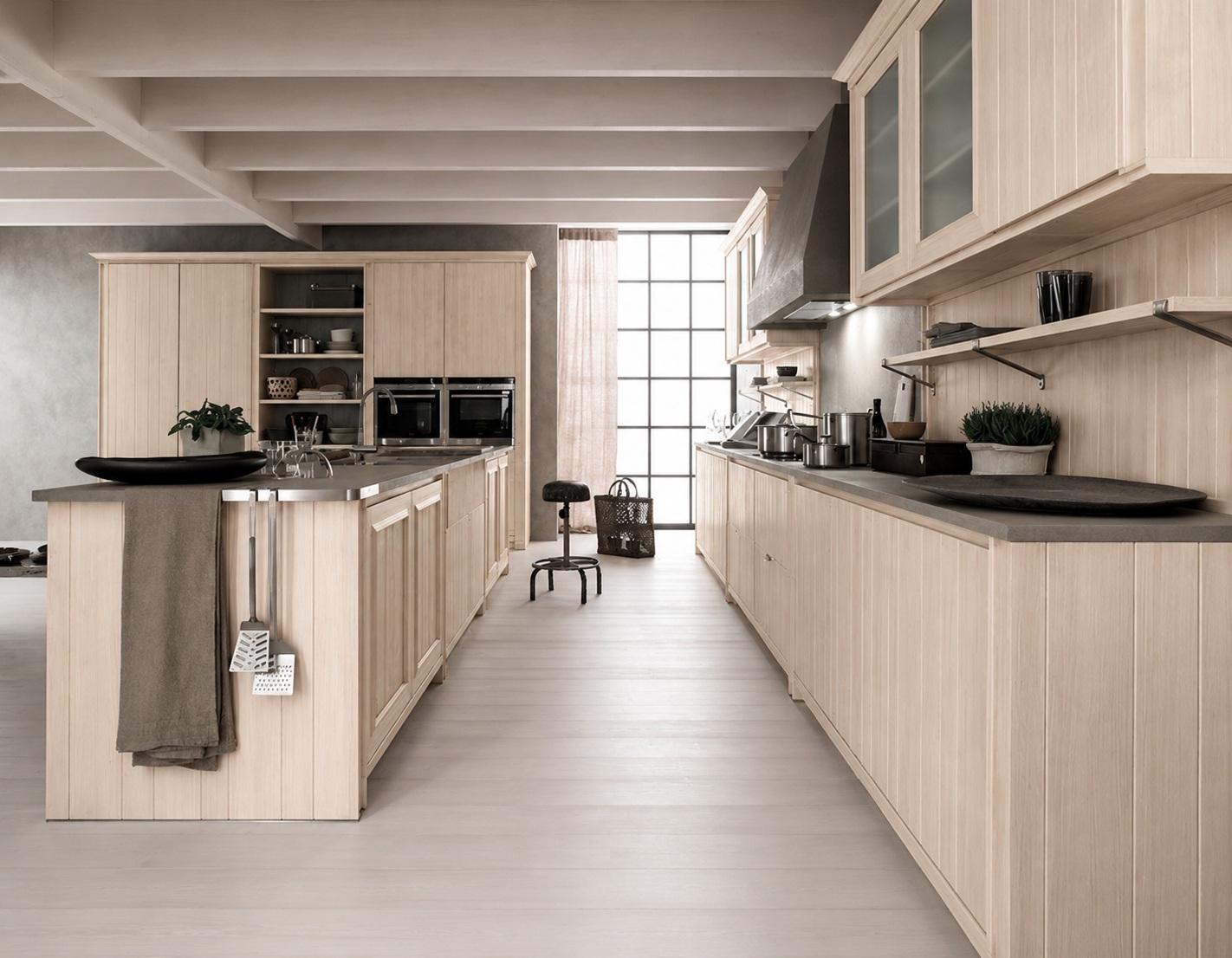
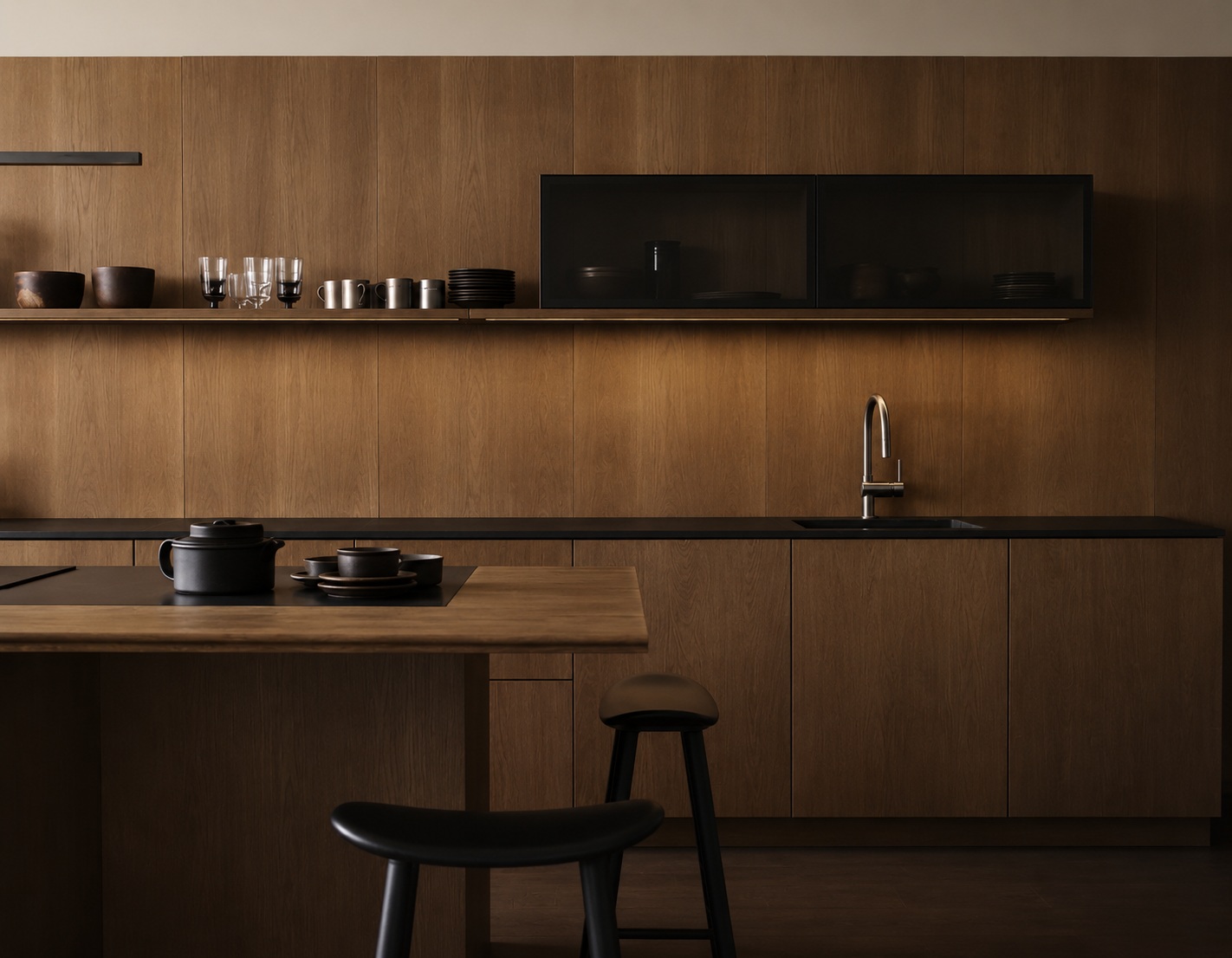
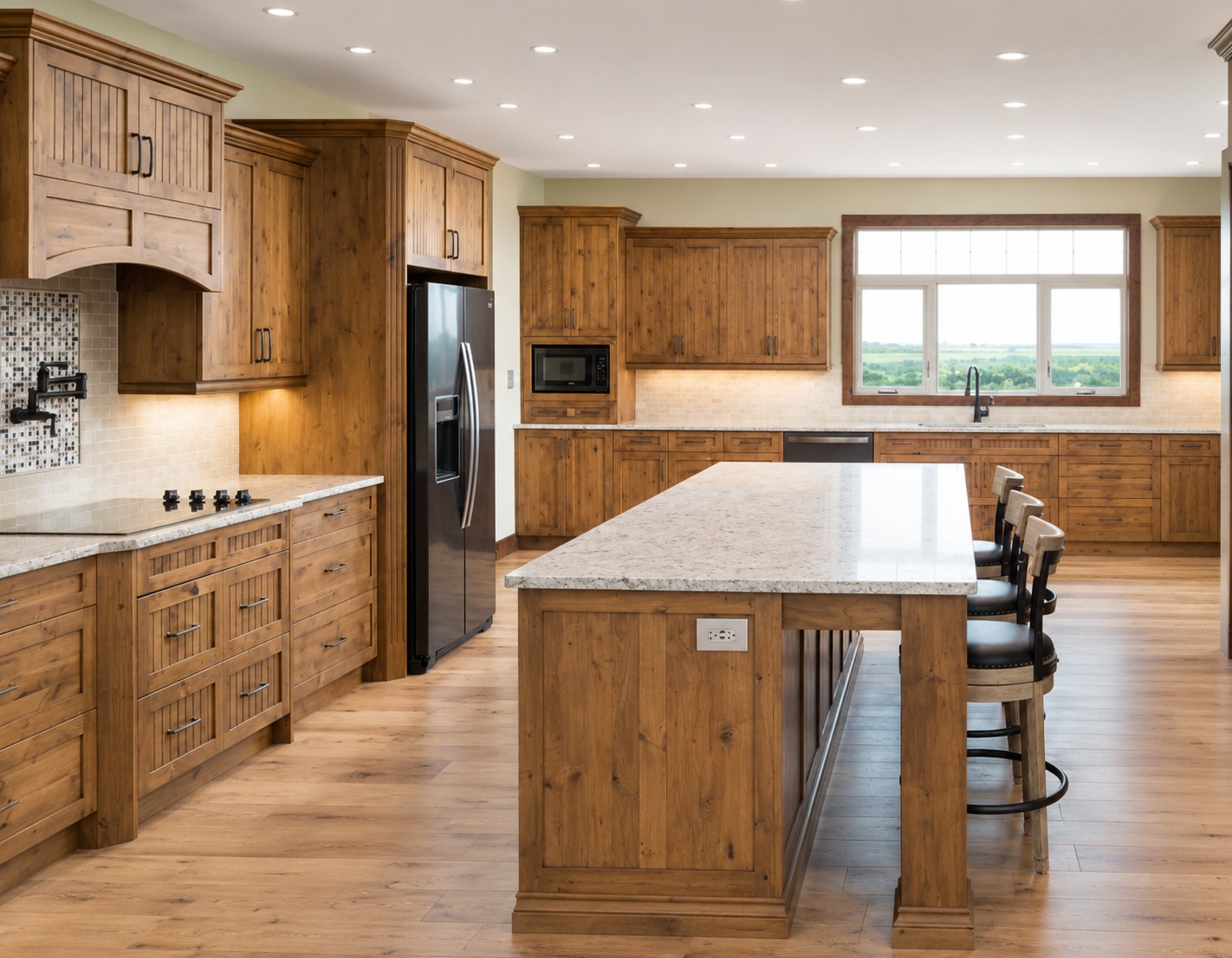
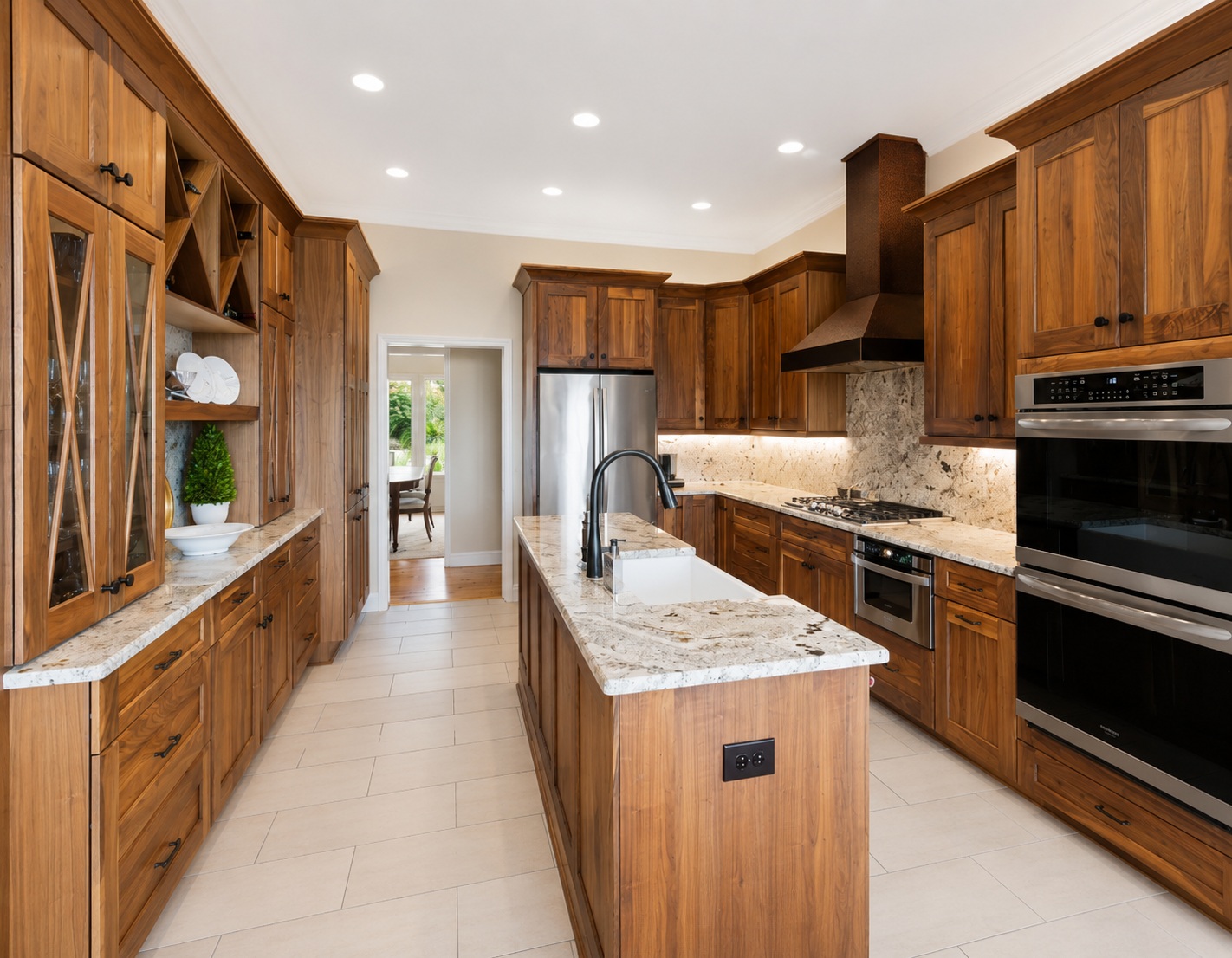
A solid wood kitchen brings warmth and grain across the whole run. The doors carry colour and figure, the cabinet boxes feel substantial in the hand, and the wood ages into the room the way veneers cannot. It is the kitchen built for the home you mean to stay in.
DBM designs and produces each solid wood kitchen run around your project. Share a kitchen plan, an elevation, or a reference picture. We turn it into a working drawing, then build the cabinet boxes, doors, and trim ready for shipment.
Choose the Right Solid Wood Build
Wood Species — Oak / Walnut / Cherry / Maple
Oak for the open grain and traditional kitchen reading. Walnut for the rich, dark room. Cherry for the warm amber that deepens with age. Maple for the clean light tone that takes paint and stain well.
Stain Finish — Clear / Tinted / Custom
A clear finish lets the wood’s natural color carry the room. A tinted stain takes the wood toward the palette of the floor and counter. Custom stain matching is available where you are working from a specific reference.
Door Style — Raised Panel / Shaker / Slab
Raised panel for the traditional kitchen with detail. Shaker for the transitional kitchen that pairs with most styles. Slab solid wood for the modern kitchen that wants the grain to be the whole detail.
Hardware Pairing — Knobs / Pulls / Hidden
Brass knobs for the heritage kitchen. Long pulls in matte black or brushed nickel for the transitional run. Hidden grip detail along the top edge of the slab door where the hardware should disappear.
Where Solid Wood Kitchen Cabinets Fit — Four Common Project Types
Villa Kitchen
A main kitchen running across one wall, an island in the centre, a pantry behind a panelled door. Walnut or oak with stone counters and brass knobs reads as the kitchen of a house meant to last a generation.
Heritage New Home Build
A new build leaning traditional or transitional. Raised-panel cherry or shaker oak in a stained finish carries the heritage reference into a new kitchen. Drawn in from the architect’s kitchen plan so the cabinet runs read clean against the room.
Boutique Apartment
A smaller boutique apartment refit, a top-floor owner’s suite, a heritage-building apartment with a fresh kitchen. Solid wood cabinets answer the building’s own character rather than the developer-grade default.
Vacation Residence
A weekend home, lake house, mountain cabin where the kitchen is part of the holiday. Oak or maple in a warm stain carries the cabin tone; the solid wood holds up to the open-window, season-by-season use.
From Sketch to Site — Three Stages
Share a kitchen plan, an elevation, or a photo of the room — that’s enough to start. We turn it into a working drawing covering cabinet box sizes, door style, drawer layout, and how the run meets walls and appliances.
Cabinet boxes, doors, and trim are trial-fit and photographed in our Guangdong workshop before crating. Each part comes labeled and finish-protected, so on-site work is typically setting and adjusting rather than field-fabricating.
Wooden crates built for ocean freight, packed in the order your installer will set the kitchen. Shipped to 60+ countries — including the USA, Australia, the EU, and across Asia.
After delivery, your contractor or kitchen installer handles fitting. We provide an assembly guide and a step-by-step video. Where local installation is available in your region, we can help you find a vetted installer.
Solid Wood Kitchen Cabinets
Real Wood in a Hard-Working Kitchen — How the Box Handles Steam, Splashes, and Daily Use.
A kitchen is the most humid room a cabinet ever has to live in. The kettle steams, the sink splashes, and warm moisture keeps rising into every cupboard positioned above the worktop. Owners want the warmth and grain of real timber, yet they also want that material to survive years of daily moisture.
Owners usually reach us carrying a fair worry at this point in their planning. They have heard that solid timber swells, warps, or splits inside a busy kitchen, so they ask how a wood run holds its shape over time. The brief here is therefore not really a question about looks; it is about building real wood to handle the warm, wet air it has to live in every day.
Why the Carcass and the Door Are Two Separate Choices.
The honest answer begins with one basic trait of the material. A wide, flat panel of solid wood expands and contracts with the seasons more than most owners expect. The cabinet box, or carcass, is therefore built from engineered plywood rather than one broad timber board. Plywood holds its dimension across humid and dry spells, which keeps every box square and stable on the wall.
The door is where the real timber earns its place in the specification. A framed door holds a floating panel inside a solid-wood frame, so the panel can move slightly without forcing the door out of true. That single piece of joinery is what lets a wood kitchen read as hand-built and still close cleanly for many years.
A solid-wood kitchen is therefore usually a plywood carcass wearing real-timber doors and trim. The eye reads warm, continuous wood across the whole run, while the structure behind it stays calm and steady. We discuss this split early in the conversation, because it shapes both the look and the price.
How a Wood Kitchen Flexes Across the Wet Zones.
Around the Sink and the Hob.
The sink run absorbs the heaviest wetting anywhere in the room. We seal the cut edges of the carcass and add a protected back panel where the plumbing penetrates the cabinet. The toe-kick beneath the sink cabinet sits clear of the floor, so a mopped or splashed surface cannot wick moisture upward into the material. The grain still reads beautifully, while the structure underneath remains properly guarded.
The Wall Cabinets Above the Steam.
Warm steam rises straight into the upper cabinets every time a pot reaches the boil. The finish on these doors matters most, so we cure a protective sealing coat over the timber before the run leaves our floor. A glass-fronted door can interrupt the steam-heavy wall and lift the upper line. The configuration follows wherever the moisture gathers inside your kitchen.
The Island and the Dry Storage.
An island sits away from the splashing, so it can carry a bolder timber or a richer stain. The dry larder and the plate drawers ask far less of the wood than the sink area ever does. We match the specification to each zone rather than over-engineering the whole kitchen to suit its single wettest corner, which keeps the cost sensible and the finish consistent.
What Coordination Looks Like for a Wood Kitchen.
Drawing-First Coordination starts with your kitchen plan and every wet point marked across it. We locate the sink, the hob, the dishwasher, and the fridge before any timber is cut, because those wet zones drive the specification. The working drawing then fixes each box dimension, the door style, and the sealing detail around the plumbing. You review and approve that drawing before the production run begins.
Trial Assembly Before Packing then stands the whole kitchen run upright on our Guangdong workshop floor. We hang the doors, fit the soft-close hinges, and confirm that every cabinet closes accurately against its neighbour. Then we take the run apart, bag the hardware, and label each component, so the install in your kitchen stays an ordered job.
Export-Ready Crating packs the boxes and doors in the order your installer will set them along the wall. We protect the finished timber against knocks and damp for the long ocean leg ahead. The crate arrives sorted by room and run, ready to lift, stand, and fix straight from the drawing.
What to Send Us About Your Kitchen.
A kitchen plan or a few clear photos give us plenty to begin with. Mark wherever the sink, the hob, and the dishwasher sit, since those spots carry the most moisture. Add the wall lengths and the ceiling height, so we can size the upper cabinets correctly.
One more note helps us read the room properly. Tell us the timber species and stain finish you have in mind, and whether the kitchen runs warm and steamy or enjoys good ventilation. From there we turn your notes into a working drawing and a finished kitchen ready to ship.
After delivery, fitting is on your side. On site, your contractor or installer handled fitting directly from our drawings, with our assembly guide and step-by-step video to follow — or use your own local installer where needed.
Chat on WhatsApp →Compare the Shaker Kitchen Cabinets → · see the White Kitchen Cabinets → · browse the full Kitchen Cabinet range → · or explore all our cabinetry →