




Straight Steel Staircase | Custom by DBM Factory


Straight Steel Staircase
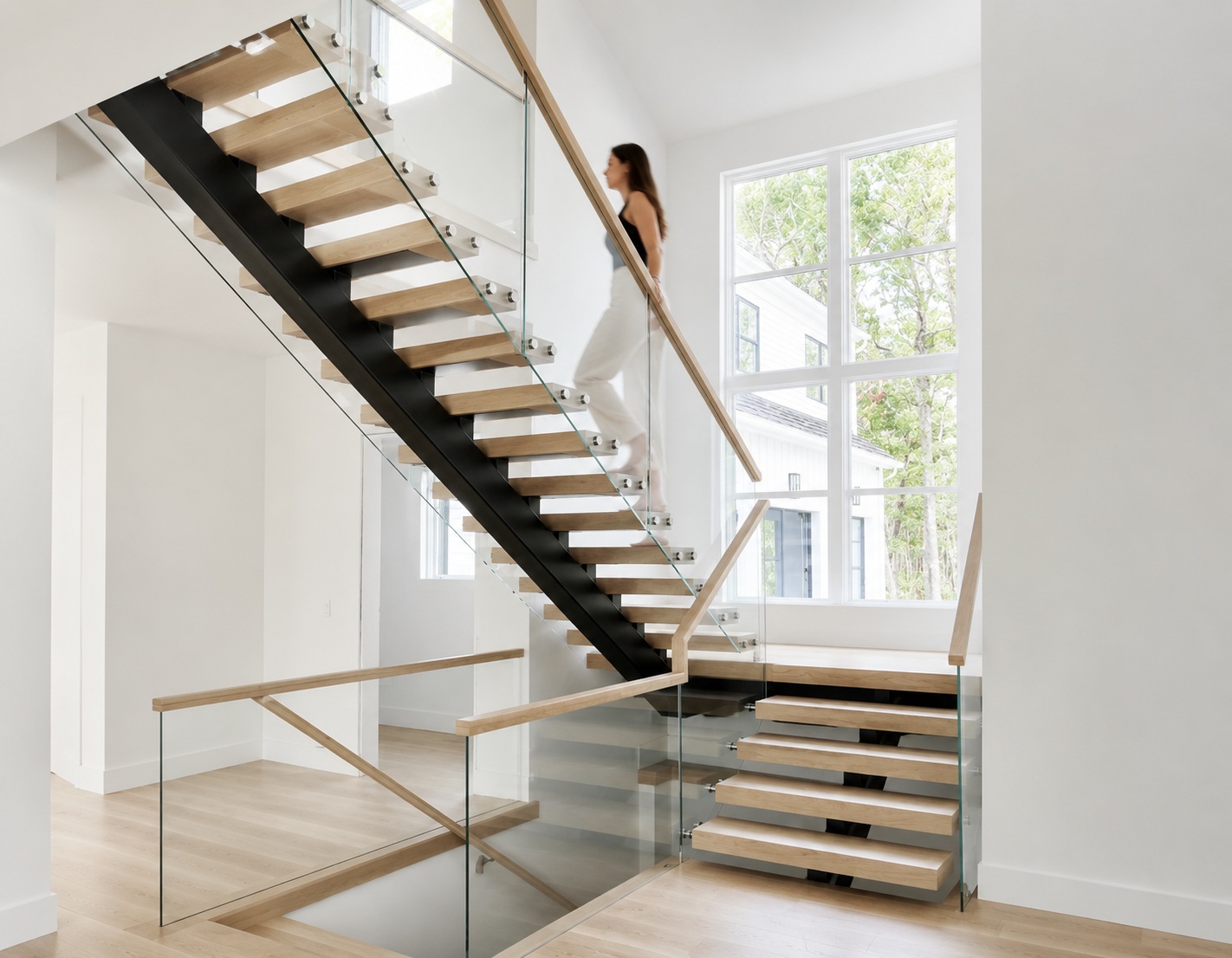
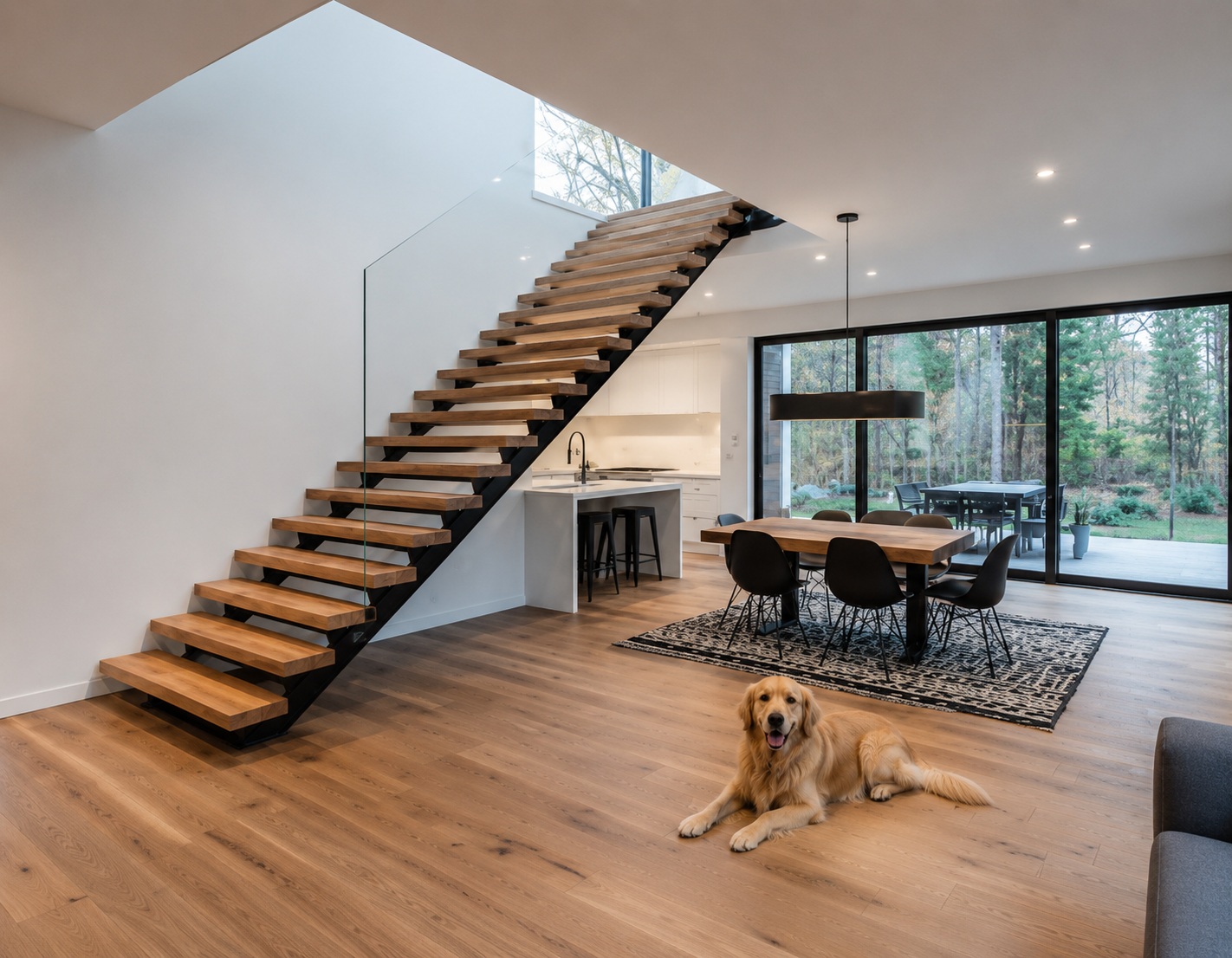
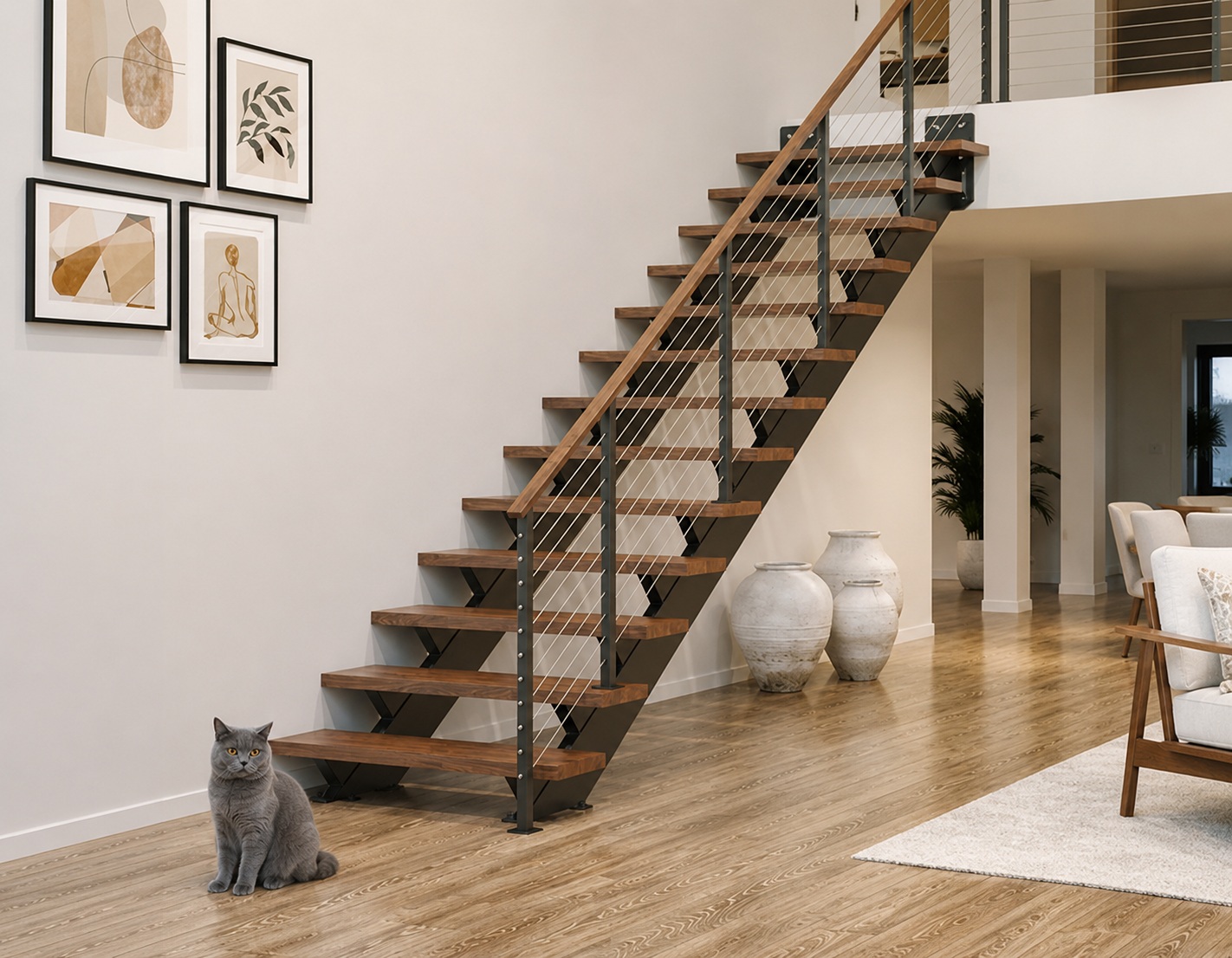
A straight steel staircase carries a long, single run with confidence. Architects draw it when the stringer should be seen. Heavy-section steel handles the span; the finish decides whether it reads as industrial, modern, or quietly tailored.
We build each stair to your drawing in carbon steel or stainless. Send us your plans, sketch, or design reference and we turn it into a working drawing and a stair ready to ship.
Choose the Steel Look You Want
Carbon Steel Stringer — The Working Core
Heavy-section carbon steel is the structural backbone for longer single-flight runs. Welded in the workshop, finished smooth before any coating goes on.
Powder-Coat Finish — Designed Living Spaces
Matte black is the go-to for a modern interior; soft grey or a custom RAL when the stair sits inside a designed palette. We fire the coating on, not paint it.
Stringer Style — Mono / Twin / Box
Mono stringer for the floating-stair look. Twin side stringer for a more grounded read. Box stringer where you want the structure visible as part of the architecture.
Tread Pairing — Hardwood / Stone / Steel Pan
Solid oak or walnut for warmth against the steel. Honed stone for a heavier villa run. Bare steel pan when the stair belongs to a workshop-loft conversion.
Where It Fits — Four Common Project Types
Villa Main Run
When the staircase is one of the first things a guest sees. Mono-stringer steel with hardwood or stone treads turns a straight run into a designed object. An architect specifies this detail on purpose.
Apartment Statement Stair
Duplex penthouse runs, mezzanine apartment stairs, loft conversions. A heavy-section steel stair gives a clean structural line that pairs well with cable, glass, or bar railing.
Modern New Home Foyer
A single flight at the entry, drawn into the architect's plans. The steel is the architecture; the wood or stone tread softens it underfoot.
Industrial-Style Loft & Showroom
Where the steel should show. Twin or box stringer, steel pan tread, matte coating — a straight single flight steel staircase that belongs in the room rather than hiding.
From Sketch to Site — Three Stages
Share your architect's drawing, a sketch, or a design reference. We turn it into a working drawing covering the stringer profile, tread layout, guardrail, and the connections at the top and bottom landing.
We dry-assemble and photograph every staircase in our Guangdong workshop. The team finishes the welds smooth, applies the coating, and checks the whole run before breaking it down for shipment.
We crate the heavy-section steel for ocean freight and protect the finished surface. Shipped to 60+ countries — including the USA, Australia, the EU, and across Asia.
After delivery, your contractor or installer handles fitting. We provide an assembly guide and a step-by-step video. Where local installation is available in your region, we can help you find a vetted installer.
Straight Steel Staircase
When One Run Spans a Double-Height Void — the Long-Flight Brief.
A tall foyer changes what a staircase has to do. Where the ceiling opens into a double-height void, the owner often wants one unbroken run climbing the full height, with no landing breaking the line. That single span becomes the structural question the whole project turns on.
Owners usually reach us with the design intent already settled. The void is the heart of the interior, and a landing partway up would divide the clean gesture they want. So the brief is exact. They want a long, sure flight that feels solid underfoot along its whole length, not a stair that flexes as someone climbs.
How Far One Run Can Stretch Before a Landing.
Span length is the real engineering variable here, and it deserves an honest word early. A longer single flight needs a deeper steel section underneath to stay rigid, because the run carries its own weight plus daily traffic across an open distance. Heavy-section steel handles this with ease, which is exactly why architects choose it for the dramatic runs.
The trade-offs stay practical, and we name them before any order. The longer the open span becomes, the deeper and heavier the stringer grows, and the harder the on-site lift turns out to be. Beyond a certain height, an intermediate landing becomes the wiser choice, both for the structure and for the freight.
So the right call weighs the design ambition against the practical reality. Where the open gesture truly leads the look, a single deep-section run typically earns its place. Where the height grows beyond a comfortable single span, a mid-flight landing may serve the building better, and we model both routes before the steel is cut.
How the Long Flight Flexes Across Different Voids.
A Modest Rise vs a Tall One.
The total height sets the structural plan. A modest double-height foyer happily takes a single mono-beam run with a slim, elegant profile. A truly tall atrium asks for a deeper section, or for a mid-flight landing that resets the span. The visible proportions shift with the height, while the engineering logic underneath stays the same.
A Mono-Beam vs Twin Stringers.
A single central beam gives the floating, minimal read that suits a clean void. Twin side stringers instead share the load across two members, which can carry a longer run with a shallower section each. We settle this on the working drawing, because the beam choice changes both the rigidity and the way the flight meets the floor.
How the Top Lands at the Void Edge.
The upper join deserves real care on a tall run. The flight has to meet the void edge cleanly, where a mezzanine floor or a steel beam frames the opening above. We detail that landing bracket to the surrounding structure on the drawing, so the long climb finishes square against the upper floor rather than at an awkward angle.
What Coordination Looks Like for a Long Steel Flight.
Drawing-First Coordination begins with the full height and the shape of the void. We set the floor-to-floor climb, the upper join, and the way the chosen section flexes under load before anyone cuts steel. A long span allows no guesswork, so the working drawing resolves the steel profile and the landing detail on paper first.
Trial Assembly Before Packing then stands the whole flight upright on our Guangdong workshop floor. We confirm the run reads straight along its length, finish the welds smooth, and apply the coating before we break it down. We label every section as it comes apart, so the build on your site becomes an ordered bolt-together operation across the void.
Export-Ready Crating packs the heavy sections in the sequence your installer will raise them. We seat the heaviest members low and protect the coated surface for the long ocean leg ahead. The crate arrives ready to open and lift, with the running order matching the drawing.
What to Send Us About Your Void.
An architect's drawing or a clear photo of the void gives us a strong start. Add the floor-to-floor height, which is the full climb from the lower floor up to the upper level. Then note the run length you can give the flight, measured along the floor beneath the void.
One more detail helps us judge the structural approach. Tell us whether you want a single uninterrupted run or will accept an intermediate landing, and how the top meets the upper floor. From there we turn your notes into a working drawing and a flight ready to ship.
After delivery, fitting is on your side. On site, your contractor or installer handled fitting directly from our drawings, with our assembly guide and step-by-step video to follow — or use your own local installer where needed.
Chat on WhatsApp →Compare the Industrial Stairs → · see the Prefabricated Stairs → · browse the full Straight Staircase range → · or explore all our staircases →