

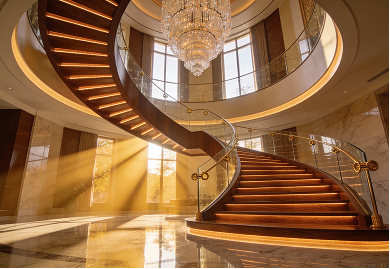
Virginia Square-Tube Floating Staircase & Glass Railing
Project DBM22111405 · Virginia, United States · Coastal Great Room
A Virginia Great Room: Square-Tube Floating Staircase with Frameless Glass Railing
For Flip’s home above the water in Virginia, we built a single-spine steel staircase and a frameless glass railing — then shipped both ready to fit under the vaulted ceiling.
By Double Building Materials — the staircase & railing manufacturer in Guangdong, China that drew, made and shipped this project’s mono-stringer staircase and glass balustrade. Written from our own shop drawings and workshop records. Published June 2026.
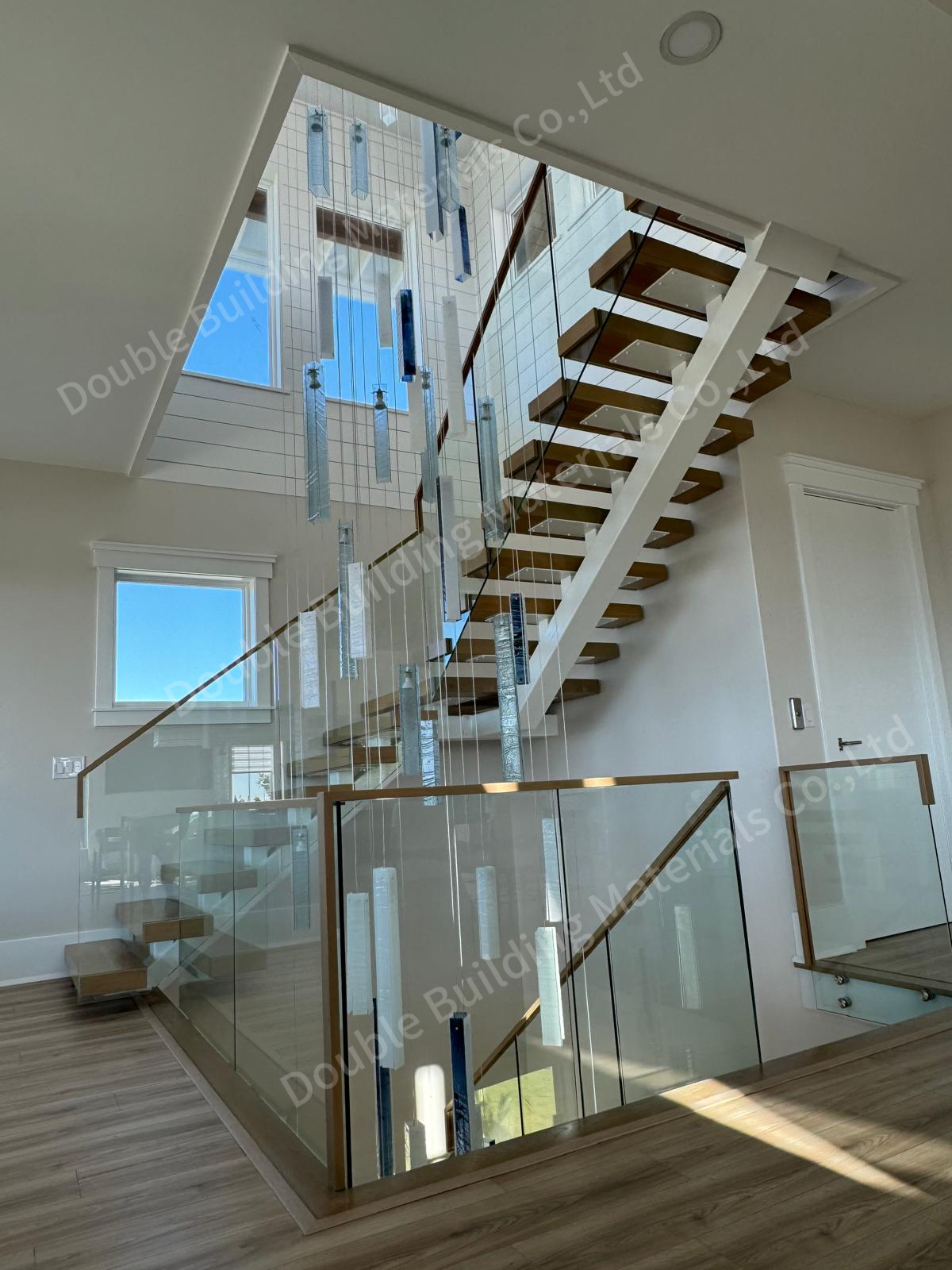
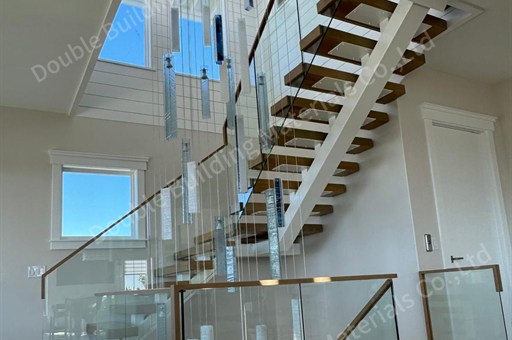
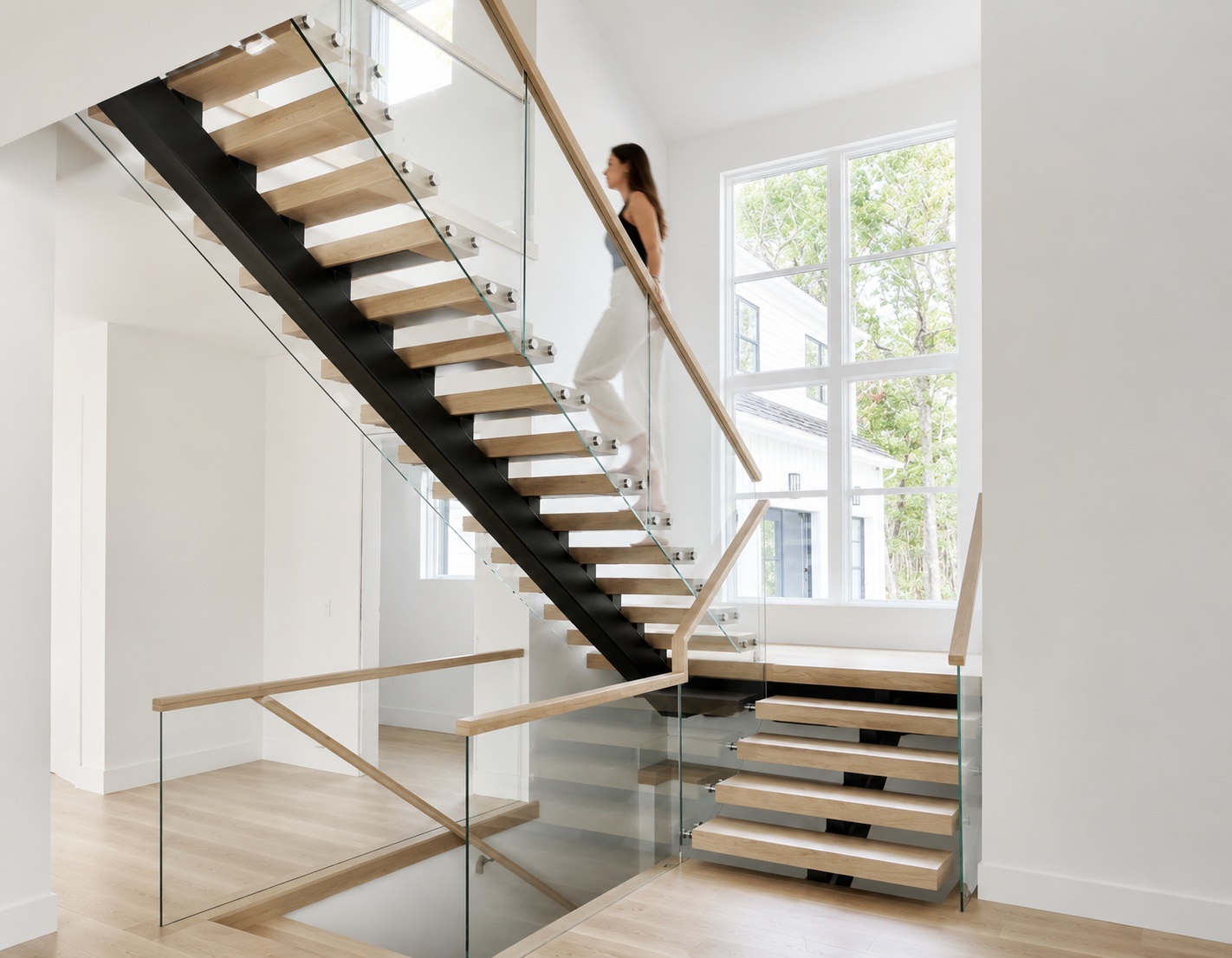
The single-spine steel stair and frameless glass railing, seen from the landing — Virginia, United States.
The Project at a Glance
Double Building Materials made the staircase and railing for a coastal home in Virginia. The design pairs a single central steel tube with open oak treads and a frameless glass balustrade. We drew, trial-assembled and crated every part in our Guangdong workshop, then shipped it for the owner’s builder to fit beneath a vaulted great-room ceiling.
The Homeowner
Flip was finishing a home that looks out over the water in Virginia. The main living space is a tall great room, open to the roof, with windows lined up to catch the view. A drum of pendant lights hangs in the centre, and the floors run a warm oak through the whole level.
He wanted the stair to suit that room. In an open plan like his, the staircase is furniture as much as structure — you see it from the sofa, the kitchen and the floor above. So he worked with us directly to get the look right before anything was built.
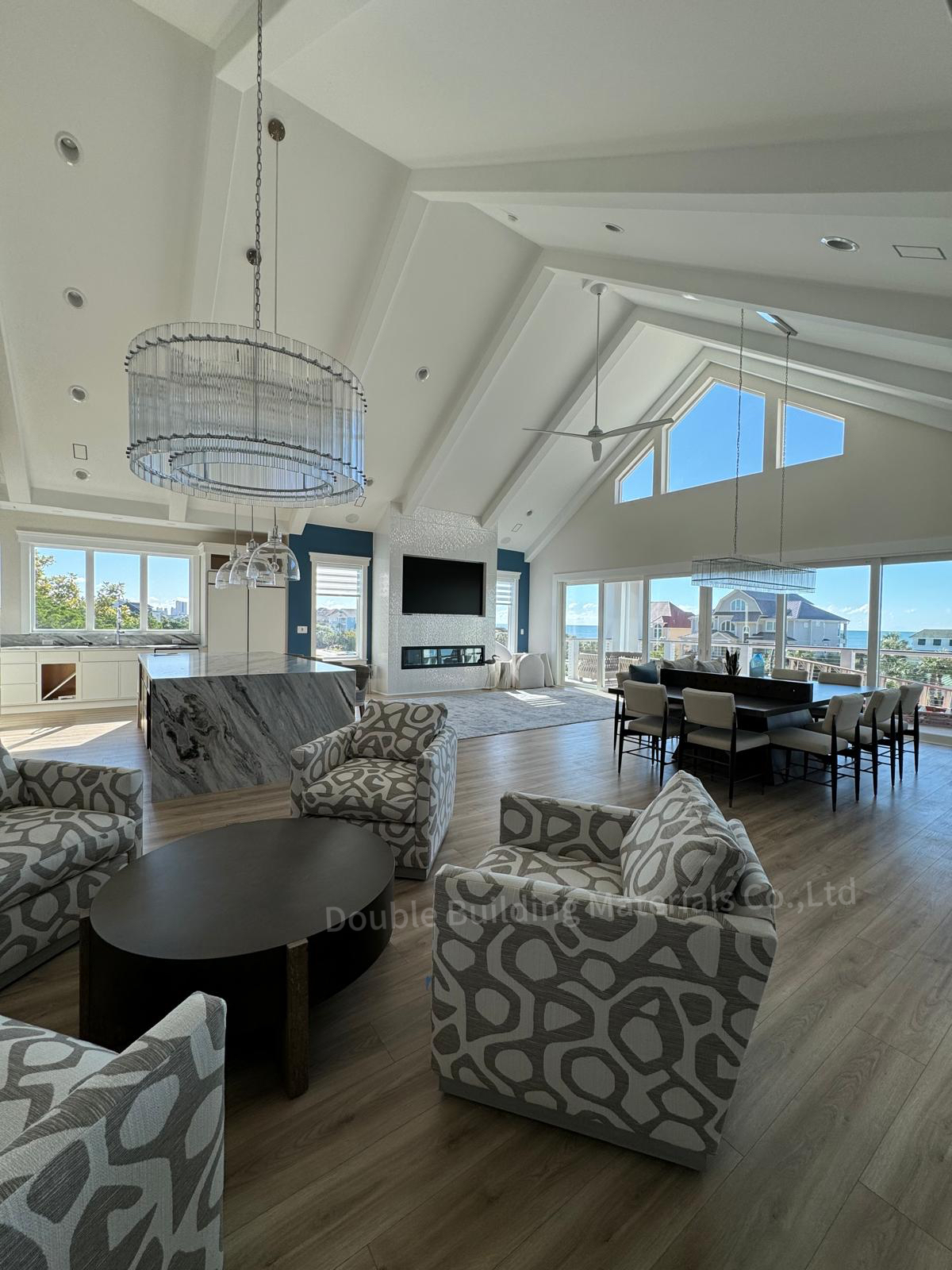
The great room the stair had to live in — vaulted ceiling, oak floors, and windows to the water.
The Challenge
A square-tube floating stair hangs its treads off one central spine. That single steel tube carries the whole flight, so it has to be sized and welded with care. Each tread reaches out from the tube on both sides, with open air between the steps. Get the spine even slightly out of line and every tread shows it.
The room makes that harder. The flight climbs through a double-height void, turns, and lands on the upper floor. It reads against tall windows and the vaulted ceiling, where there is nowhere for a clumsy joint to hide. The light from the water rakes right across the steel and the glass.
Then there is the glass. Flip wanted a frameless balustrade, so the view would stay open and the steps would seem to float free. Frameless glass leans on a clean, true line at the base and a steady gap between every panel. And all of it had to cross an ocean before it ever reached the site.
The Brief
The brief was light and open. Flip wanted a staircase that felt as if it floated — warm oak steps reaching off a slim steel spine, with nothing bulky in the way of the view. The railing had to be frameless glass, clear from floor to handrail, so the eye would carry straight through to the water. A wood top rail would warm the glass and give the hand something to hold. Quiet, light, and built to match the calm of the room.
Why These Materials
The square-tube mono-stringer
A mono-stringer stair runs on one beam down the middle, instead of a stringer under each side. Here that beam is a square steel tube — a hollow box section that stays stiff without looking heavy. The treads bolt to short arms welded along the top of the tube, so the steps appear to float on a single clean line. A box tube also takes a powder-coat finish well, which is why the spine reads as a crisp white edge through the room.
Oak treads
Solid oak gives the steps warmth against all that white steel and glass. Wood is forgiving underfoot and easy to live with, and the grain ties the stair back to the oak floor below. We machine each tread to the same thickness so the open flight keeps an even rhythm from bottom to top.
The frameless glass railing
Frameless means the glass stands on its own, held at the base rather than wrapped in posts and rails. That keeps the view open and lets the stair breathe. We finish the run with a slim wood top rail, so the glass stays almost invisible while the hand still meets something warm. Toughened glass is the right call for a stair people use every day.
Engineering & Code
The spine that carries the flight
With one central tube doing the work, the steel is the part that matters most. We size the box section for the weight of the treads and the live load of people on the stairs, then weld and check the arms before the oak goes on. A mono-stringer has less to hide behind than a twin-stringer, so the welds and the line get extra attention in the shop.
Code references for your inspector
Homes in the United States are built to the IRC, with the IBC covering commercial work. Our shop drawings reference these standards for the rise, the run and the railing, so your engineer or inspector can review and sign off for permit. We draw and make the parts and document them; the local sign-off stays with your team on site.
From Drawing to Site
Drawing-First Coordination
Drawing-First Coordination means we draw the whole stair before we cut steel. Flip shared his plans and the look he was after. We turned them into shop drawings for the tube, the tread arms, the oak steps and the glass setting-out, then sent them back for sign-off. Nothing reached the workshop floor until the drawings were agreed, so the geometry was settled on paper first.
Trial Assembly Before Packing
Trial Assembly Before Packing means we stand the stair up in our own workshop before it ships. We set the central tube, fit the tread arms, and check the rise and the line along the whole flight. We offer up the glass and the top rail to confirm the gaps. Any adjustment happens in Guangdong, where we have the tools — not on a site across the ocean.
Export-Ready Crating
Export-Ready Crating means we pack each part to survive the sea. The steel spine travels braced in timber; the oak treads and the glass ship in their own padded packs, edges protected. We label the crates to the build order, so the steel can go up first and the glass can follow once the flight is set. The parts arrive in the sequence the site needs them.
Double Building Materials draws, makes, trial-assembles, crates and ships. On this project the owner’s own contractor handled fitting on site. We supply assembly drawings and a step-by-step guide, and where local installation is available we can help you find a vetted installer.
The Reveal
In daylight the stair almost disappears. The white spine draws one clean line up through the void, the oak steps glow against it, and the frameless glass holds the view of the water wide open. A cluster of pendants drops through the turn of the flight, catching the light like rain on a line.
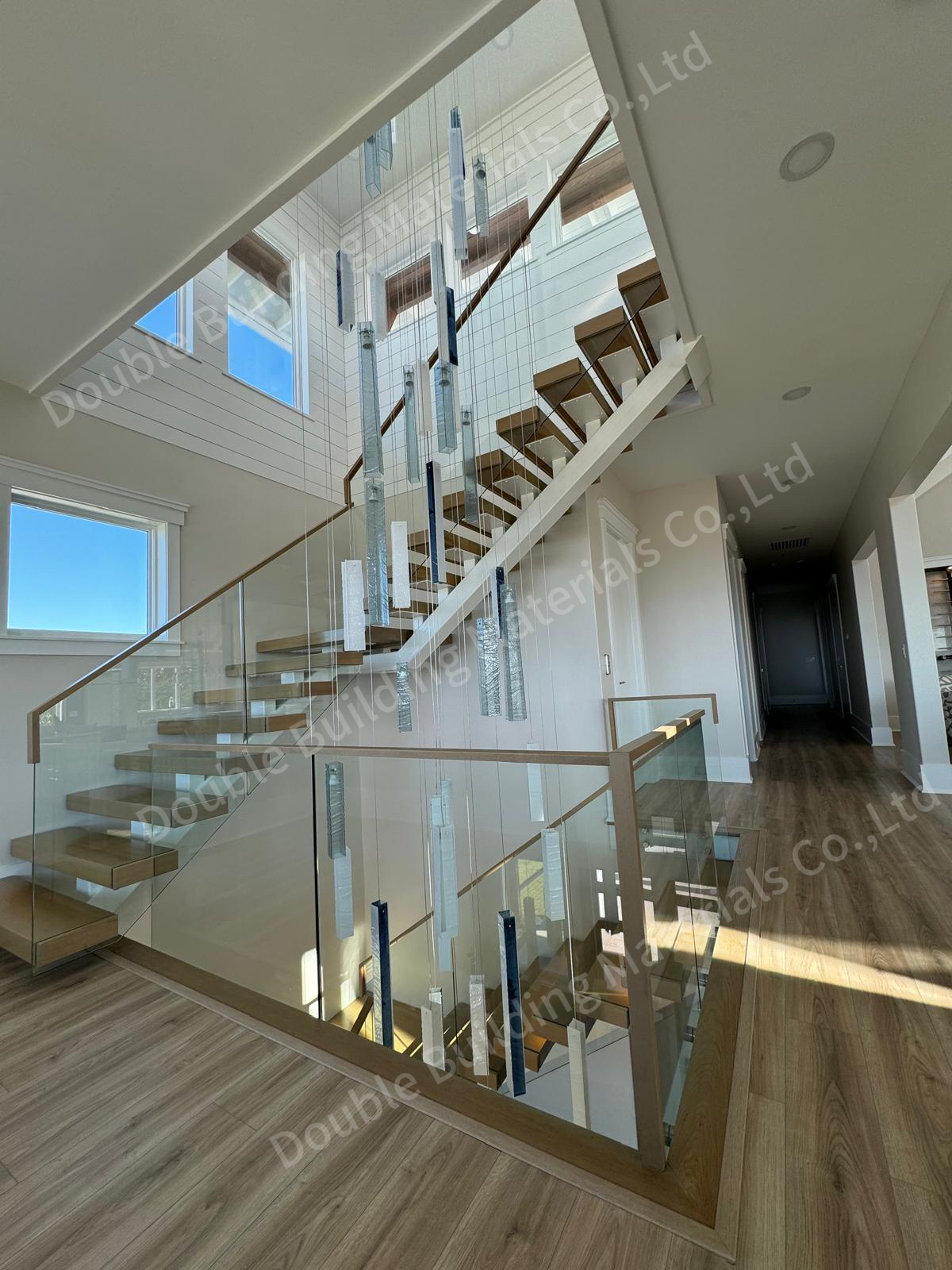
The flight turning through the void, with the pendant cluster falling alongside — Virginia.
From the living area it shows as a single light line of treads, not a wall of balusters. Walk up, and the open steps and clear glass keep the room with you the whole way — the windows, the water, the high white ceiling. It is what catches the eye the moment you step into the great room.
Day to day, the glass keeps the landing safe without closing it in, and the oak feels warm underfoot. The stair earns its place: it carries people up and down while leaving the view, and the light, to do the talking.
Staircase walkthrough.
Specifications
| Project | Staircase & railing for a coastal home |
| Stair type | Square-tube mono-stringer, floating treads |
| Stringer | Single central steel box tube, white powder-coat |
| Treads | Solid oak, to architect’s drawing |
| Railing | Frameless toughened glass, wood top rail |
| Configuration | Flight with turn, to upper floor |
| Code reference | IRC / IBC (drawing reference) |
| Made in | DBM, Guangdong, China |
| Installed by | Owner’s local contractor |
Frequently Asked Questions
What is a square-tube mono-stringer staircase?
It is a stair that runs on one central beam — here a square steel tube — rather than a stringer on each side. The treads bolt to arms along the tube, so the steps look like they float. It suits open-plan rooms where you want the view to stay clear.
Will it meet US building rules?
We prepare the shop drawings to reference the IRC for homes and the IBC for commercial work, covering the rise, the run and the railing. Your engineer or inspector then reviews and signs off for permit. We document the parts; the local sign-off stays with your team.
Who installs it when the crate arrives?
Your own contractor or installer fits it on site, as Flip’s did. We send assembly drawings and a step-by-step guide, and where local installers are available we can help you find one. The crates are labelled to the build order to make that easier.
Planning a floating staircase for an open-plan room?
Send Us Your Plans for a Drawing Review →Related Products
Other Products
More from the same factory — drawn, trial-assembled and export-crated the same way.