




Are Prefab Stairs Up to Code? IRC & IBC Rise and Run-Staircase Guides
Prefab Staircase · Code
Are Prefab Stairs Up to Code? IRC & IBC Rise and Run
Prefab stairs can meet building code. Prefab is a fabrication method, not a separate code category. The same IRC and IBC rules for rise, run, width, headroom, and guards apply to a factory stair and a site-built one alike. A factory often improves consistency, yet your local adopted edition governs the final figures.
The short answer rarely settles a real project, so this guide takes the question apart. We explain why prefabrication changes nothing about the code. We walk through the rise, run, width, and headroom references in plain words. And we stay honest on one point throughout: every number here is a common reference, and the edition your area has adopted is what truly decides.
Prefab Is a Method, Not a Code Category
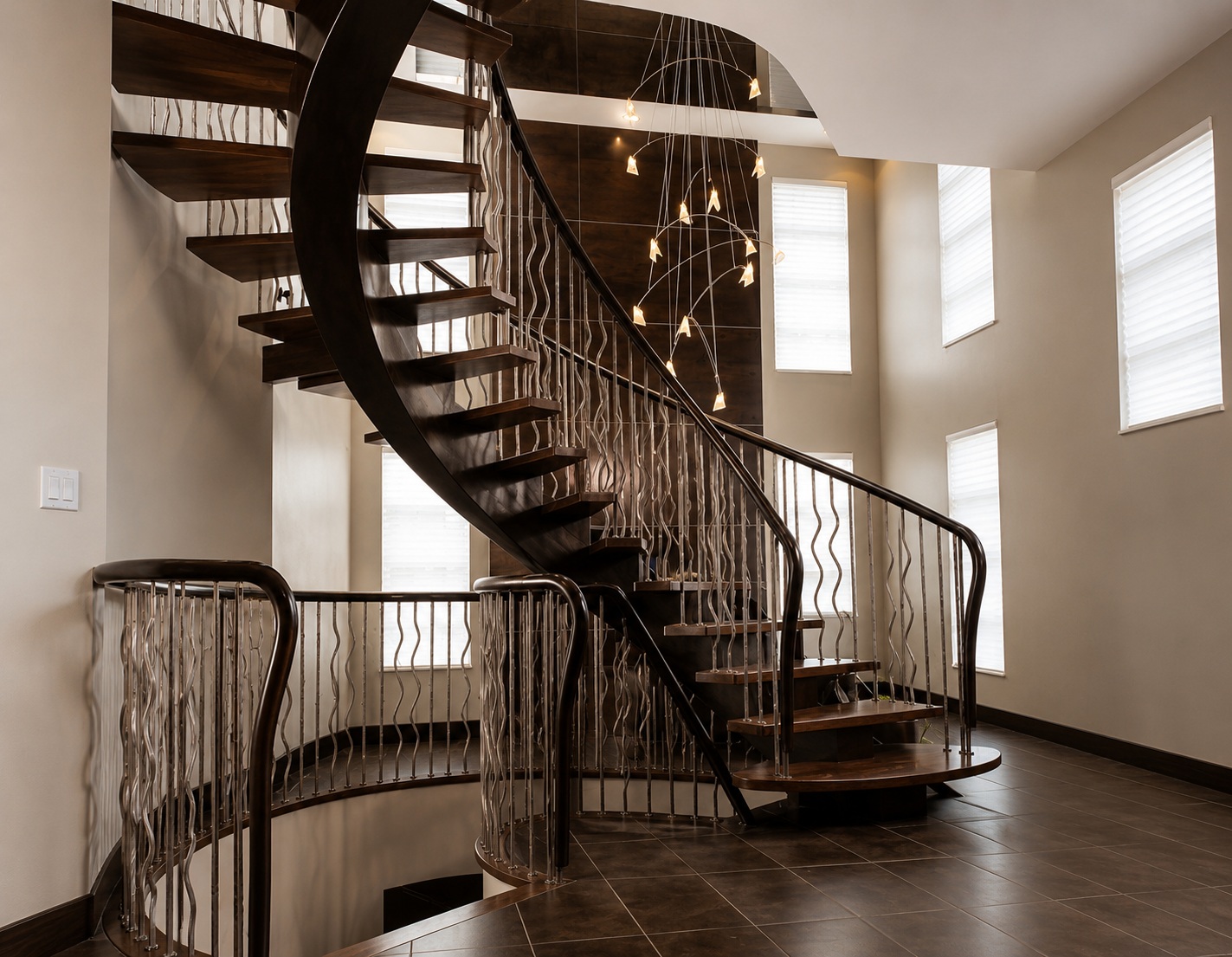
Start by clearing up a common mix-up. A prefabricated stair, often shortened to prefab stairs, is simply a staircase whose parts are made in a factory and then sent to the site as components. Prefabrication describes where and how the stair is made. It does not describe a different kind of stair in the eyes of the building code.
This distinction matters, because people sometimes assume a factory stair plays by separate rules, and it simply does not. The code governs the finished geometry of the staircase, such as the height of each step and the depth you stand on, regardless of the workshop it came from. A stair framed on site and a stair shipped from a factory must both satisfy the same rise, run, width, headroom, and guard provisions. So the real question is never whether prefab stairs are permitted, but whether a given staircase is drawn and fabricated to the figures your jurisdiction has adopted.
Seen this way, prefabrication stays neutral on compliance. It can help, because a steady factory tends to repeat the same dimension more reliably than a busy site. It can also be drawn wrong, like any stair, when the geometry on the drawing does not match the local rule. The method is the how. The code is the what. The two questions are separate, and they meet on the drawing.
Which Codes Apply to Prefab Stairs
In the United States, the prefab stairs building code sits inside two familiar documents. The International Residential Code, or IRC, governs most one-family and two-family homes and townhouses. The International Building Code, or IBC, governs larger residential buildings and commercial work. Both carry a stairway section that fixes the rise, the run, the width, and the headroom. The figures track closely between them.
Neither document holds a special chapter for prefabrication. A factory stair is read against the same stairway provisions as any other staircase, which is exactly why the prefabrication method changes nothing about the target numbers. What does change between projects is the edition in force. Jurisdictions adopt the IRC or IBC on their own timetable, and many add local amendments on top. A figure that is current in one county may sit a revision behind in the next, so whether a prefab flight satisfies the adopted rules always resolves locally, never from one national reference table.
Prefab Stairs Rise and Run
Rise and run are the two figures that determine how a flight feels underfoot, so they sit at the heart of the prefab stairs rise and run question. The rise is the vertical height of each step, measured from the top of one tread to the top of the next. The run, also called the tread depth, is the horizontal distance you place your foot on. Get these two proportions right and the stair walks comfortably; get them wrong and every step fights you.
Under common US residential references, the maximum riser height is about 7¾ inches, and the minimum tread depth is about 10 inches. The code also asks for uniform steps. Within one flight, the largest and smallest riser may differ only slightly, commonly by no more than three-eighths of an inch. That uniformity rule is where a factory truly helps. A jig cuts every stringer to the same line, rather than trusting a tape measure repeated forty times on a noisy site.
A prefab stair earns nothing extra here and loses nothing either. We draw it to the same riser and tread targets, then cut it to them in the workshop. When we set out a flight, the floor-to-floor height divides into equal risers first, and the run follows. The whole staircase then repeats one geometry from bottom to top. Our pillar guide on what a prefab staircase is covers how those parts are planned before any steel is cut.
Width and Headroom
Two more references shape the daily safety of any staircase, prefab or not. Width is the clear distance across the walking surface. Headroom is the clear vertical height above the steps. Both protect the simple act of moving up and down without squeezing or ducking, and both apply in the same way to a factory flight.
Common US residential references set a minimum clear width near 36 inches above the handrail height. They set a minimum headroom of 6 feet 8 inches, measured straight up from a line along the tread nosings. Headroom is the figure most often missed on a tight plan. The underside of the floor above, or a beam crossing the opening, can cut into the path. We size a prefab stair to clear those references on the drawing, where the floor opening and the flight are planned together, not found on site.
Handrail and Guard References
The handrail and the guard are the two parts that protect the edge of a flight, and they do separate jobs. The handrail is the rail you grip as you climb, set at a comfortable height above the nosings. The guard is the barrier that stops a fall from an open side or a landing. Both carry their own references in the IRC and IBC. Neither one cares whether the stair arrived as components or was framed in place.
Common references put the handrail height in a band near 34 to 38 inches above the tread nosings, and a home guard at about 36 inches. The guard also limits the size of any opening, commonly so a 4-inch sphere cannot pass through. That rule keeps a small child safe. On a prefab staircase, we detail the handrail and the guard on the same drawing as the treads. The whole assembly is drawn to one consistent set of reference figures before fabrication begins. Where a project asks us to ship the rail too, it trial-assembles with the flight before crating.
Inside Double Building Materials — a full factory tour.
Why a Factory Often Improves Consistency
If prefab changes nothing about the rules, it is fair to ask what it changes at all, and the honest answer is repeatability. The code does not only set a maximum riser; it also requires that every riser in a flight stay near-identical. Meeting one figure once is easy enough. Meeting that same dimension forty times in a row, by hand, on a site with weather and a deadline, is precisely where small errors begin to accumulate.
A workshop tackles that problem with jigs and repeated setups. We cut the stringers from one template, the treads to one length, and we check the assembly against the drawing under steady light, not on a ladder. None of this makes a prefab stair pass on its own. A drawing set to the wrong figure will still be wrong. What it does is remove the random drift that creeps into repeated site work, so the geometry that leaves the factory matches the geometry on the page. That is the real, modest gain a prefab stair brings to the uniformity the code asks for.
There is a second, quieter benefit. Because we build and check the flight before it ships, problems show up in the workshop instead of on site, where a fix is slower and costs more. We trial-assemble each staircase on our Guangdong floor for exactly this reason. The guide to how prefab stairs are shipped and assembled walks through that sequence in detail.
Reference Table and Where the Line Sits
Here are the common US residential stair references in one place. Read every figure as a widely cited value from the IRC and IBC stairway provisions, not as a final ruling for your project. These same references apply to a prefab staircase and a site-built one alike, because the geometry is what the code governs.
| Stair requirement | Common US reference value |
|---|---|
| Maximum riser height | About 7¾ inches, top of tread to top of tread. |
| Minimum tread depth (run) | About 10 inches, nosing to nosing. |
| Rise and run uniformity | Largest and smallest in a flight differ only slightly, commonly under three-eighths of an inch. |
| Minimum clear width | Near 36 inches above the handrail. |
| Minimum headroom | 6 feet 8 inches, measured from the nosings. |
| Handrail height | Commonly 34 to 38 inches above the nosings. |
| Guard opening limit | Commonly so a 4-inch sphere cannot pass. |
Here is how we work with that table, and where the line sits. At Double Building Materials, we fabricate each staircase to the engineer stamped drawing and to the local code your project is built under. We draw the geometry to those reference values, trial-assemble the whole flight on our Guangdong floor, then crate it for export. We do not check the figures against your area or sign off compliance ourselves. That stays with your engineer and your local building official. You can see the straight flights we build on our straight prefab staircase page.
Who Signs Off Compliance
This is the part it pays to be precise about, because compliance is a chain of duties, not a single stamp. The design engineer sets the geometry on a stamped drawing to suit the adopted code. The fabricator, which is our role, builds the staircase to that drawing and to the local code the project is built under. The local building official then inspects the installed stair and confirms it against the edition in force in that area.
A factory like ours sits in the middle of that chain, not at the end of it. We can draw a prefab staircase to the references in this guide and trial-assemble it before it ships, which gives your team a known, repeatable starting point. What we cannot do is check your local edition for you or issue the final sign-off. That authority rests with your engineer and your building official. Where on-site help is useful, we can help you find a local installer in many regions, but the compliance call stays with your local team. Treat every figure here as a reference, and treat your area as the authority. That is the safe way to plan.
Prefab Stairs Code FAQ
Are prefab stairs allowed under building code?
Yes. Prefab stairs are read against the same stairway rules as any staircase, because prefabrication is a method of building, not a separate code category. The IRC and IBC hold no special chapter for factory stairs. A prefab flight simply has to be drawn and built to the rise, run, width, headroom, and guard figures your area has adopted.
What rise and run do prefab stairs need?
The prefab stairs rise and run follow the common US references: a maximum riser near 7¾ inches and a minimum tread depth near 10 inches, with every step in a flight near-identical. Those same figures apply to a site-built stair. The exact maximum and minimum depend on the edition adopted in your area, so confirm the current numbers with your local team.
Do prefab stairs pass inspection more easily?
A factory often improves consistency, because jigs cut every riser and tread to one line, rather than measuring each by hand on site. That repeatability can make the installed geometry match the drawing closely. It does not change the rules, and it is no substitute for the inspection itself. Your local building official still reviews the installed stair against the adopted edition.
Does DBM certify that prefab stairs satisfy my local code?
No. We fabricate your staircase to the engineer stamped drawing and to the local code your project is built under, then trial-assemble and crate it for export. Checking the figures against your area and signing off compliance belongs to your engineer and your local building official. We can help you find a local installer where available, but the sign-off stays with your local team.
Are prefab stairs as safe as site-built stairs?
A well-drawn prefab staircase is held to the very same safety references as a site-built one, so its safety rests on the geometry, not the workshop. A factory repeats each dimension reliably, and we check the flight before it ships, so the installed result often tracks the drawing closely. The deciding factor is always whether the design matches the adopted code in your area.
Read more in the prefab cluster: start with the pillar on what a prefab staircase is, then see how prefab stairs are shipped and assembled. Or browse our full straight prefab staircase range.
Double Building Materials draws, manufactures, trial-assembles, crates, and ships your prefab staircase to the engineer stamped drawing and your local code. Your own engineer and local building official check the figures and sign off compliance — we do not, and we can help you find a local installer where available. Every code value above is a common US residential reference (IRC / IBC); your local adopted edition governs, so confirm the current version with your local team.
Talk to us on WhatsApp →