

What Is a Prefab Staircase? Prefabricated Stairs Explained-Staircase Guides
Prefab Staircase · Complete Guide
What Is a Prefab Staircase? Prefabricated Stairs Explained
A prefab staircase is a stair that a factory designs and builds off-site, then ships to the project for assembly in place, rather than a carpenter building it step by step. The parts arrive cut, finished, and pre-fitted to your measurements, so the staircase goes together quickly and accurately once it reaches the building.
That single idea, building the stair in a workshop instead of on the site, shapes everything that follows. This guide explains what a prefab staircase is, what the factory actually makes, and why the approach gains accuracy. It covers the materials, indoor and outdoor use, the honest difference between custom prefab and cheap kit stairs, and where the whole approach fits a project. Where a topic runs deep, we link to a focused guide so you can read further.
What a Prefab Staircase Is
A prefab staircase is a stair that a factory plans and builds, then sends to your project to be put together on site. The word prefab is short for prefabricated, and it simply means the major work happens before the staircase reaches the building. Instead of a joiner cutting and joining timber on the site, the factory makes the stringers, treads, and railing to your sizes in a clean workshop, and they arrive ready to bolt together.
People use several names for the same thing. You will see prefabricated stairs, prefab stairs, premade staircase, and pre built staircase, and they all describe a stair made off-site rather than in place. The terms mean the same thing in daily use, so do not read too much into the label. What matters is the method. The factory makes the staircase as a set of finished parts, checks the fit before it leaves, and your fitter then puts it up fast when it lands on the project.
It helps to clear up one point early, because the word prefab covers a very wide range. At one end sits a cheap, mass-made kit you buy off a shelf in a fixed size. At the other end sits a full custom staircase that a maker plans from your own drawings and builds to order for a single home. Both count as prefab, yet they are worlds apart in quality, fit, and finish. This guide covers the made-to-order end, which is the kind of staircase a maker builds for a real project.
What "Prefabricated" Actually Means
Prefab is a way of making a stair, not a style of stair. It tells you where and how a factory builds the staircase, not what the finished stair looks like. A prefab staircase can be straight, curved, spiral, or floating, and it can use steel, timber, or a mix. The common thread is order of work. The team locks the design first, the factory makes and finishes the parts, and only the last step, the assembly, happens at the project.
This is the reverse of the old site method, where a joiner measures, cuts, and joins a stair in place over several days of skilled work. With a prefab staircase, most of that craft moves indoors to a workshop with proper machines, jigs, and quality control. The site task shrinks to setting the finished stair in place and fixing it down. That shift is the whole point of prefab, and it shows why the method has spread from big buildings into high-end homes.
A prefab staircase also tends to arrive as one matched package. The factory plans the structure, the treads, and the railing together as one system, so the parts work as a unit rather than coming from many sources that someone has to square up on site. For a custom project, this joined-up planning drives much of the value, because the team treats the stair as a single made-to-fit object from the first drawing to the last fixing.
What Gets Prefabricated on a Prefab Staircase
On a prefab staircase, the factory makes almost every visible and structural part before delivery. The exact breakdown depends on the design, but the major elements take shape, gain their finish, and pass a fit check indoors. The table below sets out the main components and what happens to each one in the workshop, so you can picture what actually arrives on a truck.
| Component | What is done in the factory |
|---|---|
| Stringers or central beam | The factory cuts, welds, and drills the main structure to the drawing, then finishes it. This backbone carries the load down to the floor. |
| Treads and risers | The team makes each step to its exact size, in steel, timber, stone, or glass, and finishes the surface so you can walk on it. |
| Balustrade and handrail | Posts, infill, glass panels, and the handrail all match the stair, and the team pre-fits them so the spacing stays correct. |
| Fixings and connections | Brackets, base plates, and bolt holes take their place in the workshop, so the parts line up rather than needing adjustment on site. |
| Finish and coating | Powder coat, paint, plating, or stain goes on indoors under clean, controlled conditions for an even, durable result. |
What stays for the site is small by design. Your installer sets the structure in place, fixes it to the floors and the wall, joins any sections, and fits the railing. Since the parts already carry their finish, the on-site stage means careful assembly, not fresh build work. That is what people mean when they call a prefab staircase ready to install. We walk through the delivery and assembly stage in our guide on how prefab stairs are shipped and assembled.
The Accuracy Benefit of Prefabrication
The strongest reason to choose a prefab staircase is accuracy. A staircase ranks among the least forgiving parts of a building, because every step has to match the same height for the stair to feel right and stay safe underfoot. Even small, repeated gaps in riser height show up when you climb, and they cost real time and money to fix once a joiner has built the stair in place. A factory takes out most of that risk.
In a workshop, the team sets the staircase out on exact machines and builds it against the drawing rather than against a rough opening. The treads sit at equal spacing, the structure runs square, and the railing follows the right line before anyone packs a single part. Working indoors also means steady conditions, proper jigs, and even welds, so the finished stair comes out far more uniform than one pieced together on a busy site. The staircase reaches the project already proven to fit.
Accuracy on the bench then pays off on the site. When the parts come out exact and pre-fitted, assembly runs quicker and the chance of an awkward fix on the project drops sharply. For a custom home, where the staircase often becomes a centrepiece, that close fit shows right in the finished look. Tight, even joints and a clean line come far more easily when the parts match each other from the start.
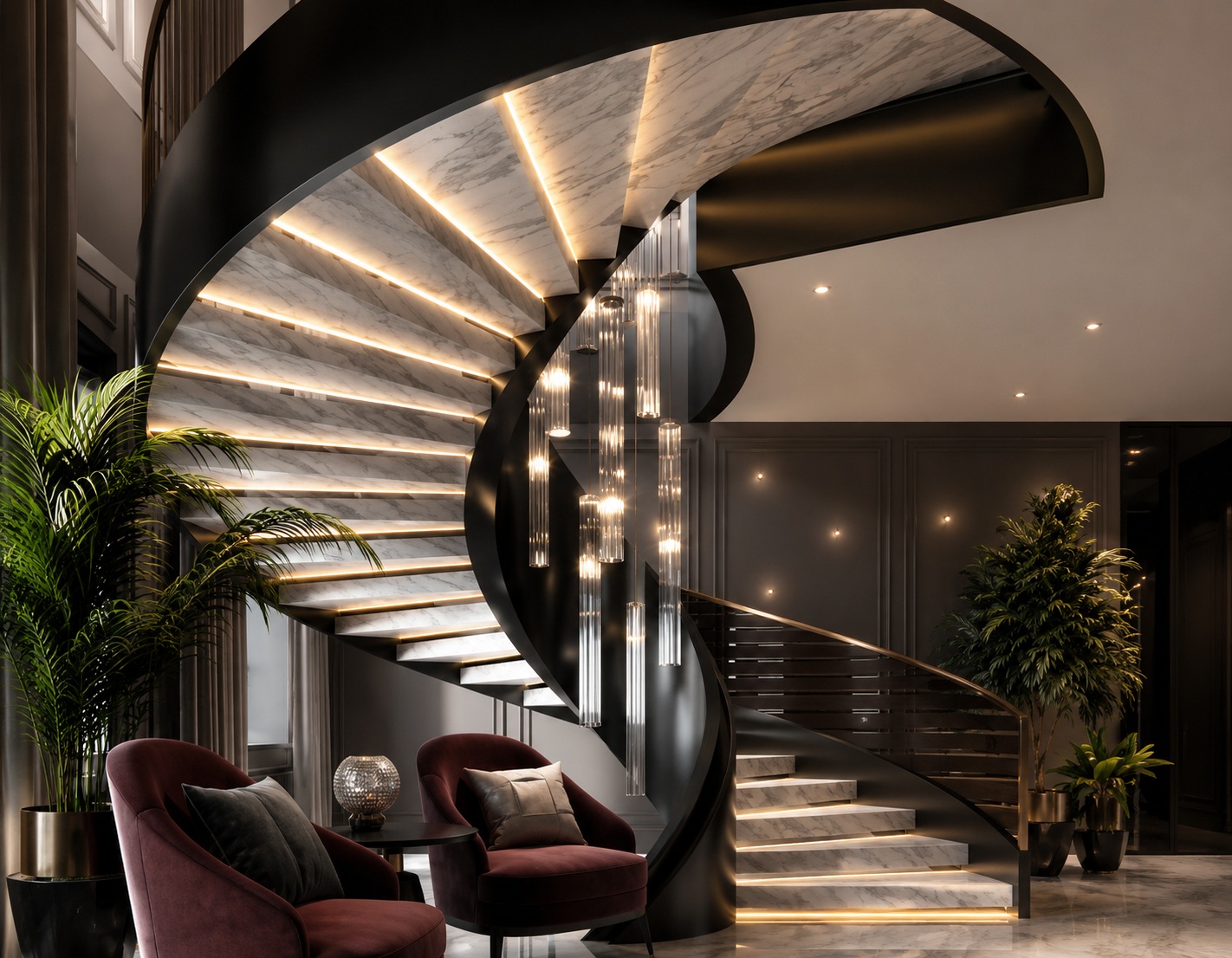
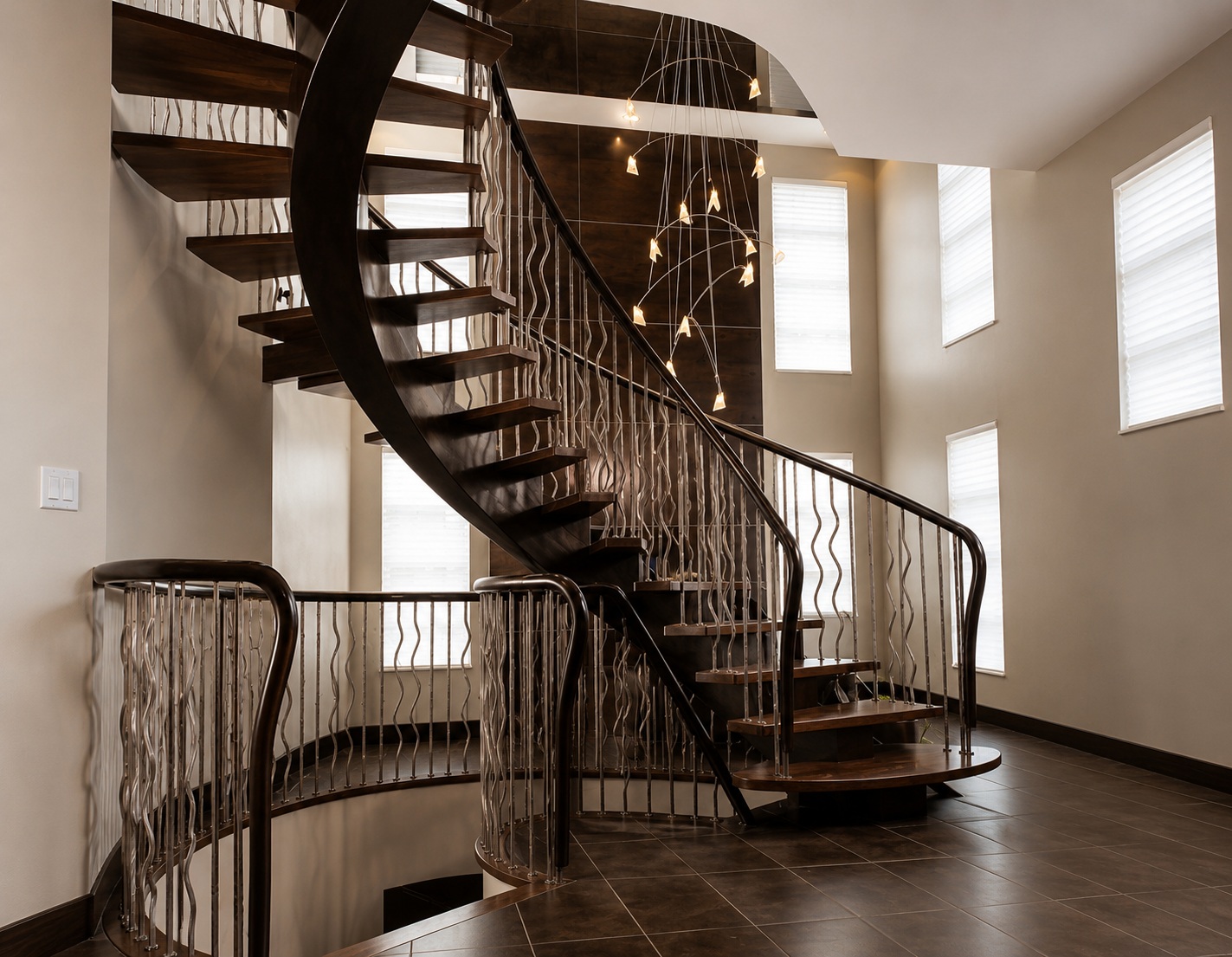
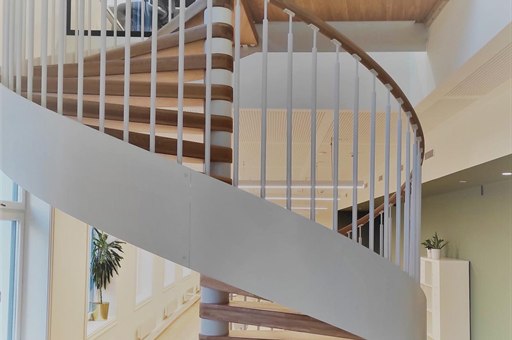
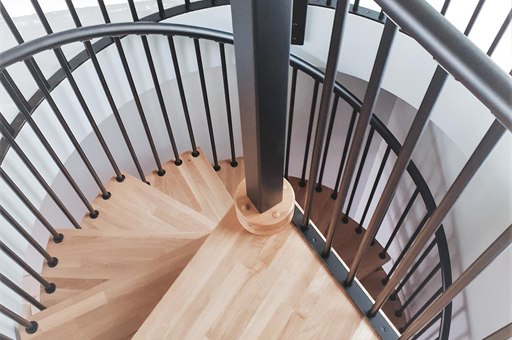
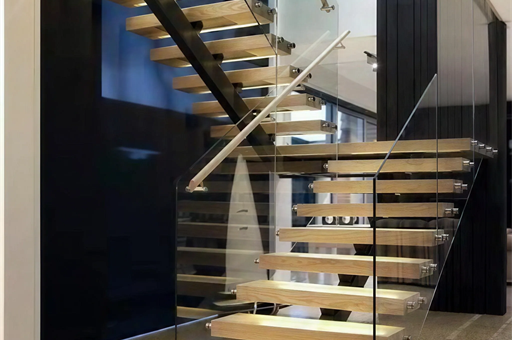
How we build square-tube stairs across four projects in our factory.
Prefab vs Site-Built Stairs
The clearest way to understand a prefab staircase is to compare it with the traditional alternative. For a site-built stair, a carpenter measures, cuts, and assembles the flight in position, often over several days. A prefabricated stair reverses that. The factory does the heavy work, and a short assembly stage remains for the site. Each approach has a place, and the right one depends on the design, the access, and the finish you want.
| Point | Prefab (factory-built) | Site-built (in place) |
|---|---|---|
| Where it is made | In a workshop, on machinery, against the drawing. | On the project, cut and joined in the opening. |
| Consistency | Steps line up identically; the finish stays even and controlled. | Depends heavily on the skill of the person on the day. |
| Time on site | Short, since the parts arrive finished and pre-fitted. | Longer, with cutting, joining, and finishing in place. |
| Best suited to | Steel and feature stairs, complex shapes, repeat quality. | Simple timber flights where a joiner is already on site. |
Neither method wins outright; they answer different needs. A prefabricated staircase suits a design that rewards precision, such as a steel feature stair or a complex curved or floating flight. A joiner who is already on a small build can still cut and fit a simple timber stair in place. We work through the full comparison, including lead time and the trade-offs each way, in our prefab vs site-built stairs guide.
Prefab Staircase Materials
A prefabricated staircase works in almost any material a traditional stair uses, and the factory setting actually widens the choice. Because the heavy fabrication and the finishing both happen indoors, materials that frustrate site crews, such as structural steel and large glass panels, become straightforward. It helps to weigh the structure and the surfaces separately, since they do different jobs.
| Material | Character on a prefab stair |
|---|---|
| Steel | The most common prefab structure. Slim, strong, weldable, and easy to finish in any colour. A natural fit for feature and floating stairs. |
| Timber | Warm wooden treads, often on a steel structure, machined and finished in the workshop to match a floor. |
| Stone | Marble or porcelain treads cut precisely for a solid, luxurious feel. Heavy, so the structure is engineered to suit. |
| Glass | Laminated glass treads or balustrade for an open, light-filled look, fabricated and pre-fitted with a slip-resistant surface. |
| Galvanised steel | For outdoor prefab stairs, finished to resist weather, often with open grating treads that drain rain. |
A steel structure with timber or stone treads suits most homes, and we build that combination most often. Glass treads or a frameless glass balustrade give the most open look, while galvanised steel handles the outdoors. Each choice changes the budget and the engineering, yet the factory can prefabricate any of them. The workshop simply lets us match the structure to the material so the finished staircase performs as one piece.
Indoor and Outdoor Prefab Stairs
Prefabrication suits both indoor and outdoor staircases, though the priorities differ. Indoors, a prefab staircase trades mostly on appearance and a clean, precise finish, so the focus falls on the tread material, the railing, and the proportions of the flight. A steel feature stair, a floating flight, or a curved staircase all read as architectural objects, and the factory finish helps them look crisp in a finished room.
Outdoors, the emphasis shifts to weather resistance and a long service life. An outdoor prefab staircase uses galvanised or powder-coated steel, often with open treads that shed rain and grip underfoot. Common uses include a route to a roof terrace, a raised deck, a mezzanine, or an external fire escape. Because the workshop finishes and protects the assembly before it ships, an outdoor stair reaches the site with its weatherproof coating already intact.
In both settings, prefabrication earns its place by keeping quality consistent and the site stage short. The team engineers the staircase for where it will live, finishes it for that environment, and checks it before packing. That makes the approach a sensible fit for a single feature stair in a home and equally for a run of matching stairs across a larger development.
Custom Prefab vs Cheap Kit Stairs
This distinction matters most, because the word prefab covers two very different products. A retail prefab staircase kit is a mass-produced stair that sells in a small range of fixed sizes, and the buyer takes it off the shelf and bolts it together. It runs cheap and quick, but it never matches your opening. You adapt your space to the kit, the finish stays basic, and the size choices run short.
A made-to-order prefabricated staircase is a different thing entirely. The manufacturer engineers it from your own measurements and your chosen design, then makes it for that one project. The dimensions, the materials, the finish, and the railing all belong to you, and the staircase passes a fit check before it ships. It carries the convenience of prefabrication, since it still arrives ready to assemble, without the compromises of a fixed-size kit.
Double Building Materials sits firmly on the made-to-order side. We manufacture custom staircases for contractors, architects, and homeowners; we do not retail off-the-shelf kits. So you may meet the phrase prefab staircase kit as you search, but the staircases we produce are bespoke, engineered builds. We make each one for a single project from a drawing, never pick it from a catalogue of stock sizes.
How We Prefabricate a Staircase
At Double Building Materials, a prefab staircase begins as a drawing, never as a kit. With more than 25 years of factory experience and over 800 projects delivered across 60-plus countries, prefabrication is simply our natural model. The process follows a clear, repeatable sequence, and each stage exists to make sure the staircase reaches your project ready to assemble and proven to fit.
It starts with Drawing-First Coordination. We take your floor-to-floor height, your opening, and your chosen design, and turn them into a working shop drawing that fixes the structure, every tread, and the railing before we cut any material. Once you approve that drawing, we fabricate the staircase in our 4,500-square-metre factory in Guangdong, China. There we cut and weld the structure, make the treads, and finish every part indoors under controlled conditions.
Before we pack anything, we carry out Trial Assembly Before Packing, building the whole staircase on our factory floor to confirm the rise, the fit, and the line of every part. Only when it passes do we move to Export-Ready Crating, protecting the finished components and packing them in the order your installer will need them. The crated staircase then ships to your project. Your own contractor or installer assembles and fixes it on site from our drawings, and we can help you locate a local installer where that service is available.
One boundary is worth stating plainly. We draw, manufacture, trial-assemble, crate, and ship your staircase, but we do not install it on site or sign off local code. That work stays with your local team, who know the building and the adopted edition that governs it. You can read more about that side in our guide on whether prefab stairs are up to code, and you can see the straight stairs we manufacture on our prefabricated straight staircase page.
Where a Prefab Staircase Fits Your Project
A prefab staircase fits a wide range of projects, and it feels right at home where a close fit and a clean finish matter. For a custom home, it gives you a feature stair that follows your design and reaches a level the site struggles to match. For a new build or a remodel, it lets the team build the staircase in step with the rest of the work, then deliver and fit it once the structure is ready for it.
The method also scales. A single floating or curved staircase can become the bold heart of one home, while a run of matching stairs can serve a whole block or a large site with even quality across every unit. Because each staircase grows from a drawing, the same care applies whether you order one feature flight or a matched set for a bigger job. The method does not change; only the count does.
If you want an exact, well-finished staircase delivered ready to fit, prefab is usually the sound route. It moves the hard work into a clean factory, keeps the site stage short, and treats the staircase as one made-to-fit object from the first drawing to the last fixing. For most custom and feature stairs, that is just what makes a prefab staircase worth the spec.
Prefab Staircase FAQ
What does prefab mean for a staircase?
Prefab is short for prefabricated, and it means a factory designs and builds the staircase before it reaches your project. The factory makes and finishes the structure, treads, and railing off-site to your measurements, then ships them for your installer to assemble on site. The word describes the method of construction, not a particular shape or style of stair.
Are prefab stairs good quality?
A made-to-order prefabricated staircase usually beats a site-built stair on accuracy, because the team sets it out on machinery against a drawing in controlled conditions. Quality does vary by source, though. A manufacturer engineers a bespoke staircase for your project, whereas a cheap off-the-shelf kit follows a fixed size and a basic finish, so the two simply do not compare.
Are prefab stairs cheaper than site-built stairs?
It depends on the design and the material rather than on prefabrication itself. A factory-built staircase can save on the labour and time spent fabricating in place, but a custom prefab stair in steel, stone, or glass is a considered build, not a budget product. Price tracks the material, the structure, and the complexity, so we price each staircase from its drawing rather than to a list.
How is a prefab staircase delivered and installed?
The factory fabricates and finishes the staircase, trial-assembles it to confirm the fit, then crates and ships it as a set of ready-to-assemble parts. On site, your own contractor positions the structure, fixes it to the floors, joins any sections, and fits the railing. We supply the drawings and can help you find a local installer where that service is available; we do not install on site ourselves.
Can a prefab staircase be fully custom?
Yes. A manufacturer engineers a made-to-order prefabricated staircase from your own measurements and design, so the size, shape, material, and finish all belong to you. It still arrives ready to assemble, which is the convenience of prefab, yet it serves one project rather than coming from stock sizes. That bespoke, engineered approach is the kind of staircase we manufacture.
Go deeper into the cluster: prefab vs site-built stairs, how prefab stairs are shipped and assembled, and whether prefab stairs are up to code. Or browse the prefabricated straight staircases we manufacture.
Double Building Materials draws, manufactures, trial-assembles, crates, and ships your prefab staircase. Your own contractor or installer handles on-site installation and local code sign-off — we can help you find one where available. Material and design notes above are general references for custom projects; your local adopted code edition governs the finished stair, so confirm the current version with your local team.
Talk to us on WhatsApp →