

Straight Staircase Cost: The Drivers That Set Your Price-Staircase Guides
Straight Staircase · Cost
Straight Staircase Cost: The Drivers That Set Your Price
Straight staircase cost depends on the material, the stringer type, the tread choice, the railing infill, the finish, and the logistics, not on one fixed price. A straight flight sits at the lower end of the staircase range, because its stringers run in simple straight lines. Every stair we make is built to order, so your real figure comes from the drawing.
A straight staircase is the most common shape in any home, and it is also the friendliest to budget. It runs in one direct line from floor to floor, with no curve or turn to complicate the frame. That simple geometry keeps the price down. Even so, two straight stairs can land far apart, because the material, the treads, and the railing each pull the number in their own direction. This guide walks through every driver, so you can read where your own design is likely to sit before anyone draws it.
Why a Straight Staircase Cost Has No Single Number
The first thing to grasp about a straight staircase cost is that no honest maker can quote a figure before you configure the stair. A staircase is not a catalogue product with a predetermined sticker price. We configure it around the exact elevation of your floors, the dimensions of the flight, the stringer you prefer, and the materials you choose. Change any single variable, and the figure moves accordingly.
This is why two straight staircases that look alike in a photograph can sit at very different prices. A simple closed-string timber flight and an open steel mono-stringer with glass belong at opposite ends of one category. So the honest way to picture cost is not as a number. Picture it as a set of levers you can adjust. Once you know which levers carry the most weight, you can read your own design and form a fair expectation before you request a quotation.
Throughout this guide, we show the way each factor pushes the budget, rather than inventing prices. Where we cite a dollar range, we draw it from third-party market sources and label it that way. As a made-to-order manufacturer, Double Building Materials prices each straight staircase from its finished drawing. That drawing is the only figure that genuinely fits your own project.
Why Straight Stairs Are the Most Economical Shape
Independent cost guides agree on one point. They place the straight staircase at the bottom of the price range, below spiral, floating, and curved stairs. The reason is structural rather than decorative. A straight flight runs along two straight stringers, which remain straightforward to cut, drill, and fit. Nothing bends. Nothing turns. The frame is the most economical beam a stair can use, so it consumes the least engineering time and the least specialised labour of any configuration.
That single advantage flows through the whole project. The handrail runs in a straight line, so it comes from standard stock rather than shaped to order. Each tread matches the next, which suits repetitive batch fabrication and minimises material waste. The flight also packs and ships completely flat, which trims the crating and the international freight. None of this makes a straight staircase plain. It simply shows why the shape sits at the value end, and why you get more finish for your budget when the geometry is simple.
The Straight Staircase Cost Drivers at a Glance
A handful of factors do most of the work in setting a straight staircase price. The table below names each one and shows what tends to raise it and what tends to lower it. None of these entries are prices. They are the levers that decide where your own configuration sits within the band. The sections that follow expand on the most influential drivers in turn.
| Cost driver | What raises it | What lowers it |
|---|---|---|
| Material | Structural steel, exotic hardwood, or a steel-and-timber mix add cost. | Painted softwood or a standard hardwood keeps the frame modest. |
| Stringer type | An open or a single mono-stringer needs heavier steel and finer work. | A closed double stringer is the simplest, most economical frame. |
| Tread material | Solid oak, natural stone, or laminated glass treads cost more. | Engineered timber or painted treads keep the surface affordable. |
| Railing infill | Frameless glass panels or forged ironwork add material and labour. | A slim metal baluster or a simple picket run is the lightest option. |
| Finish | Hand-applied stain, multi-stage paint, or a custom colour add labour. | A single standard powder-coat or one clear coat holds the cost down. |
| Size and height | A taller floor-to-floor height and a wider flight add treads and material. | A standard storey and width keep the tread count predictable. |
| Logistics | Long ocean freight and tight site access raise the delivery share. | A flat-packed straight flight crates and ships efficiently. |
Read the table as a budget map rather than a price list. If your configuration sits in the left-hand column on several drivers at once, the total climbs. If it sits on the right, the total stays contained. Most real projects fall somewhere between, which is why the final figure has to come from a drawing rather than from a guess.
Material: Timber, Steel, or a Mix
The core material sets the base of a straight staircase cost, and it splits into three broad routes. A timber stair is the warm, familiar choice, and softwood or a standard hardwood frame sits at the friendly end of the range. A structural steel stair costs more up front, yet it carries a slim, modern look and a long working life. A steel frame with timber treads mixes the two, and it is a popular middle path that pairs a crisp metal spine with a warm walking surface.
Within each route, the grade still moves the figure. Softwood costs less than oak, and oak costs less than a rich exotic species. Mild structural steel costs less than a stainless finish that resists rust for years. So the material choice is really two decisions in one: which family you want, and which grade inside that family. A clear view of both keeps the base of your budget honest before the treads and railing add their share.
Stringer Type: Closed, Open, or Mono
The stringer is the sloping beam that runs up the side of a stair and holds the treads. On a straight flight it stays simple, yet its style still shifts the price. A closed stringer hides the tread ends behind a solid board, and it is the most economical frame. An open, or cut, stringer steps the tread ends in the open air, which looks lighter and asks for cleaner fabrication. The extra care shows a small premium over a closed run.
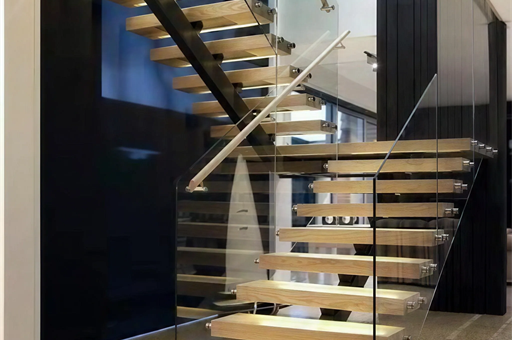
A single mono-stringer sits at the top of the straight-stair range. It carries the whole flight on one central steel beam, so each tread reaches out like a small cantilever. That silhouette is striking and contemporary, but it requires heavier steel and considerably tighter engineering than a pair of conventional side stringers. The frame performs more structural work, so it costs more to manufacture. If you want the open, floating feel on a straight run, the mono-stringer delivers it, at a price that reflects the added structure. Our guide to the custom straight staircase works through these frame choices in detail.
Tread Material and Finish
The treads are the surface you see and touch on every step, and the material you select for them is a major lever on the budget. Engineered timber treads sit at the approachable end, and they hold a stable, even surface that suits most homes. Standard hardwood treads step up in warmth and in price, and the species and grade shift the figure within the timber band. So even a wooden tread offers room to manage cost.
Solid oak, natural stone, and laminated glass treads carry the aesthetic further, and the price with it. Stone is remarkably heavy, and it asks the supporting frame to grow to carry the additional load. Glass needs precise detailing and a slip-resistant surface, which adds fabrication work. Both produce a striking straight staircase, and both occupy the premium tier of the tread range. The finish then layers on top. A single clear coat or one standard powder-coat colour holds the cost down, while a hand-applied stain or a multi-stage custom colour adds labour. Matching the tread and finish to the room keeps the spend where it shows the most.
Railing Infill: Glass, Cable, or Metal
The railing runs the full length of a straight staircase, so its style influences cost more than its modest size suggests. A simple metal baluster or a picket run is the lightest and most economical infill, and it suits a clean, traditional stair. Stainless cable infill keeps the view open across the flight for a moderate step up, since it adds fittings and tension hardware. It reads as crisp and contemporary, and it pairs well with a steel frame.
Frameless glass is where the balustrade makes the largest difference. Toughened or laminated glass panels add material, specialised hardware, and meticulous detailing, so they cost considerably more than a baluster run. The payoff is an open, almost invisible barrier that complements a contemporary interior and keeps a panoramic view intact. Forged ironwork occupies the ornamental end, where intricate scrollwork and sculpted balusters bring craftsmanship and character in equal measure. The railing is one of the clearest places to dial the budget up or down, because the frame stays the same while the infill swings from plain to premium. For a full picture of the shape itself, see our straight staircase guide.
Size, Height, and Logistics
The size of the flight adds a quiet but steady driver. A taller floor-to-floor height simply needs more treads to climb it, and a longer stringer to carry them. A wider flight uses more material across every tread and every railing run. A standard storey gives a tread count you can predict, while a tall entrance hall raises both the steps and the material. Common US references set a rise near 7.75 inches and a run near 10 inches per step, and your local adopted edition is what actually governs.
Logistics is the last piece, and it favours the straight shape. A straight flight packs flat and nests neatly, so it crates and ships more efficiently than a curved or spiral stair. The delivery share still depends on distance and on site access, since a tight stairwell or an upper floor asks for more careful handling. When you compare an installed market price with a manufactured price, remember that the freight and the local labour sit inside that installed figure. Pull them apart, and you compare the same thing.
Third-Party Market Ranges, in Context
Many buyers want a rough order of size before they begin, so here is the careful version. Independent home-improvement cost guides commonly place a basic straight staircase in the low thousands, with a plain softwood flight cited near a few thousand dollars. A mid-range hardwood or steel straight stair sits higher, and a premium straight flight in oak, stone, or glass with a frameless balustrade rises into the low tens of thousands. Those figures are a third-party market estimate, not our quote. General renovation sources publish them, not us.
Treat any such range as a wide indicator and nothing more. It blends together different countries, vastly different specifications, and everything from a utilitarian builder flight to a designer centrepiece, so it cannot accurately describe your own project. The drivers above are what genuinely move your figure within that broad category, which is why a drawing always outperforms a published average. We never publish our own price list, because every straight staircase we build is made to order and costed individually from the finished design.
How to Manage the Budget
If you want a smart straight staircase without an unlimited budget, a few choices carry most of the savings. A closed timber stringer rather than a single mono-beam keeps the frame simple, which is the largest single economy on the list. Engineered treads instead of stone or glass, and a slim metal baluster rather than a frameless glass wall, then hold the surfaces and the railing affordable. A single standard finish avoids the labour of a custom colour. None of these choices makes the stair feel cheap. They simply concentrate the budget where it shows the most.
At Double Building Materials, a straight staircase begins as a shop drawing, not a kit. We take your floor-to-floor height, your floor opening, and your chosen stringer and width, then draw every tread and the handrail before any material is cut. That drawing is also where the price becomes real, because it fixes every quantity in the design. We then fabricate, trial-assemble the whole staircase on our Guangdong factory floor, and crate it for export in the order your installer needs. Your own contractor fits it on site, and we can help you find one where local installation is available. When you are ready to specify, browse our prefabricated straight staircase range, and if you are weighing a step up in shape, compare the floating staircase cost drivers too.
Straight Staircase Cost FAQ
How much does a straight staircase cost?
There is no single price, because a straight staircase is made to order around your material, stringer, treads, railing, and height. Third-party renovation guides commonly span from the low thousands for a plain softwood flight into the low tens of thousands for a premium steel or oak stair with a glass balustrade. That is a third-party market estimate, not our quote. The genuine figure for your project comes from its finished drawing.
Are straight stairs cheaper than other staircases?
Generally yes. Independent cost guides rank the straight staircase as the most economical shape, below spiral, floating, and curved stairs. The reason is the simple frame, because two straight stringers cut and fit far more easily than a curving or turning one. That simple geometry, rather than any cut in quality, is what places straight stairs at the value end of the range.
What is the biggest factor in straight staircase cost?
The material and the stringer type usually lead. A timber closed-string flight sits at the friendly end, while a steel mono-stringer needs heavier metal and finer work, which lifts the figure. After the frame, the tread material and the railing infill decide the finish. A taller floor-to-floor height then adds treads and material, which moves the number higher again.
Does a glass railing add a lot to a straight staircase price?
It can. Frameless glass panels add material, hardware, and careful detailing, so a glass balustrade costs considerably more than a metal baluster run. Stainless cable infill is a moderate middle path that keeps the view open for less. The railing is one of the clearest levers on the budget, because the frame stays the same while the infill swings from plain to premium.
Why will a manufacturer not give a price upfront?
Because a made-to-order straight staircase has no price until you configure it. The figure depends on the exact material, the stringer, the treads, the railing, and the height, so a number quoted before the drawing would be a guess. A reputable manufacturer prices from the finished shop drawing, which is the only document that reflects every quantity in your own staircase.
Read more in the cluster: start with the pillar on the straight staircase guide, then shape your project with the custom straight staircase guide, or compare the floating staircase cost drivers. When you are ready, browse the full prefabricated straight staircase range.
Double Building Materials draws, manufactures, trial-assembles, crates, and ships your straight staircase. Your own contractor or installer handles on-site installation and local code sign-off — we can help you find one where available. Dollar figures above are third-party market estimates, not our quote; we price each made-to-order straight staircase from its finished drawing. Any code or dimension values are common US residential references, and your local adopted edition governs, so confirm the current version with your local team. With 25+ years and 800+ projects shipped to 60+ countries from our 4,500 m² factory in Guangdong, China, we draw and trial-assemble every staircase before it ships.
Talk to us on WhatsApp →