

Prefab vs Site-Built Stairs: Pros and Cons-Staircase Guides
Prefab Staircase · vs Site-Built
Prefab vs Site-Built Stairs: Pros and Cons
In a prefab vs site-built stairs comparison, the key gap is where the stair is made. A factory builds and trial-fits prefab stairs first, then ships them to fit on site, so they gain accuracy and speed. Carpenters build site-built stairs in place, which adds flexibility but leans on local skill and timing.
Both routes give you a finished staircase. But they get there in very different ways, and the right one hinges on your project. This guide weighs the two on what owners and builders care about most: accuracy, finish, time on site, flexibility, and the planning each one asks of you. By the end you will know which path fits your home and your schedule.
The Core Difference
The whole prefab vs site-built stairs question comes down to one thing: where the stair gets made. A factory engineers, cuts, welds, and finishes a prefab staircase indoors, under steady light and clean air. The crew then trial-fits the whole stair on the factory floor, takes it back apart, crates it, and ships it to you as a kit of matched parts. The heavy, exact work stays off site, and your installer mostly assembles a stair that already fits.
A site-built staircase takes the opposite path. Carpenters build it in place, working right there in the home. They measure the opening, cut the stringers, and fix the treads on the spot, shaping the stair to the house as they go. There is no factory trial fit. The stair comes together for the first time exactly where it will live, and that single fact is both the strength and the weakness of the method.
So the easiest way to tell the two apart is the order of events. A prefab stair is finished first and fitted second. A site-built stair is measured, cut, and finished all in one place, right at the end. People also call the factory route prefabricated stairs or factory-made stairs, and the choice shapes accuracy, speed, finish, and how much you can still change once work begins.
Prefab vs Site-Built Stairs at a Glance
This table sets the two routes side by side on the points that owners and builders weigh most. Read it as a quick map. The sections that follow then unpack each row in plain words, so you can balance the trade-offs against your own home, your own timeline, and the trades you can hire near you.
| Factor | Prefab (factory made) | Site-built |
|---|---|---|
| Where it is made | In a clean factory, then shipped as matched parts. | In place, inside the home, by local trades. |
| Accuracy | High; cut on factory jigs and trial-fitted before shipping. | Tracks the carpenter and the site conditions. |
| Time on site | Short; the stair arrives finished and you assemble it. | Longer; the crew builds and finishes the stair on site. |
| Finish quality | Workshop finish, sprayed in clean, dust-free air. | Finished amid site dust; quality tracks the trade. |
| Flexibility | Set at the drawing stage; you change it before cutting. | High; carpenters adjust as the build moves along. |
| Planning needed | Plan lead time, delivery, and access early. | Less delivery to plan; relies on trade availability. |
| Best suited to | Feature stairs, steel and glass designs, tight schedules. | Simple timber stairs, awkward retrofits, evolving plans. |
Accuracy and Quality Control
Accuracy is where prefab stairs tend to pull ahead, and the reason is the setting. A factory cuts every stringer and tread against fixed jigs and templates. So each part repeats to the same size, rather than to a hand measurement taken on a busy site. The riser height holds steady from the first step to the last. That uneven-step feeling some stairs have is far less likely when a machine sets the shape than when a hand does.
The quality-control step that truly splits the two is trial assembly. At Double Building Materials we build the whole staircase on our factory floor before we crate a single part. That lets us check the rise, the run, and the fit of every piece while we can still tune them. A site-built staircase, by contrast, comes together for the first time in the home. So a crew finds any mismatch late, when fixing it is slower and far more disruptive. Our pillar guide explains the full factory sequence in what a prefab staircase is.
Speed and Site Delays
Time on site is the clearest win for prefab stairs, because most of the work is already done when the stair turns up. The parts reach the home finished and labelled. So an installer assembles and anchors a proven stair, rather than cutting and shaping one from raw steel or timber. That keeps the loud, dusty work in the factory. It also shortens the messy window inside a home that people are often still living in or finishing around the trades.
A site-built staircase asks for more time in the building itself. The crew cuts every stringer, fits every tread, and finishes the whole stair where it stands. That ties up the stairwell for longer, and it locks the schedule to one trade staying on site day after day. A prefab stair has already passed its trial fit, so it carries less risk of the late surprise that stalls a job. That is exactly why the factory route trims the kind of rework that pushes a build back.
A double-stringer staircase factory QC check — eliminating on-site delays. Tap to play.
Finish Quality
Finish quality ties closely to the air a stair gets coated in, and that favours the factory for certain designs. A workshop sprays paint, powder coat, or a clear finish in a clean, sealed bay, away from the dust and weather of a live site. For a steel staircase or a glass design, a flawless surface is half the point. That kind of finish is hard to match with a brush or a spray gun in a half-built room.
A skilled carpenter can still build a beautiful site-built timber stair, and old joinery rewards working in place. The honest split is consistency and material. Prefab stairs indoor suit modern steel, glass, and stone designs, where a crisp, repeatable workshop finish does the design justice. A simple painted timber stair is more forgiving and finishes well either way. So the finish question really turns on the material and the look you want, not on one route winning across the board.
Flexibility and On-Site Changes
Flexibility is the strongest card a site-built staircase holds, because a carpenter in the home can adapt as the build unfolds. If a wall sits an inch off the plan, or a client changes a detail mid-job, the trade can shift a tread or trim a stringer on the spot. For a renovation where the old structure hides surprises, that real-time reaction is genuinely useful, and it saves a lot of back-and-forth.
Prefab stairs move that flexibility earlier, rather than dropping it. With a prefab staircase, you lock the design at the drawing stage, so you make changes on paper before any steel is cut. That is cheaper and cleaner than altering a finished stair. The trade-off is real: you must confirm the opening and the dimensions before the factory starts. Front-end site measurement matters, which is why a drawing-first maker asks careful questions before it commits anything to the workshop floor. Among the prefab stairs pros and cons, this shift in timing is the one most owners weigh hardest.
Delivery and Access Planning
The one area where prefab asks more of you up front is logistics, and it pays to plan it early. A factory-made staircase has to travel to your site, then move into the building. So lead time, delivery, and access all need a think before you place the order. A large feature stair often arrives in sections on purpose, so it can pass through a doorway, around a corner, or up to an upper floor without trouble on the day.
A site-built stair sidesteps most of that, because the materials show up as boards and sections that are easy to carry in, then become a staircase in place. For an imported prefab staircase, the route is usually well handled, since the maker crates the stair for export and breaks larger designs into liftable parts. At Double Building Materials we crate every staircase for shipping and label the parts in fitting order. We walk through that whole journey in our guide to how prefab stairs are shipped and assembled.
Cost Drivers
Cost is where the comparison resists a simple winner, because each route spends money in a different place. A prefab staircase puts more of the budget into engineering, factory time, and shipping, then saves on the hours of skilled labour spent in the home. A site-built stair carries little or no shipping. But it leans hard on local trade rates, and on however long the build runs once work starts on site.
Third-party market write-ups often note one rough pattern. A simple straight timber stair can be cheap to build in place. A complex steel, glass, or curved design is usually more cost-effective when prefabricated. Those are industry estimates, though, not our quote. The honest drivers on either route are the material, the structural design, the railing, and your local labour rates. Because we build every staircase to order, we price each project from its own drawing, rather than from a list, so the figure reflects your exact design.
How to Choose by Project
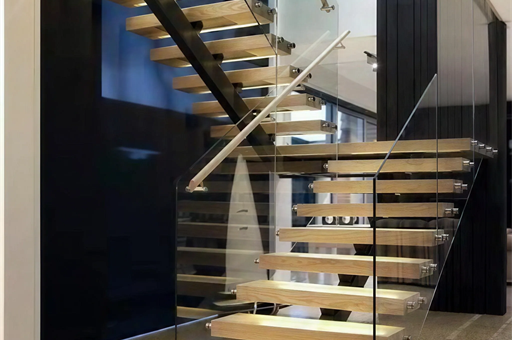
The choice between prefab and site-built stairs comes down to your design, your schedule, and the trades you can hire. Say you want a steel, glass, or stone feature staircase finished to a crisp standard, or you face a tight programme where a short window on site really matters. A prefab staircase usually fits best. It brings factory accuracy and a controlled finish, and it keeps the messy work out of the home, which suits new builds and signature projects especially well.
Say instead that your stair is a plain painted timber flight, or your project is a tricky retrofit where the structure may spring surprises and the plan is still moving. A site-built staircase can be the smarter route. It is often where a skilled local carpenter and real-time flexibility earn their keep. At Double Building Materials we draw, fabricate, and trial-assemble prefabricated stairs, then crate them for export so your own installer can fit them from our drawings. Browse the straight staircase range to see how a factory-made stair comes together.
Prefab vs Site-Built Stairs FAQ
What is the difference between prefab and site-built stairs?
The difference is where the stair gets made. A factory builds and trial-fits prefab stairs, then ships them to site to fit, which gives tighter accuracy and a shorter time on site. Carpenters cut and finish site-built stairs in place, which adds flexibility but leans on local skill and the local schedule.
Are prefabricated staircases better than site-built ones?
Neither route wins across the board; each suits a different project. Prefab stairs excel for steel, glass, and feature designs and for tight schedules, thanks to factory accuracy and a clean finish. A site-built staircase suits a simple timber flight and an awkward retrofit, where on-site flexibility matters. The right pick tracks your design, your timeline, and the trades near you.
Are prefab stairs cheaper than site-built stairs?
It depends on the design. A simple straight timber stair can be cheap to build in place, while a complex steel, glass, or curved staircase is often more cost-effective prefabricated. Prefab spends more on engineering and shipping and less on site labour; site-built does the reverse. Real cost tracks material, structure, and local rates, so we price each project from its drawing.
Can prefab stairs be used indoors?
Yes. Prefab stairs indoor are very common, and they suit modern steel, glass, stone, and timber designs alike. The factory fabricates and trial-fits the staircase, then a crew delivers and fits it inside the home. Because the messy cutting and finishing happen off site, an indoor prefab stair keeps dust and noise in the workshop, not in the house.
How are factory-made stairs installed on site?
Factory-made stairs arrive crated as matched, labelled parts, and a local installer assembles and anchors them from the maker’s drawings. Because the factory trial-fitted the stair first, the parts already fit, so fitting is mostly assembly, not cutting. Double Building Materials supplies the drawings and can help you find a local installer where available.
Read more in the cluster: start with what a prefab staircase is, then see how prefab stairs are shipped and assembled. Ready to specify one? Browse the full straight staircase range.
Double Building Materials draws, manufactures, trial-assembles, crates, and ships your prefabricated staircase. Your own contractor or installer handles on-site installation and local code sign-off — we can help you find one where available. Any market figures above are third-party estimates, not our quote; your local adopted code edition governs, so confirm the current version with your local team.
Talk to us on WhatsApp →