

Custom Straight Staircase: Stringers, Infill, Treads & Finishes-Staircase Guides
Straight Staircase Guides · Custom Options
Custom Straight Staircase: Stringers, Infill, Treads & Finishes
A custom straight staircase is a single run of stairs built to your drawing rather than a stock kit. You pick the steel stringer style (a single mono spine or twin side stringers), the infill (glass or cable), the tread material, and the finish. Those four choices set the look, the feel underfoot, and the budget of the whole flight.
A straight flight is arguably the simplest staircase geometry, yet it carries considerable design weight inside a residence. It occupies the eye-line of every visitor, so its steelwork, glazing, and treads establish the immediate impression of a hallway or a double-height volume. This guide examines each decision a custom straight staircase demands of you. It clarifies what changes between the available options, and precisely what to deliver to a manufacturer so your drawing becomes a refined, dependable flight.
Why Go Custom on a Straight Staircase
A stock staircase kit ships in predetermined widths, fixed risers, and one or two standard finishes. That approach works when a staircase merely needs to connect two floors. It rarely satisfies when the staircase becomes a feature visible from the front entrance. A custom straight staircase originates from your actual opening, your ceiling elevation, and the aesthetic you envision. Every component then follows from that architectural drawing.
The advantage is precision and creative freedom. A made-to-order flight arrives at your exact floor-to-floor dimension, so the riser and going feel consistent and the staircase reads as genuinely clean. You additionally select the components a kit ordinarily determines. You specify the stringer configuration, the infill, the tread, and the finish, and you can combine a warm timber tread with a slender steel spine. That flexibility explains why owners of villas, penthouses, and boutique renovations generally favour a bespoke flight over a packaged kit.
There is a practical gain too. Because a fabricator draws and trial-assembles the whole flight before it ships, the parts arrive matched and ready. For the wider picture of shapes, spans, and layout, our straight staircase guide sets the scene, and this page then drills into the custom choices.
Single vs Double Steel Stringers
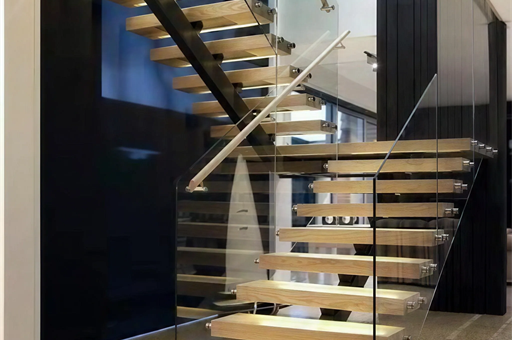
The stringer is the structural steel beam that carries the treads, and it establishes the entire character of the flight. A custom straight staircase generally arrives in two principal structures. A mono-stringer runs one central steel spine beneath the middle of the treads. Twin side stringers position a beam along each edge instead. Each configuration reads dramatically differently, and each suits a different interior.
A single mono-stringer delivers the lightest, most transparent look. With one spine running down the centreline, the tread edges appear to float free, so the flight feels remarkably airy and modern. It performs beautifully in a double-height volume where you want the staircase to nearly disappear. The trade-off is engineering. A single spine absorbs genuine structural load, so the beam demands meticulous sizing and a robust fixing at the summit and the base. This is precisely where an experienced fabricator earns their reputation, because the calculations behind that minimal look must remain accurate.
Twin side stringers provide a sturdier, more traditional framework. A beam positioned on each side supports the tread ends, which accommodates wider treads and heavier circulation comfortably. This structure suits an energetic household, a rental property, or any project that prefers a solid sensation underfoot. It can still appear slender in steel, yet it reads as considerably more grounded than a single spine. Many owners evaluate the two against budget and circulation, and both produce a compelling custom flight whenever the steelwork is engineered thoughtfully.
Glass or Cable Infill
Infill is the protective guard that fills the aperture between the handrail and the steps, and it transforms the entire feeling of the staircase. On a custom flight the two contemporary favourites are glass and cable. Both keep a run of stairs open and luminous, which complements a straight flight that occupies the eye-line. Your selection ultimately depends on how transparent you want the guard, how much maintenance you accept, and the available budget.
Glass gives the most seamless look. A toughened or laminated glass panel guards the edge while the view through it stays open, so the flight reads as one clean line. Frameless glass takes this the furthest and reads as almost unseen. The honest trade-off is care, since glass shows fingerprints and dust and wants a regular wipe to stay clear. Glass also asks for safety-rated panels under rules such as ASTM, IBC, or AS 1288, so the panel spec has to match the guard, not just the look.
Cable gives a similar openness for less. Thin stainless cables stretch level lines between posts, so the guard almost vanishes while the steel frame does the work. Cable wipes clean fast and skips the smudges of glass, which owners like on a busy flight. It leans on correct tension and close spacing to keep the gap within the guard rules. That is why the end posts and fittings want proper engineering, not just a neat look on the drawing.
Tread Materials
The tread is the surface you contact with every step, so it influences both the sensation and the acoustics of the staircase. A steel framework accommodates almost any tread, which grants a custom straight staircase genuine versatility. The customary selections are timber, steel, stone, and glass, and each one alters the warmth, the traction, and the investment of the flight in its own distinctive manner.
Timber remains the warm favourite. A solid oak, walnut, or ash tread softens a steel flight and connects it to a wooden floor, and it feels gentle underfoot. Solid steel treads, frequently with a folded or chequered surface, read as raw and industrial and complement a loft or a workshop-style residence. Stone treads in marble or granite introduce weight and a luxurious appearance, though they cost considerably more and add substantial mass. Glass treads make the flight nearly float, yet they require a textured upper layer for traction and meticulous edge detailing. The comparison below arranges the four together so you can evaluate them alongside one another.
| Tread | Feel | Upkeep | Well suited to |
|---|---|---|---|
| Timber | Warm, soft, natural | Occasional oil or re-seal | Villas and warm modern homes |
| Steel | Raw, industrial, solid | Low; wipe and touch-up | Lofts and workshop-style spaces |
| Stone | Rich, weighty, luxe | Seal; wipe spills promptly | High-end lobbies and grand homes |
| Glass | Floating, open, modern | Regular wipe to stay clear | View-driven, dramatic voids |
Finishes and Colour
The finish is the skin on the steel, and it does two jobs at once. It sets the colour and sheen you see, and it protects the metal from rust for years. On a custom straight staircase the common route is a powder coat. The steel goes through a shop process that bakes a tough colour layer onto the frame, and that coat shrugs off knocks and scuffs far better than a brushed-on paint.
Colour is where taste comes in. A matte black frame reads as sharp and modern and hides marks well, so it stays a top pick for steel flights. Soft greys and warm bronzes suit a calmer scheme, and a crisp white can lift a small hallway. Beyond powder coat, a brushed or polished stainless finish gives a bright metal face that never needs repainting, which owners like near a coast or a pool. Whatever you choose, name the exact colour and sheen on the drawing so the shop matches it once and ships it right.
What to Send a Manufacturer
Good drawings turn a smooth quote into a clean build. A fabricator needs a few clear inputs to draw your flight and price it right the first time. You do not need a full engineering pack. You do need the honest site numbers and a clear picture of the look you want. Send the items below, and the rest of the coordination runs on the shop drawing that comes back for your sign-off.
Start with the opening. Give the floor-to-floor height, the length available for the run, and the width you want, along with the wall or void the stair sits against. Then note the structure and the parts. Say whether you lean to a mono-stringer or twin side stringers, which infill you prefer, the tread material, and the finish colour. Add any code edition your local authority adopts, plus photos of the space so the shop reads the context. With that in hand, a maker can draw the flight, agree it with you, and cut steel to a drawing you both signed.
When those inputs are ready, the next step is to match them to a real product line. Our custom straight metal staircase systems cover every stringer, infill, tread, and finish on this page, so you can start a drawing-first quote from a known base.
Cost and Lead-Time Drivers
A custom flight covers a wide price range, and because every one is made to order, the honest way to plan is in drivers rather than one figure. The stringer choice is the first driver. A single mono-stringer often needs heavier steel and more careful engineering than twin side stringers, so it can carry a premium. We price each project from its drawing, so there is no fixed price list here.
Beyond the steel, several drivers move the budget. The infill counts, since frameless glass sits above cable and a simple posted guard. The tread counts too, as stone and solid timber cost more than a plain steel plate. Finish quality and the height of the flight add up as well, since a taller run means more steel and more steps. For a full walk-through of these drivers, see our guide to straight staircase cost. Lead time follows a similar logic, since a plain flight moves fast while a stone-tread, frameless-glass design wants more shop time to draw, cut, and trial-assemble before it crates.
Code and Safety Basics
A staircase is a safety element, so the numbers matter as much as the look. Common US references set a guard height near 36 inches in a home, with 42 inches in many commercial settings, and they hold the rise and going within a steady range so the flight feels even. The infill is usually set so a 4-inch ball cannot pass, and the guard has to hold a defined load at the top rail. These are widely used reference values, and your local adopted edition is what actually governs.
The custom choices tie into code in real ways. A glass guard is sized as safety glass under rules such as ASTM, IBC, and AS 1288, while cable infill wants tension and spacing that keep the gap in range. A mono-stringer takes the full load through one spine, so the beam and its fixings need proper sizing. None of this should worry an owner. It just means the flight has to be drawn, not only styled. To weigh a straight run against other shapes, see our note on straight vs L-shaped and U-shaped stairs, then confirm the current code edition with your local team before a build.
Custom Straight Staircase FAQ
What makes a straight staircase custom rather than stock?
A custom straight staircase starts from your real opening and your chosen parts, not a fixed catalogue size. You set the width, the rise, and the length to your floor-to-floor height, then pick the stringer, the infill, the tread, and the finish. A stock kit locks most of those, while a custom flight lets you match the stair to the room and the look you want.
Is a single or double stringer better for a straight flight?
Neither wins outright, since they solve different jobs. A single mono-stringer gives the lightest, most open look and suits a modern void, though its central spine needs careful engineering. Twin side stringers handle wider treads and heavier traffic, so they suit a busy home. Weigh the two against your traffic, your span, and your budget, and let a fabricator size the steel either way.
Which tread material works best on a steel straight staircase?
It depends on the mood you want. Timber gives warmth and a soft step, steel reads as raw and industrial, stone brings a rich, weighty feel, and glass makes the flight almost float. A steel frame carries them all, so the choice comes down to look, grip, and budget. Many owners pair a warm timber tread with a slim steel spine for balance.
Should I choose glass or cable infill?
Both keep the flight open and light, so the pick is about clarity, care, and cost. Glass gives the most seamless, view-through look, but it shows fingerprints and wants a regular wipe. Cable gives a similar openness for less and skips the smudges, though its posts and tension need proper engineering. Owners who want the clearest guard lean to glass; those who value low upkeep often pick cable.
What do I need to send to get a quote?
Send the honest site numbers and a clear look. Give the floor-to-floor height, the run length, the width, and the wall or void the stair meets. Then note the stringer style, the infill, the tread, and the finish colour you want, plus any local code edition and photos of the space. From that, a maker can draw the flight, agree it with you, and cut steel to a signed drawing.
Keep exploring the straight-stair cluster: start with the straight staircase guide, then plan the budget with straight staircase cost and compare shapes in straight vs L-shaped and U-shaped stairs. Ready to specify? Browse our custom straight metal staircase systems.
Double Building Materials draws, manufactures, trial-assembles, crates, and ships your custom straight staircase in any of the options above. Your own contractor or installer handles on-site installation and local code sign-off — we can help you find one where available. Dimension and code values above are common industry and US references (IRC / IBC / ADA / OSHA; AS 1288 / NCC where relevant); your local adopted edition governs, so confirm the current version with your local team. With 25+ years and 800+ projects shipped to 60+ countries from our 4,500 m² factory in Guangdong, China, we draw and trial-assemble every flight before it ships.
Talk to us on WhatsApp →