

Balcony Railing Ideas: Design, Materials & Safety Guide -Railing Guides
Balcony Railing · Complete Guide
Balcony Railing Ideas: A Design, Material & Safety Guide for Your Home
The top balcony railing ideas balance four things at once: an open view, a safe barrier, a style that suits your home, and a finish that lasts in the weather. Popular choices include frameless glass for a clear view, slim cable for a soft level line, powder-coated aluminum for low upkeep, and forged iron for character.
A balcony railing is the one part of your facade you lean on, look through, and see every day. Get it right and the balcony feels open, safe, and finished. Get it wrong and the view is cut into slices, or the metal streaks with rust. This guide walks through the design ideas, the materials, the heights and spacing, and the real-world questions. That way you can brief a project with ease. Where a topic runs deep, we link to a focused guide.
Where to Start With Balcony Railing Ideas
The strongest balcony railing ideas begin with the view, not the railing. Stand on your balcony and decide what you want to see. If the outlook is the reason the balcony exists, you lean toward the most see-through options, such as frameless glass or fine stainless cable. If privacy or a strong design line matters more, a patterned metal infill or a solid panel earns its place. The railing should frame the feel you want from that space.
Two practical filters then narrow the field quickly. The first is exposure. A balcony that faces salt spray, driving rain, or strong sun rules out finishes that streak or fade, and it pushes you toward marine-grade stainless, hot-dip galvanized steel, or a quality powder coat. The second is maintenance. Some owners enjoy the ritual of oiling a timber cap; others want a railing they can hose down twice a year and forget. Naming your tolerance early saves a lot of second-guessing later.
Finally, set the height and the infill spacing as fixed constraints, not style choices. These are governed by your local building code and they are not negotiable for safety. Decide the look within those limits rather than against them. With the view, the exposure, and the safety rules settled, every idea below becomes a clear yes or no for your particular balcony.
Eight Balcony Railing Styles to Consider
Most balcony railing ideas fall into a handful of clear directions. Each one has its own look and a natural home, so the trick is to match the style to your building and your view rather than chase a trend. Here are eight that work well for high-end homes.
| Style | Character and where it suits |
|---|---|
| Frameless glass | An almost unseen barrier that hands you the whole view. It suits a modern facade and a balcony where the outlook is the point. |
| Framed glass | Glass panels held in a slim metal frame. A little more structured and forgiving than frameless, and a touch more affordable. |
| Stainless cable | Horizontal cables strung between posts give a soft, minimal line that barely interrupts the view. A favourite for modern and coastal homes. |
| Powder-coated aluminum | Light, rust-proof, and low upkeep. A flexible workhorse that takes almost any colour and suits most homes. |
| Vertical bar metal | Slim vertical balusters in steel or aluminum. Clean, classic, and easy to meet spacing rules with. |
| Forged iron | Ornamental scrollwork and panels for a traditional, crafted look. Heavier in feel and full of period character. |
| Glass and metal mix | Glass infill with a timber or metal handrail cap. It blends an open view with a warm, tactile top rail you actually hold. |
| Perforated or laser-cut panel | A patterned screen that adds privacy and a graphic detail while still letting light and breeze through. |
None of these is universally better than the others; each answers a different brief. A view-led penthouse leans toward frameless glass or cable, a traditional villa toward forged iron, and a busy family balcony toward powder-coated aluminum that simply gets on with the job. Modern projects often combine two, such as a glass infill under a warm timber cap, to soften an otherwise clean line. For a deeper look at the contemporary directions, see our guide to modern balcony railing design.
Materials Compared at a Glance
The material choice drives the look, the upkeep, and the budget more than any other single call. Each option acts differently outdoors, and a balcony is an outdoor space even when it sits against a sheltered wall. The table below sets the common balcony railing materials side by side on the points owners ask about most.
| Material | View | Maintenance | Weather |
|---|---|---|---|
| Tempered glass | Fully open | Wipe panels to keep them clear | Excellent, shows water spots |
| Stainless cable | Near open | Occasional wipe, check tension | Excellent in marine grade |
| Aluminum | Partly open | Very low | Excellent, will not rust |
| Stainless steel | Partly open | Low | Excellent in 316 grade |
| Wrought iron | Partly open | Periodic repaint | Good when finished well |
A few patterns emerge. Glass and cable hand you the most view, while aluminum and stainless ask the least of you over the years. Iron rewards a traditional home but expects a repaint cycle to stay looking sharp. There is no single winner; there is the right answer for your exposure, your style, and the upkeep you are willing to take on. We compare these in detail in the balcony railing materials guide.
Glass Balcony Railing Ideas
Glass is the idea most owners picture first, because it gives the view away completely. A frameless glass balustrade reads as a sheet of clear safety glass standing on edge, held by discreet spigots set into the floor or by a continuous base channel that hides all the fixings. From a chair inside the room, the railing all but disappears, and the outlook fills the opening. That openness is exactly why view-led balconies reach for it.
There are a few flavours to choose from. Frameless gives the cleanest result and the highest budget. A slim top handrail across the glass adds a tactile edge to hold and a clear line your eye registers as you approach. A semi-framed system uses posts at set gaps, which costs less and copes well with wind on an exposed balcony. The glass itself is toughened, and for a balcony it is commonly laminated as well, so it holds together if it is ever broken.
The honest trade-off with glass is upkeep. Clear panels show every rain spot and fingerprint, so a view-led glass balcony asks for a regular wipe to stay looking its best. Many owners decide the unbroken outlook is well worth the cloth and the bottle of cleaner. If glass is your direction, our dedicated glass balcony railing guide covers frameless versus framed, fixing methods, and the glass specification in full.
Cable, Aluminum and Iron Ideas
When glass is not the answer, three metal directions cover most balconies. Stainless cable strings fine horizontal lines between slim posts, so the eye reads the view through the gaps and the railing nearly vanishes at a distance. It is a modern, almost nautical look that suits clean facades and coastal settings, and in marine-grade stainless it shrugs off salt air for years.
Powder-coated aluminum is the handy favourite. It is light, it never rusts, and the coating comes in any colour you like, from a soft grey to a deep matte black. It is the railing you fit and largely forget, which makes it a wise choice for a busy household or a rental home. Vertical aluminum or steel bars give a crisp, classic infill that meets spacing rules cleanly and pairs with almost any architecture.
Forged iron is the choice when character matters more than the view. Scrollwork, panels, and a substantial top rail give a balcony a traditional, hand-made presence that suits a villa or a heritage facade. Iron is heavier and expects a repaint cycle outdoors, but properly finished it lasts for decades and ages with grace. Each of these metals carries through to the railing, the stair, and the gate, so a whole project reads as one family. Browse the full range on our balcony railing systems page.
Height, Spacing and Safety
A balcony railing is a guard, so its height and infill spacing are set by safety rules rather than taste. These rules exist because a balcony is a fall hazard, and they protect children in particular. Treat the figures below as common reference values, because your local adopted code edition is what actually governs the job. The table gathers the numbers owners ask about most.
| Requirement | Common reference value |
|---|---|
| Guard height, residential (IRC) | At least 36 inches above the floor |
| Guard height, commercial (IBC) | At least 42 inches above the floor |
| Baluster gap (the 4-inch rule) | A 4-inch sphere must not pass through the infill |
| Australian guard height (NCC) | 1 metre common for higher balconies; confirm locally |
| Glass for balconies (AS 1288) | Toughened or laminated safety glass typical |
Two points trip people up. First, the height is measured from the finished floor to the top of the rail, so a thick deck tile or a paver eats into your margin, and a designer plans for that early. Second, the four-inch rule is why cable railings need careful tension and close spacing, and why glass simply passes by being a solid panel. The full breakdown, including stairs and the loads a guard must resist, sits in our balcony railing height and code guide. Always confirm the governing figures with your local team.
Coastal and Exposed Balconies
An exposed balcony asks more of a railing than a sheltered one, and the sea asks the most of all. Salt air is corrosive, and it finds every weak point in a finish, so a railing that looks fine inland can streak and pit within a few seasons near the coast. The good news is that the material choice solves most of it, provided you choose for the environment from the start rather than fixing a problem later.
For a coastal or salt-exposed balcony, marine-grade 316 stainless steel and quality powder-coated aluminum are the dependable performers, because both resist salt corrosion far better than ordinary steel. Glass copes well too, since the glass itself does not corrode, though the fixings should be specified in the same corrosion-resistant grade. Hot-dip galvanized steel under a powder coat is another robust route for a metal balustrade in a tough setting.
Wind is the other factor on a high or exposed balcony. A solid glass panel catches more wind than an open cable infill, so an exposed glass balustrade is engineered with that load in mind, which can mean thicker glass or closer posts. This is exactly the sort of detail that belongs in a drawing before anything is cut. Tell us your location and exposure and we factor it into the specification from the first sketch.
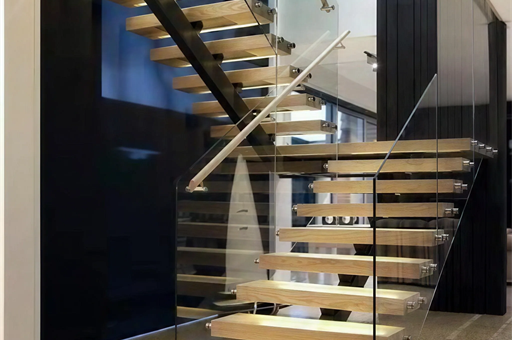
A modern glass railing we fabricated — the same systems carry through to balconies, stairs, and decks. Tap to play.
What Balcony Railings Cost
Balcony railing prices cover a wide range, and the material is the biggest reason for the spread. Because every balustrade is made to measure for your opening, there is no single price tag; there are cost drivers. Understanding the drivers lets you steer the budget toward where it matters to you, rather than reading a number that may not match your balcony at all.
The main drivers are straightforward. Frameless glass and forged iron tend to sit at the higher end, because of the glass specification and the hand-work respectively, while powder-coated aluminum and vertical metal bars are generally more economical. A longer run of railing costs more than a short one. A complex shape with corners and returns costs more than a single straight span. A premium finish, a marine-grade upgrade, or a custom colour each adds to the figure.
You will find published price ranges online, and they can be a useful rough guide. Still, treat any such figure as a third-party market estimate rather than a quote. It will not reflect your exact span, finish, or shipping. As a made-to-order factory, we price each balcony from its drawing. Tell us the length, the material, and the finish, and we work back to a figure for your project. The cost drivers are explored alongside the materials in the materials guide.
How Yours Is Made
At Double Building Materials, a balcony railing starts as a drawing, not a catalogue item off a shelf. We take your balcony dimensions, your chosen material and finish, and the governing height and spacing, then turn them into a working shop drawing. That drawing fixes every post, panel, and fixing before any metal is cut. You approve it first, because a drawing is far cheaper to change than a fabricated railing.
From there we fabricate the railing in our 4,500 square-metre Guangdong factory and trial-assemble it on our own floor. That trial build is where we confirm the fit, the angles, and the finish before anything ships, so the pieces arrive ready to go together rather than ready to argue with. We then crate the railing for export in the order your installer will need it, with the protection it takes to travel across an ocean intact. Over 25 years and 800-plus projects across 60-plus countries, that drawing-first, trial-assembled, export-ready sequence is what keeps a long-distance order predictable.
One boundary matters, and we state it plainly. Your own contractor or installer fits the railing on site and handles local code sign-off, and we can help you find a local installer where that service is available. We do not install on site, and we do not verify or certify local code compliance; that responsibility stays with your local team. Our job is to deliver a railing that is drawn right, built right, and packed to arrive right. See the full range on the balcony and balustrade railing page.
Balcony Railing FAQ
How high should a balcony railing be?
Under common US residential references, a balcony guard stands at least 36 inches above the finished floor, while commercial settings commonly require at least 42 inches. Australian practice often uses around 1 metre for higher balconies. These are typical reference values, and your local adopted code edition governs, so confirm the exact figure with your local team before you build.
What is a good material for a balcony railing?
There is no single right material, because it depends on your view, your exposure, and the upkeep you want. Glass and stainless cable give the most open outlook, powder-coated aluminum asks the least maintenance, and forged iron suits a traditional home. For a coastal balcony, marine-grade stainless and quality aluminum are the dependable performers against salt air.
Is glass or cable better for a balcony with a view?
Both keep the view open, so it comes down to feel and upkeep. Frameless glass gives a fully unbroken outlook but shows rain spots and asks for regular cleaning. Stainless cable nearly disappears at a distance, needs little cleaning, and copes well with wind on an exposed balcony. Many owners pick glass for a still, sheltered view and cable for an exposed one.
Can a balcony railing be made to match my stairs?
Yes, and matching is one of the strongest reasons to use one manufacturer for a project. When the balcony, the stair, and any gate share a material, a finish, and a handrail profile, the whole house reads as one considered design. We draw the family of pieces together from the start so the details line up rather than nearly matching.
Do balcony railings need much maintenance?
It depends entirely on the material. Powder-coated aluminum and stainless steel typically need only an occasional wash. Glass needs a regular wipe to stay clear of rain spots. Forged iron expects a periodic repaint to stay sharp outdoors. Choosing a low-maintenance material at the start is the simplest way to keep a balcony looking good with little effort.
Go deeper into the cluster: balcony railing height and code, glass balcony railing, balcony railing materials and types, and modern balcony railing design. Ready to specify? Browse the full balcony railing systems range.
Double Building Materials draws, manufactures, trial-assembles, crates, and ships your balcony railing. Your own contractor or installer handles on-site installation and local code sign-off — we can help you find one where available. Heights, spacings, and glass references above are common US and Australian figures (IRC / IBC / ADA / OSHA; AS 1288 / NCC); your local adopted edition governs, so confirm the current version with your local team.
Talk to us on WhatsApp →