

Glass Balcony Railing: Owners Guide to Design, Glass & Mounting-Railing Guides
Balcony Railing Guides · Glass Systems
Glass Balcony Railing: The Owner’s Guide to Design, Glass, and Mounting
A glass balcony railing is a guard that uses panels of toughened safety glass instead of pickets or cables. Spigots, a base channel, or a slim metal frame hold each panel. It guards the edge of a balcony while keeping the view almost fully open. That makes it a top pick for a villa terrace, a high apartment, or a deck over water.
A balcony is where you stand and look outward, so the railing along its edge has one quiet job that matters more than any other: keep you safe without blocking the reason you went outside. A glass balcony railing does exactly that. This guide walks an owner through the glass types, the mounting, the look, and the honest picture on safety, cleaning, and cost.
What a Glass Balcony Railing Is
A glass balcony railing is a guard built from panels of safety glass rather than metal balusters, timber pickets, or taut cables. The glass forms the infill that stops a person or a child from going over the edge. A top rail, a set of spigots, or a base channel then holds each panel firmly in place. The result is a guard that does the serious work of a balustrade yet reads almost as if it were not there.
The words overlap a little, so it helps to settle them early. A balustrade and a railing mean the same thing here: the whole barrier along the open edge of a balcony, terrace, or deck. The balusters are the upright infill; in a glass system that infill is a sheet of glass. A handrail is the part you grip on a stair. Many balcony railings carry a slim top rail in metal or timber for both grip and a clean line.
Owners reach for glass on a balcony for one reason above all others. You went outside to see something, whether that is a garden, a coastline, a city skyline, or a courtyard below. A solid wall or a dense run of pickets fights that view, while a glass panel lets it through almost untouched. The barrier protects the edge, and the eye keeps travelling straight out to the horizon you paid for.
Why Owners Choose Glass on a Balcony
The view is the headline, but several quieter advantages make glass the default for a high-end balcony. Light is the first. A glass balcony railing lets daylight pour onto the floor of the balcony and back into the rooms behind it, so a deep terrace never feels boxed in. On a lower floor the same glass borrows the garden visually, making a modest outdoor space feel larger than its measured area.
Glass also suits a modern house in a way that few other materials manage. It carries no pattern and no colour of its own, so it sits quietly next to stone, render, timber, or steel and lets those finishes lead. An exposed coastal or rooftop balcony gets a practical bonus too. A solid glass panel cuts the wind that a cable or picket railing lets straight through, so the terrace stays usable on a breezy day. To weigh glass against metal, cable, and composite, our pillar guide to balcony railing ideas sets out the full picture, and the dedicated balcony railing materials comparison goes deeper on each option.
The Glass Itself: Tempered and Laminated
Not all glass is the same, and on a balcony the glass you pick is a safety choice, not a styling one. The two terms that matter are tempered and laminated. Tempered glass, also called toughened glass, is heat-treated so it is far stronger than plain glass. If it ever does break, it crumbles into small blunt bits rather than long shards. Laminated glass bonds two sheets with a tough interlayer. Even when both sheets crack, the bits stay stuck to the film and the panel holds its shape.
For a balcony, the safest pick is usually laminated glass, often built from two toughened sheets, because it keeps guarding the edge even after a knock. A common rule is to treat the balcony glass as a barrier that must not fail open. That is why many projects on upper floors call for a laminated build-up. The exact glass thickness and the lamination are set by the panel height, the support method, and the wind and crowd loads at that spot.
| Glass type | Behaviour and typical balcony use |
|---|---|
| Toughened (tempered) | Heat-strengthened; breaks into small blunt granules. Strong and economical, often used where a robust top rail also restrains the panel. |
| Laminated | Two sheets bonded by an interlayer; fragments stay attached if broken, so the panel keeps protecting the edge. Common where the glass itself is the barrier. |
| Laminated toughened | Two toughened sheets laminated together; combines impact strength with post-break retention. A frequent choice for frameless balconies on upper floors. |
Most balcony projects we draw use a laminated or laminated-toughened panel, with the precise build-up confirmed against the relevant glass and barrier references for that site. The dedicated guide to balcony railing materials and types compares glass against metal and composite if you are still weighing options.
Mounting Systems Compared
How the glass is held is what gives each balcony its character, and there are three families worth knowing. Spigots are short stainless or aluminium posts that grip the bottom of each panel and bolt down to the slab or the fascia, leaving most of the glass clear above them. A base channel is a long metal track that the panel sits inside along its whole bottom edge. This hides every fixing for the cleanest line of all. A framed or post system wraps the glass with slim uprights and rails, spreading the load and cutting the glass thickness needed.
The right method depends on the structure under the balcony and the look you want. A concrete slab takes spigots or a base channel with ease; a timber deck edge often suits a fascia-mounted spigot or a post system. A base channel gives the cleanest glass and the most modern look, while spigots are forgiving and quick to set out. We size the fixings, the glass, and the channel together so the system acts as one piece rather than three. The trade-offs between these methods are explored fully in our companion guide on glass railing mounting.
| Mounting | Character and where it suits |
|---|---|
| Spigots | Short posts clamp the panel base. Robust, adjustable, and economical; the spigots stay visible below the glass. |
| Base channel | A continuous track conceals every fixing for the most seamless frameless look. Asks for accurate setting-out on a sound slab. |
| Framed / post | Slim uprights and rails capture the glass, spreading load and reducing glass thickness. Versatile on timber and steel edges. |
| Standoff fixings | Disc fixings pin the panel to a face or fascia, giving a light, floating effect on the edge of a slab. |
Framed, Semi-Frameless, and Frameless
The look of a glass balcony railing comes down to how much metal you see, and there is a clear ladder of three. A framed system wraps each panel in slim metal. It is the most budget-friendly and the most forgiving of an uneven slab, though the frame breaks up the view a little. A semi-frameless system keeps posts at gaps but loses the rails between them, so the glass leads while the posts still carry much of the load.
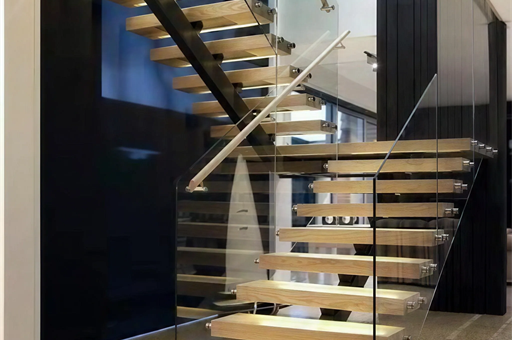
A fully frameless balcony, held by spigots or a base channel with at most a slim top rail, gives the purest glass-only line and the strongest sense of an open edge. It is the look most owners picture when they imagine a glass balcony, and it is where laminated-toughened glass earns its place, because the panel itself is doing the protecting. Frameless costs more and asks for thicker glass and more careful setting-out, so the choice weighs budget against that clean, open view. You can see frameless and framed balcony systems together on our balustrade and railing range.
Height, Safety, and Code
A balcony railing is a guard, so its height and strength are governed by code rather than taste. Under common US references, a home guard along a raised balcony is usually at least 36 inches tall, while many commercial and multi-family balconies call for 42 inches. The opening rule matters just as much: gaps in the barrier must usually reject a 4-inch sphere, which a glass railing meets simply because the panel is solid. The barrier must also resist a specified load applied along the top.
| Common reference (confirm local edition) | Typical value |
|---|---|
| Residential guard height (IRC) | Commonly 36 in minimum on a raised balcony. |
| Commercial / multi-family (IBC) | Commonly 42 in minimum. |
| Opening limit | Must reject a 4-inch sphere; a solid glass panel meets this inherently. |
| Glass standard (US / AU) | Safety glass per the adopted glazing reference; AS 1288 governs glass selection in Australia. |
Those figures are widely used reference values, and the edition adopted in your jurisdiction is what actually governs, so confirm the current numbers with your local team. In Australia and New Zealand a balcony railing is read against the NCC and AS 1288 for the glass selection, which often points to a laminated panel on an upper level. The detail of height, loads, and where 36 versus 42 inches applies is covered in our guide to balcony railing height and code.
How a Glass Balcony Railing Is Made
At Double Building Materials a glass balcony railing starts as a drawing rather than a stock kit. We take the dimensions of your balcony edge, the structure beneath it, and your chosen mounting method, then turn them into a working shop drawing. That drawing fixes every spigot or channel position, the glass panel sizes, and the top rail before anything is cut or toughened. We process no glass until you approve the layout, because a glass panel offers no margin to trim on site once it is toughened.
From there we fabricate the stainless or aluminium hardware, cut and process the glass, and trial-assemble representative sections of the run on our 4,500 m² floor in Guangdong. That trial assembly is where we confirm the fit of the spigots, the channel, and the panels before anything ships. Once it passes, we crate the system for export in the sequence your installer will need it on the balcony. Your own contractor fits it on site from our drawings, and we can help you find an installer where local fitting is available. We do not install on site or sign off local code; that responsibility stays with your local team. With 25+ years and 800+ projects across 60+ countries behind the process, the aim is a panel set that arrives ready to lift into place.
A glass railing fit-up and site-coordination review from a real DBM project — the same glass-panel detailing carries straight over to a balcony edge. Tap to play.
Cleaning and Upkeep
The one honest drawback of a glass balcony railing is that glass shows what a picket railing hides. Rain spots, salt spray on a coastal balcony, and fingerprints all read clearly on a large clear panel, so glass asks for more frequent wiping than a textured metal balustrade. The trade is straightforward: you accept a little more cleaning in exchange for a view that no other material preserves so completely.
Upkeep itself is light and uncomplicated. A soft cloth with warm soapy water, or a standard glass cleaner, keeps the panels clear, and a squeegee on a long handle makes a tall run quick. The stainless or aluminium hardware needs only an occasional wipe, and a marine-grade stainless is the sensible specification near salt water, where ordinary steel can bloom with surface rust over the years. A coating that sheds water can be applied to the glass to slow the build-up of spots, which many owners find worthwhile on an exposed terrace. Beyond that, a glass balcony railing has no joints to rot, no timber to repaint, and no cables to re-tension.
What Drives the Cost
A glass balcony railing covers a wide price range, and the mounting style is the biggest lever. A framed or post system is the most economical because the frame carries load and lets you use thinner glass. A fully frameless run on spigots or a base channel sits higher, because it needs thicker laminated-toughened glass and more precise hardware. Because every balcony is made to order, there is no single price tag; there are drivers.
The main drivers are the glass type, the mounting method, the hardware finish, and the length and shape of the run. Laminated-toughened glass costs more than a single toughened sheet, and a marine-grade stainless finish costs more than a plain one. A long straight balcony costs less per metre than a short run full of corners, where each turn adds setting-out and trims. Figures you find online are third-party market guesses, not our quote, and they vary widely by region and spec. As a made-to-order maker, we price each balcony from its drawing rather than from a catalogue. For the full balcony picture across every material, return to the pillar guide on balcony railing ideas and designs.
Glass Balcony Railing FAQ
Is a glass balcony railing safe?
Yes, when it is specified and built correctly. The glass is toughened, laminated, or both, so it resists impact and, if it ever breaks, it either crumbles into blunt granules or holds together on its interlayer. The panel itself blocks the opening that codes guard against, and the system is sized to resist the load applied along the top rail. Your local adopted code edition governs the specifics, so confirm them with your local team.
How tall does a glass balcony railing need to be?
Under common US references a residential balcony guard is typically at least 36 inches, while many commercial and multi-family balconies require 42 inches. Australia and several other regions set their own figures. These are widely used reference values rather than a single universal number, so the edition adopted in your jurisdiction governs — confirm the current height with your local team before you finalise the design.
What thickness of glass is used for a balcony railing?
The thickness depends on the panel height, the support method, and the wind and crowd loads at that location, so it is an engineered figure rather than a fixed one. A framed panel can be thinner because the frame shares the load, while a frameless panel must be thicker and is usually laminated-toughened. We size each panel from the drawing against the relevant glass reference rather than apply one blanket number.
Does a glass balcony railing need a handrail on top?
Not always. A fully frameless balcony can run as glass-only with no top rail where the glass is the barrier, which is the cleanest look. Many owners still choose a slim metal or timber top rail for the comfort of something to grip and a tidy finishing line. A top rail can also let you use a slightly thinner panel, so it is partly a structural choice and partly an aesthetic one.
Is a glass balcony railing hard to keep clean?
It is not hard, but it does show marks that a textured railing hides, so it asks for more frequent wiping. Warm soapy water or a standard glass cleaner and a squeegee keep the panels clear, and a water-shedding coating slows the spots on an exposed terrace. The hardware needs only an occasional wipe, with marine-grade stainless the sensible choice near salt water.
Keep exploring the balcony cluster: the pillar on balcony railing ideas and designs, the rules behind balcony railing height and code, and the full balcony railing materials comparison. Ready to specify a system? Browse our glass balustrade and railing range.
Double Building Materials draws, manufactures, trial-assembles, crates, and ships your glass balcony railing. Your own contractor or installer handles on-site installation and local code sign-off — we can help you find one where available. Heights, glass build-ups, and code figures above are common references and typical values; your local adopted edition governs, so confirm the current version with your local team.
Talk to us on WhatsApp →