

Modular vs Custom Railing: Fit, Look, Code & Cost -Railing Guides
Railing Manufacturer Guides · Buyer Decision
Modular vs Custom Railing: Fit, Look, Code, Cost & Lead Time
The modular vs custom railing choice comes down to fit. A modular kit ships in stock lengths and standard heights, so it suits straight runs on a budget and a fast schedule. A custom railing follows your own drawing, so it fits curves, odd spans, and villa-grade looks that a kit cannot reach. Your site, your view, and your finish standard decide which one wins.
Every railing project starts with one fork in the road. Do you buy a modular kit off the shelf, or commission a custom railing drawn for your exact building? The answer shapes how the guard fits, how it looks, how well it satisfies the building regulations, what it costs, and how long you wait. This guide walks both approaches side by side. It shows where a kit handles the job cleanly and where custom fabrication earns its place, so you can match the right approach to your own project.
What Modular and Custom Railing Really Mean
A modular railing is essentially a kit of standard components. The manufacturer stocks posts, handrails, and infill panels in predetermined sizes, and you assemble them into runs on site. Consider it a construction set for a guard rail. Because the components repeat, the price generally stays low and the schedule stays short. Modular systems typically perform well on plain, straight balconies, corridors, and decks where the geometry is uncomplicated and the appearance is clean rather than special.
A custom railing works the other way round. Instead of forcing your building to fit stock lengths, the manufacturer draws every post, rail, and bracket to suit your particular site. The team follows a shop drawing that documents your landings, your angles, and your finish preferences. That additional design step costs a little more and adds a few weeks. In return, a custom railing fits a curved stair, a raked balcony, or a wide glass span that no catalogue kit can accommodate. This is essentially the heart of the modular vs custom railing question.
Neither approach is right or wrong on its own. A kit that suits a condominium corridor would look thin on a villa terrace. A bespoke system on a plain rental balcony would generally waste money. The skill lies in evaluating your own project and selecting the approach that serves it. The sections below separate the decision into the factors that matter most, one at a time.
Fit: Straight Runs vs Curves and Odd Spans
Fit is where the two approaches part company fastest. A modular kit assumes a level, straight run and a standard height. On a plain balcony that runs true, the stock lengths click together neatly and the installation goes quickly. Difficulty begins the moment the geometry turns awkward. A curved landing, a sloped stair, or a span that falls between stock sizes forces the crew to cut, splice, or improvise around the kit, and the result rarely looks crisp.
A custom railing sidesteps that whole problem. Because the maker draws each section to your survey, a curve stays a smooth curve and a raked rail keeps a clean, constant line. Odd spans get a post exactly where the load needs one, not where the catalogue happens to allow. On a project with any curve, change of level, or non-standard bay, custom work simply fits where a kit fights. For owners chasing a seamless look, that fit alone often settles the debate. The trade-off is the shop drawing and the time it takes to prepare it.
Look: Catalogue Style vs a Bespoke Face
A railing is the one detail a guest touches and studies on every visit, so its appearance matters. Modular kits arrive in a fixed palette of profiles, colours, and infill varieties. That palette covers clean, modern looks nicely, and a quality kit reads as tidy and orderly. What it cannot deliver is a genuinely one-off design. Every apartment that buys the same kit ends up with an identical railing, which suits a developer batch but can feel generic on a residence meant to stand apart.
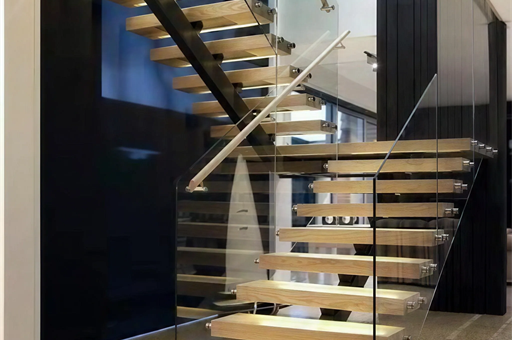
Custom railing opens the whole design menu. You choose the post rhythm, the handrail shape, the infill, and the finish to match the architecture rather than a catalogue. A slim stainless post with frameless glass reads very differently from an ornamental iron baluster, and custom work lets you tune that line exactly. Owners often blend materials here too, such as a warm timber top rail over a metal frame. To see how each material changes the face of a railing, our railing materials compared guide lays them side by side. The finish then sets the final look, which our powder coat vs anodized finish guide explains in detail.
Code Compliance on Both Routes
A railing is a guard first and a design feature second, so both routes have to meet the same safety rules. Common US references put a home guard at around 36 inches and a commercial guard at 42 inches above a set fall height. The infill is usually set so a 4-inch ball cannot pass, and the top rail must hold a defined load. In a workplace, OSHA references add their own height and load rules. These are widely used reference values, and your local adopted edition is what actually governs.
A reputable modular kit meets these figures on a standard run, which is one of its real strengths. The catch shows up on non-standard geometry. When a crew cuts or splices a kit to force an odd fit, post spacing and gaps can drift outside the limits without anyone meaning to. Custom railing removes that risk by design. The maker sizes post spacing, section thickness, and infill gaps to carry the load on your exact layout. For the numbers behind a compliant guard, our guide on how to choose a railing manufacturer covers the code basics in depth.
Cost: Modular vs Custom Railing Drivers
Cost is where most owners expect a clear winner, yet the honest answer is a range. Because every system is made to order, the smart way to think about the modular vs custom railing budget is in drivers rather than one figure. Third-party market guides often place kit railing at the lower end of the scale, since repeated stock parts keep the unit price down. Custom systems usually sit higher, because the drawing, the bespoke lengths, and the finish work all add value. We price each project from its drawing, so there is no fixed price list here.
Several drivers move both budgets. Material is the first, as glass and stainless steel cost more than powder-coated aluminium on either route. Complexity is the second, since curves, changes of level, and special finishes lift a custom quote. Quantity matters too, because a large run of identical bays spreads the design cost thin and narrows the gap. The last driver is upkeep over the life of the building. A slightly higher spend up front on a low-care material or a cleaner fit can pay back in fewer repairs later. When you are ready to plan, our custom balustrade and railing systems cover both routes in one place.
| Factor | Modular kit railing | Custom-drawn railing |
|---|---|---|
| Fit | Best on straight, level runs | Fits curves, rakes, and odd spans |
| Look | Fixed catalogue palette | Bespoke, matched to the architecture |
| Code fit | Sound on standard runs; drifts if cut | Sized to the drawing on any layout |
| Cost band | Usually lower per unit | Higher; scales with complexity |
| Lead time | Short; parts in stock | Longer; drawing plus fabrication |
| Best home | Condo corridors, plain decks, batches | Villas, curved stairs, feature spans |
Lead Time and Site Coordination
Schedule often tips the balance on a live site. A modular kit wins on raw velocity, because the components already sit in inventory and ship fast. For a plain run on a demanding programme, that head start counts for a lot. The hidden cost lands during assembly, since a crew still has to cut and position the kit on site, and any awkward corner slows them down. Small errors on site can also consume the time the kit apparently saved up front.
A custom railing asks for more time before delivery and gives some of it back on site. The maker turns your survey into a shop drawing, fabricates to that drawing, and dry-fits the parts before they ship. That upfront care front-loads the schedule, yet it means the parts arrive labelled and ready to set. At Double Building Materials we trial-assemble every custom railing before packing and crate it export-ready, which cuts surprises when the crate opens on the far side. Drawing-first coordination keeps the site phase short even on a complex guard.
Where Custom Railing Wins
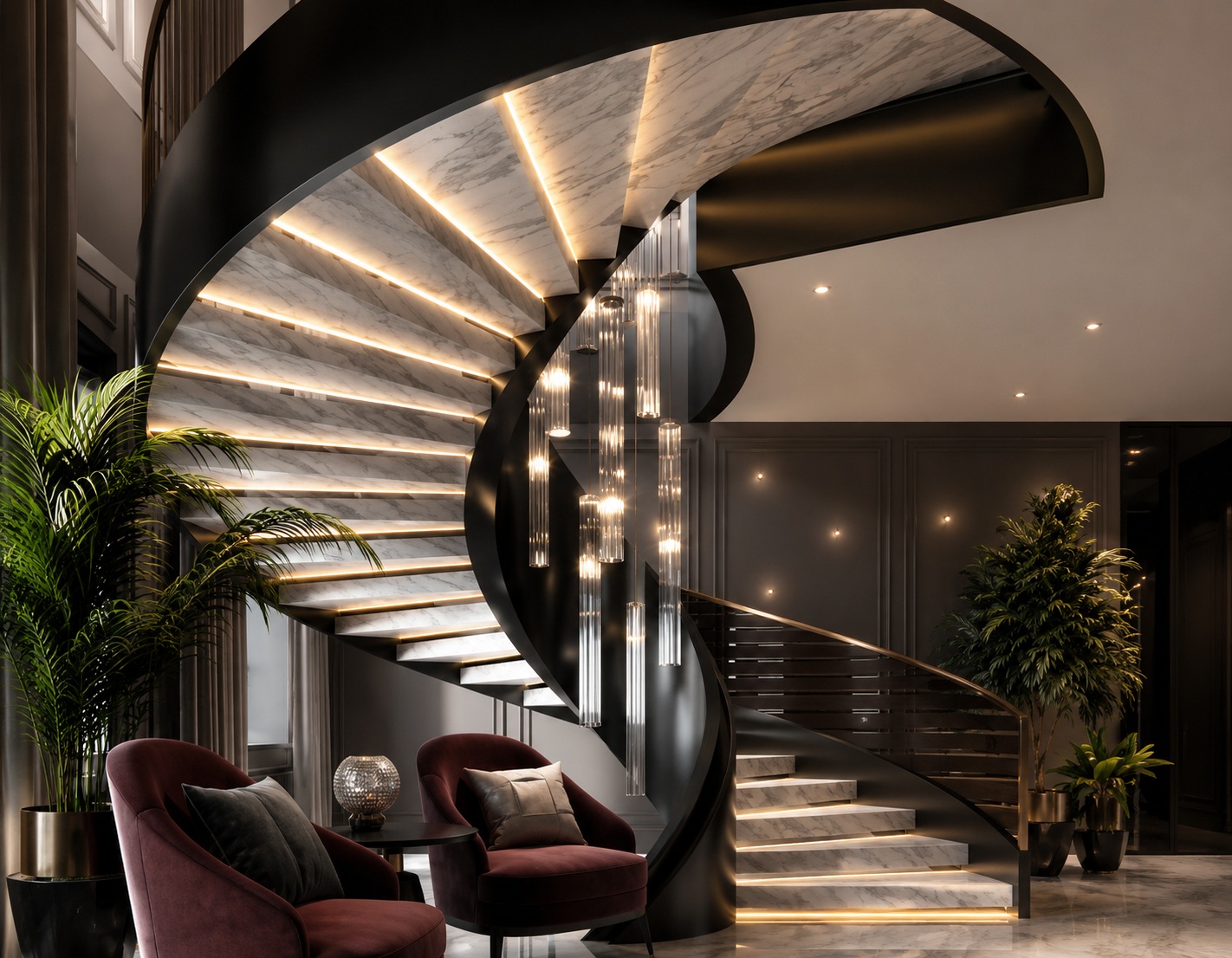
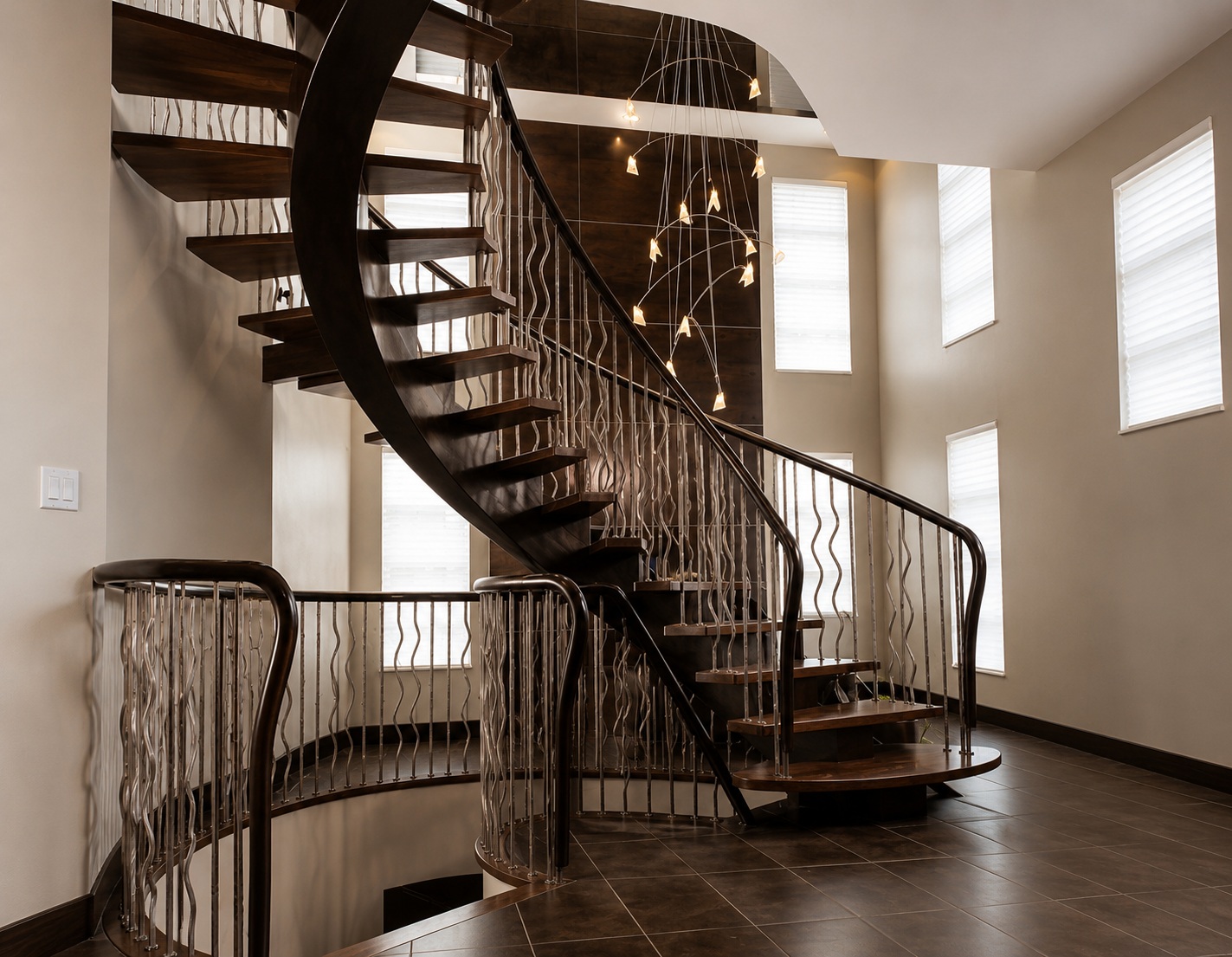
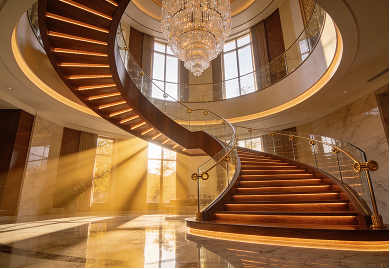
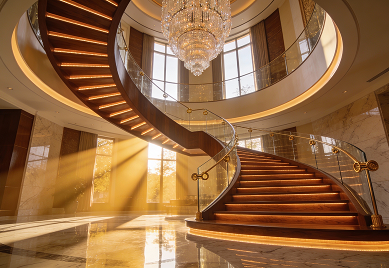
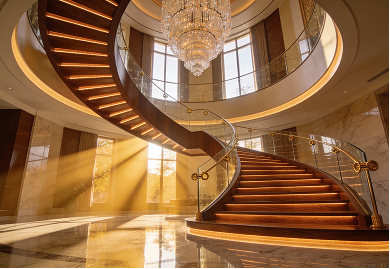
Some projects tip clearly toward custom fabrication, and it helps to identify them. A curved staircase is the classic example, because a stock kit cannot follow a genuine radius without ugly facets. A villa terrace with a signature view is another, where a frameless glass span or a slim bespoke post lets the outlook take the lead. Any raked or spiralling run belongs here too, since the geometry simply falls outside a catalogue.
Non-standard spans round out the list. A very wide opening, a double-height void, or a bay that lands between stock sizes all want a post placed by load, not by catalogue. High-end homes and boutique hotels also lean custom because the finish standard is exacting and the design has to be one of a kind. In each of these situations, custom railing is not a luxury but the practical route to a guard that fits properly, satisfies the regulations, and looks the part. For a plain corridor, though, a modular kit remains a sensible, thrifty pick.
How to Choose for Your Project
Choosing between the two routes comes down to three plain questions. First, is your run straight and level, or does it curve, rake, or change level? Straight runs open the door to a kit; anything else points to custom. Second, how much does the look matter? A generic face suits a rental or a corridor, while a home meant to impress wants a bespoke line. Third, what rules the schedule and the budget, speed and price or fit and finish?
Once those answers are clear, the choice usually settles itself. A plain, level, budget-led job on a tight clock leans modular. A curved, view-led, or feature project with a real finish standard leans custom, and the extra weeks buy a guard that fits like it was drawn for the building, because it was. Many real projects mix both, using a kit on plain corridors and custom work on the feature stair. Whichever way you lean, start from your drawing, and the modular vs custom railing decision grows a great deal easier.
Modular vs Custom Railing FAQ
Is a modular railing cheaper than a custom one?
Usually, yes, on a plain, straight run. A kit uses repeated stock parts, so third-party market guides often place it at the lower end of the price scale. Custom railing costs more because the drawing, the bespoke lengths, and the finish work add value. The gap narrows on large, repeated runs and widens on curves or special finishes. Every project is priced from its own drawing, so treat any range as a guide.
Can a modular kit follow a curved staircase?
Not cleanly. A modular kit assumes straight, level runs, so it cannot follow a true radius without cutting the curve into short flat facets that look rough. A curved stair is the classic case for custom railing, because the maker draws each section to the exact radius and keeps the line smooth. For a spiral or raked run, custom work is the practical route to a guard that fits and reads well.
Does a custom railing take much longer to get?
It adds time up front, not endless delay. A custom railing needs a survey, a shop drawing, and fabrication, which usually adds a few weeks over a stock kit. That upfront work pays back on site, since the parts arrive labelled and dry-fitted rather than cut to fit in place. On a complex guard, drawing-first coordination often shortens the overall programme rather than lengthening it.
Do both modular and custom railings satisfy building codes?
Both can, when they follow the rules for height, gap, and load. A quality modular kit meets common references on a standard run, though cutting or splicing it for an odd fit can push spacing outside the limits. Custom railing sizes post spacing and gaps to your exact layout from the start. Whichever route you take, your local adopted edition governs, so confirm the current version with your local team.
Which is better for a high-end home?
A high-end home usually leans toward custom railing. The finish standard is exacting, the design is often one of a kind, and features like curved stairs or wide glass spans fall outside a catalogue. Custom work lets you match the railing to the architecture and the view. A modular kit still earns its place on plain back-of-house runs, so many homes sensibly mix both routes.
Keep exploring the manufacturer cluster: start with the buyer guide on how to choose a railing manufacturer, then compare materials in our railing materials compared guide and finishes in powder coat vs anodized. Ready to specify? Browse our custom balustrade and railing systems.
Double Building Materials draws, manufactures, trial-assembles, crates, and ships your railing as a custom-drawn system in the material and finish you choose. Your own contractor or installer handles on-site installation and local code sign-off — we can help you find one where available. Code values above are common industry and US references (IRC / IBC / ADA / OSHA; AS 1288 / AS 1657 / NCC where relevant); your local adopted edition governs, so confirm the current version with your local team. With 25+ years and 800+ projects shipped to 60+ countries from our 4,500 m² factory in Guangdong, China, we draw and trial-assemble every custom railing before it ships.
Talk to us on WhatsApp →