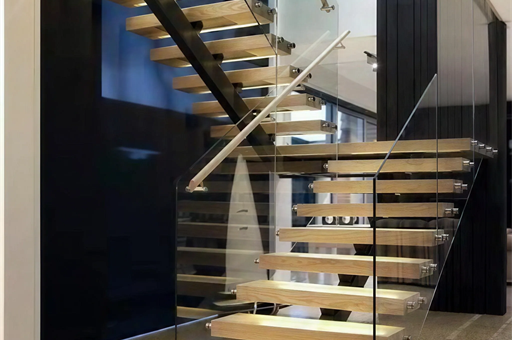





How to Choose a Railing Manufacturer: Buyers Guide for Owners-Railing Guides
Railing Guides · Buyer Guide
How to Choose a Railing Manufacturer: A Buyer's Guide for Owners and Their Teams
To choose a railing manufacturer, judge five things. Look at the materials they make, the depth of their custom work, how they work from a shop drawing, the quality checks before packing, and how they crate for export. A strong railing manufacturer turns your drawing into a precise, project-ready railing that arrives on time.
A railing sets the tone of a space the moment you walk in, so the partner who makes it matters as much as the design. This guide walks owners and their teams through the choice. It covers materials, custom capability, the drawing-first process, quality, lead time, and the questions worth asking. Where a topic runs deep, we link to a focused guide.
What a Railing Manufacturer Actually Does
A railing manufacturer takes a design intent and turns it into a finished, project-ready railing. The work starts with a shop drawing that fixes every dimension, then moves through cutting, welding, finishing, and a final fit-up before the railing ever leaves the floor. A strong partner treats that drawing as a contract, not a sketch, so what you approve is exactly what ships.
It helps to split the maker from the seller. A reseller stocks standard parts and ships them in a box; a true railing manufacturer builds to your numbers. For a hotel terrace, a condo corridor, or a villa with a long glass front, the gap shows up at install. A custom railing fits the opening the first time. A generic kit needs trimming, packing, and patience on site.
Knowing that scope is the first step in choosing well. Once you know a maker drives the drawing, the build, and the quality check, you can compare partners on what matters and not on price alone. The parts below break that down into clear, simple steps. The aim is to keep the choice rooted in your own project.
Stock Supplier, Local Fabricator, or Custom Factory
Railing partners fall into three broad groups. Knowing which one you are talking to saves a lot of mix-ups. The right group depends on your volume, your design, and how much site fitting you want to avoid.
| Type of partner | What it suits |
|---|---|
| Stock supplier | Sells standard kit lengths and brackets off the shelf. Quick and cheap for a plain deck, but you cut and fit on site, and the look is generic. |
| Local fabricator | A nearby shop that welds to order. Handy for one-off repairs and short runs, though capacity, finishes, and batch pricing are often limited. |
| Custom factory | Draws, fabricates, finishes, and trial-assembles complete railing systems for whole projects. Best where design, repeatable quality, and export crating all matter at once. |
A custom factory is where most serious projects land, because it owns the whole chain from drawing to crate. A mixed-use lobby or a batch of apartment balconies needs many identical units, a consistent finish, and parts that arrive in install order. That kind of volume and repeatability is the home ground of a dedicated railing manufacturer rather than a stock supplier or a single welding bench.
Match the Maker to Your Material
Railings come in glass, cable, stainless steel, aluminum, and wrought iron. Each one rewards a different skill. Glass needs clean spigots and true lines so the panels read as one sheet of light. Cable needs tight tension and even hole spacing. Stainless asks for a clean brushed or mirror finish. Cast aluminum and forged iron call for casting and welding craft. A good railing manufacturer is honest about which of these it does well.
Choose the material first, then choose the maker who works in it daily. A villa with a sea-facing front may want frameless glass that melts into the view. A coastal terrace leans toward marine-grade stainless or coated aluminum that shrugs off salt air. A factory that runs several lines under one roof lets you mix glass infill with a metal top rail and keep one contact. We compare every option side by side in our railing materials compared guide.
How Deep Does the Custom Work Go
Many suppliers use the word custom loosely. For some it means a choice of colours. For others it means a railing built to your exact opening, your post spacing, and your chosen profile. The depth of custom work is one of the clearest ways to tell partners apart. Ask whether they draw to your plan, or only tweak a fixed stock part to fit.
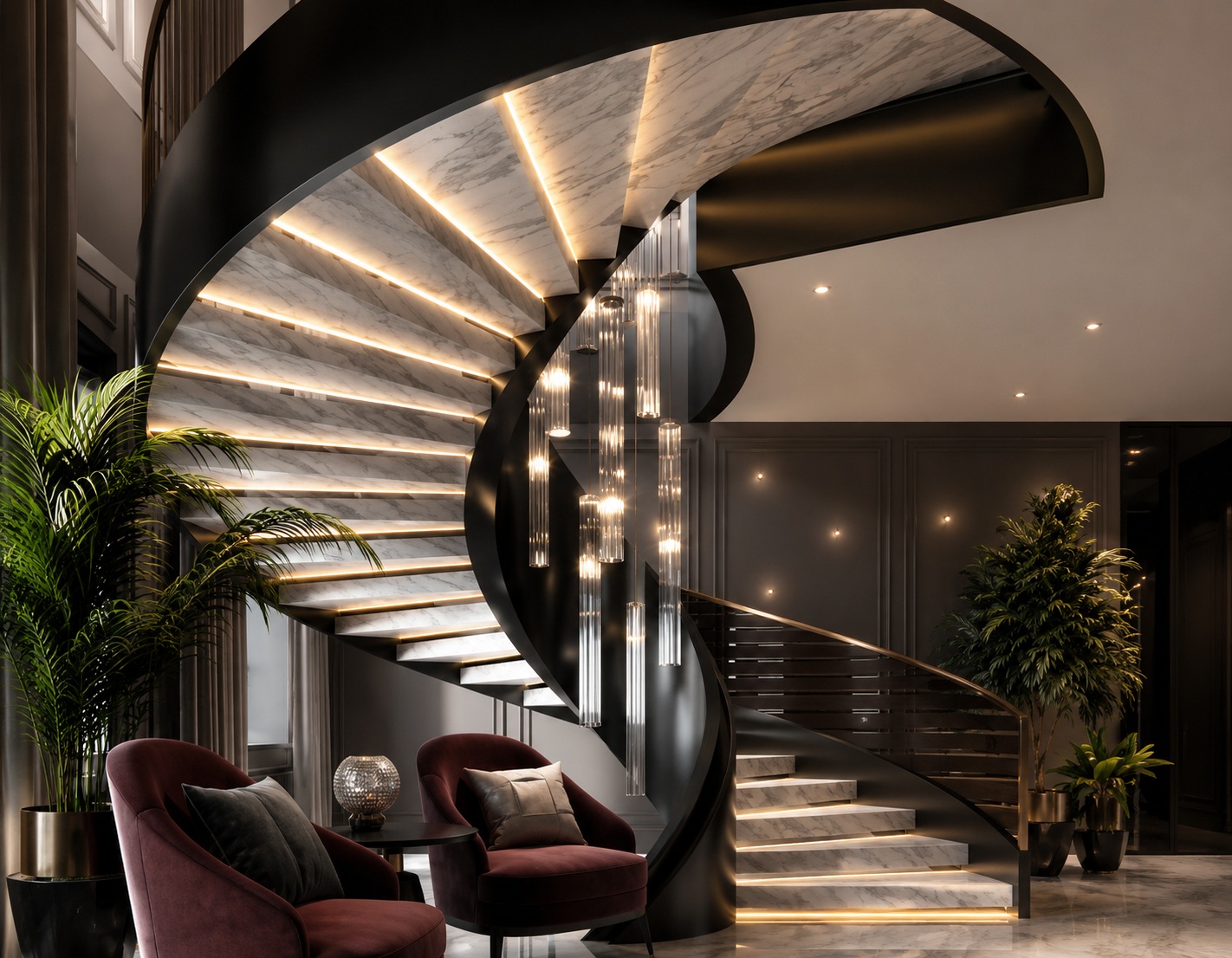
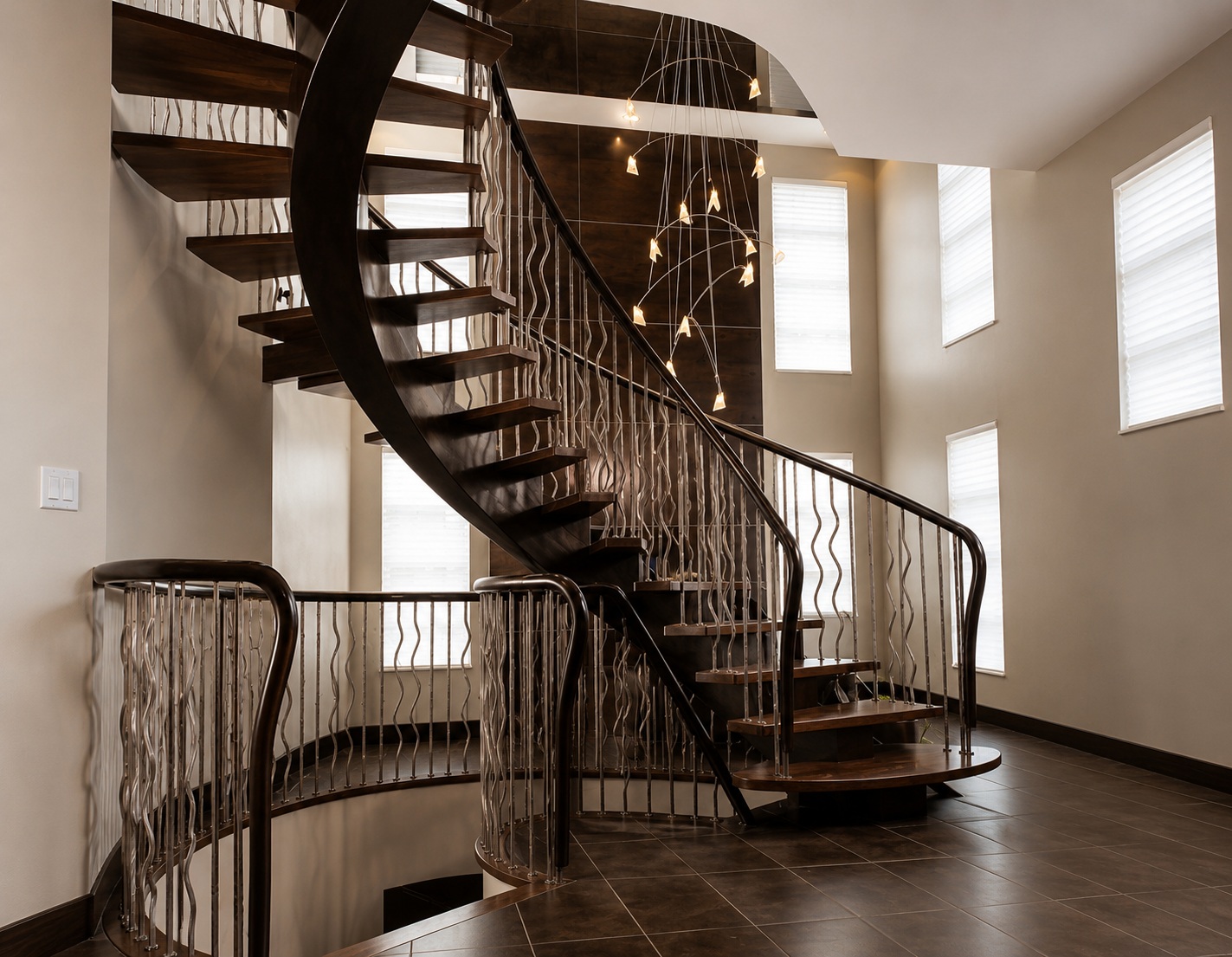
True custom skill shows in the details. It is the curved top rail that follows a sweeping stair, the slimmer post that suits a clean modern condo, or the period scrollwork that matches an older building. A maker with real depth can solve an awkward landing or an odd balcony, rather than ask you to redesign around its stock. When the design is the whole point of the railing, that freedom is worth more than a lower line price.
If your project leans hard on a signature look, start with a design conversation, not a parts list. We explore creative directions in our railing design ideas piece, and we cover bespoke, drawing-led work in our custom railing design guide.
The Drawing-First Process
The single best predictor of a smooth project is how a railing manufacturer handles drawings. At Double Building Materials, every railing starts as a shop drawing, not a kit. We take your measurements, your post layout, and your chosen finish, then turn them into a working drawing that fixes every part before any metal is cut. You approve that drawing first, and we cut nothing until you do.
This drawing-first coordination is what keeps surprises off the site. When the drawing is right, the posts land where the structure can hold them, the panels match the openings, and the parts arrive labelled in the order your installer needs. A railing manufacturer that skips this step shifts the guesswork onto your crew. With 25+ years of factory practice and 800+ projects across 60+ countries behind it, that disciplined drawing stage is where the schedule is really won.
For an owner, the practical payoff is fewer site changes and a cleaner handover. You see the railing on paper, sign off on what you want, and receive what you signed off on. That single habit separates a true railing manufacturer from a parts vendor more than any brochure claim ever could.
Quality, Trial Assembly, and Crating
A railing can look perfect in a photo and still fight you at install. The defence against that is a real quality routine. Ask any railing manufacturer how it checks a finished railing, and listen for two words: trial assembly. We build your railing twice, once on our own 4,500 m² floor in Guangdong, China, to confirm the fit before anything is packed.
That trial assembly before packing is where a hidden problem surfaces in the factory rather than on your terrace. We check the alignment, the joints, the finish, and the way the parts come together as a set. Only then do we move to export-ready crating, packing the railing so it survives the journey and lands in install order. For a project shipping across an ocean, the crate is part of the product, not an afterthought.
When you compare manufacturers, treat quality and packing as core capability, not as extras. A factory that trial-assembles and crates for export typically gives your installer a far calmer day than one that ships loose parts in mixed boxes. The reassurance is concrete: what you approved in the drawing is what comes out of the crate.
Inside our staircase and railing factory — a look at how we work as a custom building-materials supplier.
Code and Safety: Who Owns What
A railing is a safety element, so the rules around it are firm, and it pays to know who handles which part. A railing manufacturer fabricates to the heights and spacings on your approved drawing. Your local design team and inspector confirm that those numbers suit your jurisdiction. The two roles work best when they are clear from the start, so the railing matches both the look you want and the rules that apply.
| Common reference | Typical guard / handrail figure (US, residential) |
|---|---|
| IRC guard height | A guard at least 36 inches high is a common residential reference; a 4-inch sphere should not pass through the infill. |
| IBC commercial guard | Commercial guards are commonly referenced at 42 inches for occupied areas such as a lobby mezzanine or condo corridor. |
| ADA / handrail grip | Accessible handrails are commonly referenced at 34 to 38 inches with a graspable profile on public routes. |
| OSHA workplace rail | Workplace guardrails are commonly referenced around 42 inches on industrial platforms and back-of-house stairs. |
These are widely used reference values, not a ruling for your site. Your local adopted edition of the IRC, IBC, ADA, or OSHA is what actually governs, so confirm the current version with your local team. A capable railing manufacturer will build to whatever heights and openings your drawing specifies; we draw, fabricate, and crate to those numbers, while code sign-off and inspection stay with your local design and inspection team.
Questions to Ask Before You Commit
A short, sharp set of questions tells you more than any glossy catalogue. Ask the railing manufacturer to walk you through a real recent project in your material, and notice how specific the answer is. Vague answers about lead time, finishing, or packing usually point to gaps that will surface later on your site.
A few questions cut to the heart of it. Do you draw before you cut, and do I approve the drawing? Do you trial-assemble the railing before packing? How do you crate for export, and how are parts labelled for the installer? Which materials do you fabricate in-house, and which do you outsource? Honest, detailed answers signal a factory that owns its process from drawing to crate.
Finally, ask about coordination and after-sale support. A partner who answers your drawing questions quickly during the quote stage tends to stay responsive through fabrication and shipping. For a deeper, room-by-room look at planning a whole home, our house railing guide is a useful next read. When you are ready to see real systems, browse our balustrade and railing systems.
Choosing a Railing Manufacturer: FAQ
What is the difference between a railing manufacturer and a railing supplier?
A supplier stocks standard parts and ships them in a box for you to cut and fit. A railing manufacturer fabricates the railing to your drawing, so it arrives sized to your opening. For a custom or whole-project railing, a manufacturer typically gives a cleaner fit and fewer changes on site than a parts supplier.
How do I know if a railing manufacturer can handle my material?
Ask which materials they fabricate in-house and request photos of recent work in that material. A maker who does glass, cable, stainless, aluminum, and iron under one roof can mix them on one project. Matching the maker to your chosen material is one of the most reliable ways to judge fit.
Does a railing manufacturer handle code compliance?
A manufacturer builds to the heights and spacings on your approved drawing, but your local design team and inspector confirm those numbers for your jurisdiction. Common references include the IRC, IBC, ADA, and OSHA, yet your local adopted edition governs. Confirm the current version with your local team before fabrication begins.
How long does custom railing take to make and ship?
Lead time depends on the material, the design complexity, the quantity, and the finish, so ask for a project-specific schedule rather than a single number. A drawing-first manufacturer can usually give a clear timeline once the drawing is approved, because the fabrication steps are then fixed and the crating plan is known.
Why work with an overseas railing manufacturer?
A specialist export factory often combines deep material range, custom engineering, and competitive batch pricing for whole projects. The key is a partner that draws first, trial-assembles before packing, and crates for export so parts arrive in install order. We ship roughly 90% of our output abroad to 60+ countries with that workflow.
Keep reading across this guide: railing materials compared, railing design ideas, custom railing design, and the whole-home house railing guide. When you are ready to specify, browse our balustrade and railing systems.
Double Building Materials draws, manufactures, trial-assembles, crates, and ships your railing system. Your own contractor or installer handles on-site installation and local code sign-off — we can help you find one where available. Code figures above are common US references; your local adopted edition of the IRC, IBC, ADA, or OSHA governs, so confirm the current version with your local team. Every railing is made to order and priced from its drawing.
Talk to us on WhatsApp →