

How to Choose a Custom Staircase Manufacturer: A Buyers Guide-Staircase Guides
Custom Staircase Manufacturer · Buyer's Guide
How to Choose a Custom Staircase Manufacturer: A Buyer's Guide
To choose a custom staircase manufacturer, judge five things: shop-drawing and engineering capability, the range of materials they can fabricate, their quality control, their export and shipping experience, and how clearly they communicate. A strong custom staircase manufacturer draws every detail before cutting, trial-assembles the staircase, and crates it properly for the journey to your site.
A staircase is one of the few things in a home you touch every single day, so the company that builds yours matters as much as the design itself. This guide walks an owner, a contractor, or an architect through how to weigh and choose a custom staircase manufacturer. It covers the questions worth asking, the red flags worth heeding, and what changes when your maker is overseas. Where a topic runs deep, we link to a focused guide so you can read further.
What a Custom Staircase Manufacturer Does
A custom staircase manufacturer designs and builds a staircase to fit one opening, rather than selling a fixed model off a shelf. The work begins with your measurements and your chosen look, and it ends with a finished, made-to-measure staircase ready to install. Between those two points sits a chain of skilled tasks: drawing, cutting, welding, finishing, and packing. A good maker owns that whole chain under one roof.
That single-source control is the real value of a custom maker. When the same factory draws the staircase, fabricates it, and checks the fit, nothing falls through the gaps between separate trades. Bespoke staircase design also means the proportions, the materials, and the railing all answer to your space instead of forcing your space to accept a standard part. For a feature stair in a main room, that tailored fit is usually what owners are paying for.
It helps to know what a maker does not do, because that boundary shapes your project plan. Most makers draw, build, and ship the staircase, then hand it to a local contractor who fits it on site. The maker rarely installs the stair itself or signs off your local building code. That is even more true when the factory sits in another country. Knowing where the maker's work stops, and where your own builder picks up, keeps the project honest from the start.
Custom vs Catalogue: Which You Actually Need
Before you choose a maker, settle whether you truly need a custom staircase at all. A stock or kit stair is quicker and cheaper, and it suits a plain opening with standard dimensions where the stair is purely functional. A made-to-measure staircase costs more and takes longer, but it earns that premium when the opening is unusual, the ceiling height is non-standard, or the stair is meant to be seen and admired.
The honest test is simple. If a catalogue stair fits your opening and your eye, buy the catalogue stair. If it does not, a custom staircase manufacturer is the route, because adapting a fixed model to an awkward space usually costs more grief than starting from a fresh drawing. The table below sets the two side by side so you can place your own project.
| Consideration | Stock / kit vs custom |
|---|---|
| Fit | Stock fits standard openings only; a custom maker fabricates to your exact height, width, and floor opening. |
| Lead time | Stock ships fast; custom needs weeks of drawing and fabrication, plus shipping when made overseas. |
| Cost | Stock is the lower outlay; custom carries a premium that buys a tailored fit and a feature finish. |
| Look | Stock is one of many identical units; custom is a one-off designed around your room and materials. |
| Materials | Stock offers set options; a custom maker mixes steel, timber, glass, and stone to your specification. |
We weigh this decision in full, with the trade-offs that matter to owners and builders, in our guide to custom versus stock staircases. If your answer is custom, the rest of this page shows you how to pick the maker.
Engineering and Shop-Drawing Capability
The single most important thing to look for in a custom staircase manufacturer is the quality of its drawings. A shop drawing is a detailed, fully dimensioned plan of the finished staircase, showing every tread, every connection, and every railing component before any metal is cut. The drawing is where a custom staircase succeeds or fails, because a stair fabricated from a vague sketch leaves little room to fix an error once the steel exists.
Ask how the staircase design service actually works. Some makers expect you to arrive with finished architect's drawings; others run a full design and detailing service in-house, turning your rough measurements into a working plan. The stronger arrangement is drawing-first: the factory produces the shop drawing, you and your builder approve it, and only then does fabrication begin. That single approval step catches geometry problems on paper, where they cost a revision rather than a remake.
Engineering sits right behind the drawing. A custom staircase carries real loads, so the maker should understand how the structure transfers weight to the floor and the wall, and should detail connections that a competent contractor can install. You do not need the factory to certify your local code, but you do need drawings clear enough that your engineer or building department can read them. We cover exactly what to hand a factory, and what to expect back, in what to send a staircase manufacturer.
Materials Range and Finish
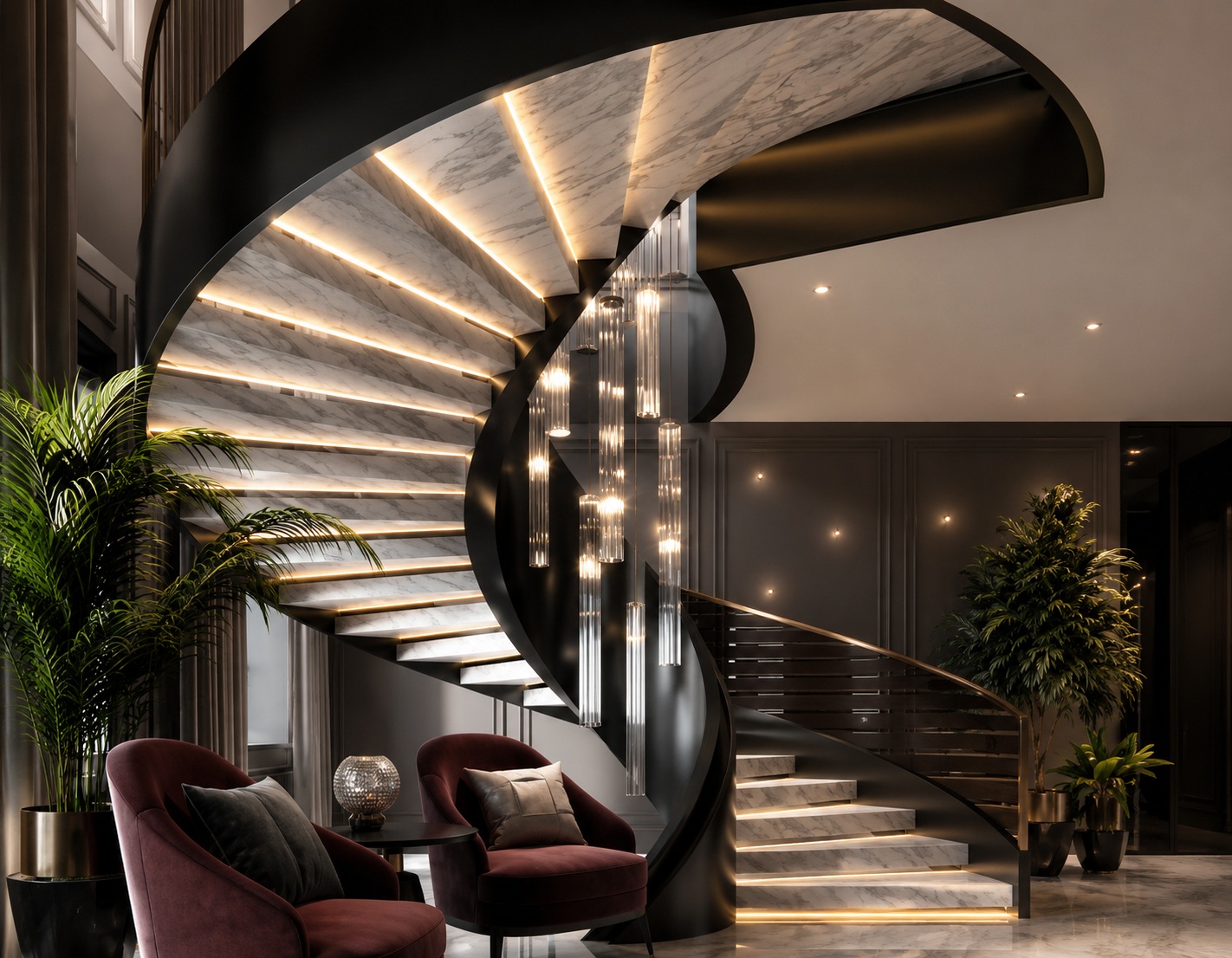
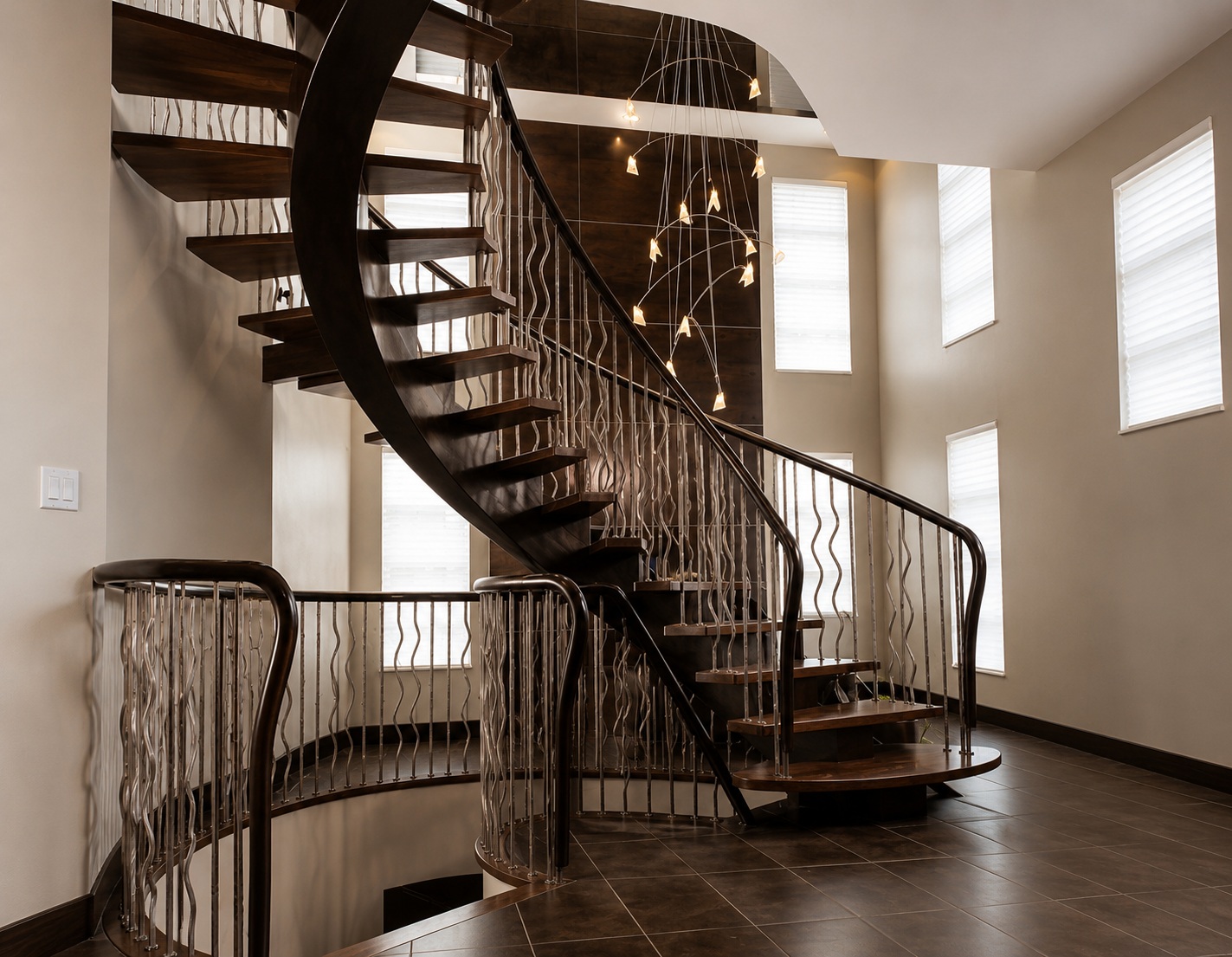
A custom maker should fabricate in more than one material, because a one-material workshop will steer you toward whatever it happens to weld. The breadth of a manufacturer's material range tells you how freely you can design, and how well the finished staircase will sit against your floor, your walls, and your light. A fabricated staircase combines a structure, a tread, and a railing, and each of those parts can be a different material.
| Material | What it brings to a staircase |
|---|---|
| Steel | The usual structure for floating, mono-stringer, and spiral stairs. Slim, strong, and finished in any colour. |
| Timber | Warm treads that match a wood floor; a common pairing on a steel structure for an indoor home. |
| Glass | Laminated treads or balustrade for an open, light-filled look; needs a slip-resistant surface. |
| Stone | Marble or porcelain treads for a solid, luxurious feel; heavier, and demanding to detail and ship. |
| Stainless steel | A durable, corrosion-resistant choice for railings and for stairs in damp or coastal settings. |
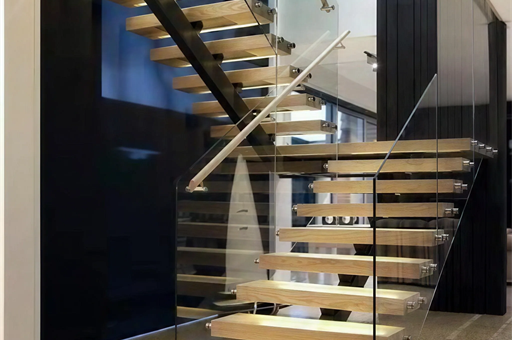
Finish quality is where a custom staircase is won or lost up close. Look at how a maker handles the joints you will see and touch: the weld at a stringer, the line where a tread meets the structure, the powder-coat or paint on the steel. A factory that can show clean, consistent finishes across past work has the hand skill that a drawing alone cannot promise. You can browse the materials and stair types we fabricate on our custom staircase page.
Quality Control and Trial Assembly
Quality control is what separates a staircase that fits on site from one that fights you. The strongest signal a custom staircase manufacturer can offer is a trial assembly. The factory builds the whole staircase on its own floor, confirms the rise, the run, and the fit of every part, then takes it apart for shipping. That dry run is where a fault becomes a quick fix in the workshop, not a costly surprise once the stair reaches your site.
Trial assembly matters more, not less, when the staircase travels. A stair shipped halfway around the world cannot be tweaked on arrival the way a local maker might pop back with a grinder. Building it once in the factory, checking it, and only then crating it removes most of the risk that the parts will not come together. Ask any maker, local or overseas, whether they trial-assemble before they pack, and what they check while it is standing.
Beyond the trial build, ask about the everyday checks. A capable factory measures key dimensions against the approved drawing, inspects welds and finishes, and labels the parts so your installer can rebuild the staircase in the right order. None of this is glamorous, yet it is exactly the discipline that turns a good drawing into a staircase that goes up cleanly. Consistent quality control is a habit you can see in a factory's past projects.
Inside a China staircase manufacturer and railing factory — custom building-materials supplier.
Working With an Overseas Factory
Many fine-value custom staircases are made overseas, where skilled work costs less and a factory can pour its budget into engineering and finish. Buying from another country is a well-worn path. It does change a few practical things you should plan for. The three that matter most are lead time, the drawing loop, and the crating that guards the staircase across an ocean.
Lead time is longer, because the staircase has to be drawn, approved, made, and then shipped by sea. A typical overseas project runs in weeks, not days. Start early and build the voyage into your schedule. The drawing loop is the heart of the deal. No one can pop to your site, so the shop drawing has to be complete and correct before work begins. That is why a drawing-first maker fits overseas work so well.
Crating is the quiet detail that decides whether your staircase arrives in the condition it left. Export-ready crating means the parts are protected, braced, and packed in the sequence your installer will need them, so nothing is scratched or bent in transit. A maker with real export experience will treat packing as part of the build, not an afterthought. We lay out the full ordering path, from first enquiry to delivery, in how to buy a staircase.
Questions to Ask Before You Sign
A short list of pointed questions tells you more about a custom staircase manufacturer than any brochure. The answers reveal how a factory really works, where its strengths lie, and where the boundaries of its service sit. Ask these before you commit, and ask the same set of every maker you compare, so you are weighing like against like.
| Ask the maker | Why it matters |
|---|---|
| Do you produce shop drawings I approve before fabrication? | A drawing-first process catches errors on paper, not in steel. |
| Do you trial-assemble the staircase before packing? | A dry build confirms the fit before the stair ever ships. |
| How do you crate and protect the staircase for transit? | Export-grade packing decides what condition the parts arrive in. |
| What do you need from me to start? | A clear input list shows the maker has a real process. |
| Do you install, or do I arrange a local fitter? | Confirms where the maker's scope ends and yours begins. |
| Can I see past projects in my chosen material? | Finished work proves the hand skill a drawing cannot. |
Pay attention to how the answers are delivered as much as to their content. A maker who replies clearly, in good time, and in plain language is one you can coordinate a complex project with from a distance. Vague or evasive answers at the enquiry stage rarely improve once an order is placed.
Red Flags to Watch For
A few warning signs tend to separate a dependable custom staircase manufacturer from a risky one. None of them is conclusive on its own, but several together should give you pause before you part with a deposit. The pattern to watch for is a maker who is eager to take the order yet thin on the process that makes a custom staircase succeed.
Be wary of a factory that quotes a price before seeing your drawings or measurements, because a real custom price comes from a real custom design. Treat a refusal to share shop drawings, or to show past projects, as a meaningful gap rather than a small one. A maker who cannot explain how the staircase will be packed and shipped has probably not thought the journey through, which is a particular worry for overseas orders.
Watch the communication too. Slow, unclear, or mixed replies during the sales stage tend to grow worse, not better, once work starts and the stakes rise. Be wary of a maker who claims to handle everything from another country. That can include your local install and code sign-off, and that scope is hard to honour in practice. A maker honest about where its work stops is usually safer than one that promises the world.
How We Work at Double Building Materials
It is fair to ask where Double Building Materials fits the framework above, so here is the honest picture. We are a custom staircase and railing manufacturer with 25+ years of factory operation, a 4,500 m² facility in Guangdong, China, and more than 800 delivered projects across 60+ countries. About 90% of what we make is exported, so working at a distance with owners, contractors, and architects is the everyday business, not the exception.
Our process follows the three habits this guide recommends. We work drawing-first, turning your measurements and design into a shop drawing you approve before any steel is cut. We trial-assemble each staircase on our own floor to confirm the rise, the run, and the fit. Then we crate it export-ready, braced and sequenced for the voyage, so it arrives in the condition it left. Those three steps are why the projects that ship from us tend to go up cleanly on site.
We are equally clear about where our work stops. We draw, fabricate, trial-assemble, crate, and ship your staircase; we do not install on site or certify your local building code, and we can help you find a local installer where one is available. Your own engineer and building department confirm the design against your local adopted edition. If that division of labour suits your project, you can see the range we build on our custom staircase page.
Custom Staircase Manufacturer FAQ
What should I look for in a custom staircase manufacturer?
Look for five things: clear shop drawings you approve before fabrication, a real range of materials, disciplined quality control with a trial assembly, genuine export and shipping experience, and prompt, plain communication. A maker who is honest about where its work stops, such as not installing on site, is usually more dependable than one promising everything.
Is it safe to buy a custom staircase from overseas?
It is a common and workable route when the maker draws first and trial-assembles before packing. The keys are a complete, approved shop drawing, a factory that checks the fit before shipping, and export-grade crating. Plan for a longer lead time, since the staircase has to be fabricated and then shipped by sea to your site.
Do staircase manufacturers install the staircase too?
Often not, and even less so with an overseas factory. Most makers draw, build, and ship the staircase, then hand it to a local contractor who fits it on site. Always confirm at the enquiry stage where the maker's scope ends. A clear boundary lets you arrange a local fitter and your own code sign-off in good time.
What is the difference between a custom and a stock staircase?
A stock or kit staircase is a fixed model built to standard sizes, quick and lower in cost. A custom staircase is fabricated to your exact opening, materials, and look, which costs more and takes longer. Choose custom when the opening is unusual or the stair is a feature; choose stock when a standard size genuinely fits.
What do I need to provide to get a custom staircase quote?
At minimum, your floor-to-floor height measured rather than estimated, the size of the floor opening, the footprint you can spare, and the materials and style you want. Photographs and any architect's drawings help a great deal. A good maker will send you a clear input list, and we walk through the whole list in our guide on what to send a staircase manufacturer.
Go deeper into the cluster: custom versus stock staircases, what to send a staircase manufacturer, and how to buy a staircase. When you are ready to brief a maker, browse the full custom staircase range.
Double Building Materials draws, manufactures, trial-assembles, crates, and ships your custom staircase. Your own contractor or installer handles on-site installation and local code sign-off — we can help you find one where available. Any code or dimension references above are common industry values; your local adopted edition governs, so confirm the current version with your local team.
Talk to us on WhatsApp →