

What to Send a Staircase Manufacturer: Drawings, Measurements & Specs-Staircase Guides
Custom Staircase Manufacturer · What to Send
What to Send a Staircase Manufacturer: Drawings, Measurements & Specs
To quote and build accurately, a staircase manufacturer needs your floor-to-floor height, the floor opening dimensions, the plan dimensions, the headroom, and the finished floor levels. Add clear site photographs, any architect drawings, your material and finish preferences, and your railing choice. Those details let the manufacturer turn your stairwell into an approved shop drawing before any steel is cut.
The quality of your quote rests almost entirely on the quality of the information you send first. A staircase manufacturer works from numbers and drawings, not guesswork, so a complete brief saves rounds of back-and-forth and protects your timeline. This guide lists what to gather and explains why each item matters. It then shows how Double Building Materials turns that package into a working drawing you approve before fabrication begins.
Why the Information Matters First
A custom staircase is engineered around your own opening, so the manufacturer cannot price one from a photograph alone. Every dimension you send feeds straight into the structural calculation, the tread layout, and the final cost. When the brief is thin, the manufacturer has to assume, and those assumptions are exactly what produce a quote that shifts later, once the real numbers arrive. A complete package removes that uncertainty at the very start.
There is a second benefit that owners often overlook. A detailed enquiry signals that the project is serious and well prepared, which usually earns a closer look and a faster turnaround. You are handing the engineering team the raw material for an accurate drawing. The more clearly you describe your stairwell, your materials, and your finish, the closer the first proposal lands to what you intended.
None of this needs professional surveying skill. A tape measure, a phone camera, and a careful eye are enough for a first enquiry, and the manufacturer refines everything against a site survey before fabrication. The aim now is simple: give a skilled reader a clear, honest picture of the space the new staircase has to occupy.
The Information Checklist at a Glance
Here is the full list of what to gather before you contact a staircase manufacturer. Treat it as a packing list for your enquiry. The more boxes you tick, the sharper the reply. None of it is a must for a first chat. But each item moves the quote closer to a real, buildable number rather than a rough guess.
| What to send | Why the manufacturer needs it |
|---|---|
| Floor-to-floor height | The single most important measurement; it determines the number of risers and the whole geometry. |
| Floor opening dimensions | The length and width of the hole in the upper floor that the staircase must rise through. |
| Plan dimensions | The footprint available at floor level, including walls, doorways, and any obstruction nearby. |
| Ceiling height and headroom | Confirms a tall person clears the underside of the upper floor while climbing. |
| Finished floor levels | The final floor surface top and bottom, so risers stay equal once flooring is laid. |
| Photos of the space | Wide and close shots reveal context that bare numbers cannot communicate on their own. |
| Architect or builder drawings | Any plan, section, or elevation that already exists shortens the drawing stage considerably. |
| Material and finish | Steel, timber, stone, or glass treads, plus the finish and colour you have in mind. |
| Railing choice | Glass, cable, metal, or timber balustrade, which changes both the structure and the look. |
| Site access for delivery | Door widths, lift size, and the approach route, so the crate reaches the room. |
The sections below take each group in turn and show how to capture it well. Can only gather a few items before your first message? Lead with the floor-to-floor height, the opening, and a couple of photos. Those three alone let a staircase manufacturer sketch a credible starting point.
The Measurements a Staircase Manufacturer Needs
Staircase measurements start with the floor-to-floor height, measured vertically from the finished surface of the lower floor to the finished surface of the floor above. This figure governs the total rise, and the manufacturer divides it into equal risers to keep every step identical. An error here propagates through the entire staircase, so measure it carefully and, where you can, take the reading in more than one position to confirm the floors are level.
Next come the plan dimensions: the length and width of the area the staircase can occupy at floor level. Note the position of nearby walls, the swing of any door, and the location of windows or radiators that the design must accommodate. These constraints decide whether a straight flight fits or whether the staircase has to turn. Recording them now prevents a beautiful drawing that simply will not fit the real room.
If you are sending raw staircase measurements, label every number with what it shows and the unit you used. A bare size invites a misread, and a metric figure read as an imperial one is a costly mix-up. A small marked-up sketch, even a rough one drawn by hand, tells the story far better than a list of plain numbers ever could.
The Floor Opening and Headroom
The floor opening is the gap in the upper floor that the staircase climbs through. Its length and width both matter a great deal. The opening has to be long enough for an easy pitch and tall enough to clear your head as you near the top. When the opening is fixed and cannot move, it often becomes the limit that shapes the whole layout. So the maker needs its exact size from the start.
Headroom is the related measurement, the clear vertical distance from a tread to the floor or ceiling directly above it. Too little headroom forces a person to stoop, which most building codes treat as a defect. Common references set a minimum headroom for residential stairs, though your local adopted edition is what actually governs, so confirm the current figure with your local team rather than assume one universal value.
Finished floor levels earn a note of their own, since they are easy to forget on a project still being built. The height you measure today, over a bare subfloor, shifts once tile, timber, or stone is laid at either landing. Tell the maker the planned finished depth top and bottom. That way the first and last risers come out equal to all the others once your flooring is down.
Staircase Drawings and Photos
If an architect or builder is on board, their drawings are the single most useful thing you can forward. A floor plan shows the footprint. A section shows the rise and the opening together. An elevation shows how the staircase reads against the wall. These sheets already speak the maker’s language. So sending them trims the drawing stage and cuts the questions that come back to you.
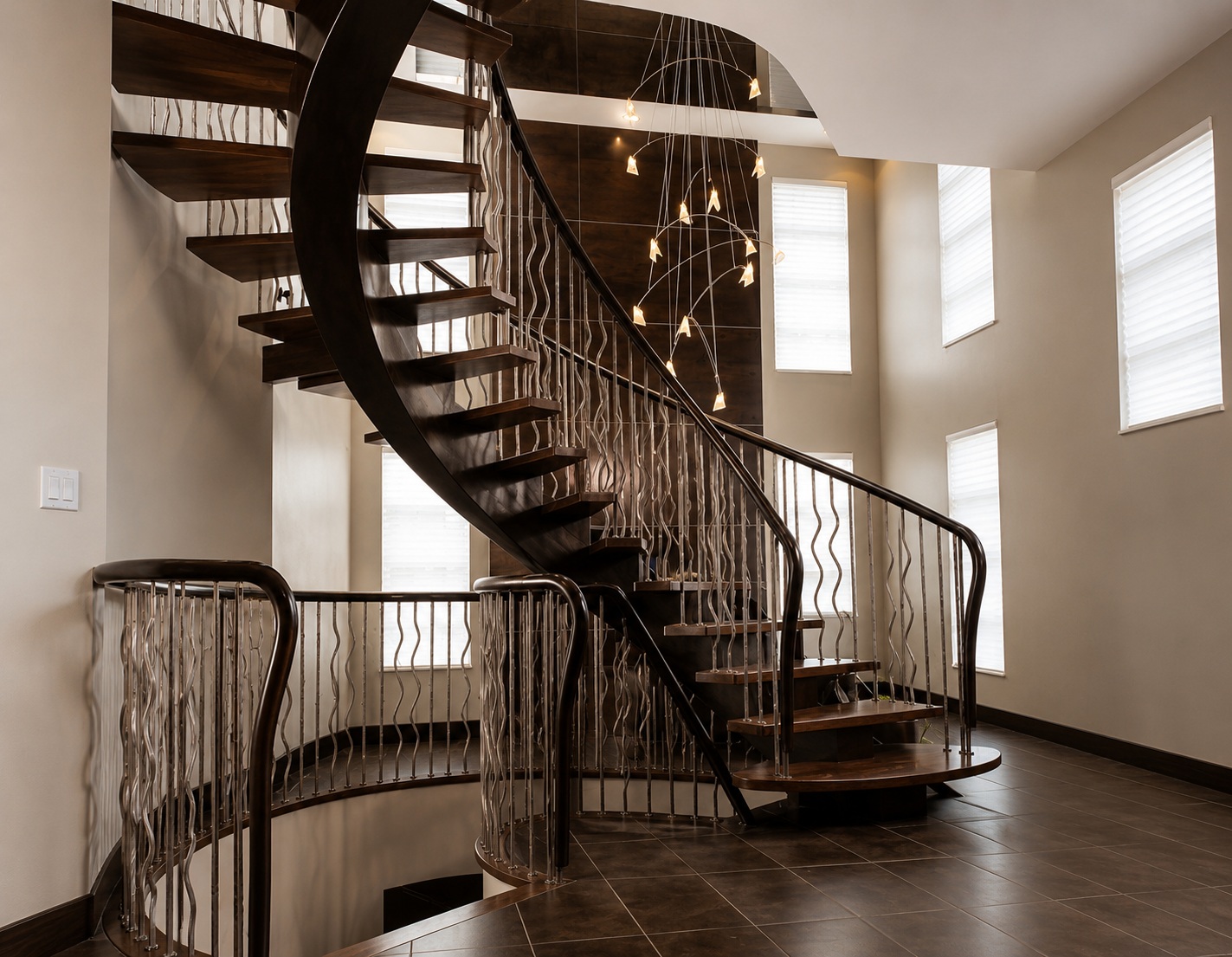
For a timber job, any wooden staircase drawings you have are worth their weight in gold. They log the tread depth, the nosing shape, the stringer style, and the joinery that gives a wooden stair its feel. Even a hand sketch of a staircase you love helps, since it shows the look you are after far more clearly than words. The maker can then match the spirit of that source within your own sizes.
Where no drawings exist, photos carry the load. Take several wide shots of the full stairwell and the rooms at both levels. Then take a few close shots of the floor edges, the walls, and any pipe or duct running through the space. Good photos let the maker read what bare numbers miss, such as a sloping ceiling, an awkward beam, or a wall finish you want the new staircase to sit against.
Material, Finish, and Railing Choices
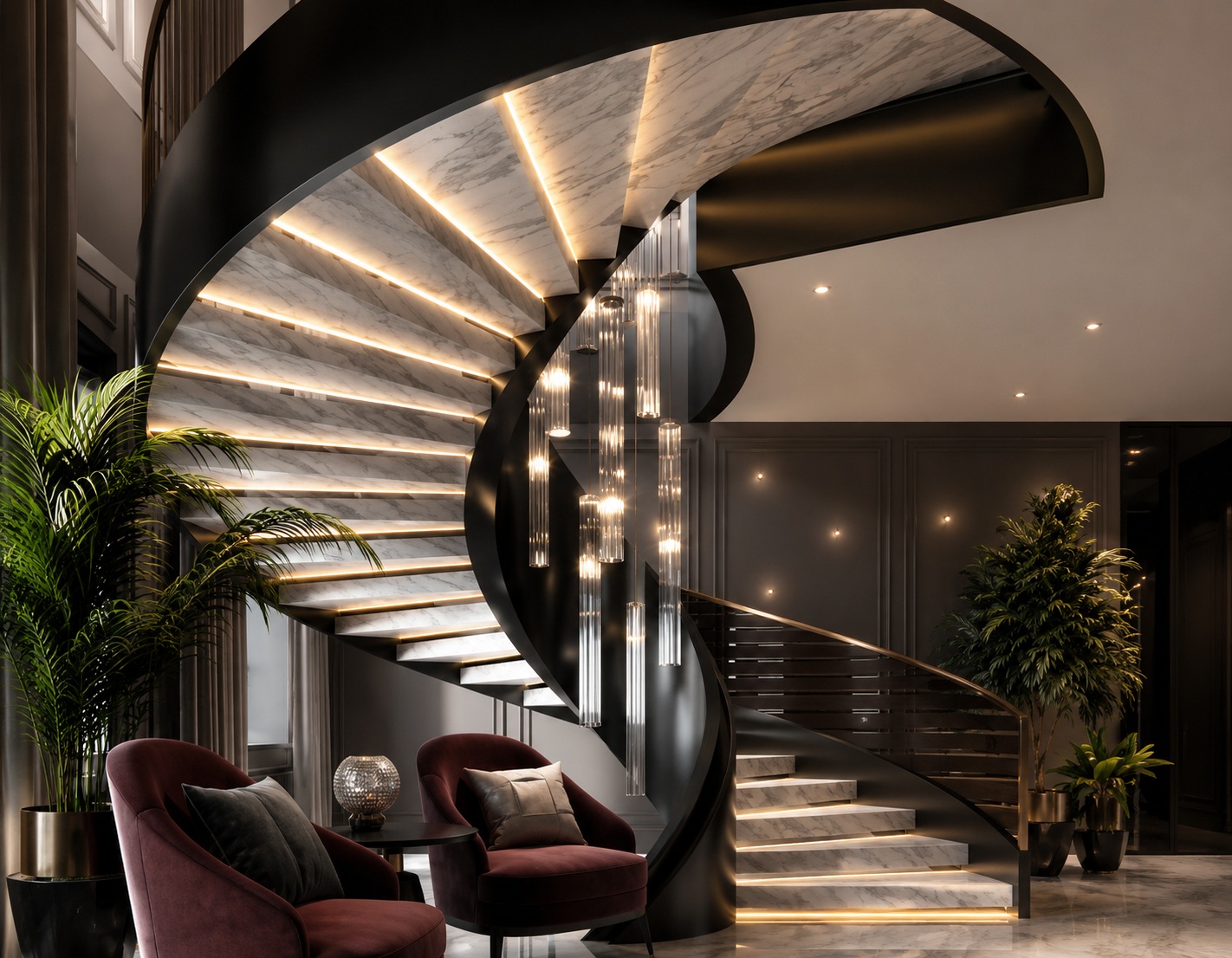
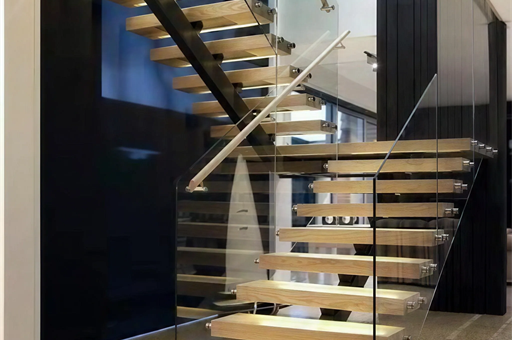
Your material preference shapes both the engineering and the cost, so share it early even if it is only a leaning rather than a firm decision. A steel structure, timber treads, stone treads, or laminated glass each behave differently, and each carries its own price and lead time. Telling the manufacturer you want, say, oak treads on a steel frame immediately narrows the design toward something buildable and quotable.
Finish is the next layer, covering the colour of the steel, the species and stain of the timber, and the polish of any stone. A reference image is the clearest way to communicate a finish, since the same word means something different to each person. The railing choice belongs in this conversation too, because a frameless glass balustrade, a cable infill, a metal baluster, and a timber handrail each load the structure differently and change the character of the staircase.
You do not need a final spec at the enquiry stage; a clear steer is enough. The maker can lay out options against your stated choice, then dial in the detail through the drawing stage. What helps most is being open about what drives you, whether it is the budget, the look, the lead time, or a single style you have already fallen for. Browse the full range on the custom staircase page to anchor those choices.
Every millimetre measured before this stair ships — our pre-shipment check.
Site Access and Delivery
Site access is the detail most people forget, yet it can quietly rule how a staircase is built and packed. A staircase manufacturer needs to know how the finished parts will reach the room where they belong. Measure the width of the entry doors, the size of any lift, the turns in a hallway, and the height of a stairwell the crate must travel up. A fine staircase is of no use if it cannot get into the building.
For an export project, this shapes the crating as much as the delivery. The access route lets the maker decide how the staircase should be split for the trip and how each part should be wrapped for the journey. At Double Building Materials, that thinking drives our export-ready crating. Each part is packed in the order your installer will need and braced to survive the long trip overseas.
Flag any real limits at the far end as well, such as a narrow lane that bars a large truck, a building with no service lift, or a delivery window set by a city. These limits rarely change the design, but they often change the packing and the haulage. Raising them in the enquiry means the final quote reflects the true cost of getting your staircase to the door.
From Your Brief to an Approved Drawing
Once your package arrives, this is where Double Building Materials begins its Drawing-First Coordination. We take your floor-to-floor height, your opening, your plan dimensions, and your stated preferences, then convert them into a working staircase shop drawing. That drawing fixes every riser, every tread, the structure, and the railing on paper, in proportion, before a single piece of steel is cut. It is the document that turns a loose idea into a precise, buildable plan.
You review that drawing and approve it, and nothing is fabricated until you do. This approval step is the heart of a custom stair consultation, because it is your chance to confirm the proportions, the materials, and the details while changes still cost only an eraser rather than steel. A good staircase manufacturer treats this conversation as collaborative, answering questions and adjusting the drawing until it genuinely matches what you had in mind.
After sign-off we build the staircase and trial-assemble it on our Guangdong floor, where we check the rise, the fit, and the finish before anything ships. Then we crate it for export and, where local fitting is on offer, we can help you find an installer. Your own contractor fits it on site from our drawings. We do not install on site or sign off local code; that part stays with your local team. Not sure whether to order a bespoke stair at all? Weigh the trade-offs in our guide to custom versus stock staircases, and see the wider picture in how to choose a custom staircase manufacturer.
What to Send a Staircase Manufacturer: FAQ
What is the most important measurement to send?
The floor-to-floor height is the one that counts most. You take it straight up, from the finished lower floor to the finished floor above. It sets the total rise, which the maker splits into equal risers. With that one figure and your floor opening, a staircase manufacturer can already sketch a sound starting layout for your stairwell.
Do I need pro drawings to get a quote?
No. Pro drawings help and speed things up, but they are not a must for a first enquiry. Careful measurements, a labelled sketch, and clear photos are enough for a maker to give a real reply. If an architect has already drawn plans or sections, forward them. They speak the maker’s language and cut the questions that come back to you.
What are staircase shop drawings?
A staircase shop drawing is the detailed build drawing a maker produces from your measurements and brief. It sets out every riser, tread, the frame, and the railing to exact scale, and you sign it off before anything is cut. It differs from an architect’s concept drawing, which shows the idea rather than the precise sizes a workshop builds to.
How do I measure my floor opening?
Measure the length and the width of the hole in the upper floor that the staircase will pass through, taken at the framed edges rather than the trim. Note both numbers with their unit, plus any beam or duct that juts in. Where the opening is fixed, it usually becomes the limit that shapes the whole staircase layout.
Why does a staircase manufacturer ask about site access?
Because a finished staircase still has to reach the room where it goes in. Door widths, lift size, hallway turns, and the delivery route all decide how the staircase is split, packed, and crated. Sharing these limits early means the quote reflects the true cost of moving and handling the staircase, with no shocks on the day.
Keep reading in this cluster: how to choose a custom staircase manufacturer and custom vs stock staircases. When your brief is ready, browse the full custom staircase range.
Double Building Materials draws, manufactures, trial-assembles, crates, and ships your staircase. Your own contractor or installer handles on-site installation and local code sign-off — we can help you find one where available. Any code or dimension references above are common values only; your local adopted edition governs, so confirm the current figures with your local team.
Talk to us on WhatsApp →