

Monorail Staircase or Mono Stringer? Clearing Up the Single-Beam Terms-Staircase Guides
Mono Stringer Staircase · Terms
Monorail Staircase or Mono Stringer? Clearing Up the Single-Beam Terms
A monorail staircase is the same structure as a mono stringer staircase: one central steel beam runs under the treads and carries the whole flight, so the stair reads as a single clean line. The names differ, not the engineering. Builders also say single stringer, mono beam, or single beam staircase, and all four describe one central spine.
If you have searched for a monorail staircase and a mono stringer staircase and wondered whether they are two different products, the honest answer is simple. They are nearly always the same stair described in different words. This guide sorts out the terms, explains the small nuance behind the word monorail, and shows where the single-beam family sits next to floating and double-stringer stairs, so you can brief a supplier with confidence.
What a Monorail Staircase Is
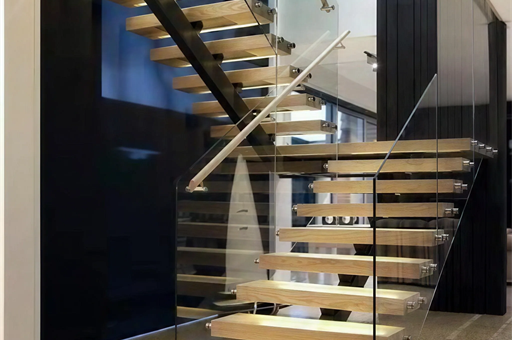
A monorail staircase uses one central beam that runs the full length of the flight, directly beneath the middle of every tread. That single spine carries the structural load down to the floor, and the treads cantilever outward from it to either side. The support sits in one slim line, not across two side stringers, so the staircase looks very light, almost as though the steps balance on a backbone.
The word monorail borrows the image of a single rail, and that is just what you see from the side: one clean line of steel running from the lower floor to the upper landing. Owners tend to like the look for that reason. A monorail staircase keeps the visual clutter of a normal stair low, so the sightline through a room stays open. The stair then becomes a design feature rather than a plain way up.
The central beam is normally a large steel section, either a square tube or a welded box, sized by an engineer to suit the span and the load. The treads sit on short brackets welded along the top of that beam, and they can be timber, solid stone, or steel depending on the look you are after. The handrail and balustrade then run along one or both edges to complete a stair that is genuinely structural, not merely decorative.
Monorail, Mono Stringer, Single Beam: The Synonyms
Here is the part that confuses most people, and it is worth settling plainly. The terms monorail staircase, mono stringer staircase, single stringer staircase, mono beam staircase, and single beam staircase all point, on nearly every project, at the same thing: a flight held up by one central spine. The words vary by region, by fabricator, and by whether the speaker is a designer or an engineer. The stair underneath stays the same.
A stringer is simply the structural member that runs under a staircase and carries the treads. A traditional staircase uses two stringers, one along each side. A mono stringer staircase reduces that to a single stringer placed down the centre, which is the literal meaning of the prefix mono. The marketing-friendly name monorail emphasises how that lone member reads as one rail when you look at the stair side-on. The table below lines the synonyms up so the relationships are clear.
| Term you may hear | What it actually means |
|---|---|
| Monorail staircase | A single central beam carries the treads; the name highlights the one-rail line you see from the side. |
| Mono stringer staircase | The same stair named after its single central stringer. The most common term in fabrication. |
| Single stringer staircase | An identical description: one stringer instead of two. Mono and single are interchangeable here. |
| Mono beam / single beam staircase | Names the structural element as a beam rather than a stringer; engineering teams often prefer this. |
| Central spine staircase | A descriptive label some architects use; the spine is the same central member. |
So if a designer hands you a drawing labelled monorail and a fabricator quotes a mono stringer, you are almost certainly looking at one product under two names. The practical lesson is that you should focus on the description, not the label. Confirm that the support is a single central member and that the treads cantilever from it, and the terminology stops mattering. We dig into the structural detail in the broader single-stringer staircase explainer.
Mono Stringer vs Monorail: The Small Nuance
If there is any shade of difference between the terms, it lives in emphasis rather than engineering. The word stringer is structural language; it names the member that takes the load and is the term a fabricator or an engineer reaches for first. The word monorail is more visual and more marketing-led, because it calls up the picture of one long rail and sells the clean look the stair gives. Both point at the same single-spine structure below.
Occasionally monorail is used a little more loosely in showroom or catalogue language, where it can describe any stair with one dominant central line, including some that lean toward a floating look. Mono stringer, by contrast, stays firmly tied to the structural meaning of a single stringer. That is the full extent of the nuance. In day-to-day practice most people treat the two words as synonyms, and a careful brief or shop drawing removes any ambiguity long before fabrication begins. When in doubt, ask the supplier to confirm the support arrangement in plain words.
How a Single Central Beam Carries the Stair
The engineering behind a single-beam stair is more demanding than its slim look suggests, which is exactly why the structural detailing matters. All of the load that two side stringers would normally share now runs into one central member, so that beam has to be deeper and stronger than either of the two it replaces. An engineer sizes the section from the span between supports, the floor-to-floor height, and the weight the treads must carry, and the result is a stiff steel spine that resists both bending and twisting.
Each tread then cantilevers sideways from the beam. The beam supports it at the centre, and it projects outward to the open ends. That cantilever gives the stair its airy character, and it is also where the careful work hides. The joint between every tread and the beam has to control sag and stop any springy feeling underfoot, so we detail the brackets, welds, and tread fixings with care. The handrail and balustrade add lateral stiffness along the edges and tie the whole assembly together.
Because the structure concentrates rather than spreads, a monorail staircase typically transfers real force into the floor at its base and into the framing at the top landing. We design those fixing points alongside the beam, never as an afterthought. The takeaway for an owner is simple. A single-beam stair looks effortless on purpose, yet that effortless line rests on engineering that has to be right the first time, which is why a complete shop drawing matters so much.
What a Monorail Staircase Is Not
Clearing up the single-beam synonyms is only half the job. It also helps to separate the monorail staircase from two neighbours it is sometimes confused with, because the distinction changes both the look and the engineering.
The first is the floating staircase. A floating stair appears to have no support at all; its treads seem to grow straight out of the wall or to hang from concealed steelwork, with nothing visible underneath. A monorail stair is different precisely because you can see its support. The central beam shows openly and becomes the defining line of the stair. If the treads anchor into a wall and hide the structure, you are looking at a floating staircase, not a monorail one, even though both feel light and modern.
The second neighbour is the normal double-stringer staircase, where two steel members run along the outer edges and the treads span between them. That layout looks heavier and very familiar, and it is the visual opposite of the single-spine look. The table below sets the three side by side so the gaps in support and look read at a glance.
| Stair type | Where the support sits |
|---|---|
| Monorail / mono stringer | One visible central beam carries the treads, which cantilever to both sides. Light, sculptural, structure on show. |
| Floating staircase | Support is hidden inside a wall or concealed steel; the treads appear unsupported. Structure is deliberately invisible. |
| Double-stringer staircase | Two members run along the outer edges; treads span between them. The traditional, more solid-looking arrangement. |
Keeping these three straight saves a lot of mix-ups when you brief a fabricator. A monorail staircase shows its single beam with pride, a floating stair hides every trace of support, and a double-stringer stair frames the treads from both sides. For a fuller comparison of the suspended look, our cluster covers floating stairs separately, and the single-beam family is mapped end to end in the complete mono stringer staircase guide.
A custom mono-stringer staircase inspection — defining a seamless standard on our floor.
When the Single-Beam Look Suits a Home
A monorail staircase tends to find its home in spaces where the stair should be noticed. In an open-plan living area, a villa entrance, or a double-height void, the single central line keeps the floor visually clear and lets daylight travel under and around the treads. Owners who want a modern, gallery-like feel often choose it, because the stair reads as a piece of design rather than a plain route between floors.
It also pairs well with frameless glass or slim metal railings, which carry the clean language all the way to the handrail. You can match the treads to a timber floor for warmth, pick stone for weight, or leave them as crisp steel for a factory-style edge. Each choice changes the character of the same core structure. Because everything keys off one central beam, the stair stays unified whichever finish you select.
There are practical points worth weighing too, stated honestly. A single-beam stair concentrates its structure, so the connections at the floor and the upper landing carry real force, and we detail them with care during design. The minimal look also leaves little room to hide a poorly made tread or a loose fixing, which is why fabrication quality shows so plainly on this style. Where a good fabricator handles those points properly, a monorail staircase is a durable everyday stair as well as a striking one. You can see the straight-flight versions we build on our straight staircase page.
How We Build One
At Double Building Materials a monorail staircase starts as a drawing, never as a stock item. We take your floor-to-floor height, the available run, and your chosen tread material. We turn them into a working shop drawing that fixes the central beam, every tread bracket, and the balustrade before we cut any steel. With a single-beam stair the structure concentrates and stays exposed, so the drawing has to resolve the beam size, the cantilever, and the fixing points up front. We cut nothing until you have approved that drawing.
From there we fabricate the central beam and the treads, then trial-assemble the complete staircase on our Guangdong floor. That trial build is where we confirm the rise, the run, and the fit of every tread on the beam before anything ships, because a concentrated structure leaves little margin to correct on site. Once the stair passes that check, we crate it for export in the sequence your installer will need it, protecting the steel and the finished treads for the journey.
Your own contractor or installer then fits the staircase on site from our drawings, and we can help you find one where local installation is available. To be clear about the boundary, we do not install on site and we do not certify local code compliance; that responsibility stays with your local team and the authority having jurisdiction. What we provide is the drawing-first coordination, the fabrication, the trial assembly before packing, and the export-ready crating that lets a single-beam stair arrive ready to install. Drawing accuracy, backed by 25+ years of factory experience and more than 800 delivered projects, is what keeps a minimal stair looking minimal once it is standing.
Monorail Staircase FAQ
What is a monorail staircase?
A monorail staircase is a stair supported by one central steel beam that runs the length of the flight beneath the middle of the treads. The treads cantilever outward from that single spine, so the stair reads as one clean line. It is the same structure people also call a mono stringer or single beam staircase.
Is a monorail staircase the same as a mono stringer staircase?
In nearly every case, yes. Both names describe a flight carried on one central member instead of two side stringers. Monorail leans on the visual idea of a single rail, while mono stringer uses the structural term, but the stair below is the same. Confirm the support arrangement in the drawing and the labels stop mattering.
Is a monorail staircase different from a floating staircase?
Yes, and the difference is the support. A monorail stair shows its central beam as a deliberate feature, whereas a floating staircase hides its structure inside a wall or behind concealed steel so the treads appear unsupported. Both look light and modern, but one celebrates the spine and the other conceals it entirely.
Are single-beam stairs strong enough for daily use?
When an engineer sizes the central beam correctly, a single-beam stair is a robust daily staircase. The whole load runs through one deep steel section sized for the span, and we detail the tread connections to control any flex. The clean look does not mean a slim structure; it means the structure packs into one careful line.
Do monorail stairs need a railing?
In a home they almost always do. Your local adopted building code governs guarding and handrails on a staircase, and most residential codes require a railing once a flight rises beyond a modest height. The slim glass or metal balustrade that suits a monorail stair both satisfies that requirement and preserves the open look. Your local edition governs, so confirm it with your local team.
Read on in the cluster: the full mono stringer staircase guide maps the single-beam family end to end, and our single-stringer staircase explained goes deeper on the structure. Ready to specify one? Browse our straight and mono stringer staircase range.
Double Building Materials draws, manufactures, trial-assembles, crates, and ships your monorail staircase. Your own contractor or installer handles on-site installation and local code sign-off — we can help you find one where available. Any code reference above is a common US residential point only; your local adopted edition governs, so confirm the current version with your local team.
Talk to us on WhatsApp →