

What Is a Mono Stringer Staircase? The Single Central-Beam Stair Guide-Staircase Guides
Mono Stringer Staircase · Complete Guide
What Is a Mono Stringer Staircase? The Single Central-Beam Stair Guide
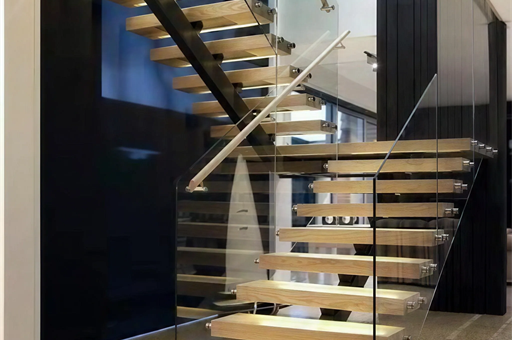
A mono stringer staircase is a stair carried by one central steel beam that runs up the middle of the flight. The treads sit across that single spine and cantilever out to both sides, so the steps appear to float over open air. The look is modern, minimal, and gallery-like, with the structure deliberately reduced to one clean line.
That single central beam is the whole idea, and it shapes everything else about the stair. This guide explains how a mono stringer staircase carries its load, how it differs from a double-stringer and a floating stair, and which materials suit it. It then gives the honest picture on the look, the build, the cost drivers, and the code. Where a topic runs deep, we link to a focused guide.
What a Mono Stringer Staircase Is
A mono stringer staircase carries its treads on a single structural beam that runs up the centre of the flight. The word stringer simply means the structural member that supports the steps. A traditional stair uses two stringers, one under each side; a mono stringer staircase uses only one, placed in the middle, so the treads bridge across it and reach out to either edge. That one decision gives the stair its whole character.
Because there is just one beam, and it sits in the centre rather than at the sides, the treads have nothing visible holding their outer ends. They appear to extend into open air on both sides. The result is light, open, and architectural, which is why so many modern homes and showrooms choose this configuration for a main staircase. People also call it a single stringer staircase, a mono beam stair, a monorail staircase, or a centre stringer stair; these names all describe the same single-spine arrangement.
It helps to be precise about one thing at the outset, because the central beam is the defining feature of a mono stringer staircase and it is meant to be seen. This is not a hidden-support stair. The spine is part of the design, finished and detailed as a visible element, often in dark steel that draws a confident line through the room. Understanding that single exposed beam makes every later decision, from materials to cost, far easier to follow.
The Single Central Beam and How the Cantilever Works
The structure of a mono stringer staircase is honest and simple to picture. One substantial steel beam, usually a deep rectangular tube, runs at an incline from the lower floor up to the landing. This beam is the spine, and it carries the entire weight of the stair down to its two anchor points. Every tread then attaches to the top of that spine, fixed with a bracket or a welded mounting plate, and reaches out to both sides like a branch from a trunk.
Each tread is therefore a small cantilever. A cantilever is any element fixed firmly at one end and unsupported at the other, like a diving board. The unsupported part holds steady because the fixed end is strong and rigid enough to resist it. On a mono stringer staircase, the fixed end is the connection to the central beam, and the free ends are the two sides of the tread that float clear. The deeper and stiffer the central beam, the more confidently each tread holds its line.
This is precisely why the engineering of the central beam matters so much, and why a mono stringer staircase is a job for a manufacturer rather than a kit. The single spine must resist both bending along its length and twisting from footfalls landing off to one side. We size that beam, its wall thickness, and its anchor connections from your exact geometry, so the finished stair feels solid underfoot rather than springy. The slim look is the visible reward for getting the hidden structure right.
Mono Stringer vs Double-Stringer, Side-Stringer, and Floating
It is easy to confuse a mono stringer staircase with its near relatives, so this is the section worth reading slowly. The difference always comes down to where the support sits and whether you can see it. A mono stringer puts one beam in the centre and shows it. A double-stringer, sometimes called a twin-stringer, runs two beams, one under each side of the treads. A closed or open side-stringer stair, the most traditional type, also carries its steps on members at the two edges.
| Stair type | Where the support sits, and the look it gives |
|---|---|
| Mono stringer | One central beam, visible, with treads cantilevering to both sides. The most open and minimal of the visible-beam stairs. |
| Double / twin stringer | Two beams, one under each side of the treads. Heavier and more robust looking, and common where a stair takes steady traffic. |
| Side / box stringer | The traditional stair, with the steps held between members at both edges. Either open on the sides or closed into a solid box. |
| Floating stair | The support is hidden, usually inside the wall or under the treads, so no beam is visible at all. The treads seem to grow from the wall. |
The distinction that trips people up most is mono stringer against floating, because both read as open and modern. The clean test is the beam itself. A mono stringer staircase shows its single central spine proudly as part of the design. A floating stair conceals its support entirely, so the treads look as though they emerge from a blank wall. They are different products with different structures, and the choice changes the look, the wall you need, and the cost. We compare them closely in our guide to the monorail staircase versus a mono stringer, and we set the centre-beam and side-beam terms straight in mono beam vs center stringer stairs.
Materials: the Steel Spine and the Treads
A mono stringer staircase divides cleanly into two material decisions: the spine, and the treads that sit on it. The central beam is almost always steel, because steel concentrates great strength into a slim profile, which is exactly what a single-beam stair needs. Most beams are a welded steel tube, finished in a powder coat. Matte black is the signature choice, though any colour is possible, and the finish is a visible part of the design rather than an afterthought.
| Element | Common choices and character |
|---|---|
| Steel spine | A welded steel tube, powder-coated, usually matte black. Slim, strong, and the visible signature of the stair. |
| Wood treads | The most popular choice. Solid timber such as oak or walnut warms the steel and matches a wood floor. |
| Steel treads | Folded or solid steel plate for an all-metal, industrial look, often colour-matched to the beam. |
| Glass treads | Laminated structural glass for the most open look. They need a slip-resistant surface and careful detailing. |
| Stone treads | Marble or engineered stone for a heavier, luxurious feel. The added weight asks for a stiffer central beam. |
A black steel beam with solid wood treads is the classic combination, and it suits most modern homes. Steel treads push the look towards the industrial; glass treads open the stair up to light; stone treads bring weight and a sense of luxury. Each choice changes both the appearance and the budget, and a heavier tread material asks for a stiffer, often deeper, central beam underneath. The railing is a separate decision again, and a frameless glass or a slim steel balustrade keeps the open feeling that drew you to a mono stringer in the first place.
The Look, and Where It Suits
The appeal of a mono stringer staircase is restraint. By reducing the structure to a single line, the stair reads as a piece of sculpture rather than a piece of joinery. Sightlines stay open through and around it, light passes between the treads, and the room behind it stays visible. In an open-plan home this matters a great deal, because the staircase sits in the middle of the living space and you look at it every day. A lighter stair keeps the whole room feeling larger.
That openness is why a mono stringer staircase is most at home in modern and contemporary interiors, in new-build villas, loft conversions, double-height entrances, and high-end apartments. It pairs naturally with a glass balustrade, a polished concrete or timber floor, and a clean, uncluttered palette. The configuration works best as a feature stair in a space generous enough to let people see and appreciate it, which is exactly where most owners want their main staircase to be.
There are settings where a different stair serves better, and it is fair to say so. A mono stringer is an open-riser design by nature, with daylight visible between the steps, which some households with very young children choose to avoid, and which a few local codes restrict. Where a more enclosed, traditional feel is wanted, a box-stringer stair may suit better. You can see the mono stringer alongside the steel, box, and floating options we build on our straight staircase page.
A modern mono-stringer staircase with glass railing, built by Double Building Materials — tap to play.
How a Mono Stringer Staircase Is Built
At Double Building Materials, a mono stringer staircase starts as a drawing, not a kit. We take your floor-to-floor height, the size of your landing, and your chosen tread material, then turn them into a working shop drawing. That drawing fixes the central beam, every tread bracket, and the anchor connections before any steel is cut. We cut nothing until you approve it, because a single-beam stair leaves little room to correct a mistake on site once the spine is fabricated.
From there we fabricate the central beam and the tread mountings, then trial-assemble the whole staircase on our 4,500 m² floor in Guangdong. That trial build is where we confirm the rise, the run, and the fit of every tread before anything ships. It is the step that most catches a problem early rather than on your site. Once the assembly passes, we crate the staircase for export, marked and ordered so it goes back together cleanly at the far end. We have shipped this way to projects across more than sixty countries.
Your own contractor fits the stair on site from our drawings, and we can help you find a local installer where that service is available in your region. To be clear about the boundary, we do not install on site, and we do not sign off local code; that part stays with your local team and the engineer of record. This drawing-first sequence is what keeps a slim, demanding stair both accurate and accountable, and we walk through the same process for a single-spine build in how a single stringer staircase is explained.
What Drives the Cost
A mono stringer staircase sits in the custom-stair price bracket, and because every one is made to order there is no single price tag, only drivers. The largest driver is usually the central beam itself. A single spine that must carry the whole stair has to be deep, thick-walled, and carefully welded. The engineering and the steel in that one member account for a real share of the cost, even though it looks slim and simple in the finished room.
After the beam, the tread material moves the price most. Solid hardwood, structural glass, and stone each cost more than a folded steel tread, and a heavier tread asks for a stiffer beam underneath, so the two decisions compound. Height adds treads, a wider tread adds material and asks more of the cantilever, and the railing is a separate line again, with frameless glass costing more than a slim metal infill. A mono stringer steel staircase with plain steel treads sits at the more economical end; glass or stone treads sit well above it.
We give you a single project price built from your approved drawing, rather than a figure from a list, because the beam size, the tread choice, and the railing all interact. You may want to see how each of these levers moves the number before you commit to a design. Our guide to the single stringer staircase walks through the same drivers with worked, attributed market context rather than a quote. As a made-to-order manufacturer, we price each project individually.
Code and Safety
A mono stringer staircase is an open-riser stair, so the two code topics that come up most are the gap between the treads and the railing that guards the open sides. Under common US residential references, an open riser is typically limited so that a sphere of about four inches cannot pass through the gap between treads, which keeps a small child from slipping through. The guard and handrail rules then govern the height of the railing and the spacing of its infill along the open edges.
Those figures are widely used reference values drawn from codes such as the IRC and the IBC in the United States, with comparable rules in other regions. Your local adopted code edition is what actually governs. So treat the numbers here as a guide and confirm the current version with your local team and engineer of record. The structural side, meanwhile, is about the beam: a single-spine stair must be engineered so it does not flex or twist under normal use, which is the part we resolve in the shop drawing.
A well-built mono stringer staircase is a safe, comfortable, everyday stair; the open-riser look does not make it less sound when the central beam and the guard are designed properly. The rules simply keep the tread gap closed enough and the railing high enough to protect the people using it. Because adopted editions and amendments vary from place to place, the safe habit is to design to your local code from the start rather than retrofit to it later.
The Many Names for One Stair
Shopping for this stair gets confusing because it travels under several names, and they all point at the same single-spine idea. Mono stringer stairs, single stringer staircase, mono beam stairs, monorail staircase, and centre stringer stairs are simply different words for a stair carried on one central beam. The word mono means one, the word stringer means the structural support, and a monorail is the same single-rail image borrowed from the railway. None of these names signals a different product.
A few of the terms carry a faint shade of emphasis worth knowing. Mono beam stairs leans on the beam as the structural member, while monorail staircase leans on the single-rail picture; centre stringer stairs simply states where the support sits. The term mono stringer steel staircase adds the material, naming the most common version, the one with a steel spine. When you are comparing quotes, it pays to confirm that everyone means the same single-central-beam stair rather than a twin-beam or a hidden-support design, since the look and the price differ sharply between them.
Mono Stringer Staircase FAQ
Is a mono stringer staircase the same as a floating staircase?
No, and the difference is the beam. A mono stringer staircase shows a single central beam running up the middle of the flight as a deliberate, visible part of the design. A floating staircase hides its support, usually inside the wall, so the treads look as though they grow straight out of a blank surface. Both look open and modern, but they are built differently.
Is a single central beam strong enough to be safe?
Yes, when the beam is engineered for the job. A mono stringer staircase relies on a deep, thick-walled steel spine sized to resist both bending and twisting, with anchor connections to match. The slim look comes from steel doing a lot of work in a small profile. We size the beam from your exact geometry in the shop drawing, which is why a single-spine stair should be manufactured rather than bought as a kit.
Do mono stringer stairs feel bouncy or solid to walk on?
A correctly engineered one feels solid. Any springiness comes from a beam that is too shallow or too thin for the span, which is a design issue rather than a feature of the type. Sizing the central beam and its connections properly removes the bounce, so the finished stair feels firm underfoot. This is one of the main reasons the structural drawing matters so much on a single-stringer stair.
What tread material works best on a mono stringer staircase?
It depends on the look you want. Solid wood is the most popular, because it warms the steel spine and suits most modern homes. Steel treads give an industrial feel, glass treads open the stair to light, and stone brings weight and luxury. Heavier treads ask for a stiffer central beam, so the tread and the beam are best chosen together rather than separately.
Are mono stringer stairs more expensive than ordinary stairs?
They usually cost more than a plain enclosed stair, because the single central beam carries the whole load and must be engineered and welded to suit. Price tracks the beam size, the tread material, and the railing rather than the mono shape alone. A steel-tread version sits at the more economical end, while glass or stone treads raise it. We price each project from its approved drawing.
Go deeper into the cluster: single stringer staircase explained, the monorail staircase vs mono stringer comparison, and mono beam vs center stringer stairs. Ready to specify one? Browse the straight and mono stringer staircase range.
Double Building Materials draws, manufactures, trial-assembles, crates, and ships your mono stringer staircase. Your own contractor or installer handles on-site installation and local code sign-off — we can help you find one where available. Dimensions above are common references and code values are typical US residential figures; your local adopted edition governs, so confirm the current version with your local team.
Talk to us on WhatsApp →