




Spiral Staircase Dimensions: Diameter, Width & Size Guide-Staircase Guides
Spiral Staircase · Sizing
Spiral Staircase Dimensions: Diameter, Width & Size Guide
Spiral staircase dimensions are governed by one number: the overall diameter. Diameters commonly run from about three and a half feet at the tight end to six feet for a generous climb. The diameter sets the tread depth and comfort, while common residential code expects roughly twenty-six inches of clear walking width.
Once you understand how the diameter drives everything else, the rest of a spiral falls into place. This guide walks through the diameter ranges, the clear walking width, the floor opening above, and the headroom you need. It then shows how to choose a diameter for a given space, with two reference tables you can use while planning.
Diameter Is the Master Dimension
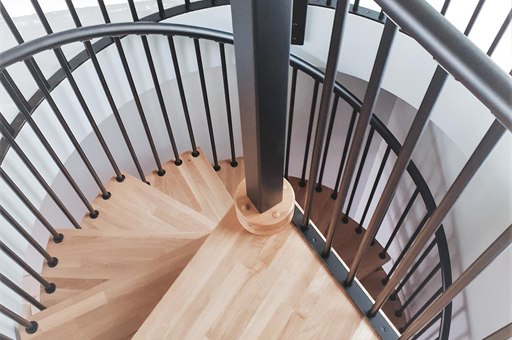
Every conversation about spiral staircase dimensions begins with the diameter, because that single measurement controls almost everything else. The diameter is the width of the circle the stair occupies, measured from the outer edge of one tread, straight across the central column, to the outer edge of the tread opposite. Once you fix that circle, you have fixed the footprint, the tread depth, and the comfort of the climb together. Nearly every other dimension on the stair follows from it.
The spiral staircase diameter you can choose is bounded at both ends. A wider circle gives a deeper, more comfortable tread, but it claims more floor area and a larger opening above. A tighter circle saves space, yet it shortens each tread and asks you to climb with more care. Common diameters run from around three and a half feet at the compact end to six feet or more for a wide, gentle climb. The right spiral staircase size sits wherever your floor area meets the comfort you want underfoot.
How Diameter Sets Tread Depth and Comfort
The link between the diameter and the tread is the heart of the whole subject. On a spiral, each tread is a wedge that radiates from the central column, narrow at the post and wide at the outer edge. A larger diameter stretches that wedge outward, which makes the usable part of every step deeper and easier to land your foot on. A tight diameter pinches the same wedge, so the treads become shallow and the climb feels steeper and busier. The shape of the wedge, in short, is set by the diameter alone.
This is why two spirals of the same height can feel so different to walk. A four-foot circle and a six-foot circle both turn through a full rotation, yet the wider one gives a clearly more relaxed tread at the point where you actually step. Comfort, then, tracks the diameter more closely than any other factor. When a client tells us a stair must feel easy for older parents or young children, the first lever we reach for is a wider diameter. It deepens every tread at once and softens the turning climb.
Clear Walking Width
The spiral staircase width that matters most is the clear walking width, not the full diameter. Clear walking width is the usable space between the central column and the inner face of the handrail, and it is the channel your shoulders actually pass through. Common US residential code references a minimum clear walking width of about twenty-six inches for a spiral stair. That figure is a typical reference value, not a fixed rule, and your local adopted edition governs, so check the current number with your local team.
Working back from that walking-width reference gives you the minimum spiral staircase size in practical terms. To leave roughly twenty-six inches clear between the column and the rail, the overall diameter usually needs to land near three and a half to four feet at the tight end. Squeeze the circle any smaller and the treads grow too shallow to use comfortably, and the walking channel narrows past the point where two shoulders fit. A wider diameter widens the walking channel directly, which is one more reason a generous circle is almost always the more comfortable choice.
The Floor Opening Above
A spiral does not just occupy a circle on the lower floor; it also needs a matching hole in the floor above. The spiral staircase floor opening is the framed gap in the upper floor that the stair rises through. It has to be at least as wide as the stair, with a little extra so a climber clears the edge without ducking. As a working guide, the opening is usually sized a few inches larger than the diameter on each side, which keeps knuckles and shoulders clear of the framed edge.
This is the dimension owners most often overlook, and it is worth settling early, because the opening is structural. Cutting or reframing a floor to widen an opening late in a project is messy and costly, so the diameter and the opening should be agreed together from the start. When we prepare a shop drawing, we set the diameter, the opening, and the rise as one package, so the circle below and the hole above always match before any steel is cut. That step is exactly what keeps a spiral from arriving on site a few inches too wide for its opening.
Four measurements to get right before ordering a spiral staircase — from our factory floor.
Headroom and the Walking Line
Headroom is the upright partner to the diameter, and it is the dimension that keeps a tall climber from ducking. Headroom is the clear height measured straight up from the walking line of a tread to the underside of the floor or ceiling above. Common US residential code references a minimum headroom of about six feet six inches on a spiral stair. As with the other figures here, that is a typical reference value, and your local adopted edition governs, so check the current rule with your local team before you set the layout.
Where you measure that headroom is the subtle part, and it brings in the walking line. The walking line is the path a climber follows around the stair, and on a spiral it sits on the outer third of each tread, where the wedge is widest and the steps are deepest. Because people instinctively walk that outer band, the headroom and the tread depth both matter most along it. We size the diameter, the rise, and the opening so the walking line stays clear, deep, and easy for the whole turning climb, rather than only at the points that are simplest to draw.
Key Dimension References
The two tables below pull the planning numbers together. The first shows how the diameter trades comfort against footprint; the second collects the common code reference figures. Treat every value as a widely used reference, not a fixed specification, because your local adopted edition is what actually governs each one. The spiral staircase dimensions in feet here are approximate planning ranges, useful for an early conversation rather than a final drawing.
| Diameter (approx.) | Comfort and footprint |
|---|---|
| ~3.5 ft (tight) | The most compact circle that still works. Treads are shallow and the climb is steep, so it suits a backup stair or a light-use route where space is the priority. |
| ~4 to 5 ft (middle) | A balanced range for most homes. Treads are usable and the climb feels reasonable, while the footprint stays modest. This band suits most indoor projects. |
| ~6 ft or more (generous) | Deep, easy treads and a relaxed climb that feels close to a normal stair underfoot. It claims more floor area and a larger opening, and it reads as a feature. |
| Dimension | Common residential reference |
|---|---|
| Clear walking width | About 26 inches minimum between the central column and the handrail. |
| Tread depth at walking line | At least about 6¾ inches, measured roughly 12 inches in from the narrow edge; all treads identical. |
| Maximum riser height | Around 9½ inches per step on a spiral, which is taller than a straight stair allows. |
| Minimum headroom | About 6 feet 6 inches of clear height above the walking line. |
These figures echo the values most US residential projects work to, and we explain how they fit together in the spiral staircase code requirements guide. The numbers keep the tread depth and the headroom honest, but the controlling document is always your local adopted edition.
How to Choose a Diameter for Your Space
Choosing a diameter is a matter of working between two limits at once. Start from the floor area you can really give the stair, then check that the same circle leaves room for the opening above and a clear path at the top. The smallest circle that still meets your local walking-width reference is the space-saving end; the largest circle your floor and opening will accept is the comfort end. The diameter you actually want lives somewhere between those two limits.
A few questions usually settle it. Who climbs the stair, and how often? A daily route for a family leans toward a wider, gentler circle, while a stair to a guest loft can sit at the compact end. Will you carry furniture or laundry up and down? If so, favour a more generous diameter. Is the stair a quiet utility route or a visible centrepiece? A feature stair earns the extra floor area a wider circle asks for. When space is genuinely scarce, our space-saving spiral staircase guide goes deeper on squeezing a comfortable climb into a tight footprint.
However you arrive at a number, the safest next step is a drawing rather than a guess. At Double Building Materials, we take your floor-to-floor height, your floor opening, and your chosen diameter, then turn them into a working shop drawing that fixes every tread before any steel is cut. We trial-assemble the whole spiral on our Guangdong floor to confirm the rise and the fit, then crate it for export in the order your installer needs. Your own contractor fits it on site, and we can help you find one where local installation is available. To see the diameters and configurations we build, visit our spiral staircase systems page, or read the cluster overview in what a spiral staircase is.
Spiral Staircase Dimensions FAQ
What is the standard diameter of a spiral staircase?
There is no single standard, but diameters commonly run from about three and a half feet at the compact end to six feet or more for a generous climb. A four to five foot circle suits most homes, balancing usable treads against a modest footprint. The wider the diameter, the deeper the tread and the easier the climb feels.
What is the minimum size for a spiral staircase?
Common residential code references a clear walking width of about twenty-six inches, which points to a minimum overall diameter near three and a half to four feet. Below that the treads grow too shallow to use safely. Your local adopted edition governs the exact figure, so confirm the current minimum with your local team before planning the tightest circle.
How big should the floor opening be for a spiral staircase?
The opening in the floor above should be at least as wide as the overall diameter, with a few inches of extra clearance so a climber passes the framed edge without ducking. Because the opening is structural, agree it together with the diameter from the start, rather than enlarging the floor framing later in the project.
How much headroom does a spiral staircase need?
Common US residential code references a minimum headroom of about six feet six inches, measured straight up from the walking line of a tread to the floor or ceiling above. A taller climber on the upper steps should never have to duck. As always, your local adopted edition is the controlling document, so confirm the figure locally.
Where do you measure the dimensions on a spiral staircase?
You measure the diameter across the full circle, the walking width between the column and the handrail, and the tread depth on the walking line about twelve inches in from the narrow edge. Headroom is measured vertically from that same walking line. The walking line sits on the outer third of each tread, where the steps are widest.
Keep reading in the spiral cluster: start with what a spiral staircase is, check the spiral staircase code requirements, and see how to fit one into a tight footprint in our space-saving spiral staircase guide. Ready to size a real stair? Browse our spiral staircase range.
Double Building Materials draws, manufactures, trial-assembles, crates, and ships your spiral staircase. Your own contractor or installer handles on-site installation and local code sign-off — we can help you find one where available. The diameters above are common planning ranges and the code values are typical US residential references; your local adopted edition governs, so confirm the current figures with your local team.
Talk to us on WhatsApp →