

What Is a Spiral Staircase? Complete Guide to Types, Sizing & Uses-Staircase Guides
Spiral Staircase · Complete Guide
What Is a Spiral Staircase? The Complete Guide to Types, Sizing & Uses
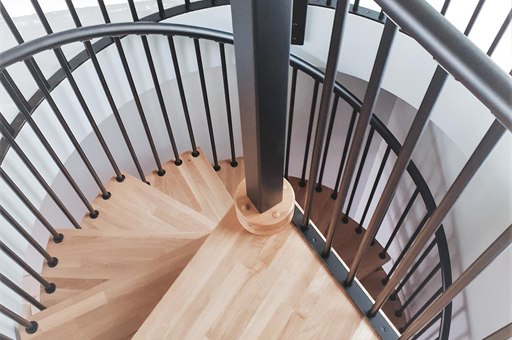
A spiral staircase is a stair whose treads wind around a single central post in a tight circle. Each step is wedge-shaped, wide at the outer edge and narrow at the column. The whole flight fits into the smallest footprint of any staircase, which saves floor space and turns the stair into a sculptural centerpiece.
That winding shape is the whole story of a spiral staircase. This guide explains how a spiral works and the types you can choose. It covers sizing, materials, and configurations, then gives the honest picture on cost, code, and everyday use. Where a topic runs deep, we link to a focused guide so you can read further.
What a Spiral Staircase Is
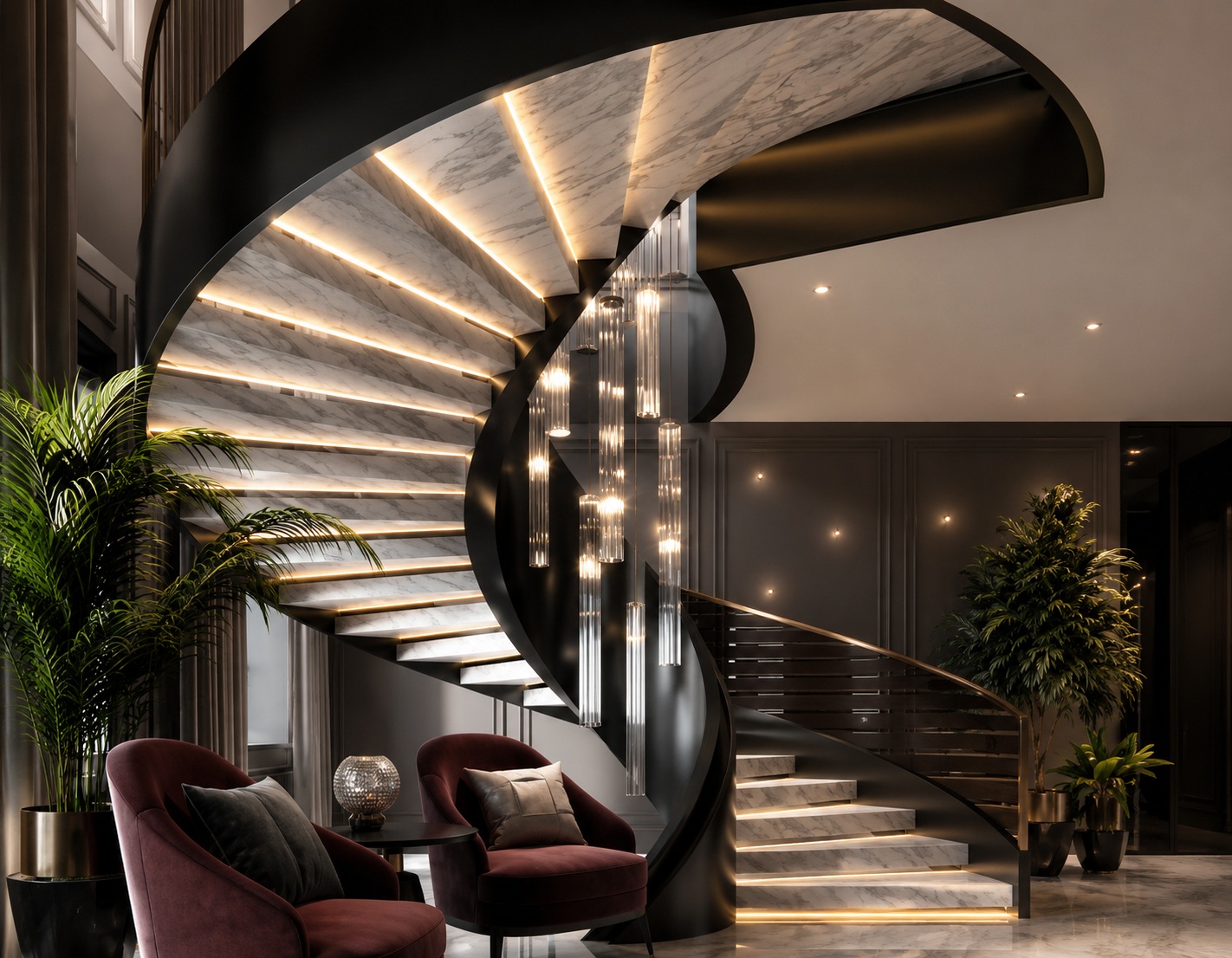
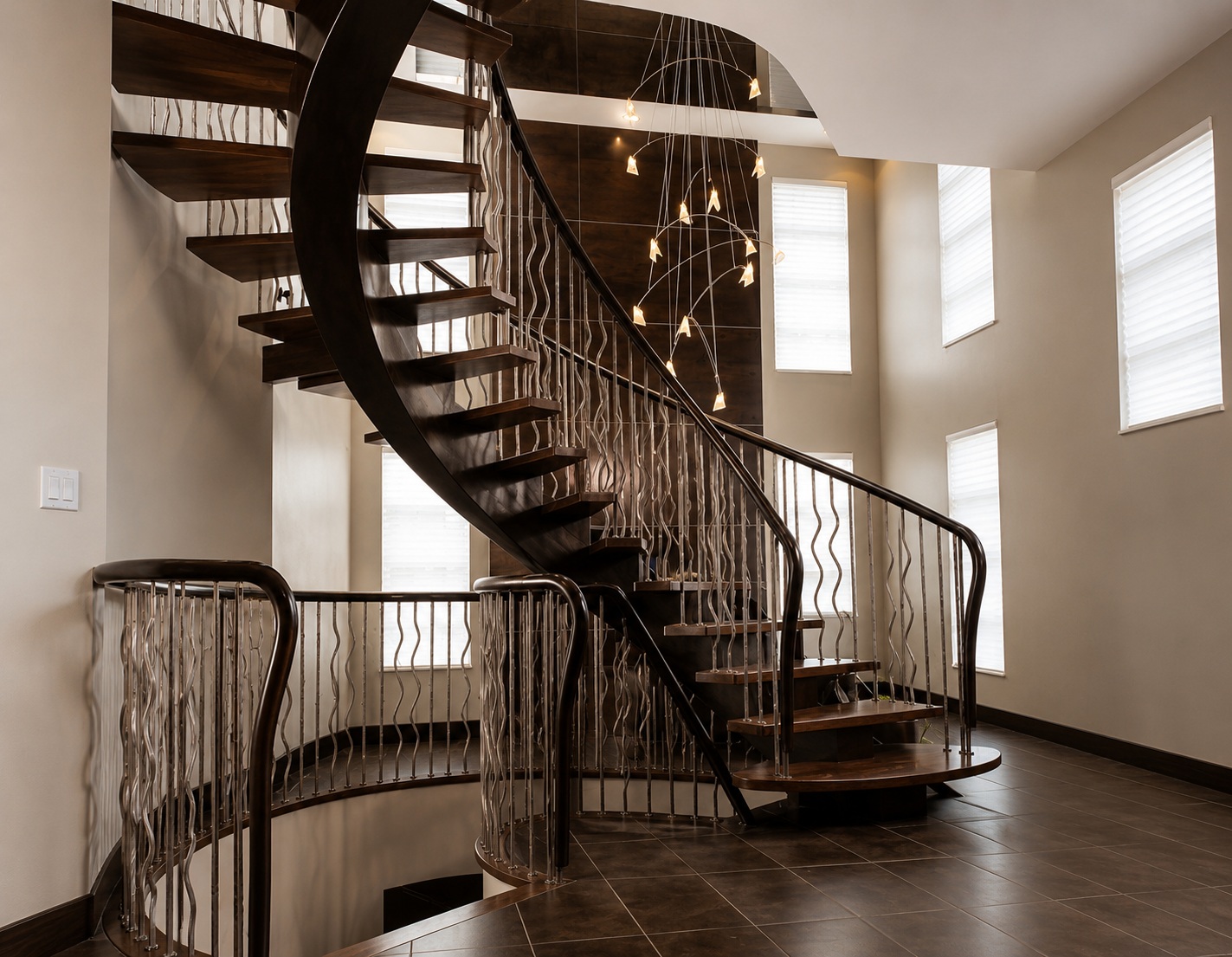
A spiral staircase winds its treads around a central vertical column, and each tread is wedge-shaped, wide at the outer edge and narrow where it meets that column. You ascend in a turning circle rather than along a straight line, which is the defining characteristic of the configuration. People also call it a spiral stair, or a helical staircase when it curves around an open well with no central column. The name describes the winding geometry, not one fixed method of construction.
The appeal is mostly about space. A spiral staircase packs a full flight into a circle as small as a few feet across. That makes it the natural choice where floor area is tight, such as a loft, a mezzanine, a basement, or a compact second home. It also reads as a sculptural object, so many owners choose one for a main room purely for its appearance, where the staircase stops being a corridor and becomes an architectural centrepiece.
It helps to be clear on one point early, because a spiral staircase trades a compact footprint for a tighter, turning climb. You manoeuvre large furniture with more care, and two people pass less comfortably than on a straight flight. None of that makes it a poor choice; it simply determines where a spiral configuration works best, and choosing a generous diameter softens every one of those trade-offs.
How a Spiral Staircase Works
The structure of a spiral staircase is simpler than it looks. In the most common type, a hollow steel column stands at the centre, and every tread locks onto it in turn. The treads stack up around the post like the pages of a fanned book, and the column carries the load straight down to the floor. A handrail follows the outer edge and ties the tops of the treads together, which contributes both stability and rigidity to the assembly.
| Spiral type | How it works and where it suits |
|---|---|
| Centre-column spiral | Treads radiate from one central post. This is the simplest and most space-efficient type, and it suits a tight footprint such as a loft or a corner. |
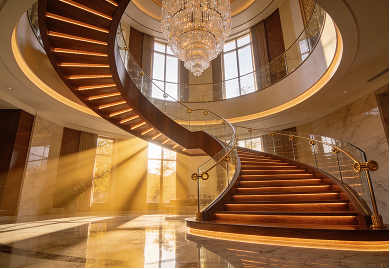
| Helical (open well) | The treads curve around an open centre with no post, carried by the railing and an outer stringer. It is more open and dramatic, asks for more room, and is far more demanding to engineer. |
| Outdoor spiral | A centre-column spiral built for weather, in galvanised or powder-coated steel, often with open grating treads that shed rain. It gives a compact route to a roof terrace or a raised deck. |
A centre-column spiral is the workhorse of the three. It is compact, well understood, and quick to fabricate, which is why most spiral stairs use it. A helical stair drops the column for a freer, more sculptural sweep, but it needs more space and much more engineering. We build both, and the right one depends on your floor area, your ceiling height, and the look you want.
Spiral vs Other Space-Saving Stairs
A spiral staircase is one of several ways to fit a stair into a small space, so it helps to see where it sits. A straight flight is the easiest to walk and to carry things up, but it needs the most floor length. A curved or L-shaped stair softens the turn and feels more generous underfoot, yet it takes more room again. Each option purchases comfort at the expense of additional floor area.
A spiral wins decisively on footprint while giving up a little on everyday convenience, folding the entire climb into roughly the space a small table would occupy. If your priority is fitting a genuine staircase into a corner, a loft, or a holiday home, the spiral configuration is usually the answer. If you regularly move large furniture between floors, a straight or curved staircase may serve you better. We examine the tight-space situation thoroughly in our guide to space-saving spiral staircases.
Dimensions and Sizing
Size is the first thing to settle on a spiral staircase, because the diameter controls both comfort and footprint. A wider circle gives a deeper, easier tread; a tighter circle saves space but asks you to step with more care. Commonly available diameters run from around three and a half feet at the tight end to six feet or more for a generous, easy climb. The right diameter is a balance between the room you can spare and the comfort you want.
The walking line matters just as much as the diameter. On a spiral, you walk the outer third of each tread, where the wedge is widest, so a larger circle pays off directly underfoot. Headroom is the other number to watch. You need enough clear height where the stair passes the opening in the floor above, so a tall person on the upper treads is never ducking. We work through diameters, floor openings, and clearances in the spiral staircase dimensions guide.
Materials
The materials set both the look and the budget of a spiral staircase. The structure is almost always steel, because it carries the load in a single slim column. The treads and the railing are where the choices open up, and they are what people actually see and touch.
| Material | Character |
|---|---|
| Steel | The standard structure, and a common tread too. Slim, strong, and easy to finish in any colour. |
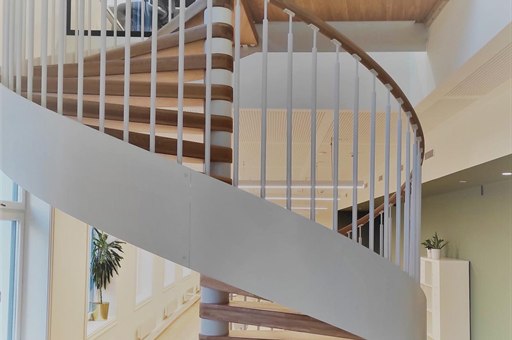
| Wood | Warm wooden treads on a steel column are the most popular mix, and they match a timber floor. |
| Wrought iron | Forged balusters and scrollwork for a classic, ornamental stair. Heavier, more crafted, and full of character. |
| Glass | Laminated glass treads give the most open, light-filled look. They need a slip-resistant surface and careful detailing. |
| Galvanised steel | For outdoor spirals, finished to shrug off weather, often with open grating treads that drain rain. |
A steel column with wood treads suits most indoor homes. A forged-iron spiral suits a period setting or a feature stair that wants to be noticed. For an exterior route, a galvanised steel spiral with grating treads sheds rain and lasts outdoors. Each choice changes the price, which the cost section below picks up. We pair most spirals with a frameless glass or a slim metal balustrade, depending on the look.
Configurations
A spiral staircase flexes to its setting in a few ways. It can turn clockwise or anticlockwise, which you choose to suit the entry and exit points on each floor. It can rise a full storey in one continuous coil, or include a small landing where it meets the upper floor opening. The number of treads corresponds to the floor-to-floor height, so a taller ceiling simply introduces additional steps into the coil.
Indoors, a spiral often becomes a feature in an open-plan room, finished to match the joinery and the floor. Outdoors, the same shape gives a compact, weatherproof route to a roof terrace or a raised deck. The diameter, the tread material, and the railing style then tune the stair to its room. You can see the range of spirals we build, indoor and outdoor, on our spiral staircase page.
How One Is Built
At Double Building Materials, a spiral staircase starts as a drawing, not a kit. We take your floor-to-floor height, the size of your floor opening, and your chosen diameter, then turn them into a working shop drawing. That drawing fixes the central column, every tread, and the railing before any steel is cut. We cut nothing until you approve it, because a spiral leaves little room to correct a mistake on site.
From there we fabricate the central column and the treads, then trial-assemble the whole spiral on our Guangdong floor. That trial build is where we confirm the rise, the turn, and the fit of every step before anything ships. Once it passes, we crate the staircase for export in the order your installer will need it. Your own contractor fits it on site from our drawings, and we can help you find one where local installation is available. We do not install on site or sign off local code; that stays with your local team. The full sequence is in how a spiral staircase is built.
A spiral staircase we built and trial-assembled before crating — tap to play.
What a Spiral Staircase Costs
A spiral staircase covers a wide price range, and the material is the biggest reason. A plain steel spiral sits at the affordable end of custom stairs, because it uses less material than a straight flight of the same height. A forged-iron spiral with ornamental balusters, or a helical stair with no column, sits much higher. Because every spiral is made to order, there is no single price tag; there are drivers.
The main drivers are the diameter, the structure, the tread material, and the railing. A straightforward centre-column steel spiral is the most economical; an open helix or a forged-iron staircase is considerably more involved. Glass or stone treads add cost, and an outdoor stair adds a weatherproof finish. A taller floor-to-floor height adds treads. We break each driver down, with attributed market ranges rather than a quote, in the spiral staircase cost guide. As a made-to-order manufacturer, we price each project from its drawing.
Code and Safety
Spiral staircases have their own code rules, because their shape differs from a straight flight. Under common US residential code, a spiral stair has a minimum clear walking width of about 26 inches. Each tread must give at least 6¾ inches of depth measured 12 inches in from the narrow edge, and all the treads must be identical. The maximum riser is around 9½ inches, and the minimum headroom is 6 feet 6 inches.
Those figures are widely used reference values, and your local adopted code edition is what actually governs, so confirm the current version with your local team. Codes also limit when a spiral may serve as the only stair to a floor, which is why a spiral is often a secondary or feature stair rather than the sole route. A well-built spiral is a safe, comfortable stair; the rules simply keep the tread depth and the headroom honest. We cover them in the spiral staircase code requirements guide.
Spiral Staircase FAQ
How much space does a spiral staircase need?
A spiral staircase needs a circle the width of its diameter, commonly three and a half to six feet across, plus a matching opening in the floor above. The larger the diameter, the easier the climb and the more room it asks for. Even at the generous end, that circle is far smaller than the run a straight flight would need.
Are spiral staircases hard to walk on?
Not when they are sized well, because you walk the wide outer third of each tread, where a larger diameter feels natural and comfortable. A very tight spiral does ask for more care, particularly on the descent. Choosing a generous diameter and a continuous handrail makes everyday use comfortable for most people.
Can a spiral staircase be the only staircase in a house?
Sometimes, but codes often restrict it. Many building codes limit when a spiral may serve as the sole stair to a floor, particularly in larger homes, so a spiral is frequently a secondary or feature stair. Your local adopted code edition governs this, so confirm it with your local team before you plan one as the only route.
What is the smallest spiral staircase size?
Common residential code sets a minimum clear walking width of about 26 inches, which points to a diameter near three and a half to four feet at the tight end. Below that the treads become too shallow to use safely, so a larger diameter is always easier and more comfortable to climb — go as wide as your available space allows.
Are spiral staircases cheaper than regular stairs?
A plain steel spiral can cost less than a comparable custom straight stair, mostly because it uses less material. But a forged-iron or helical spiral, or one with glass or stone treads, costs more. Price tracks the diameter, the material, and the railing rather than the spiral shape on its own. See the cost guide for the full breakdown.
Go deeper into the cluster: spiral staircase dimensions, code requirements, cost drivers, and space-saving spirals. Prefer the suspended look? See the floating spiral staircase. Or browse the full spiral staircase range.
Double Building Materials draws, manufactures, trial-assembles, crates, and ships your spiral staircase. Your own contractor or installer handles on-site installation and local code sign-off — we can help you find one where available. Dimensions above are common references and code values are typical US residential figures; your local adopted edition governs, so confirm the current version with your local team.
Talk to us on WhatsApp →