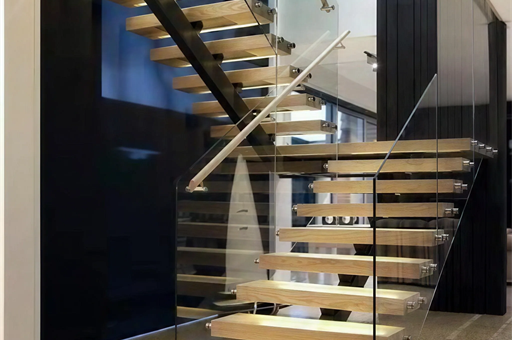





Interior Cable Railing: Indoor Stairs, Lofts & Mezzanine Ideas -Railing Guides
Cable Railing Guides · Interior Applications
Interior Cable Railing: A Designer’s Guide to Indoor Stairs, Lofts & Mezzanines
Interior cable railing is an indoor guardrail that runs thin stainless steel cables horizontally between metal or timber posts in place of solid balusters. The slender cables nearly vanish against the architecture, keeping views and daylight open across staircases, lofts, and mezzanines while still giving you a structured, contemporary barrier along every open edge inside the residence.
That near-invisible look is the whole reason designers reach for interior cable railing. This guide shows where it works indoors, how the parts fit, the proportions that make it look right, and the safety points that apply to any indoor guard. Where a topic runs deep, we point you to a focused guide so you can keep reading.
What Interior Cable Railing Is
An interior cable railing swaps the usual run of solid balusters for thin stainless steel cables, tensioned between sturdy end posts. The cables are slender, about as thick as a pencil lead, and they stretch horizontally across each opening. Your eye reads straight through them to the room beyond, so the guardrail registers as a faint pattern of lines rather than a barrier.
That transparency is why the configuration has become a hallmark of contemporary residences. A solid balustrade divides a room into compartments. A cable infill keeps an open-plan interior feeling continuous and luminous. The architecture stays legible, the daylight travels further, and a sculptural staircase remains the centrepiece of the room.
It is worth being honest about the trade-off early. Cable is a tension system, so the posts have to take real pulling force, and the cables need a tension check now and then. None of that rules out an indoor job. It simply means the frame needs proper detailing rather than a casual handrail bracket. Done well, the result is both elegant and tough.
Where Interior Cable Railing Works Indoors
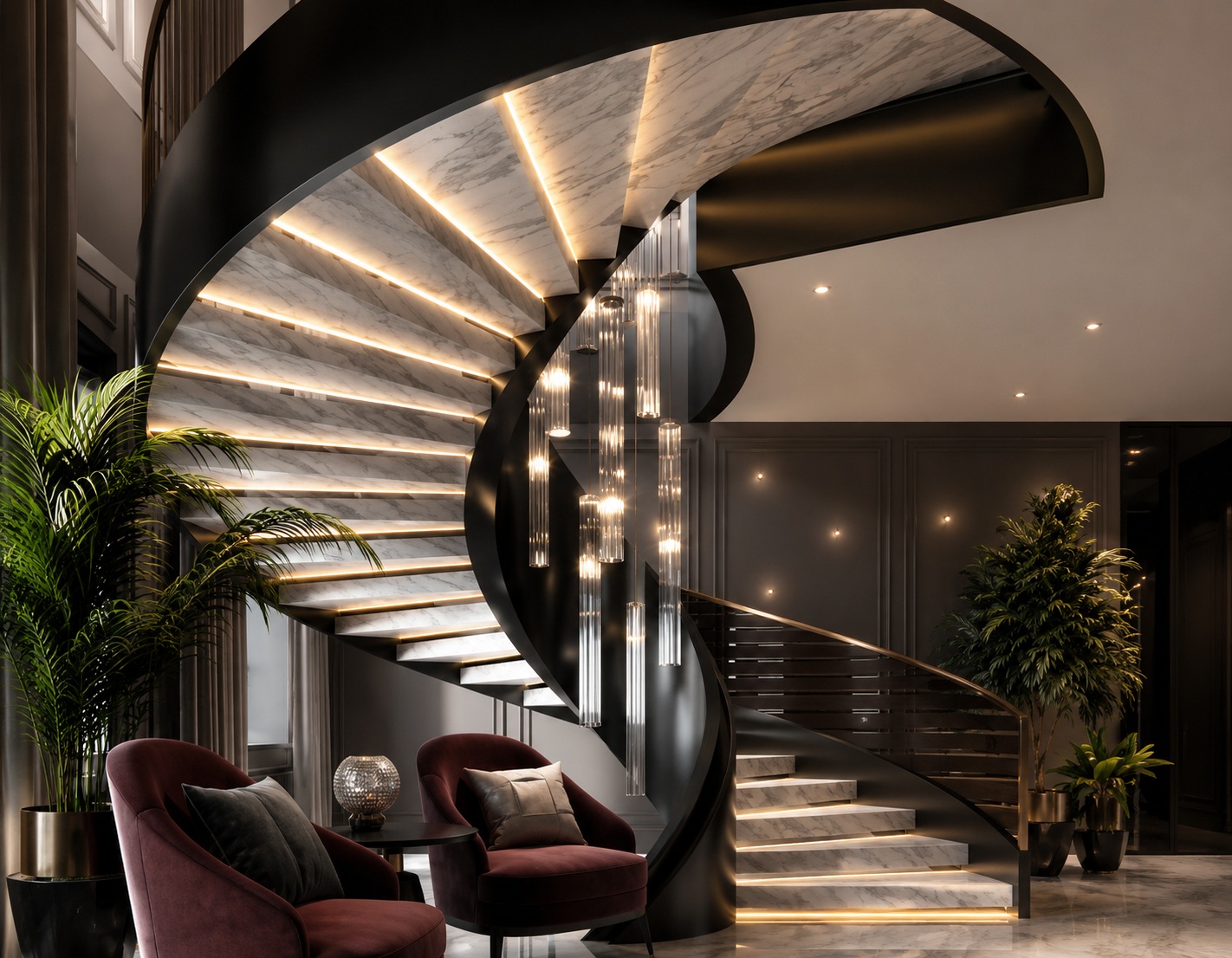
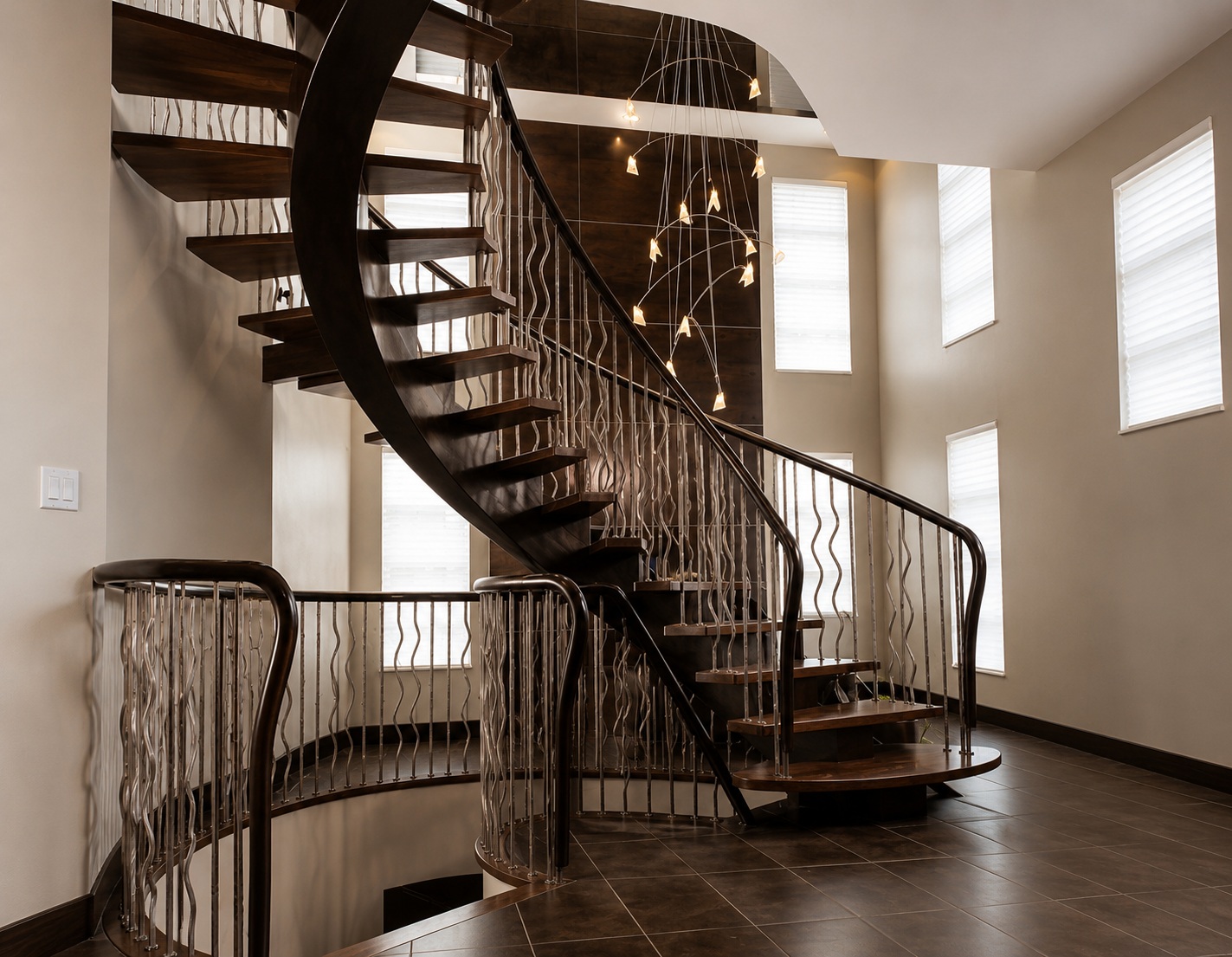
Indoors, cable railing earns its place wherever an open edge would interrupt a view. The classic application is the open staircase, where horizontal cables follow the incline and let the treads appear to float above the floor below. The same principle suits a loft balustrade, a mezzanine overlooking a tall living room, and the landing that wraps a stairwell opening.
| Indoor location | Why cable suits it |
|---|---|
| Open staircase | Angled cables track the flight and keep the treads light, a natural fit for a feature stair in a hallway or living room. |
| Loft & mezzanine | A level guard along the upper floor keeps the view down into the room while it guards the open edge. |
| Stairwell landing | Cables wrap an indoor void without boxing it in, so light from a skylight can reach the lower floors. |
| Interior balcony | An inside-facing balcony or gallery reads as part of the larger room, not a closed-off box. |
The common thread is verticality and openness. A residence with tall ceilings, generous glazing, and a feature staircase is the natural setting for an indoor cable system. In a small, compartmented room the visual advantage is smaller. There, a slim glass or metal balustrade may suit the same opening just as gracefully.
The Anatomy of an Interior Cable Railing
A cable railing looks simple, and it has just four working components. The posts are the structural backbone, fixed firmly to the staircase stringer or the floor framing. The cables are the infill, and the hardware at each terminal tensions them and holds them steady. A top rail, often a slim metal or timber section, caps the run and gives your hand a place to rest.
Indoors, the choice of metal is more relaxed than outdoors, since the cables never encounter rain, salt, or pooled water. Many indoor installations still specify 316-grade stainless steel for its bright, lasting finish. The corrosion-resistance edge of marine-grade steel matters far less in a dry interior than on a coastal deck. Posts can be brushed stainless, powder-coated steel, or a hardwood that echoes the staircase joinery.
The terminal posts deserve extra attention, since the tensioned cable pulls hard against them. End and corner posts carry the full accumulated tension of every cable, so they are sized and anchored more robustly than the intermediate posts that simply stop the cables from sagging. Get that distinction right and the railing stays taut. Get it wrong and the run can bow over time, which is why the structural drawing precedes any cutting.
Designing the Look and Proportion
The charm of an interior cable railing lives in its proportions. Thin cables, slim posts, and a fine top rail come together into something that feels almost weightless. Heavy posts and a chunky cap quickly spoil the clean look. Designers tend to keep the visible metal as slim as the frame honestly allows, then let the level lines do the talking against timber, stone, or plaster.
The orientation of the cables is a deliberate choice too. Horizontal cables are the familiar contemporary look, drawing the eye along the run and emphasising the openness. The closer the cables sit, the more refined and the safer the infill reads, so the spacing is both an aesthetic decision and a safety one. The top rail material then sets the temperament. Warm oak feels residential and inviting, while brushed stainless leans crisp and gallery-like.
Finish ties the whole picture to the room around it. A satin stainless system melts into a clean modern scheme. A black coated frame turns the railing into a graphic line. A timber top rail links the cable to a warmer, softer palette. Because every part is made to order, the size and finish can be tuned to the staircase and the room rather than pulled from a fixed shelf of stock parts.
Safety and Spacing References
An indoor guardrail follows the same regulations as any other, and cable introduces two points to watch. One is the spacing between cables. The other is the tension that keeps that spacing honest. The figures below are common United States references. The edition your jurisdiction has adopted is what governs, so treat them as orientation rather than the final word from your local team.
| Requirement (common US reference) | Typical guidance |
|---|---|
| Guardrail height (residential, IRC) | Commonly cited around 36 inches for interior residential guards; commercial work under IBC is often higher. |
| Opening / sphere rule | A common reference is that a 4-inch sphere should not pass through the guard, which sets the maximum cable gap. |
| Cable deflection | Inspectors often check that the gap cannot be pushed open beyond the limit, which makes tension and post spacing critical. |
The push test is the one that trips people up. A cable can flex, so a child can push two strands apart and widen the gap unless the run is taut and the posts sit close together. That is why middle posts and proper tension matter so much, a point we unpack in the cable railing spacing and code guide. Your inspector confirms the edition that governs your project.
Inside our staircase and railing factory — how Double Building Materials makes custom building products. Tap to play.
How Your Interior Cable Railing Is Engineered
At Double Building Materials, an interior cable railing starts as a drawing, not a box of parts. We take the staircase shape, the run lengths, and your chosen posts and cable, then work out where every post lands and how the tension is held. We draw all of this before any metal is cut, because a tight cable system leaves almost no room to guess once the posts are fixed.
From the approved drawing we make the posts, the top rail, and the cable runs, then trial-assemble the railing on our Guangdong floor. That trial build is where we check the post spots, the cable runs, and the fit of the hardware before we pack a thing. Once it passes, we crate the parts for export in the order your installer will need. We draw on more than 25 years of work and over 800 finished projects across 60-plus countries.
Your own contractor fits the railing on site from our drawings. They set the posts and tension the cables to the drawing, and we can help you find a local installer where that service is on offer. We do not install on site or sign off the local code. That job stays with your project team and your inspector. To see the finished hardware and stainless options, explore our stainless steel cable balustrade systems.
What Drives the Price of Interior Cable Railing
An interior cable railing covers a wide price range, and the hardware is a big part of why. Each cable ends in a tension fitting, and a run with many short spans needs more of that hardware than one long reach. Because every project is made to order, there is no single price to publish, only a set of drivers that move the number up or down.
The main drivers are the length of the run, the post count and the matching number of cable terminations, the post material and finish, and the top rail. A long, simple loft balustrade with few corners is cheaper to fabricate than a staircase with several turns, since each turn interrupts the cables and multiplies the fittings. Stainless and bespoke finishes shift the cost too, as does any feature post or curved section.
Rather than quote a price, we lay out these drivers plainly so you can weigh your options. Outside market estimates do exist online, but they are not our quote and they swing widely by region and supplier, so use them only as rough orientation. As a made-to-order maker, we price each indoor project from its drawing. For the wider view across the whole cable line, our cluster pillar, the complete cable railing buyer’s guide, sets out the full picture.
Interior Cable Railing FAQ
Is interior cable railing a good idea indoors?
Indoors, cable railing is a great fit wherever you want to guard an open edge without blocking the view, such as an open staircase, a loft, or a mezzanine. It keeps a modern home feeling roomy and bright. The system does need strong posts and an odd tension check, so it rewards proper detailing rather than a rushed job.
What is the spacing between cables on an interior railing?
A common United States reference holds that a 4-inch sphere must not pass through the guard, which caps the gap between cables. Because a child can push cables apart, inspectors also check that the gap cannot stretch past the limit. Your local adopted edition sets the exact figure, so confirm it with your local team.
Does interior cable railing need stainless steel?
Stainless steel is the usual pick indoors for its bright, lasting finish and its resistance to marks. The marine-grade rust edge matters far less in a dry room than on an open deck, so the call is mostly about looks. Coated steel and timber top rails are common partners, letting you match the railing to the joinery around it.
Can interior cable railing be used on stairs?
Yes, and the sloped staircase is one of its most striking uses. The cables follow the angle of the flight and keep the treads looking light. The slope of a stair adds a few engineering points around the angled cable ends, which we cover in our guide to cable railing for stairs.
How often does interior cable railing need re-tensioning?
Tight cables can relax a little after fitting and over the years, so most systems do well with an odd tension check, above all in the first months. The gap between checks depends on the run length, the cable size, and how the posts were anchored. A well-made indoor job with strong end posts holds its tension well between checks.
Keep reading across the cable cluster: the complete cable railing buyer’s guide, our breakdown of cable railing for stairs, and the cable spacing and code references. Ready to specify the hardware? Browse our stainless steel cable balustrade range.
Double Building Materials draws, manufactures, trial-assembles, crates, and ships your interior cable railing. Your own contractor or installer handles on-site installation, tensioning, and local code sign-off — we can help you find one where available. Code and dimension values above are common US references; your local adopted edition governs, so confirm the current version with your local team.
Talk to us on WhatsApp →