




ADA Railing Requirements: Handrail Height, Grip & Extensions
Commercial Railing · Accessibility Guide
ADA Railing Requirements: A Plain Guide for Project Owners
ADA railing requirements set the handrail height, the continuous gripping path, and the extensions that make a stair or ramp usable by everyone. For a public or commercial space, the guidance points to a handrail top between 34 and 38 inches, a graspable rail, and runs that reach past the top and bottom steps.
If you are fitting out a boutique hotel terrace, a condo corridor, or a mixed-use lobby, the railing is where comfort and accessibility meet the rule book. This guide explains ADA railing requirements in plain language, shows how they sit beside the building code, and gives the honest picture on what they mean for your project. Where a topic runs deep, we link to a focused guide so you can read further.
What ADA Railing Requirements Cover
The ADA is the Americans with Disabilities Act, and its design rules live in a companion document called the ADA Standards for Accessible Design. When people say ADA railing requirements, they usually mean the handrail rules in that document. The aim is simple and human: a handrail that anyone can reach, grip, and follow safely, including a person who relies on it for balance or who uses a wheelchair.
Those rules focus on the handrail rather than the whole railing assembly. A railing has two jobs that people often blur together. The guardrail is the barrier that stops a fall from an open edge, and the building code governs its height and infill. The handrail is the bar your hand follows along a stair or ramp, and that is the part the ADA shapes. On many projects the same elegant railing does both jobs at once, so the two rule sets meet in one design.
ADA railing requirements mostly come down to four things. You need a consistent handrail height, a shape your hand can actually grip, a continuous path with no awkward breaks, and short extensions at each end. Get those four right and the handrail reads as effortless to use. The sections below take each one in turn, in plain terms a project owner can carry into a design meeting.
Where the Rules Apply
ADA railing requirements apply to places the public uses and to many workplaces, which is why owners meet them most often on commercial and mixed-use projects. A boutique hotel, a restaurant terrace, a clinic, a retail lobby, an office building, and the common areas of a condo all sit inside that world. If the public or staff will walk the stair or the ramp, the handrail typically needs to meet the standard.
Private single-family homes usually fall outside the ADA. A villa stair built for one family is governed by the residential building code, not the ADA, so the strict extension and height rules need not apply there. The picture shifts once a property is rented, shared, or open to guests. A short-let villa with frontage, a serviced apartment, or any space that welcomes the public is far more likely to be treated as a place that the standard reaches.
Because the line depends on how a building is used and where it sits, the safe move is to confirm scope early with your design team. Many owners simply choose to follow the ADA handrail shape everywhere, even in private areas, because a comfortable, graspable rail is good design for everyone. It is one of those rare cases where the accessible choice and the beautiful choice point the same way.
Handrail Height and the Gripping Path
The most cited ADA railing requirement is height. The standard points to a handrail top measured between 34 and 38 inches above the stair nosings or the ramp surface, and it asks for that height to stay consistent along the whole run. A handrail that drifts up and down feels wrong under the hand and trips people up, so a steady line is both the rule and the comfortable choice.
Shape matters just as much as height. The handrail has to be graspable, which means a round profile around 1¼ to 2 inches across, or a non-round profile with a similar grip dimension and a smooth edge. There also needs to be clearance behind the rail so a hand can wrap around it, commonly about 1½ inches between the rail and the wall. A flat slab you cannot curl your fingers around does not count as a handrail under the standard, however handsome it looks.
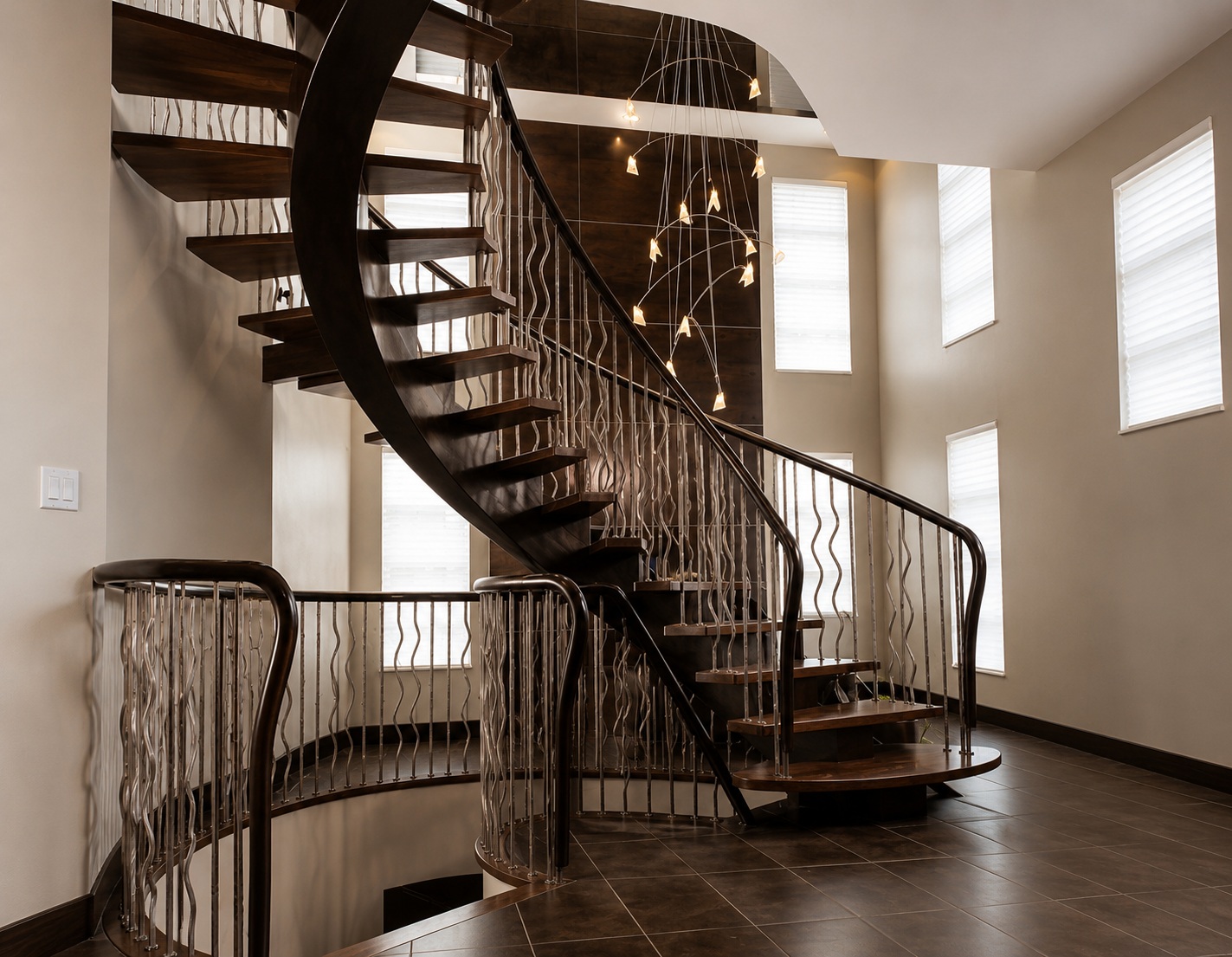
The path has to be continuous too. Along a single flight or ramp run, the handrail should not stop, and where it turns at a landing it should ideally carry through without a gap. For wide public stairs, the standard often expects a graspable handrail on both sides, and on very wide flights an intermediate rail down the middle. These are common reference values; your local adopted edition governs the exact numbers, so confirm them with your local team.
| Handrail feature | Common ADA reference |
|---|---|
| Top height | 34 to 38 inches above the stair nosings or ramp surface, kept consistent. |
| Round grip size | About 1¼ to 2 inches across, or an equivalent non-round profile. |
| Wall clearance | About 1½ inches behind the rail so a hand can wrap around it. |
| Continuity | No break along a flight or ramp run; both sides on many public stairs. |
Extensions at the Top and Bottom
Extensions are the detail that surprises owners most, because they change how a stair looks at each end. The standard asks the handrail to continue past the last step, not stop right at the nosing. At the top of a stair, the rail commonly carries on horizontally for about 12 inches beyond the top riser. At the bottom, it continues for the depth of one tread, sloping, before turning level. On a ramp, both ends usually get a 12-inch level extension.
There is a real reason behind the look. A person finds the rail before the first step and keeps hold of it past the last one, which is exactly when a fall is most likely. The extension turns the handrail into a guide that meets you early and lets you go late. Designers usually return the end of the extension down to a post or into the wall, so it never catches a sleeve or a bag.
For an owner, extensions matter at the planning stage, because they need clear space at the head and foot of every flight. A stair that lands tight against a doorway can leave no room for the top extension, which forces an awkward redesign late on. Flagging this early, when the railing layout is still on paper, is far cheaper than discovering it on site. A drawing-first approach is exactly where these end conditions get resolved.
Handrail height across the three rule sets compared — IBC vs OSHA vs ADA — tap to play.
ADA vs IBC vs OSHA
Owners often hear three sets of initials and assume they conflict. They do not really fight; they cover different ground, and a good design satisfies all three at once. The ADA sets the accessibility floor for handrail height, grip, and extensions. The IBC is the International Building Code, which governs the guardrail height and the infill that stops a fall. OSHA is the workplace safety standard, which shapes handrails on stairs that staff use behind the scenes.
In practice these layer rather than clash. A public stair in a hotel lobby typically follows the IBC for the guardrail and the ADA for the handrail, so the same railing meets both. A service stair to a plant room follows OSHA for its handrail. The smart approach is to design the rail to the strictest figure that applies, so it passes every check without rework. The table below gives the everyday split in plain terms.
| Rule set | What it mainly governs | Common handrail top |
|---|---|---|
| ADA | Accessibility: grip shape, continuity, extensions on public stairs and ramps. | 34–38 in |
| IBC | Building safety: guardrail height and infill, plus handrail height on stairs. | 34–38 in |
| OSHA | Workplace stairs that staff use, such as service and back-of-house routes. | 30–38 in |
These are widely used reference figures, and your local adopted code edition is what actually governs, so confirm the current version with your local team. For the building-code side of the picture, our commercial railing code guide walks through the guardrail rules in the same plain style, and the commercial handrail guide goes deeper on grip and mounting.
What It Means by Project Type
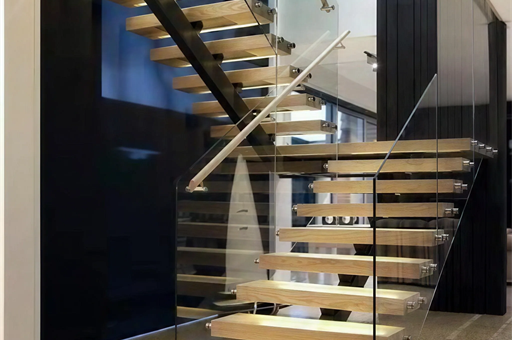
The rules read more easily once you picture them in a real space. A boutique hotel terrace, for instance, wants a railing that looks like jewellery yet still gives guests a graspable handrail at the right height. A slim metal rail on top of a glass guard, set to the 34-to-38-inch band, lets the view through while quietly meeting the standard. The accessible detail disappears into the design rather than fighting it.
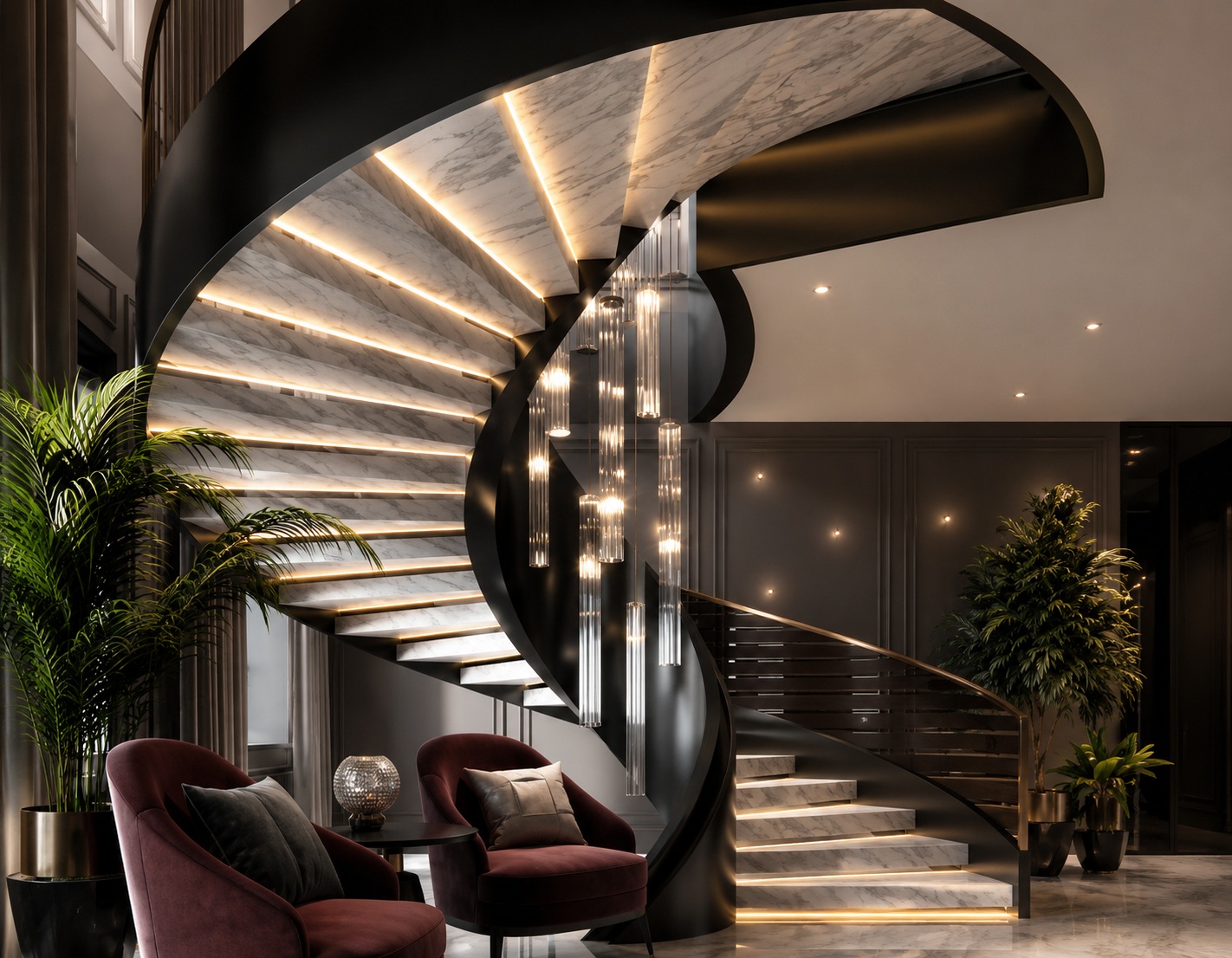
A condo corridor or a shared apartment stair leans on continuity and extensions, because residents of every age and mobility use it daily. Here a warm, continuous handrail that runs past each landing is worth more than a dramatic feature, and a second rail on a wide flight earns its keep. A mixed-use lobby blends the two: a sculptural stair that greets visitors, wrapped in a handrail that any of them can use without a second thought.
Across all of these, the railing is both the safety element and the signature of the space, which is why owners care how it is made as much as how it looks. We manufacture glass, cable, frameless, aluminum, and stainless steel railing systems to a project's drawings, and you can see the range on our commercial balustrade and railing systems page. Pairing the look you want with the handrail rules early is the simplest way to land both.
ADA Railing Requirements FAQ
What is the ADA height for a handrail?
The ADA points to a handrail top measured between 34 and 38 inches above the stair nosings or the ramp surface, and it asks for that height to stay consistent along the run. The exact figure within that band is a design choice. Your local adopted code edition governs, so confirm the current value with your local team before you build.
Does ADA require handrails on both sides?
On many public stairs and ramps the standard expects a graspable handrail on both sides, and on very wide flights an intermediate rail as well. The detail depends on the width and the use of the run. For most commercial stairs, planning for a rail on each side is the safe assumption, then your design team confirms it against the adopted edition.
What is the ADA handrail extension at the top and bottom?
At the top of a stair, the handrail commonly continues level for about 12 inches past the top step. At the bottom, it carries on for the depth of one tread, sloping, then turns level. On a ramp, both ends usually get a 12-inch level extension. These give a hand something to find before the first step and to hold past the last one.
Is a glass railing ADA compliant?
A glass guard can sit happily within an accessible design, as long as a separate graspable handrail meets the height, grip, and extension rules. The glass handles the barrier job and the look; the handrail handles the accessibility job. Many hotel and lobby railings pair the two, which is a common way to keep the view open while meeting the standard.
Do ADA railing requirements apply to private homes?
A private single-family home is usually governed by the residential building code rather than the ADA, so the strict handrail extensions need not apply. The picture changes once a property is rented, shared, or open to guests. Many owners still follow the ADA handrail shape everywhere, simply because a graspable rail is comfortable for everyone in the household.
Read more across the cluster: start with the full commercial railing height guide, then the commercial railing code and the commercial handrail guide. Ready to specify? Browse our balustrade and railing systems.
Double Building Materials draws, manufactures, trial-assembles, crates, and ships your railing systems. Your own contractor or installer handles on-site installation, and your local design team handles ADA and code sign-off — we can help you find a local installer where available. The figures above are common US reference values (ADA, IBC, OSHA); your local adopted edition governs, so confirm the current version with your local team before you build.
Talk to us on WhatsApp →