




Outdoor Stainless Steel Railing Ideas: Design, Grades & Layouts -Railing Guides
Stainless Steel Railing Guides · Outdoor Ideas
Stainless Steel Railing Outdoor Ideas: Design, Materials & Layouts That Last
A stainless steel railing outdoor design pairs a corrosion-resistant metal frame with infill such as glass, cable, or slim vertical bars. It suits decks, balconies, terraces, pools, and entry steps because the polished or brushed surface resists weather, rust, and salt air while keeping sightlines open and the architecture clean and modern.
Few materials handle the outdoors as gracefully as steel. It shrugs off rain, sun, and coastal salt, and it frames a view without blocking it. This guide walks through smart stainless steel railing outdoor ideas, the grades that survive harsh climates, the infill choices, and the simple detailing that keeps the finish looking new. Where a topic runs deep, we link to a focused guide.
Why a Stainless Steel Railing Outdoor Choice Lasts
A stainless steel railing outdoor faces a hard setting, yet the metal handles it with ease. Stainless holds chromium, which forms an unseen layer that heals itself when the surface is scratched. That self-healing trait is why a polished post can stand on a balcony for years and still reflect the sky. Painted steel chips and rusts in the end. Stainless holds firm through repeated cycles of rain, sun, and frost.
The look matters just as much to most owners. A slim stainless frame reads as calm and clean rather than heavy. A deck or a terrace feels larger, and the view stays open. The metal pairs well with timber decking, stone, and rendered walls, so it sits at home in a modern build or a period one. On a coastal home, salt air ruins lesser finishes. Stainless lasts and stays good-looking, which is why it is a frequent first pick among the outdoor railing metals we make.
Choosing the Right Grade Outside
Outdoors, the grade of stainless is the biggest choice you will make. It drives how the metal copes with damp and salt. The two grades used most for railings are 304 and 316. They look the same, yet they behave very differently once the weather turns harsh. Matching the grade to the site protects both the look and the structure for years.
| Grade | General reference & where it suits |
|---|---|
| 304 stainless | The common architectural grade. It performs well for most inland and suburban outdoor settings, where rainfall is the main exposure rather than salt. |
| 316 stainless | Marine grade. Added molybdenum improves resistance to chloride, so it is the typical choice near the coast, beside pools, or in industrial air. |
As a working rule, inland projects often pick 304. Coastal and poolside projects typically move up to 316 for the extra salt resistance. The gap is not easy to see at a glance, but it shows over the years in how cleanly the surface ages. We weigh the two grades, and where each one earns its place, in our 304 vs 316 stainless steel railing guide.
Infill Ideas: Glass, Cable & Bars
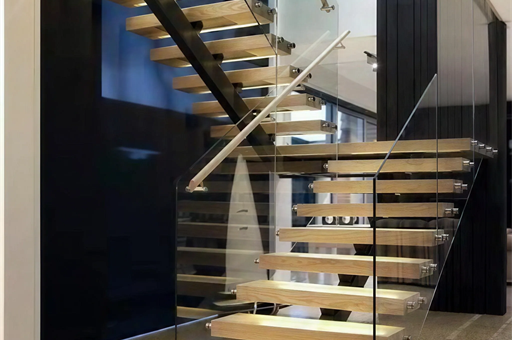
The infill is the part of a railing you look through, so it shapes the whole outdoor space more than the posts do. A stainless frame carries several infills with ease. The choice usually comes down to how much of the view you want to keep, and how much shelter from wind you would like. Each option gives the design its own feel while keeping the same tough metal frame.
| Infill | Outdoor character |
|---|---|
| Toughened glass | A near-invisible barrier that protects an exposed terrace from wind while keeping the view completely open. The most premium, contemporary look. |
| Tensioned cable | Slim horizontal stainless cables that almost disappear at a distance. They suit decks and elevated lookouts where the landscape is the feature. |
| Vertical bars | Round or square stainless infill bars give a crisp, rhythmic line and a reassuringly solid feel. A practical, classic choice for stairs and balconies. |
| Perforated panel | A patterned metal sheet adds privacy and a decorative screen, useful where a balcony overlooks a neighbour or a street. |
Glass delivers the cleanest sightline and the most weather shelter, while cable gives a barely-there industrial elegance that flatters a view. Vertical bars feel solid and traditional and forgive an uneven climate, and perforated panels add privacy where you need it. Many owners mix them, choosing glass on the view side and bars on the steps, which keeps the design coherent without forcing a single solution onto every elevation.
Ideas by Outdoor Space
A stainless railing earns its keep across almost every outdoor surface of a home, and the strongest idea usually grows from the space itself rather than from a catalogue. A raised timber deck reads beautifully with stainless posts and tensioned cable, because the slim horizontal lines extend the deck visually toward the garden instead of fencing it off. A rooftop or first-floor terrace, by contrast, often wants toughened glass between stainless posts, which blocks the wind at height while preserving the long view that made the terrace worth building.
Around a swimming pool, marine-grade 316 with glass or vertical bars resists the chlorine-laden air and keeps the poolside feeling spacious and resort-like. On a balcony, where the area is smaller, a slim stainless frame avoids the heavy, boxed-in feeling that bulky balustrades create. At the front entrance, a polished stainless handrail beside the steps offers a clean, welcoming detail and a secure grip for guests. The same durable material adapts to each setting; only the proportion and the infill change to suit the scene. You can see the full outdoor range on our stainless steel balustrade page.
Finishes and the Modern Look
The surface finish quietly sets the mood of an outdoor stainless railing. Owners are often surprised by how much it changes the result. A mirror-polished finish reflects its surroundings and reads as glossy and rich. It works well on a modern terrace where you want the metal to feel jewel-like. A brushed or satin finish, by contrast, carries fine lines that soften the light. It hides fingerprints and small scuffs, and gives a calmer, quieter look that ages well in daily use.
Beyond the bare metal, stainless can also be coloured. A powder-coated or PVD-coated finish wraps the surface in black, bronze, champagne, or another architectural tone, letting the railing either recede quietly into a dark facade or stand out as a deliberate feature. Colour also lets a single material span an entire project, matching window frames and door hardware for a unified palette. The structural strength remains the same beneath every finish; the coating simply tunes the appearance to the architecture, which is one reason stainless adapts so readily to both minimalist and richly textured homes.
Height and Code Basics
An outdoor railing is a safety barrier first and a design element second, so a handful of dimensional rules shape every layout before the styling begins. The figures below are common US references drawn from the IRC, IBC, ADA, and OSHA families. They are widely cited starting points rather than a fixed promise for your project. The edition your jurisdiction has adopted is what actually governs, so confirm the current values with your local team early in the design.
| Common reference | Typical value (confirm locally) |
|---|---|
| Residential guard height (IRC) | Around 36 inches above the walking surface for decks and balconies. |
| Commercial guard height (IBC) | Around 42 inches for many commercial and multifamily applications. |
| Baluster / infill gap | Sized so a 4-inch sphere cannot pass through, limiting the spacing between bars or cables. |
| Graspable handrail (ADA) | A continuous, graspable profile at roughly 34 to 38 inches where a handrail is required. |
These four numbers cover most of the geometry that an outdoor stainless railing has to respect. The infill gap, in particular, often decides cable tension and bar spacing, so it is worth resolving on the drawing rather than on site. We build to the dimensions your drawing carries; your local authority and your contractor confirm that those dimensions satisfy the adopted edition for your address.
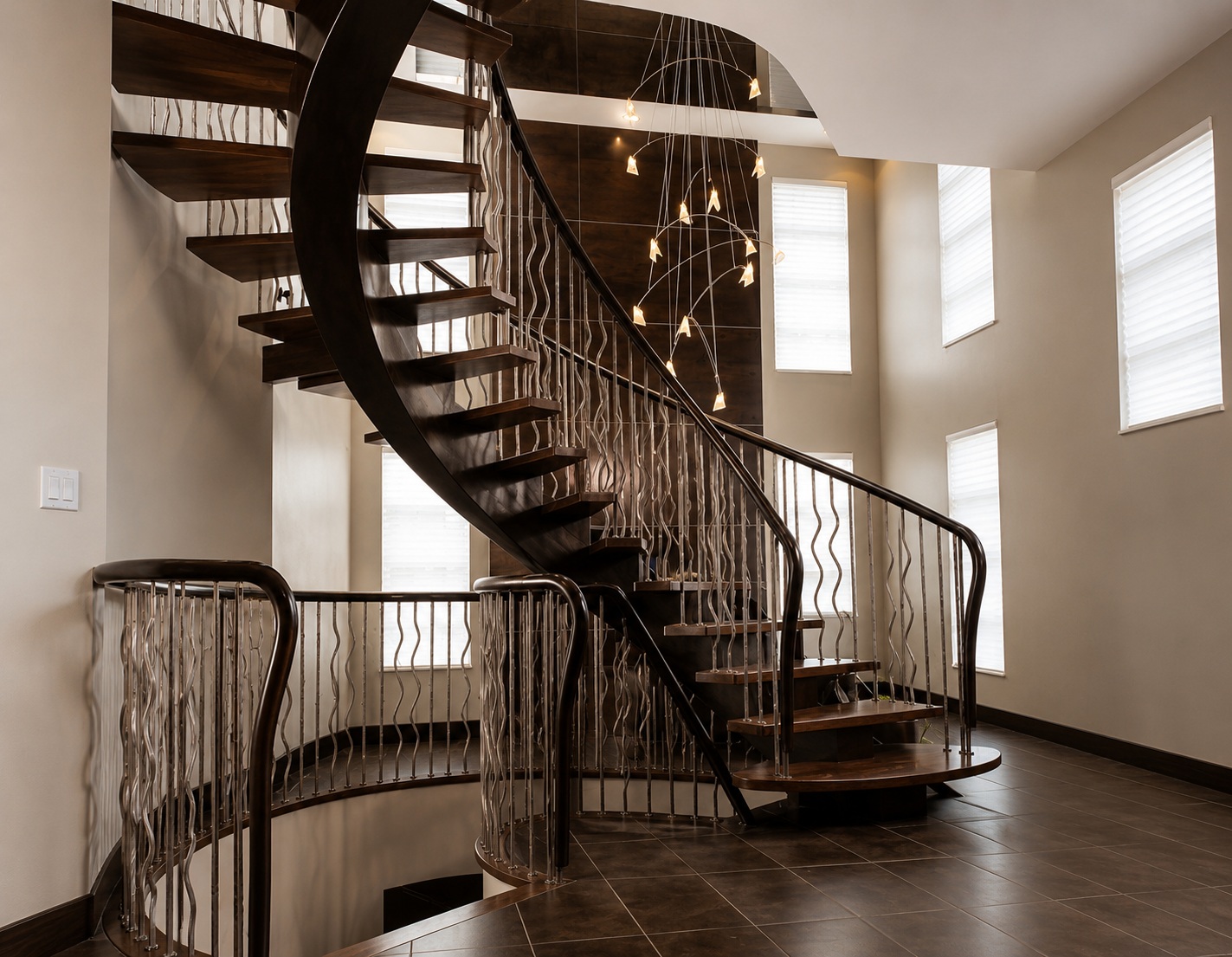
Client feedback on an outdoor terrace and indoor stair railing we built — an ornamental iron project, shown for how we approach an outdoor railing.
How We Build Yours
At Double Building Materials, an outdoor stainless railing begins as a drawing rather than a stock kit. We take your deck, terrace, or stair layout, the heights your local code requires, and your chosen grade, infill, and finish, then turn them into a working shop drawing. That drawing fixes every post position, every cable run, and every glass panel before any stainless is cut. Nothing reaches the saw until you approve it, because outdoor metalwork leaves little room to correct a misjudged dimension once it is on site.
From there we fabricate the posts, rails, and infill in our 4,500 square metre factory in Guangdong, China, then trial-assemble the railing on our own floor. That trial build is where we confirm the fit, the spacing, and the line of the whole run before anything is packed. Once it passes, we crate it for export in the order your installer will need it. Your own contractor then fits it on site from our drawings, and we can help you find a local installer where that service is available. We do not install on site or certify local code compliance; that responsibility stays with your local team. Across 25+ years and 800+ projects in 60+ countries, this drawing-first, trial-assembled sequence is how we keep an outdoor railing accurate from factory to deck.
Keeping It Looking New
Stainless is famously easy to look after, but outdoors that means low effort rather than none. A little routine care protects the finish you paid for. Dust, pollen, and especially coastal salt settle on the surface over time. Left long enough, they can cause a faint mark known as tea staining, which is cosmetic rather than structural. A simple wash now and then, with warm soapy water and a soft cloth, lifts the grime before it can mark the metal. It keeps a polished rail bright and a brushed rail evenly toned.
The grade you chose earlier does most of the heavy lifting here. Marine-grade 316 near the coast resists salt far better than 304 would, which is precisely why the grade decision and the maintenance routine are two halves of the same plan. Avoid abrasive pads and harsh chlorine cleaners, since both can damage the protective layer, and rinse with fresh water after any salt exposure. We set out a full, step-by-step routine, including what to use and what to avoid, in our guide to how to clean stainless steel railings.
Outdoor Stainless Steel Railing FAQ
Does stainless steel railing rust outside?
Quality stainless is highly resistant to rust because its chromium layer protects the surface and repairs itself. Near the coast, an under-specified grade can develop a faint surface staining, which is cosmetic and washes off. Choosing marine-grade 316 for salty environments and rinsing it occasionally keeps an outdoor stainless railing genuinely rust-free for the long term.
Is 304 or 316 stainless better for an outdoor railing?
It depends on the location. Grade 304 typically performs well for inland and suburban outdoor railings, where rain is the main exposure. Grade 316 contains molybdenum for stronger chloride resistance, so it is the usual choice beside the coast, around pools, or in industrial air. Matching the grade to the climate is the key decision.
Which infill suits an outdoor stainless railing?
There is no single ideal infill; each one suits a different goal. Toughened glass shelters a terrace from wind while keeping the view open, tensioned cable almost disappears against a landscape, and vertical bars feel solid and classic. Many owners combine them, using glass on the view side and bars on the steps for a coherent, practical result.
How tall should an outdoor railing be?
Common US references put residential deck and balcony guards near 36 inches and many commercial guards near 42 inches above the walking surface, with infill spacing that stops a 4-inch sphere passing through. These are typical starting figures only; your local adopted code edition governs the exact heights, so confirm them with your local team before finalising the design.
How do I keep an outdoor stainless railing looking new?
Wash it periodically with warm soapy water and a soft cloth, more often near the coast, and rinse with fresh water after salt exposure. Avoid abrasive pads and harsh chlorine cleaners, which can damage the protective layer. Pairing the right grade with this simple routine is what keeps the finish bright for years.
Start with the full stainless steel railing design guide for the complete picture. Then compare grades in 304 vs 316 stainless, and keep the finish bright with how to clean stainless steel railings. Ready to specify one? Browse the stainless steel balustrade range.
Double Building Materials draws, manufactures, trial-assembles, crates, and ships your outdoor stainless steel railing. Your own contractor or installer handles on-site installation and local code sign-off — we can help you find one where available. Dimensions and grade notes above are common references, and code values are typical US figures; your local adopted edition governs, so confirm the current version with your local team.
Talk to us on WhatsApp →