

Stainless Steel Railing Cost: The Drivers That Move the Price -Railing Guides
Stainless Steel Railing Guides · Cost & Budgeting
Stainless Steel Railing Cost: The Drivers That Actually Move the Price
Stainless steel railing cost is governed by drivers rather than one fixed figure, because every balustrade is made to order. The major variables are the steel grade, the infill style, the finish, the running length, and the installation difficulty. Marine-grade 316 stainless, a frameless infill, and a mirror polish each concentrate cost into engineered material and precision fabrication.
Understanding stainless steel railing cost begins with understanding what you are actually paying for, because the headline figure hides several independent decisions. This guide works through each driver in plain language, shows where the money concentrates, and explains why a single quote varies so widely between projects. We label every market band as a third-party estimate, never as our own quote, because each balustrade we build is priced from its drawing.
What Drives Stainless Steel Railing Cost
A stainless balustrade is never a catalogue product with one sticker, so the honest answer to its price is a set of drivers rather than a number. Five drivers move the figure most: the steel grade, the infill style, the surface finish, the running length, and the install difficulty. Each one is a separate decision, and each one compounds the others. That is why two projects of equal length can quote at very different totals.
Stainless steel railing cost carries a real story behind it, because the railing is a load-bearing part that also has to fight off rust for decades. The metal holds people back from a fall, so the posts, the infill, and the joints must all be sized for the load and detailed so the welds stay sound. That care, more than the raw tubing, explains the gap between a basic system and a balustrade you can lean against with full trust. The sections below take each driver in turn.
The Steel Grade: 304 vs 316
The grade of stainless is the first lever on the budget, and two grades lead in home railing. Grade 304 is the everyday stainless, bright and strong, and it suits most indoor and sheltered spots. Grade 316 adds a metal called molybdenum to the alloy, which boosts how well it fights off salt, so it holds up far better near the coast or a pool. That extra alloy makes 316 the dearer grade, often by a clear margin across a full railing.
| Stainless grade | Relative cost and where it suits |
|---|---|
| Grade 304 | The budget-friendly grade. Strong and bright, it commonly serves indoor stairs, balconies, and sheltered exterior runs away from salt air. |
| Grade 316 | The marine grade, and the dearer one. Its added alloy fights off salt, so it tends to go on coastal, poolside, and harsh outdoor projects. |
| Mixed specification | Some projects use 316 on the exposed fixings and 304 on protected members, balancing durability against budget on a single railing. |
Choosing the grade is really choosing how long the finish stays flawless in your environment. A coastal owner who specifies 304 to save money often pays for it later in tea-staining and corrosion, so the saving is a false one near salt air. An inland owner rarely needs the 316 premium. We weigh the two grades against your environment in our guide to 304 vs 316 stainless steel railing, and that single decision moves your budget as much as anything here.
Infill Style and Configuration
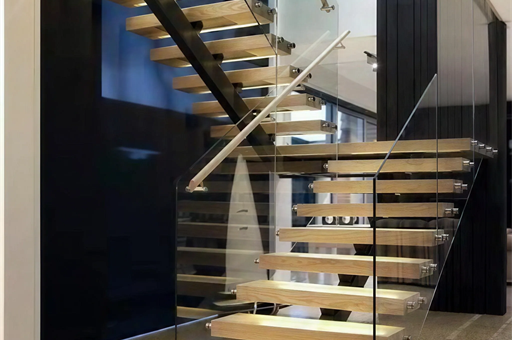
What fills the space between the posts is the second major driver, because it changes both the look and the fabrication. A stainless frame with cable infill keeps the metalwork minimal and the view open, with tensioned runs that the fabricator has to terminate precisely. Glass infill bonds a frameless or framed sheet into the stainless structure for a fully transparent guard, which lifts the cost because the glass itself is an engineered safety element. A bar or picket infill is the most traditional, and a slim horizontal-rod infill reads contemporary.
Each infill carries its own labour. Cable runs need swaged terminals and careful tensioning across every post. Glass needs stainless clamps or a base channel sized for the panel. A welded bar infill needs every joint ground and polished so the line stays clean. The more visible and minimal the design, the more the fabrication concentrates into precision work that nothing hides. A stainless-and-glass combination, in particular, blends two premium materials and sits at the upper end. We show how those pairings come together in our overview of stainless steel railing with glass and wood.
Finish and Fabrication
The surface finish is a quieter cost that owners often miss. A brushed satin finish is the workhorse, because it hides fingerprints and minor handling marks, so it suits a busy stair or a public space. A mirror polish reflects the room like chrome and looks superb, yet it asks for far more hand-finishing and shows every smudge, which lifts both the build cost and the cleaning effort. A bead-blasted or coloured PVD finish sits between the two and brings its own premium.
| Finish | Budget character and upkeep |
|---|---|
| Brushed satin | The economical workhorse. It hides handling marks and fingerprints, so it stays presentable with little upkeep. |
| Mirror polish | A premium finish. The reflective surface needs intensive hand-polishing and shows every smudge, so it costs more to make and to maintain. |
| PVD coloured | A coated finish in tones such as black or bronze. It adds a colour premium on top of the base fabrication. |
Welding and assembly complexity round out the fabrication cost. Posts that meet a curved stringer, raking panels cut to a stair pitch, and seamless welded corners all add hand-work compared with a straight, repetitive run. The finish also shapes the years that follow, because a brushed surface forgives daily life while a mirror polish asks for routine care. We set out a sensible care routine in our guide to how to clean stainless steel railings, which keeps your finish looking new for longer.
Market Ranges in Context
Owners naturally want a number, so here is the honest framing. Trade and home-renovation sites usually quote stainless railing as a per-foot installed figure. They place cable and glass infills above a plain bar system, and they place 316 above 304. Those quoted bands are third-party market estimates, not our quote. They vary a lot by region, by grade, by infill, and by how hard the install is. Treat any single figure you read online as a rough guide, not a promise.
A safer way to budget is to fix your configuration first, then price it. Settle the grade for your environment. Choose the infill that matches the look you want. Pick the finish your space can maintain. Those three decisions account for most of the spread between estimates. Once the specification is set, a drawing-based quote becomes meaningful and comparable between suppliers. As a made-to-order manufacturer with more than twenty-five years of factory experience, we price each balustrade from its drawing, not from a catalogue. That is why we publish drivers here and reserve numbers for your own project.
Our comparison of railing materials for coastal homes, including stainless steel — tap to play.
Installation and Site Factors
Installation is a cost driver the material price never reveals, yet it can move a total a lot. A straight, level run on a solid concrete deck is the simplest case. The post bases land predictably and the sections drop into place quickly. A staircase brings in raking panels and posts cut to the pitch of the flight, which take more setting out. Curved runs, stepped levels, and balconies several storeys up all add labour, access equipment, and engineering. So the install portion of a quote rises with the complexity of the site.
This is where it pays to understand our scope clearly. Double Building Materials draws, fabricates, trial-assembles, and crates your stainless balustrade in our 4,500-square-metre factory in Guangdong, China. Then we ship it ready for your installer to fit. We do not install on site, and we do not certify local code compliance, which stays with your local team. Because we trial-assemble each run before it leaves the floor, the posts and infill arrive checked for fit. That typically reduces the on-site fitting time and the chance of a costly remake. Where you need a fitter, we can often help you find one where local installation is available.
Where to Save Without Cutting Corners
A stainless railing has sensible economy and false economy, and the line between them is the structural metal and its environment. The safe place to save is the visible finish, not the engineering. You can choose a brushed satin surface over a mirror polish. You can pick a simple bar infill over cable or glass. You can keep the run straight rather than weaving it around a curved feature. Each of these trims the budget. None of them touches the structure that holds people back from a fall.
The place never to save is the grade in a salty setting and the sizing of the posts and welds. Picking 304 where the air carries salt only borrows against the finish, because tea-stains and rust arrive within a few seasons. Under-sizing the tube or skimping on the weld prep does not really save money either. It borrows against safety and against a future remake. A balustrade you can lean against with full confidence is worth specifying correctly the first time. Browse the full stainless steel balustrade range to see the configurations, then read the cluster stainless steel railing design guide for how every choice fits together.
Stainless Steel Railing Cost FAQ
Is a stainless steel railing more expensive than other railings?
Stainless steel railing generally costs more than basic aluminium or timber, because the metal is corrosion-resistant, structural, and finished by hand. The premium buys decades of durability and a refined look that needs little upkeep. A plain bar system in grade 304 narrows the gap, while a 316 cable or glass design widens it, so the configuration you choose decides where you land within the range.
Why does grade 316 stainless cost more than 304?
Grade 316 costs more because it holds added alloy, which boosts how well it fights off salt. That extra content raises the raw material price across a full railing. The premium earns its keep near the coast or a pool, where 304 would in time tea-stain and rust. Inland and indoors, 304 is usually enough, so the grade is chosen by the setting rather than by budget alone.
What is the most budget-friendly stainless railing configuration?
A grade 304 system with a simple bar infill and a brushed satin finish trims the budget the most. The straight, repetitive sections fabricate efficiently, and the satin surface hides daily handling. You keep the clean, durable character of stainless while avoiding the drivers that push cable, glass, and mirror-polished designs higher. It is a sensible saving that never touches the structural metal or the welds.
Does the finish change the price of a stainless railing much?
Yes, the finish is one of the larger levers, because a mirror polish needs far more hand-work than a brushed satin surface. The reflective finish also shows every smudge, so it costs more to maintain over the years. A PVD colour adds a further premium on top of the base fabrication. For most homes, a brushed satin finish balances appearance, cost, and upkeep without compromise.
Should I compare stainless steel railing with glass or cable on cost?
It is a fair comparison, because the three often compete for the same modern, open look. A plain stainless bar system usually costs less than a glass infill, while a stainless-framed glass or cable design moves toward the higher end. The right choice depends on the view you want and the environment the railing sits in. Our outdoor stainless steel railing ideas guide shows how those options read in real exterior settings.
Keep reading across the stainless cluster: the complete stainless steel railing design guide, 304 vs 316 stainless, outdoor stainless railing ideas, and how to clean stainless railings. Ready to specify? Browse our stainless steel balustrade systems.
Double Building Materials draws, manufactures, trial-assembles, crates, and ships your stainless steel balustrade. Your own contractor or installer handles on-site installation and local code sign-off — we can help you find one where available. Any price bands referenced above are third-party market estimates, not our quote; each balustrade is made to order and priced from its drawing. Grade and code values are common references; your local adopted edition governs, so confirm the current version with your local team.
Talk to us on WhatsApp →