




Stainless Steel Railing Design Guide: Grades, Finishes & Cost -Railing Guides
Stainless Steel Railing · Complete Design Guide
Stainless Steel Railing: The Complete Design Guide to Grades, Finishes, Styles & Cost
A stainless steel railing is a guard or handrail system built from corrosion-resistant stainless steel, usually grade 304 indoors or grade 316 in coastal and exterior settings. It pairs slim posts and a top rail with glass, cable, rod, or solid infill, delivering a clean modern look, structural strength, and minimal maintenance across both residential and commercial projects.
That blend of strength, longevity, and a quiet modern look is why a stainless steel railing turns up on so many high-end projects. This guide walks through the grades and finishes, the infill styles, sizing and code, what shapes the cost, and how each railing is engineered and built. Where a topic runs deep, we link to a focused guide so you can read further.
What a Stainless Steel Railing Is
A stainless steel railing is a barrier that guards a stair, a balcony, a landing, or a terrace. We build it from stainless steel rather than ordinary mild steel. Stainless is an iron alloy with a good dose of chromium. That chromium forms an invisible layer on the surface, and the layer is what fights off rust. The result is a railing that keeps its bright look for decades and asks for very little.
The system itself has a few standard parts. Vertical posts anchor to the structure and carry the load. A continuous top rail runs along the hand, giving you something secure to hold. Between the posts sits the infill, which is the part you mostly see, and it can be tensioned cable, slim rods, tempered glass, or solid panels. A stainless steel railing therefore covers a whole family of configurations, unified by one durable, low-maintenance material.
Because stainless is strong relative to its weight, the visible metal can be slim without feeling flimsy. That slenderness is a large part of the appeal, since the eye reads clean lines and an open view rather than heavy framing. The same alloy works indoors on a feature staircase and outdoors on an exposed balcony, which is why architects reach for it across so many different project types.
Why Owners Choose Stainless
Owners lean toward stainless for a set of reasons that few other materials match all at once. It fights rust, so the railing keeps its looks through rain, damp, and salt air. Painted steel would blister in time, and a raw alloy would streak. That staying power means less upkeep, which matters most on the balconies and terraces that a crew can barely reach.
The look is the other half of the choice. A stainless steel railing reads as quietly modern, with a satin or mirror surface that sets off glass, timber, and stone without fighting them. It suits a clean new build, yet it sits well in a remodel that blends old and new. The finish is the true colour of the metal, not a coating, so scuffs and scratches never expose a different material below.
Strength rounds out the case. Stainless carries loads with ease, so posts and rails can stay slim and still meet tough guardrail rules. Think of a busy commercial stair or a home balcony alike. That mix of toughness, calm looks, and quiet strength is the real reason this metal costs more and earns it.
Grades: 304 vs 316
The biggest spec choice on a stainless steel railing is the grade, and it almost always comes down to two alloys. Grade 304 is the everyday workhorse. Grade 316 adds a metal called molybdenum for far better defence against salt and chloride. Picking between them is mostly about where the railing lives. The setting drives how hard rust will attack the surface.
| Grade | Character and where it suits |
|---|---|
| 304 | The standard architectural grade. Excellent corrosion resistance for interiors and most inland exteriors, and the more economical of the two. The common choice for indoor staircases and sheltered balconies. |
| 316 | The marine grade. Added molybdenum resists chloride pitting, so it is typically specified for coastal, poolside, and heavily exposed projects where salt is constant. |
| 316L | A low-carbon variant of 316 often used where extensive welding is involved, since it helps preserve corrosion resistance around the welds. |
A simple rule guides most jobs. If the railing is indoors or well inland, grade 304 is plenty and the smart budget pick. If it lives near the sea, beside a pool, or anywhere salt air is constant, grade 316 is the safer pick. It resists the salt pitting that would mark a lesser alloy. We compare the two in depth in our 304 vs 316 stainless steel railing guide.
Finishes and Surface Options
The finish on a stainless steel railing changes its whole character, even though the metal underneath stays the same. A standard reference number names each surface, and each one catches light in its own way. Choosing a finish is part style and part common sense. Some surfaces hide fingerprints and light scratches far better than others over years of daily touch.
| Finish | Look and behaviour |
|---|---|
| Brushed / satin | The most popular architectural finish, with a soft directional grain. It hides fingerprints and light scratches well, which makes it forgiving on a handrail. |
| Mirror / polished | A bright, reflective surface for a glamorous, high-shine statement. It shows fingerprints more readily, so it asks for a touch more wiping. |
| Bead-blasted / matte | A uniform, non-directional matte surface with a contemporary, understated feel that diffuses glare. |
| PVD-coloured | A thin, durable coating that adds tones such as black, bronze, or gold while keeping the corrosion resistance of the base alloy. |
For most homes, a brushed satin finish is the practical favourite, because it looks refined and forgives the marks that a handrail inevitably collects. A mirror finish makes a more dramatic statement and suits a hotel lobby or a showpiece staircase, provided someone is happy to keep it wiped. A PVD-coloured finish opens up darker, warmer palettes for owners who want stainless durability without the bright silver look.
Infill Styles and Pairings
The infill is the part you read first, because it fills the space between posts and sets the whole look. The stainless frame stays the same, while the infill choice turns the railing from nearly unseen to richly detailed. Each option trades off open view, privacy, and character. So the call usually follows the view you want to keep and the style of the room.
Tensioned cable infill keeps the sightline almost completely open, which suits a deck or a balcony where the view is the point. Slim horizontal or vertical rods give a similar lightness with a more defined, linear rhythm. Tempered glass panels offer wind protection and an uninterrupted view at once, and they pair beautifully with a slim stainless frame. Solid or perforated panels add privacy and a stronger graphic presence where an open infill would feel too exposed.
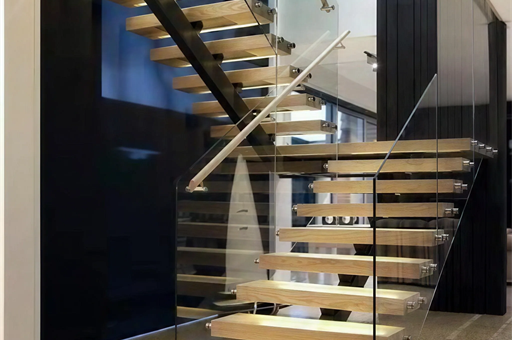
Mixing materials is where stainless really shines, because the metal sits so comfortably beside glass and timber. A stainless frame with glass infill and a warm timber handrail is a perennial favourite, marrying the strength of metal, the openness of glass, and the warmth of wood. We explore that combination, with its detailing and pairing tips, in our guide to a stainless steel railing with glass and wood.
Indoor and Outdoor Applications
A stainless steel railing fits almost any setting, which is a big part of why it shows up so often on bold projects. Indoors, it lines feature stairs, mezzanine edges, and gallery landings. There its slim shape keeps an open-plan space feeling roomy. The railing reads quietly enough to sit behind a sculptural stair, yet it shrugs off constant daily use without showing wear.
Outdoors is where the material truly proves its worth. Balconies, terraces, rooftop gardens, pool surrounds, and exterior stairs all expose a railing to weather, and stainless meets that exposure without rusting or peeling. For seafront and poolside projects, the marine grade keeps salt corrosion at bay, so the railing still looks bright years after a painted alternative would have failed. We gather styling and specification ideas for exposed settings in our outdoor stainless steel railing ideas guide.
Commercial jobs lean on stainless for the same traits at a larger scale. Hotels, eateries, offices, and apartment lobbies need railings that survive heavy footfall and still read as polished. Stainless gives both. The metal also meets the tough guardrail loads that commercial code expects. That makes it a safe pick when a project must perform as well as it looks.
Sizing, Height, and Code
A stainless steel railing has to satisfy guardrail rules just like any other material, and the headline numbers concern height and infill spacing. Guard height and the gaps in the infill are the figures most projects check first, because they protect against falls and against a small child slipping through. The values below are common US references, and the right ones for your project depend on the edition your jurisdiction has adopted.
| Common US reference | Typical value |
|---|---|
| Residential guard height (IRC) | Around 36 inches minimum above the walking surface. |
| Commercial guard height (IBC) | Around 42 inches minimum in most commercial settings. |
| Infill / sphere rule | Gaps sized so a 4-inch sphere cannot pass through the infill. |
| Graspable handrail (ADA / IBC) | A continuous handrail commonly set near 34 to 38 inches with a graspable profile. |
Treat these as a guide, not the final word. Your local adopted code edition is what really governs, so confirm the current version with your local team. Cable infill earns a special note. Level cables can flex under load, and many inspectors expect tighter spacing and extra supports to keep them within the sphere rule. Commercial jobs add access and load rules on top. That is why the design stage is the moment to lock these numbers down, not the install.
How One Is Engineered and Built
At Double Building Materials, a stainless steel railing begins as a drawing, not a catalogue item. We take your dimensions, your chosen grade, your finish, and your infill, then turn them into a working shop drawing that fixes every post, rail, and bracket before any metal is cut. This drawing-first coordination is where clashes and awkward junctions get resolved on paper, while changes are still easy and cheap to make.
Once the drawing is approved, we fabricate the posts, rails, and fittings, then trial-assemble the railing on our 4,500 square metre Guangdong factory floor. That trial assembly before packing is where we confirm the fit of every connection and the run of the top rail, so problems surface in the workshop rather than on your site. With 25-plus years of practice and 800-plus projects across 60-plus countries behind us, that step is simply how we work.
After the railing passes trial assembly, we mark the parts and crate them for export in the sequence your installer will need. Your own contractor fits the railing on site from our drawings, and we can help you locate a local installer where that service is available. We do not install on site or sign off local code; that responsibility stays with your local team. You can see the stainless systems we manufacture on our stainless steel balustrade page.
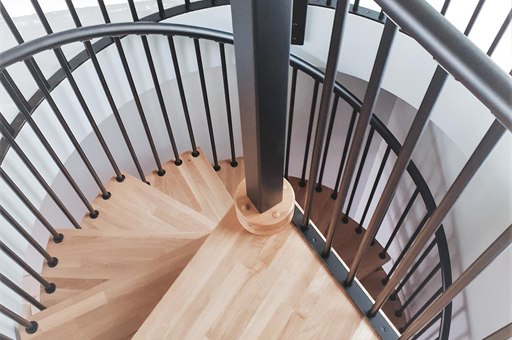
A heavy-duty rod railing quality check on a commercial spiral staircase build on our factory floor — the same metal fabrication and QC discipline behind our stainless railings.
What a Stainless Steel Railing Costs
A stainless steel railing covers a wide range of budgets, and the final figure follows a handful of clear drivers rather than a single list price. Because every railing is made to order, there is no off-the-shelf price tag; instead, the design choices you make add up to the cost. Understanding those drivers lets you steer the budget toward the things that matter most for your project, and trim where the difference would go unnoticed.
Grade leads the list, since marine-grade 316 carries a premium over 304 for its added corrosion resistance. The infill is the next big lever, because tempered glass typically costs more than cable or rod, and a solid panel adds material again. Finish matters too, as a mirror polish or a PVD colour involves more processing than a standard satin grain. The length and complexity of the run, the number of corners and posts, and the mounting detail all move the number as well.
Any specific dollar figures you see online are third-party market estimates, not our quote, and they vary widely by region and project. As a made-to-order manufacturer, we price each railing from its drawing, so the only accurate number is the one tied to your actual design. We break the drivers down in detail in our stainless steel railing cost guide.
Care and Maintenance
One of the quiet pleasures of a stainless steel railing is how little it asks of you. A little routine care keeps it looking sharp for years. The protective chromium layer repairs itself in the presence of oxygen, so the metal naturally resists rust. What it does not resist is a build-up of grime, salt, or iron particles from nearby grinding, which can sit on the surface and eventually cause staining if left in place.
For most railings, a wipe with warm water and a mild detergent, followed by a dry cloth, is all that is needed on a regular basis. A brushed finish should be wiped along the grain rather than across it, which keeps the surface even. Coastal and poolside railings benefit from a more frequent rinse to clear away salt before it can concentrate. Abrasive pads, bleach, and chloride-heavy cleaners should be avoided, since they can damage the very layer that protects the metal. We set out a full routine in our guide on how to clean stainless steel railings.
Stainless Steel Railing FAQ
Does a stainless steel railing rust?
A stainless steel railing resists rust far better than ordinary steel, because the chromium in the alloy forms a self-healing protective layer on the surface. In harsh coastal or poolside settings, a lesser grade can develop surface staining over time, which is why marine-grade 316 is specified there. With the right grade for the environment and a basic rinse routine, a quality stainless railing stays bright for decades.
Is 304 or 316 stainless steel better for railings?
Neither is universally better; the right grade depends on where the railing lives. Grade 304 is excellent and more economical for indoor and most inland exterior projects. Grade 316 adds molybdenum to resist salt and chloride, so it is the safer choice near the ocean, beside a pool, or in any constantly exposed location. Match the grade to the environment rather than defaulting to one.
How tall does a stainless steel railing need to be?
Guard height follows the building code, not the material. Common US references put residential guards near 36 inches and commercial guards near 42 inches above the walking surface, with infill gaps sized so a 4-inch sphere cannot pass. These are typical figures only, and your local adopted code edition governs, so confirm the current values with your local team before finalising the design.
Are stainless steel railings expensive?
A stainless steel railing usually sits at the premium end of the railing market, reflecting the material cost and its long-term durability. The price tracks the grade, the infill, the finish, and the complexity of the run rather than a fixed rate. Because every railing is made to order, the only accurate figure is the one tied to your specific drawing, which is why we quote from the design.
Can a stainless steel railing be combined with glass and wood?
Yes, and the combination is one of the most popular configurations we build. A slim stainless frame carries the structure, tempered glass keeps the view open and blocks wind, and a timber handrail adds warmth where the hand falls. The three materials complement each other naturally, which is why this mix appears so often on high-end staircases and balconies.
Go deeper into the stainless cluster: 304 vs 316 stainless steel railing, outdoor stainless railing ideas, stainless with glass and wood, cost drivers, and how to clean a stainless railing. Ready to specify? Browse the full stainless steel balustrade range.
Double Building Materials draws, manufactures, trial-assembles, crates, and ships your stainless steel railing. Your own contractor or installer handles on-site installation and local code sign-off — we can help you find one where available. Grades, finishes, and code values above are common industry references and typical US figures; your local adopted edition governs, so confirm the current version with your local team.
Talk to us on WhatsApp →