

304 vs 316 Stainless Steel Railing: Which Grade to Choose? -Railing Guides
Stainless Steel Railing Guides · Grade Comparison
304 vs 316 Stainless Steel Railing: Which Grade Should You Choose?
A 316 stainless steel railing adds molybdenum to the alloy, which gives it far stronger resistance to salt and chloride corrosion than 304. Choose 316 for coastal, poolside, or marine settings where salt air attacks metal. Choose 304 for most indoor and sheltered locations, where it performs beautifully at a lower material cost.
The choice between 304 and 316 comes down to one question: how much salt and damp will your railing face? This guide explains what each grade is, how their rust resistance differs, and where each one fits in a home. It walks through finish, code, cost drivers, and care, then links to focused guides where a topic runs deep.
What 304 and 316 Actually Are
Both 304 and 316 belong to the austenitic family of stainless steels, the bright, non-magnetic metal you see on most railings. Each one holds a good amount of chromium and nickel, and that chromium forms an unseen surface layer that keeps the metal from rusting. In daily use, the two grades look the same, take the same mirror or brushed finish, and carry much the same strength.
The one real difference is a single ingredient. A 316 stainless steel railing adds a metal called molybdenum, and that one addition changes how the railing copes with salt and chlorides. This is why people describe 316 as marine-grade, while 304 is the everyday all-rounder of architectural metals. Apart from that, the two grades weld, shape, and finish in much the same way, so the grade you pick never limits the design you want.
Once you know that the grades are close cousins, and differ mainly in that one added metal, the rest of the decision is simple. You are not picking a strong metal over a weak one. You are matching the corrosion resistance of the alloy to the environment your railing will occupy, which is exactly what the next section explores.
The Real Difference: Corrosion Resistance
Corrosion resistance is the whole reason this comparison matters, and it comes straight from that added metal. Molybdenum makes the protective surface layer far tougher against chlorides, the very thing that triggers pitting and rust spots on stainless. Salt air, sea spray, pool chemistry, and winter road salt all carry chlorides, and over the years a 316 stainless steel railing simply shrugs them off far better than 304 does.
A 304 railing is far from weak, though. In a clean indoor room, on a sheltered stair, or in a dry inland location, 304 resists corrosion beautifully for decades and is the smarter, more economical specification. The trouble only appears when chlorides build up on the surface, and that is when 304 can form fine brown spots that 316 would have resisted. The table below sums up where each grade comfortably performs.
| Property | 304 vs 316 |
|---|---|
| Key alloy difference | 316 adds molybdenum; 304 does not. Everything else is broadly comparable. |
| Chloride resistance | 316 is markedly stronger against salt, spray, and pool chemicals. 304 is good in clean, dry conditions. |
| Best environment | 316 for coastal, poolside, and marine; 304 for interiors and sheltered, inland exteriors. |
| Appearance | Visually identical once finished. The difference is invisible until corrosion conditions test it. |
| Relative material cost | 316 costs more per kilogram because molybdenum is expensive. 304 is the value option. |
Where Each Grade Belongs
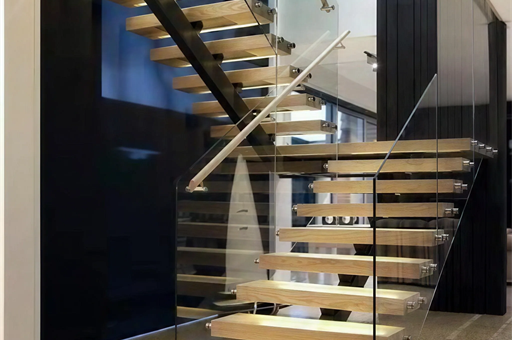
Match the grade to the location, and the decision gets easy. A waterfront villa, a sea-view balcony, a roof terrace near the spray, a poolside guard, or a marina walkway all point firmly toward a 316 stainless steel railing. In these locations the salt exposure never relents. The added molybdenum in 316 is the difference between a railing that stays bright for decades and one that needs continual attention to maintain its appearance.
For interior stairs, mezzanines, gallery landings, and sheltered courtyards well away from the coast, 304 is the easy, sensible specification. It delivers the same clean, modern look at a lower material cost, and it ages gracefully wherever chlorides never gather. Many of our owners combine an interior 304 system with a coastal 316 system on the same property, putting each grade exactly where it earns its keep.
When you are unsure, lean to 316 in any spot touched by sea water, pool water, or heavy winter road salt. The higher price buys long-term peace of mind right where rust is hardest to undo. For a wider tour of stainless choices across a whole home, see our complete stainless steel railing design guide, which sets this grade choice in its full context.
Finish, Look, and Feel
Because 304 and 316 share the same surface chemistry, they accept identical architectural finishes, so the grade you select never limits the appearance you want. A satin brushed finish is the most popular choice for railings, because it conceals fingerprints and minor handling marks while reading as warm, contemporary metal. A mirror polish delivers a brighter, more reflective appearance that suits a formal interior or a luminous coastal terrace.
Beyond bare metal, both grades accept coloured coatings in black, bronze, champagne, and gold tones, which let a stainless railing match a set palette without changing its underlying corrosion behaviour. The key point is this: on a 316 stainless steel railing the marine-grade protection lives in the metal itself, beneath any coating, so the colour is purely cosmetic rather than the thing holding off rust. That distinction matters at the coast, where a scratched coating on a lesser metal would soon invite trouble.
In practice, owners select the finish for the interior and the grade for the environment, and the two decisions remain independent. A brushed 316 system on a sea-view balcony and a brushed 304 system on the interior staircase can read as one coherent design across the whole property. To see how stainless combines with other materials, read our guide to a stainless steel railing with glass and wood.
Our full comparison of railing materials for coastal homes — where 316 stainless earns its place. Tap to play.
Cost Drivers and Value
A 316 stainless steel railing costs more than a 304 one, and the reason is simple. The molybdenum in 316 is a costly metal, and adding it lifts the price of the base steel per kilogram. That extra cost then runs through every tube, fitting, and fastener in the system. So a full 316 railing sits well above the matching 304 build once you add everything up.
Grade is only one of several cost drivers, however. The infill configuration matters too, since glass panels, tensioned cable runs, and slim vertical balusters each price differently. The length of the run, the number of corners and posts, the finish, and the mounting method all influence the figure as well. Because every railing is manufactured to order, there is no published price list; there are drivers, and the appropriate grade is one of them. For the complete picture, see our dedicated stainless steel railing cost guide.
Value is a smarter lens than the sticker price. Using 304 indoors saves you from paying for marine defence you will never need. Using 316 at the coast saves you the far bigger cost of early rust and a swap-out down the line. The grade that costs more on paper is often the one that costs less over the life of the railing. That is the very sum a good design chat should work through.
Code, Strength, and Safety
Grade and code are two separate questions, and it helps to keep them apart. Building codes set the shape and the load of a guard or handrail, not which stainless grade you pick. Both 304 and 316 are plenty strong for homes and most commercial railings, so the rust-driven choice between them never weakens the safety case. The figures below are common references that any code-ready railing must meet.
| Requirement (common reference) | Typical value |
|---|---|
| Residential guard height (IRC) | Commonly 36 inches minimum. |
| Commercial guard height (IBC) | Commonly 42 inches minimum. |
| Baluster gap (IRC / IBC) | A 4-inch sphere must not pass through. |
| Graspable handrail (IRC) | Commonly 34 to 38 inches above the stair nosing. |
These are widely cited values, and your local adopted code edition is what truly governs, so confirm the current version with your local team. Australian jobs use AS 1170 for loads and AS 1288 for any glass infill, while public stairs may bring in ADA reach and OSHA work rules. Your local adopted edition still wins. The grade choice sits above this layer, and it settles how long the railing lasts, not its sizes.
Care and Longevity
Both grades reward a little routine maintenance, and a coastal railing rewards it most. The protective surface layer on stainless rebuilds itself whenever the metal stays clean, so the single most valuable habit is rinsing salt and grime away before they accumulate. Near the sea, a regular freshwater rinse and a gentle wash keep even 304 looking respectable, and that same habit keeps a 316 stainless steel railing in genuinely excellent condition for the long haul.
The mistakes to avoid are identical for both grades. Steer clear of abrasive pads and chloride-based cleaners, since they scratch the finish and accelerate the very corrosion you want to prevent. A soft cloth, warm water, and a mild detergent handle everyday cleaning, while a dedicated stainless cleaner restores the brightness on a brushed or polished surface. Our step-by-step guide to cleaning stainless steel railings covers the routine in detail.
In the end, how long it lasts is where the grade choice pays back. Indoors, a well-kept 304 railing can look as good as new for decades. At the coast, only 316 can give that same easy service, which is why the higher price is rarely a regret in salt air. Pick the grade for the place, keep the surface clean, and a stainless railing becomes one of the toughest parts of the whole building.
304 vs 316 Stainless Steel Railing FAQ
Is 316 stainless steel worth the extra cost for a railing?
Near salt water, a pool, or heavy winter road salt, a 316 stainless steel railing is usually worth every cent, since it fights off the salt rust that would slowly pit a lesser grade. Away from those spots, 304 looks just as good at a lower cost. The value answer rests on how much salt your railing will face.
Can you tell 304 and 316 apart by looking?
No, not by eye. Once polished or brushed, the two grades look the same, since the metal that sets them apart sits inside the steel, not on the surface. The sure way to confirm a grade is a mill certificate or a hand-held alloy tester. That is why a good supplier documents the grade rather than asking you to trust the look.
Does 316 stainless steel ever rust?
It can, though far less easily than 304. In harsh sea air, or where salt is left to build up for a long time without a wash, even 316 may show some surface staining in the end. A regular rinse with fresh water keeps the protective layer healthy and greatly extends how long a coastal 316 railing stays bright and rust-free.
Which grade is better for an outdoor railing?
It depends on the spot. For a coastal, poolside, or dockside railing, 316 is the safer pick by a wide margin. For a sheltered inland patio or a dry climate well away from salt, 304 typically holds up well and costs less. Our outdoor-focused ideas guide looks at both, with examples for each setting.
Is 316 stainless steel stronger than 304?
Not in any real way, for a railing. The two grades have about the same strength, so a switch to 316 buys rust resistance, not load capacity. Both easily meet home and most commercial railing loads when built right, so strength is rarely the deciding factor between them. How well they hold up in salt is the real split.
Keep exploring: start with the full stainless steel railing design guide, then weigh up stainless steel railing cost drivers and browse outdoor stainless steel railing ideas. Ready to specify a system? Explore our custom stainless steel balustrade and railing systems.
Double Building Materials draws, manufactures, trial-assembles, crates, and ships your stainless steel railing in 304 or 316 to your project drawing. Your own contractor or installer handles on-site installation and local code sign-off — we can help you find one where available. Alloy, finish, and code values above are common industry and US references; your local adopted edition governs, so confirm the current version with your local team.
Talk to us on WhatsApp →