

Railings for Coastal Homes: Materials That Beat Salt Air-Railing Guides
Railing Guides · Coastal & Humid Climates
Railings for Coastal Homes: Materials That Beat Salt Air and Humidity
The right railings for coastal homes resist salt and moisture rather than fight them. Grade 316 stainless steel, marine-grade stainless cable, quality powder-coated aluminium, and laminated glass on stainless fixings hold up well by the sea. Ordinary steel and untreated iron corrode fast in salt air. A corrosion-resistant fastener spec matters as much as the railing material you pick.
A coast is beautiful and brutal at once. The same salty breeze that makes a terrace feel alive also drives a slow chemical attack on metal, glass fixings, and every hidden bolt. Choose the wrong railing and it stains, pits, and streaks within a season or two. Choose well and the guard shrugs off decades of sea air with a rinse now and then. This guide walks through which railings for coastal homes actually last, what corrodes and why, and how humidity from Florida to the Australian coast changes the call.
Why the Coast Is So Hard on a Railing
Salt air is the villain, and it works in a quiet, patient way. Wind lifts tiny salt droplets off the surf and carries them inland for miles. Those droplets land on a railing, dry, and leave chloride crystals behind. Chlorides break down the thin protective layer that keeps steel from rusting, so corrosion starts in pinpoints and spreads. Add high humidity and the salt stays wet longer, which speeds the whole process up.
Heat and sun pile on top of that. A poolside guard also meets chlorinated splash, which acts a lot like sea salt. The result is a harsh test bed where an inland railing that would last for decades can stain and pit in a year or two. So the coastal question is really one of chemistry, not looks. Pick a metal, a finish, and a fastener that laugh off chloride, and the design freedom follows. The sections below rank the railings for coastal homes that pass that test, then explain the failures you want to avoid.
One more factor shapes the choice: how far the home sits from the water. A front-row beach house within splashing distance of spray needs the toughest spec you can get. A home a few streets back still meets salt in the air, but the load is lighter. A rule of thumb from the trade is simple. The closer the surf, the higher the grade, and the more the fastener detail counts. Keep your own exposure in mind as you read.
Grade 316 Stainless Steel
Grade 316 stainless steel is the workhorse of coastal railings for a good reason. It adds a metal called molybdenum to the mix, and that single ingredient hugely lifts its defence against salt and chlorides. Where grade 304 stainless suits inland and sheltered sites, 316 holds its bright finish in the harsh salty air that would tea-stain lesser metal. A brushed or polished 316 posts-and-handrail system pairs cleanly with glass or cable infill, so it fits the modern beach house look.
The upkeep story is honest and light. Grade 316 does not rust the way carbon steel does, but salt film still needs a wash. A fresh-water rinse and a soft wipe every so often keeps the surface bright and heads off the surface tea-staining that can appear on any stainless in a very aggressive spot. For the toughest front-row locations, some builders step up to even higher grades. For most coastal homes, though, 316 hits the sweet spot of long life, slim profile, and clean modern face, which is why it stays the default coastal metal.
Marine-Grade Stainless Cable
Marine-grade stainless cable gives a coastal home two things it craves at once: an open view and strong corrosion defence. Thin level runs of 316 stainless cable stretch between posts, so a terrace over water keeps its horizon almost unbroken. The word marine in the name is the whole point. It signals cable and fittings rated for salt exposure, so the run holds its shine where cheaper wire would streak and rust. That is why cable suits front-row decks so well.
The catch with cable sits in the structure, not the wire. The end posts carry serious tension, so a good maker sizes and braces them for real load and reaches for 316 fittings throughout. Skimp on the swage fittings or the tensioners and the weakest link corrodes first, even when the cable itself is sound. Done properly, coastal cable asks for very little: a periodic tension check and an occasional wipe. It reads as crisp and contemporary, and it keeps the view every bit as open as glass does.
Powder-Coated Aluminium
Quality powder-coated aluminium is the low-care coastal favourite, and it earns that reputation fairly. Aluminium does not rust the way carbon steel does, because it forms its own thin oxide skin that protects the metal underneath. A good powder coat then seals colour over the top, so the railing shrugs off rain, sun, and salt with little more than a wash. For a whole coastal condo block or a batch of holiday units, that low upkeep across many balconies is a real draw.
Two details separate a coastal-ready aluminium railing from an ordinary one. First, the coating quality: a marine-grade powder-coat system, often with a primer layer, resists the salt-driven chalking and fading that a thin coat suffers near the sea. Second, the fixings: a salt-side aluminium railing still needs stainless fasteners, since a plain steel bolt would rust and streak the post. Get both right and aluminium delivers years of colour with almost no fuss. Our guide on how to clean aluminum railings covers the simple routine that keeps a coastal finish bright.
Laminated Glass and Stainless Fittings
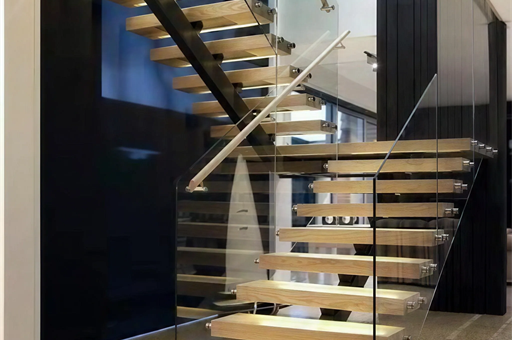
Glass wins the view war at the coast, and the ocean view is often the whole reason to build there. A frameless or minimal-frame glass balustrade guards the edge without blocking the outlook, so the surf stays in full sight from the terrace. Glass itself does not corrode, which makes it a natural coastal partner. Laminated glass, which bonds an interlayer between two panes, also holds together if a panel cracks and stands up well to strong coastal wind loads.
With glass, the metal you cannot see decides how long it lasts. The spigots, clamps, standoffs, and fixings that grip each panel must be 316 stainless at the coast, or the guard streaks with rust at every fitting while the glass stays perfect. The other honest trade-off is cleaning, since glass shows salt film and needs a regular wipe to stay clear. Common rules such as AS 1288 in Australia and the ASTM and IBC clauses in the United States set out how the safety glass is sized for a guard. Your local adopted edition is what actually governs.
What Corrodes at the Coast
Knowing what fails is as useful as knowing what lasts, so here is the short list of coastal casualties. Plain carbon steel rusts fast in salt air unless it carries a heavy galvanised layer and a sound finish, and even then a scratch invites rust. Untreated or lightly coated wrought iron suffers the same fate, so a period-look coastal railing wants a galvanised base and a diligent repaint habit. The table below sorts the common materials by how well they cope with salt.
| Material | Coastal performance | Coastal care |
|---|---|---|
| 316 stainless steel | Strong; the coastal default | Rinse and wipe now and then |
| Marine-grade cable | Strong with 316 fittings | Tension check plus a wipe |
| Powder-coated aluminium | Very good with marine coat | Occasional wash; stainless bolts |
| Laminated glass | Great; fittings must be 316 | Wipe to clear salt film |
| 304 stainless steel | Fair; may tea-stain by the sea | Better kept for inland sites |
| Carbon steel and iron | Weak; rusts fast without care | Galvanise and repaint often |
Two more traps catch people out. The first is galvanic corrosion, where two different metals touch in salt and one eats away at the other. A plain steel bolt in an aluminium post, or an iron bracket on a stainless rail, sets up exactly that trap. The second is crevice corrosion, where salt collects in a tight gap, a poor weld, or under a loose fitting and stays wet. Both traps come down to detail and fixings, which is why the fastener spec earns its own section below.
Why the Fastener Spec Matters Most
Here is the detail that quietly makes or breaks a coastal railing: the fasteners. A gorgeous 316 handrail bolted down with cheap plated screws will streak rust from every fixing within a season, and the whole guard then looks tired though the rail itself stays sound. The small parts fail first because they hold salt in tight threads and crevices. So the smart coastal spec calls for stainless fasteners, ideally 316, matched to the railing metal to dodge that galvanic trap.
This is where a drawing-first maker earns its keep. When a supplier works from the project drawing and calls out the fastener grade, the anchor type, and the isolation detail up front, the guard behaves as a system. It is no longer a set of loose parts. Every base plate, every swage fitting, and every glass clamp gets the same coastal-grade thinking. A trial assembly before packing then catches a wrong bolt or a poor fit in the workshop, not on your beach terrace. The finish choice ties in too, and our guide on powder coat versus anodized finishes explains how each behaves in salt air.
Humidity: Florida, the Gulf, and the Australian Coast
Salt and humidity work as a team, and warm, wet coasts stack both. In Florida and along the Gulf, high heat and heavy humidity keep salt film damp on a surface far longer, so corrosion never really pauses. The Australian coast, from Sydney terraces to Queensland beach homes, throws the same test at a railing. That is why the coastal material list looks the same on both sides of the world: 316 stainless, marine-grade cable, quality powder-coated aluminium, and laminated glass on stainless fittings.
Local codes still shape the guard beyond the material. In Australia, standards such as AS 1288 for glass and AS 1657 for many access ways feed into the National Construction Code, while US projects lean on IRC, IBC, and OSHA references for height, gap, and load. These are widely used reference values rather than a single global rule. Your local adopted edition is what actually governs, so a good maker asks for your jurisdiction early and draws the railing to suit it. Warm-climate humidity also rewards finishes that hold colour, which again favours a marine powder coat and a laminated glass interlayer.
Care and Upkeep by the Sea
Even the toughest coastal railing likes a little routine, and the routine is refreshingly simple. A fresh-water rinse to lift salt film, then a wipe with a soft cloth and mild soapy water, covers almost every material on the list. For stainless, that rinse heads off tea-staining before it starts. For aluminium and glass, it keeps colour and clarity sharp. A quick check of cable tension and of fixings once or twice a year rounds out the job, and none of it takes long.
Frequency depends on exposure, so let the location set the pace. A front-row beach house rewards a more regular rinse, above all after a storm blows spray over the terrace. A home a few streets back needs less. Skipping the routine for years is the main way a good coastal railing goes wrong, since salt then builds up in crevices and works away unseen. A few minutes now and then keeps the guard bright, and it saves the far larger cost of an early replacement down the track.
Budget follows the same logic as upkeep. Because every coastal system is made to order, the honest way to think about cost is in drivers, not one figure. A higher stainless grade such as 316, a marine powder-coat system, and 316 fittings all cost a little more than the inland version, and that premium buys years of extra life by the sea. We price each project from its drawing, so there is no fixed list here. When you are ready to plan a coastal guard, our custom balustrade and railing systems cover every coastal-ready material in one place.
Railings for Coastal Homes FAQ
Which railing material suits a coastal home?
Grade 316 stainless steel is the usual first pick, since molybdenum in the alloy gives it strong defence against salt and chlorides. Marine-grade stainless cable, quality powder-coated aluminium, and laminated glass on 316 fittings also perform well by the sea. Whatever you choose, corrosion-resistant stainless fasteners matter as much as the railing metal itself, so match them to the job.
Does 304 or 316 stainless steel work better near the ocean?
Grade 316 works better near the ocean. It contains molybdenum, which greatly improves resistance to the chlorides in salt air, so it holds its bright finish far longer than 304 in coastal conditions. Grade 304 suits inland and sheltered sites, but by the sea it can develop surface tea-staining over time. For any salt-exposed railing, 316 is the safer and longer-lasting choice.
Do aluminium railings rust at the coast?
Aluminium does not rust the way steel does, because it forms a protective oxide skin, and a good powder coat adds a further seal. That makes quality powder-coated aluminium a solid coastal choice. The two things to get right are a marine-grade coating that resists salt-driven chalking and stainless fasteners rather than plain steel bolts, which would rust and streak the posts near the sea.
Can I use glass railings on a beachfront balcony?
Yes. Glass itself does not corrode, so it suits a beachfront balcony and keeps the ocean view open. The key is the metalwork you cannot see: the spigots, clamps, and fixings must be 316 stainless to avoid rust streaks. Laminated glass copes well with strong coastal wind loads too. Expect to wipe the panels regularly, since salt film shows on glass quickly.
How do I stop a coastal railing from corroding?
Start with the right material and fastener spec, then keep a light routine. Choose 316 stainless, marine-grade cable, marine powder-coated aluminium, or glass on 316 fittings, and match every bolt and bracket in a matching stainless grade. Rinse off salt film with fresh water now and then, wipe stainless to head off tea-staining, and check cable tension and fixings once or twice a year.
Keep exploring the materials cluster: start with the full side-by-side comparison in railing materials compared, then see how to clean aluminum railings and powder coat versus anodized finishes. Ready to specify a coastal guard? Browse our custom balustrade and railing systems.
Double Building Materials draws, manufactures, trial-assembles, crates, and ships coastal-ready railings in 316 stainless, marine-grade cable, powder-coated aluminium, and laminated glass. Your own contractor or installer handles on-site installation and local code sign-off — we can help you find one where available. Material behaviour and code values above are common industry and US references (IRC / IBC / ADA / OSHA; AS 1288 / AS 1657 / NCC where relevant); your local adopted edition governs, so confirm the current version with your local team. With 25+ years and 800+ projects shipped to 60+ countries from our 4,500 m² factory in Guangdong, China, we draw and trial-assemble every railing before it ships.
Talk to us on WhatsApp →