

Wood vs Metal Spiral Staircases: What to Decide Before a Custom Stair Is Manufactured
Staircase Guides · Materials & Pre-Build Choices
Choosing between a wood spiral and a metal spiral staircase starts with splitting hidden structural support from the parts you touch every day. Pure wood spirals feel warm like fine furniture yet shift when winter heat dries indoor air. All-steel builds stay ultra-slim, while steel-core spirals with thick oak steps blend quiet strength with warm grain.
Finished room photos hide what carries the load under the steps. Two gallery stairs can both show white oak treads and a matching oak rail, yet one relies on notched wood blocks at the hub while the other bolts solid oak slabs onto a steel column.
Because a custom shop cuts the center pipe, step arms, spindles, and curved rail as one matched set, switching materials halfway through drawings restarts the whole job. Review these spiral build choices alongside our complete spiral staircase guide and broader metal and wood staircase comparison before production starts.
Three Real Ways Factories Build Wood and Metal Spirals
When homeowners ask for quotes on a wood spiral or a metal spiral staircase, our Foshan engineers break the market into three distinct structural builds instead of two.
- All-metal spiral (steel, stainless, or aluminum): welded metal wedge plates radiate from a structural pipe post with slim spindles and a rolled tube handrail.
- All-wood joinery spiral: a turned or staved hardwood center post, glued wood wedge treads, wood balusters, and a laminated bentwood rail.
- Hybrid steel-core + solid wood spiral: a strong steel center post and steel step arms—powder-coated or wrapped in wood collars—carrying thick oak or walnut treads.
3D build view: (A) slim coated steel-plate spiral for clean loft spans vs (B) steel center column + thick oak wedge treads + bentwood top rail.
Inside our workshop, more than two out of three indoor clients who start out asking for a wooden spiral staircase end up picking that third hybrid build. Once they see how winter furnace air treats tight round wood hubs, steel inside and hardwood outside makes clear sense.
Why All-Wood Spirals Creak—and How a Steel Core Stops It
Even kiln-dried, sealed hardwood absorbs moisture in humid August air and gives moisture back when winter heaters push indoor humidity down near 25 percent. As the USDA Wood Handbook (GTR-282) documents, timber barely changes length along the board yet swells and shrinks across the grain every season.
On a straight wood stair tucked between walls, tiny cross-grain movement stays quiet. On an all-wood spiral, though, twelve to fifteen wedge steps crowd into one tight wood hub while outer spindles pin the wide tips along a rising curve. When dry January heat shrinks that wood hub by even one millimeter, glue lines relax, wood rubs on wood, and footsteps begin to creak.
Material mechanics before production: (A) steel step pans with oval screw slots let thick oak expand across the grain without splitting; (B) glued bentwood strips vs rolled metal rail tubes.
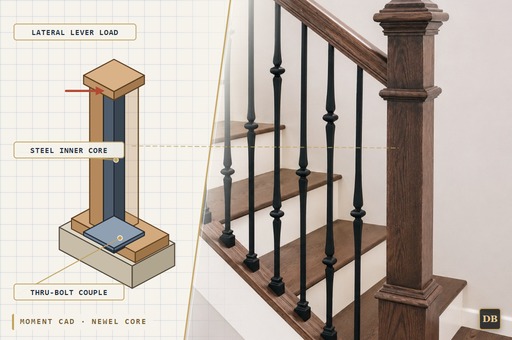
A structural steel center column stops axial sag and hub loosening permanently because steel neither shrinks in winter nor swells in summer. Bolting 38-to-50 mm solid white oak, ash, or walnut wedges onto steel pans through oval slots lets timber breathe across the grain without splitting, keeping factory quality steady across every balcony and loft opening.
Footstep Sound, Barefoot Warmth, and Visual Weight
Walk down a thin unlined steel pan in hard leather shoes and you hear a bright metallic ring that carries into nearby bedrooms. Bare metal also feels chilly under bare feet on winter mornings, and flat black steel treads show pale lint or pet hair faster than medium-tone wood grain.
Thick oak steps change room sound and foot feel right away because dense white oak, beech, or walnut soaks up heel clicks while wood grain hides small marks along the outer walk band.
Where your room calls for an all-metal loft look—such as black steel next to brick walls or glass doors—you can quiet a metal spiral staircase fast. Use thick steel step plates, welded box stiffeners under each step, or flush cabinet-quality wood pads across every balcony, gallery, and studio opening built at our company factory.
Spiral Handrails: Glued Bentwood Plies vs Rolled Metal
Your hand slides along the outer spiral handrail on every climb, making rail material one of the biggest lead-time and price drivers on a custom quote. Unlike a straight rail cut on a miter saw, a spiral rail curves in plan while climbing upward at the exact same time.
Solid lumber snaps across the grain if bent into a tight helix. To build a smooth wood spiral handrail, craftspeople slice thin hardwood strips, spread structural glue between every layer, and clamp the stack onto a helical form matched to your circle diameter and step rise. Because bent wood fibers try to spring back slightly when clamps release, our crew fits and locks the cured rail right onto your real balusters during upright shop trial assembly.
Rolled steel, brushed 304 stainless, or bronze-coated metal tubes bend cleanly through three-roll CNC machines with zero springback drift after welding. Pairing a matte-black steel guard and rolled metal top rail with warm oak treads trims custom woodworking hours while creating a crisp modern contrast.
Pairing Spindles, Rods, and Center Column Sleeves
Your choice between wood and metal also shapes how outer guard spindles and the center post look across the room. Lock these pairings on your shop drawing before steel cutting begins so bracket tabs and tread holes land cleanly.
- Slim vertical steel pickets under a wood or metal rail: clean everyday favorite for home lofts and living rooms, holding the 4-inch sphere rule around tight turns.
- Forged wrought-iron scrolls with solid oak treads: classic estate warmth that pairs hand-forged dark spindles with stained hardwood wedges and a bentwood cap.
- Rolled multi-bar metal rods or perforated steel side wraps: gives contemporary spirals a sculptural ribbon look while screening tread undersides from view.
All-Wood vs All-Metal vs Hybrid Spiral Table
Compare all three indoor spiral builds across frame stability, step sound, upkeep, and climate limits before sending your floor opening measurements.
| Check Point | All-Metal Spiral Staircase | All-Wood Joinery Spiral | Steel Core + Wood Treads |
|---|---|---|---|
| Main Support | Steel, stainless, or aluminum pipe + welded arms | Turned/staved wood center post + mortised wood hub | Steel center pipe + steel pans beneath thick wood |
| Winter Dryness | Zero shift in winter heating or summer humidity | Needs steady indoor HVAC (around 35-55% RH) | Rock-steady frame; oval slots let wood breathe |
| Footstep Sound | Bright metal note unless stiffened or padded | Warm timber tone; can creak if winter dries joints | Quiet, damped step over rubber isolation pads |
| Side Profile | Ultra-slim 6-10 mm plate or folded steel pan | Thicker classic wood wedge and turned spindle look | Slim steel spine paired with 38-50 mm solid hardwood |
| Outdoor Rating | Yes (with HDG/aluminum; see exterior spiral guide) | No—indoor climate-controlled rooms only | Indoor standard; outdoor only with marine metal + teak |
Stain Sample Matching, Crate Packing, and Clean Site Fit
How your custom spiral packs and installs on site shifts by material too. Pre-finished oak or walnut treads get sanded through fine grits, stained to match your floor plank, and sealed in clear coats inside our clean finishing booth. We mail real stained hardwood sample blocks to your door first so you can check the color beside your flooring in daylight. Each wood step then rides wrapped in foam inside plywood crates so your crew bolts wood on last—after painters finish.
On a powder-coated metal spiral staircase, pre-fitted column sleeves, spindles, and curved rail arcs stack up in sequence from bottom base plate to upper landing plate. Follow that full workshop-to-home sequence in our guide on how a spiral staircase is built.
Coordinating the upper mezzanine gallery railing and under-tread lighting during the same engineering pass ties the two-story room together. Matching the upstairs balcony guard in identical hardwood handrail species, spindle spacing, and architectural powder-coat batch makes spiral and landing read as one unit.
Hybrid steel-and-timber fabrication also makes concealed low-voltage step lighting cleaner than solid timber hubs. Our technicians rout slim aluminum diffuser channels underneath each oak wedge nosing and feed hidden wires down the steel column before your licensed local electrician connects the driver.
Keep furniture movement and everyday household circulation in mind when locking diameter on your floor plan as well. Stepping up from a compact 5-foot loft circle to a generous 6-foot residential spiral adds noticeable outer walkline depth and makes carrying luggage or laundry baskets effortless.
Requesting physical wood finish blocks alongside powder-coated metal swatches before bulk production begins lets homeowners, architects, and interior designers inspect grain warmth against real room cabinetry, hardwood flooring, and window mullions under natural daylight.
Once signed off, full upright dry-fit inside our company factory checks each steel flange, oak step arm, balcony spindle tolerance, and curved gallery handrail splice before export crates seal the order.
Send us your floor rise, room width, and a quick sketch so we can draw your stair plan right now.
Counter-Questions: When Should You Skip Wood or Bare Steel?
Test your favorite finish mix against three honest cases where the wrong pick causes avoidable trouble.
- When not to pick an all-wood spiral? Skip pure wood hubs in mountain cabins left unheated all winter, beach houses with open salt-breeze doors, or sunrooms facing unshaded west glass. Wide moisture swings punish wood hubs; pick an all-metal build or a steel-core hybrid instead.
- When should you avoid high-gloss dark stain on wood steps? Mirror-gloss espresso or jet-black stain shows every white sock print and hides step edges in dim halls. Choose a low-sheen matte or satin topcoat (~15-25 sheen) so wood grain hides everyday wear.
- When does all-metal beat hardwood treads? In studio workshops, commercial mezzanines, rooftop entries, or mudrooms where wet boots track gravel, textured coated steel shrugs off grit and never asks for refinishing.
Wood and Metal Spiral Staircase Ordering FAQ
Can you hide the steel center post so a hybrid spiral looks completely wooden?
Yes. Our shop can wrap the structural steel column sleeves in matching stained hardwood collars, or coat the steel warm bronze, matte black, or soft white to blend into trim while keeping steel stiffness inside.
Which hardwood types hold up well on spiral wedge treads?
White oak, red oak, American black walnut, ash, and European beech hold up very well. Dense hardwoods resist heel dents along the concentrated outer walking path far better than soft pine.
How do I match your factory wood tread stain to my home's oak floors?
Mail us a small floor offcut or share your stain code during shop drawings. We coat real hardwood sample blocks on the exact step wood and ship them for your sign-off in your own room light first.
Does a curved spiral handrail ship in one oversized ring?
No. Full-height spiral rails split into neat curved arcs with hidden joiner pins or post-top splices, all verified during upright trial assembly in our Foshan plant before crating.
Scope note: Double Building Materials prepares custom shop drawings, mails real finish samples on request, trial-assembles every stair before packing, and ships worldwide. Optional fitting is available across the USA, Australia, and Canada (quoted separately), or your carpenter can assemble from our numbered drawings.