

Railing Design Ideas: Materials, Styles & Layouts to Suit Your Project -Railing Guides
Railing Manufacturer Guides · Design Ideas
Railing Design Ideas: Materials, Styles & Layouts That Suit Your Project
Good railing design balances three things at once: the look you want, the material that fits the setting, and the safety code your project must meet. The strongest design ideas start from the space — a villa stair, a hotel terrace, a condo corridor — then choose glass, cable, metal, or wood to match it.
A railing is one of the most visible details in any building, so its design carries a lot of weight. This guide walks through the design ideas that work, organised by material, by style, and by where the railing lives. It covers the height and spacing rules that quietly shape every layout, then shows how a made-to-order manufacturer turns an idea into a buildable drawing.
Where Good Railing Design Starts
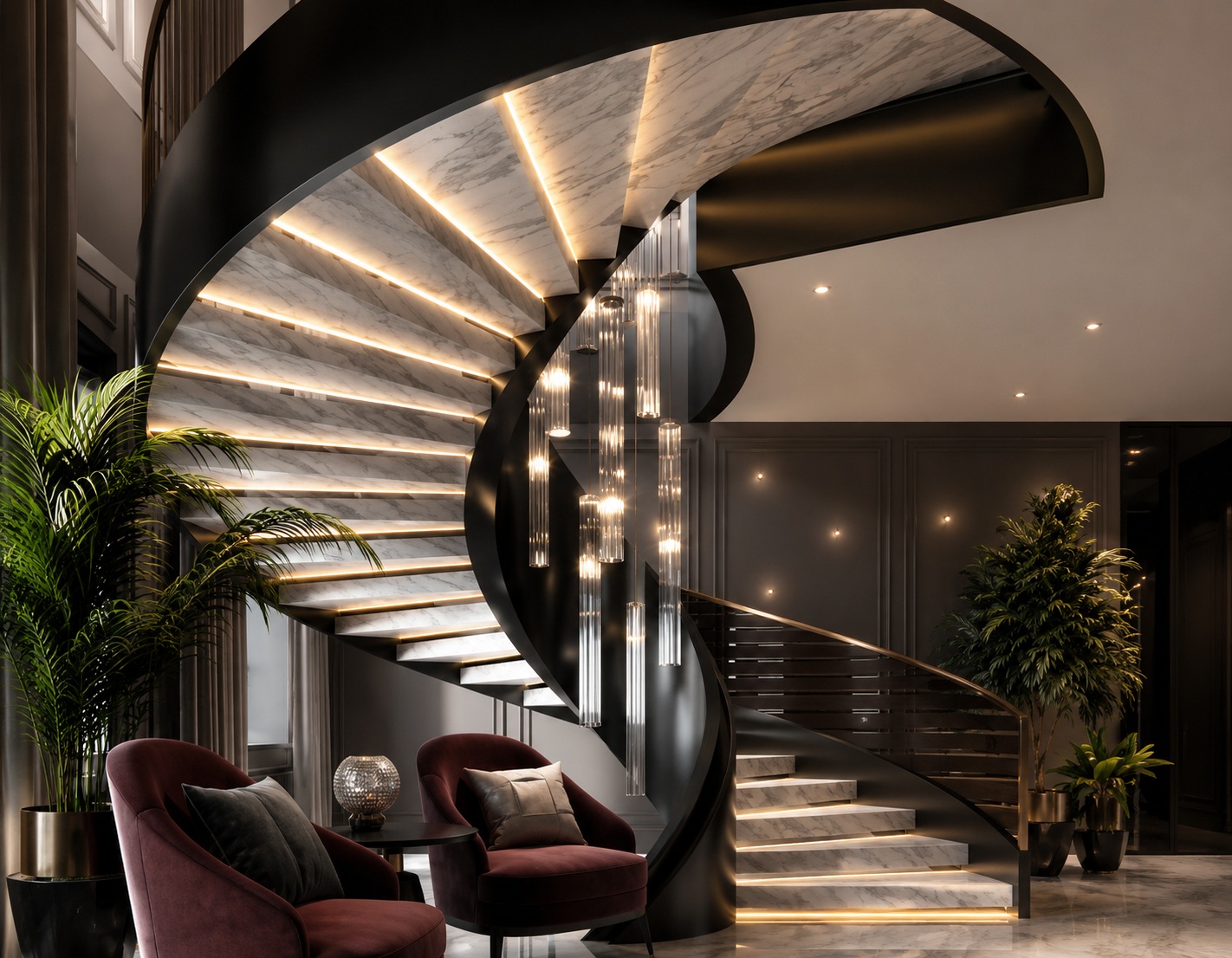
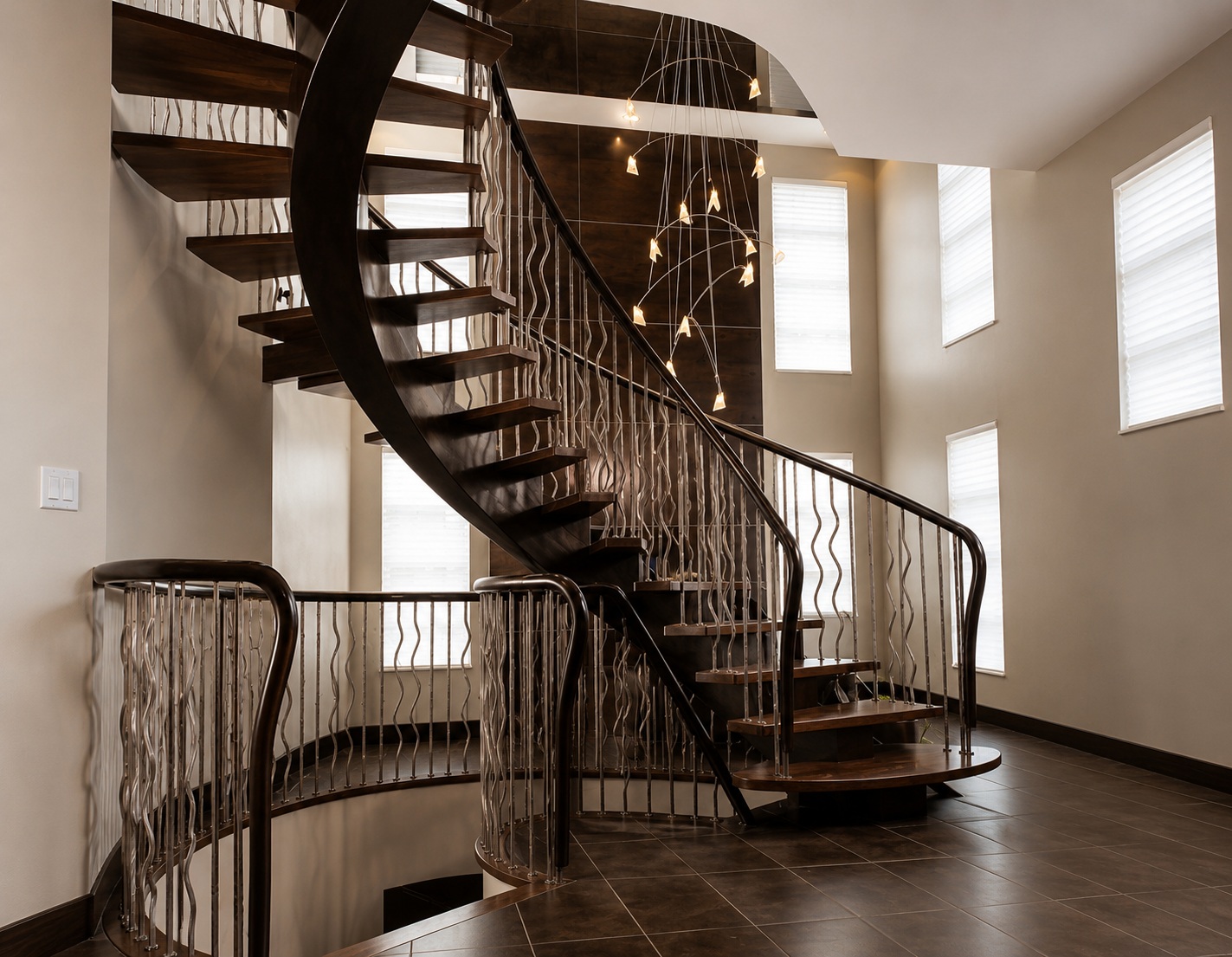
The strongest railing design ideas do not start with a catalogue. They start with the space and the way people move through it. A sweeping villa stair wants a railing that follows its curve and disappears into the view. A boutique-hotel terrace wants a railing that frames the skyline rather than blocking it. A condo corridor wants something clean, durable, and quiet that runs the full length without drawing the eye. The setting tells you most of what the railing should be.
From there, three forces pull at every design at once. The first is the look, which is the part owners feel most strongly about. The second is the material specification, which determines how the railing ages, how it feels under the hand, and what it ultimately costs. The third is the safety regulation, which establishes the height and the gap spacing before any decorative style is chosen. A good design idea satisfies all three rather than treating the code as an afterthought, and the rest of this guide keeps those three in view throughout.
One more thing helps before you browse ideas. A railing reads as a continuous line across a room or a facade, so it pays to think about that line early. Where it starts, where it turns, and where it ends shape the whole space. Get that line right and the material choice becomes the easy part.
Railing Design Ideas by Material
Material is the single biggest design lever, because it sets the character before any styling is added. Glass reads open and modern. Cable reads light and almost invisible. Stainless steel reads crisp and architectural. Wrought iron reads classic and crafted. Wood reads warm and domestic. Picking the material is really picking the mood of the space, so it is worth seeing each one in plain terms.
| Material | The design idea it gives you |
|---|---|
| Glass | Frameless or slim-framed panels keep a view fully open. Suited to a terrace, a stair landing, or a balcony where the outlook is the point. |
| Cable | Thin horizontal lines that nearly vanish. Suits a modern deck or a loft stair where you want guarding without a visual barrier. |
| Stainless steel | Crisp posts and handrails with a brushed or polished finish. A clean architectural look that holds up indoors and in coastal air. |
| Wrought iron | Forged scrollwork and patterned panels for a period or traditional setting. Heavy, ornamental, and full of character. |
| Wood & mixed | A timber handrail over a metal or glass infill warms the touch and softens the look. A common mix in homes and hospitality. |
A simple way to choose is to ask what the railing should do to the view behind it. If you want the view to carry through, glass or cable is the design idea. If you want the railing itself to be the feature, stainless steel or wrought iron earns its place. Many of the strongest projects mix two materials — a warm timber handrail on a cool steel frame, or glass panels capped in brushed metal. We compare the materials side by side in our guide to railing materials compared.
Railing Design Ideas by Style
Style is the layer that sits on top of the material. Two railings can use the same stainless steel and feel completely different, because the spacing, the proportion, and the finish change the whole reading. It helps to picture a few clear directions and then borrow from them, rather than trying to design from a blank page.
A minimalist design idea strips the railing back to the fewest possible lines: a frameless glass panel, a single slim top rail, or a run of fine cable. It suits a modern home or a clean commercial lobby where the architecture should speak and the railing should not compete. A transitional idea keeps that restraint but warms it, often with a timber handrail or a soft matte finish, so the railing feels welcoming rather than clinical.
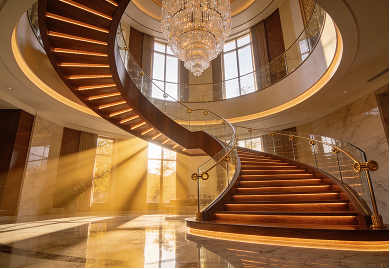
A classic or ornamental idea goes the other way, treating the railing as decoration in its own right. Forged scrolls, patterned panels, and a dark finish belong to a period villa, a grand stair, or a heritage facade. Between the extremes sits the industrial idea: square steel sections, a matte black finish, and an honest, structural look that reads well in a mixed-use loft or a converted building. Whichever direction you lean, keep one style across the whole project so the railing line stays calm. If you have a clear picture already, our custom railing design guide shows how a one-off idea becomes a real drawing.
Railing Design Ideas by Setting
The setting often decides the design idea more firmly than personal taste does, because each space brings its own demands. A railing on an indoor stair, on an exterior terrace, and in a busy commercial corridor are asking for different things, even when the owner wants the same overall look. Matching the idea to the setting is what keeps a beautiful railing practical.
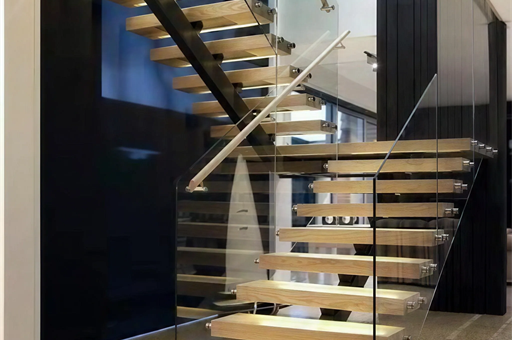
For an interior stair in a villa or a new-build home, frameless glass or a slim cable infill keeps sightlines open across an open-plan floor, while a timber handrail adds warmth where the hand lands. For a boutique-hotel terrace or a balcony with a view, glass framed in a corrosion-resistant metal protects the outlook and stands up to weather. For a condo corridor or a mixed-use lobby, a durable stainless or powder-coated metal railing handles constant traffic and cleaning without losing its finish. For a villa with street frontage or a period facade, wrought iron or a patterned metal panel gives presence from the kerb.
In each case the design idea is shaped by exposure, traffic, and the view. Outdoor and coastal locations push you toward finishes that resist corrosion. High-traffic public circulation pushes you toward durable materials that clean easily and resist accidental knocks. A quiet feature stair gives you the most freedom to be sculptural. Naming the setting first turns a long list of ideas into a short one.
The Rules That Quietly Shape Every Design
Every railing design idea has to live inside a few safety rules, and they are easier to design with once you know them. The two that matter most are how tall the railing must be and how wide the gaps in it may be. These two numbers shape the proportion of the whole railing, so it is far better to design around them from the start than to discover them late.
| Common US reference | Typical value (confirm locally) |
|---|---|
| Residential guard height (IRC) | Around 36 inches above the walking surface for a home guard. |
| Commercial guard height (IBC) | Around 42 inches for most commercial and public guards. |
| Baluster / infill gap | Spacing that will not pass a 4-inch sphere is the widely used limit. |
| Graspable handrail (ADA / IBC) | A continuous handrail, commonly around 34–38 inches, that the hand can wrap. |
| Industrial guard (OSHA) | Around 42 inches for elevated platforms and working levels. |
Those figures are widely used reference values, not a final spec. Your local adopted edition governs the real numbers — the IRC, IBC, ADA, or OSHA in the US, or the AS 1170 and NCC families in that region. Confirm the current version with your local team before you finalise a design. The rules rarely block a good idea. They simply set the frame inside which a glass, cable, or metal design has to work, and a manufacturer who knows them can keep your look intact while staying inside the lines.
Details That Lift a Railing From Good to Memorable
Once the material, the style, and the rules are settled, a handful of small details decide whether a railing looks ordinary or considered. These are the parts owners feel every day, even if they never name them. They cost little to think about at the drawing stage and a lot to change later, so they belong in the design conversation early.
The finish is the first detail. A brushed metal reads soft and forgiving of fingerprints, a polished one reads bright and formal, and a matte powder coat reads quiet and modern. The handrail profile is the second: a round rail feels traditional in the hand, a flat or oval rail feels contemporary, and a timber cap warms either. How the railing meets the floor and the wall is the third — a clean base shoe on glass, a discreet post fixing, or a wall return that tucks the handrail away all signal care.
Lighting is the detail people forget. A slim LED tucked under a handrail or along a base channel turns a stair railing into a feature after dark and makes a terrace railing safer to use at night. Continuity is the last: a handrail that runs unbroken around landings and turns, with no awkward joints, is the mark of a well-designed railing. Sweat these few details and even a simple, code-driven railing feels custom.
Inside our factory — a full tour and a look at projects we have built across 60+ countries.
From Design Idea to Buildable Drawing
A design idea only becomes a railing once someone turns it into a working drawing. At Double Building Materials, that is where every project begins. We take your idea, your measurements, and the look you want, then draw the railing in full before any metal is cut. That drawing fixes the posts, the panels, the handrail, and every fixing, so you can see the design resolved on paper and approve it before fabrication starts.
With 25+ years of factory work behind us, a 4,500 m² facility in Guangdong, China, and 800+ projects delivered across 60+ countries, our team has usually built something close to your idea before. That experience shows up in the drawing as small, practical choices that keep your look intact. Once the drawing is approved, we fabricate the railing, then trial-assemble it on our own floor so the fit is confirmed before anything ships. Export-ready crating then protects every part on its way to site.
Your own contractor or installer fits the railing on site from our drawings, and we can help you locate a local installer where that service is available. We do not install on site or sign off your local code — that stays with your local team, who confirm the adopted edition. To see the range of systems behind these ideas, browse our balustrade and railing systems, and if you are still choosing a partner, start with how to choose a railing manufacturer.
Railing Design FAQ
What is the most popular railing design right now?
Frameless glass and thin horizontal cable are the two designs most owners ask for, because both keep a view open and read as modern. Brushed stainless steel with a timber handrail is the popular middle ground that warms the look. The most popular choice for any given project still depends on the setting and how the railing meets the view behind it.
How do I choose a railing design for my home?
Start with the space and the view, not the catalogue. Decide whether you want the railing to disappear or to be a feature, then pick the material that delivers that. Settle the height and gap-spacing rules early so they shape the proportion, and keep one style across the whole project. From there the finish and handrail profile fine-tune the look.
What is the most economical railing design to build?
A simple metal or cable railing is usually more economical than ornamental wrought iron or large glass panels, because it uses less material and less finishing work. Cost tracks the material, the finish, and the amount of fabrication rather than the style on its own. Every railing here is made to order, so we price each design from its drawing rather than from a list.
Can a railing design be fully custom?
Yes. Because we draw and fabricate to order, a railing can follow a one-off shape, a specific finish, or a mixed-material look rather than a stock pattern. We turn your idea into a working shop drawing first, so the design is resolved and approved before fabrication. Our custom railing design guide walks through that process.
Does railing design have to follow building code?
Yes — the height of the guard and the spacing of the infill are set by code, and they shape the proportion of any design. Common US references come from the IRC, IBC, ADA, and OSHA, with AS 1170 or NCC families where relevant. Your local adopted edition governs the final numbers, so confirm them with your local team before you finalise a design.
Keep reading: compare the options in railing materials compared. Turn a one-off idea into a drawing with custom railing design. See what fits a home in the house railing guide, or step back to how to choose a railing manufacturer. Ready to spec? Browse our balustrade and railing systems.
Double Building Materials draws, manufactures, trial-assembles, crates, and ships your railing. Your own contractor or installer handles on-site installation and local code sign-off — we can help you find one where available. Code figures above are common US reference values; your local adopted edition (IRC / IBC / ADA / OSHA, or AS 1170 / NCC where relevant) governs, so confirm the current version with your local team.
Talk to us on WhatsApp →