

Stainless Steel Railing With Glass and Wood: A Designers Guide -Railing Guides
Stainless Steel Railing Guides · Mixed Materials
Stainless Steel Railing With Glass and Wood: A Designer’s Guide
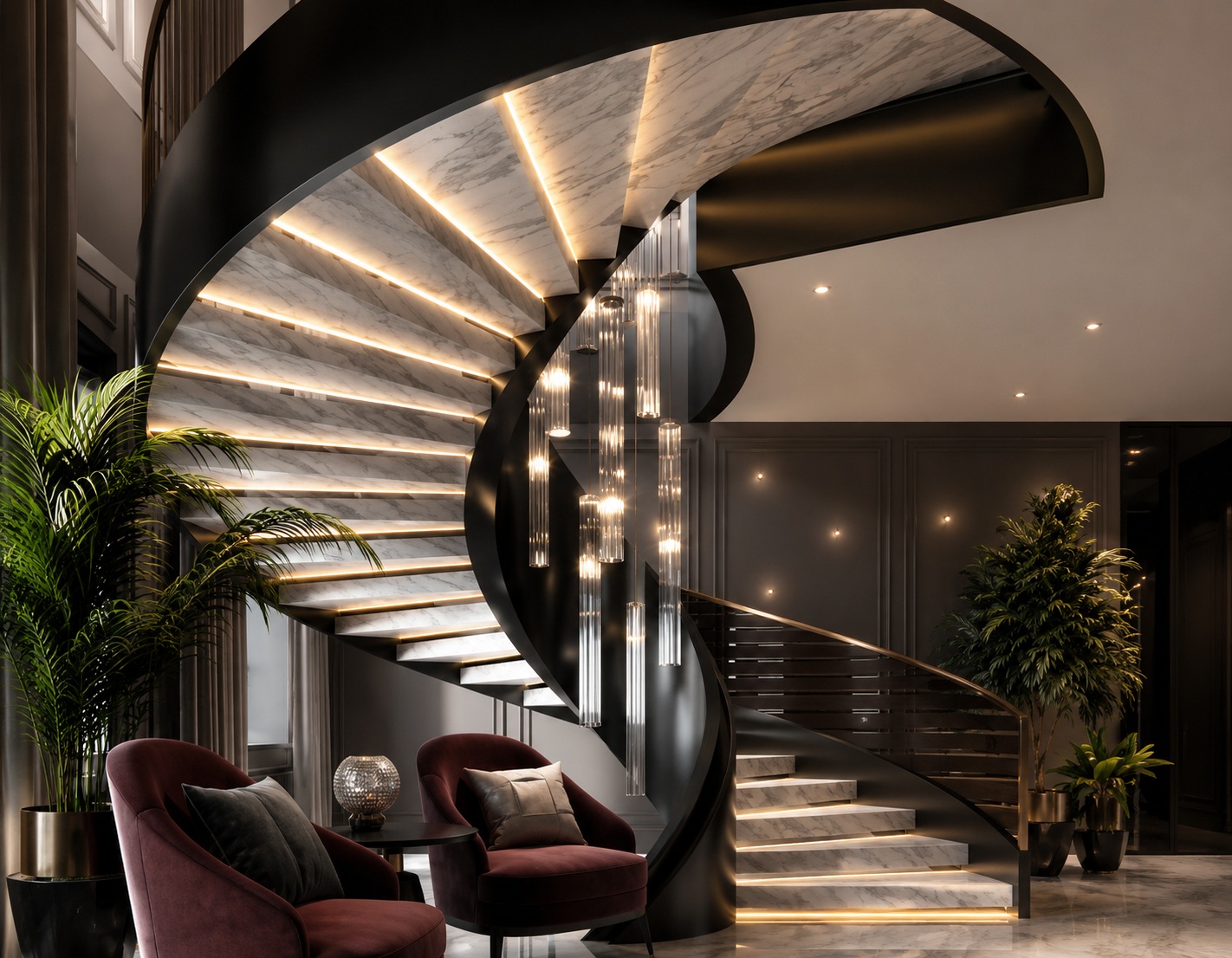
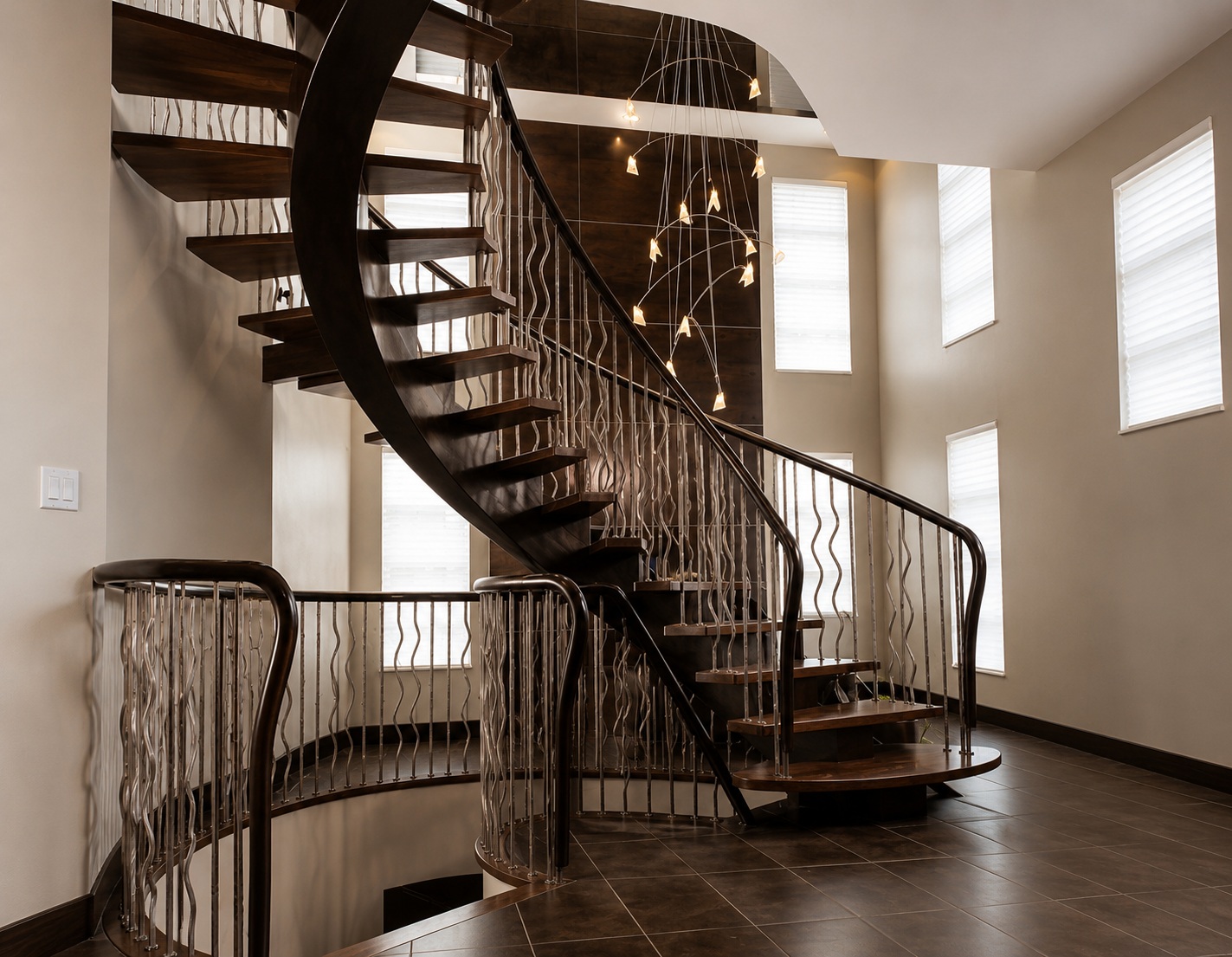
A stainless steel railing with glass pairs a slim steel frame and handrail with clear glass infill, often warmed by a timber top rail. The steel carries the structure, the glass keeps the view open, and the wood adds touch and warmth. Together they suit modern staircases, balconies, and open-plan living spaces beautifully.
Mixing materials is where a railing stops being hardware and starts being design. This guide explains how stainless steel, glass, and wood work together, where each one earns its place, and how the combinations look in a real home. It covers finishes, structure, code, cost drivers, and care, then links to focused guides where a topic runs deep.
Why Mix Steel, Glass, and Wood
Each of these three materials brings something the others cannot. Stainless steel supplies the strength and the precision, drawing a crisp, slender line that holds the railing together. Glass dissolves the visual barrier, so a balustrade protects without blocking the light or the view beyond it. Wood introduces warmth and a tactile, hand-friendly surface that metal alone never quite delivers underhand.
Combining them lets a single railing do several jobs at once. The structure stays minimal and contemporary, the sightlines stay open across a room, and the part you actually touch feels welcoming rather than cold. This is exactly why a stainless steel railing with glass and a timber cap reads as considered design rather than ordinary safety hardware. The whole assembly looks lighter than the sum of its parts.
For the high-end home, this mixture also future-proofs the look. Stainless and glass age slowly and shrug off fashion, while a wood top rail can be refinished or swapped if tastes shift over the years. You end up with a railing that suits a modern villa today and still belongs there a decade later, which is the quiet luxury most owners are really after.
The Three Classic Combinations
Most mixed-material railings settle into one of three recognisable recipes. Knowing them helps you picture your own staircase or balcony before a single drawing is made. Each recipe shifts the balance between openness, warmth, and structure, so you can lean toward whichever quality your space needs most.
| Combination | Character and where it suits |
|---|---|
| Steel frame + glass infill | The most open option. Slim stainless posts hold clear glass panels for an uninterrupted view, common on balconies and sea-view terraces. |
| Steel + glass + wood cap | The warmest of the three. A timber top rail crowns the steel-and-glass system, softening the metal where your hand lands, popular on interior stairs. |
| Steel posts + wood handrail, no glass | A leaner, more traditional look with thin vertical bars or cables and a wooden grip, suited to landings and corridors away from a feature view. |
The middle recipe is the one most owners picture when they imagine a modern staircase. The steel and glass deliver the contemporary, gallery-like feel, while the timber cap brings the warmth that keeps the space from feeling clinical. Our cluster stainless steel railing design guide sets these combinations within the full range of stainless systems.
Adding Glass to a Stainless Steel Railing
Glass is what turns a sturdy railing into a transparent one. In a stainless steel railing with glass, the metal does the structural work while the glass simply fills the gap that would otherwise hold balusters. The panels are toughened safety glass, and they are often laminated, which means a tough interlayer holds the glass together even if a pane is ever broken. That keeps the barrier intact and the people behind it protected.
There are two common ways to hold the glass. Stainless point fittings, sometimes called standoffs or spigots, clamp each panel at a few discreet contact points, leaving most of the glass edge open and almost invisible. A slim stainless top channel, by contrast, captures the upper edge of the glass in a continuous metal rail for a cleaner, more linear finish. Both keep the view wide open, and the choice comes down mostly to the look you prefer.
Glass also changes how a room feels, not just how it looks. Light travels straight through it, so a staircase or a balcony stops casting a heavy shadow across the floor below. On a sea-view balcony or a double-height living room, that openness is the entire point, letting the architecture and the view, rather than the railing, become the thing you notice first. The glass becomes a quiet edge instead of a wall.
Adding a Timber Top Rail
The wood almost always lands where your hand does. A timber top rail sits along the very top of the railing, capping the steel and the glass with a warm, rounded grip that feels good underhand on the way up the stairs. It is the one part of the whole assembly you touch on every journey, so it pays to choose a species and a profile you genuinely enjoy holding.
Wood species set the personality of the cap. Oak reads as solid and classic, walnut as rich and dark, and ash or maple as bright and contemporary. The timber can be stained to match a staircase tread or a nearby floor, which knits the railing into the room rather than letting it stand apart. A satin or matte lacquer then protects the surface while keeping that honest, hand-friendly wooden feel.
There is a practical reason designers favour a wooden cap beyond its looks. A timber handrail stays comfortable to the touch in any weather, where bare steel can feel cold in winter and hot under summer sun. That comfort matters most on a staircase used many times a day, which is why the steel-glass-wood combination is so common on the main flight of a family home. The cap turns a duty rail into a pleasure.
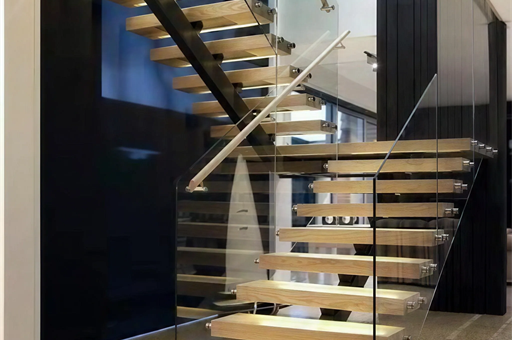
Modern mono-stringer stairs with a glass railing we built — the steel-and-glass pairing in a real project. Tap to play.
Finishes That Tie It Together
A mixed-material railing succeeds or fails on how its three finishes relate. The stainless can be satin brushed for a soft, fingerprint-tolerant sheen, mirror polished for a brighter statement, or coated in black, bronze, or champagne tones through a coloured surface treatment. Each metal finish sets a different mood, so it should be chosen alongside the wood and glass rather than in isolation. The three decisions are really one decision.
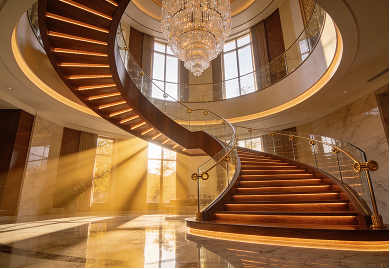
The pairings that designers reach for are quietly reliable. Brushed stainless with a mid-tone oak cap and clear glass feels calm and contemporary, the safe choice for most modern interiors. Black-coated steel with dark walnut and low-iron glass turns dramatic and architectural, suited to a bold staircase that wants to be seen. Warm champagne or bronze metal with a pale timber reads soft and luxurious, a natural fit beside the gold accents many high-end homes already carry.
Low-iron glass is worth a mention here. Ordinary toughened glass carries a faint green tint at its edges, which a low-iron variety removes for a truly clear, colourless panel. On a feature staircase, the glass often meets a pale stone floor or a bright wall. That extra clarity is what makes the whole stainless steel railing with glass look genuinely high-end rather than merely functional. It is a small upgrade with a visible payoff.
Structure, Code, and Safety
Mixing materials never relaxes the safety rules. A railing is a guard, and it must resist the same loads and respect the same heights whatever it is made from. The stainless frame does the structural duty, the laminated glass forms a barrier rather than a structural member in most designs, and the wood cap is a comfort layer on top. The figures below are common references that any compliant railing has to satisfy.
| Requirement (common reference) | Typical value |
|---|---|
| Residential guard height (IRC) | Commonly 36 inches minimum. |
| Commercial guard height (IBC) | Commonly 42 inches minimum. |
| Opening / gap (IRC, IBC) | A 4-inch sphere must not pass through any open area. |
| Graspable handrail (IRC) | Commonly 34 to 38 inches above the stair nosing. |
| Safety glass infill | Toughened or laminated glass; AS 1288 guides glass selection on Australian projects. |
These are widely cited values, and your local adopted code edition is what actually governs, so confirm the current version with your local team. Australian projects also reference AS 1170 for loading and the NCC for guard provisions, while public stairs may invoke ADA reach and OSHA workplace rules. A wood top rail must still meet the graspable-handrail profile where it serves as the handrail, so the comfort layer and the safety layer overlap on a staircase.
Cost Drivers
A mixed-material railing carries more cost drivers than a single-material one, simply because three trades meet in a single assembly. The stainless grade is the first lever, since marine-grade 316 sits above standard 304 on raw-material price. The glass is the second, with laminated and low-iron panels costing more than plain toughened glass. The timber cap is the third, where a hardwood like walnut sits above a softer or more common species.
Beyond the materials, the engineering matters. A frameless glass run with concealed fittings asks for more precise fabrication than a simple framed panel, and a curved or sloping staircase adds complexity over a straight landing. The length of the run, the number of corners and posts, and the chosen finish all move the figure as well. Because every railing is made to order, there is no published price list; there are drivers, which our stainless steel railing cost guide breaks down in full.
It helps to read the spend as value rather than headline price. The glass and stainless carry the modern look and the long, low-maintenance life, while the wood cap delivers daily comfort for a comparatively small share of the budget. Most owners find the timber upgrade the easiest money in the whole specification, because it is the part their hand meets on every single journey up and down the stairs. The cap repays itself in feel.
Care for Three Materials
Three materials mean three simple routines, none of them demanding. The stainless asks only for an occasional wipe with a soft cloth and mild detergent, plus a freshwater rinse near the coast to keep salt from settling on the surface. Avoid abrasive pads and chloride-based cleaners, which scratch the metal and can feed corrosion over time. Our guide to cleaning stainless steel railings covers the metal in detail.
Glass and wood each have their own easy habit. The glass stays clear with a standard glass cleaner and a lint-free cloth, and a quick wipe keeps fingerprints from dulling the view on a busy stair. The timber cap wants the gentlest care of all: a soft dry or barely damp cloth, never a soaking, with an occasional re-oil or re-lacquer over the years to refresh the finish. Treated this way, a wood handrail can look better with age rather than worse.
The reassuring part is how little of this you actually do. A mixed railing in a normal home needs a few minutes of attention now and then, not a maintenance schedule. The stainless and glass are essentially set-and-forget, and the wood simply rewards a light touch when you remember it. That low upkeep is a large part of why the combination has become a default for the modern, design-led staircase.
Stainless Steel Railing With Glass and Wood FAQ
Can you mix stainless steel, glass, and wood in one railing?
Yes, and the combination is a modern favourite. The stainless frame carries the load, the glass infill keeps the view open, and a timber top rail adds warmth where your hand lands. Because the three materials do separate jobs, they work together naturally rather than competing, which is exactly why designers reach for the mix so often on staircases and balconies.
What kind of glass goes in a stainless steel railing?
Safety glass, always. The panels are toughened, and frequently laminated, so a tough interlayer holds the glass together even if a pane is damaged. Many owners upgrade to low-iron glass for a clearer, tint-free look on a feature stair. Your local adopted code edition sets the exact glass requirement, so confirm the current version with your local team.
Does a wood handrail meet building code?
A timber top rail can serve as the code handrail, provided its profile is graspable and its height matches the local requirement, commonly around 34 to 38 inches on a stair. The wood must satisfy the same handrail rules as any other material. Confirm the graspable profile and the exact height with your local team, since your adopted code edition governs.
Is a glass and steel railing more expensive than wood alone?
Usually, yes, because glass and stainless add material and fabrication cost over a plain timber balustrade. The trade-off is the open view, the modern look, and the very low maintenance of the metal and glass. Cost tracks the stainless grade, the glass type, the timber species, and the run length rather than the mix itself, as our cost guide explains.
Which wood suits a stainless steel railing cap?
There is no single answer, since it depends on your interior. Oak suits a classic, solid look, walnut a rich and dramatic one, and ash or maple a bright contemporary scheme. The cap is usually stained to match a nearby floor or staircase tread. Choose the species you most enjoy holding, because it is the part you touch on every trip up the stairs.
Keep exploring: start with the full stainless steel railing design guide, weigh up the 304 vs 316 grade choice, and browse outdoor stainless steel railing ideas. Ready to specify a system? Explore our custom stainless steel balustrade and railing systems.
Double Building Materials draws, manufactures, trial-assembles, crates, and ships your stainless steel railing with glass and wood to your project drawing. Your own contractor or installer handles on-site installation and local code sign-off — we can help you find one where available. Finish, glass, and code values above are common industry and US references; your local adopted edition governs, so confirm the current version with your local team.
Talk to us on WhatsApp →