

Wrought Iron Railing Designs: Styles, Patterns & Ideas -Railing Guides
Wrought Iron Railing Guides · Designs & Styles
Wrought Iron Railing Designs: Styles, Patterns & Inspiration
Wrought iron railing designs range from ornate scrolled patterns to clean geometric bars and minimalist flat-stock styles. The look is set by the baluster shape, the spacing, and any decorative scrollwork, finials, or panels. Classic, transitional, and modern families all share the same forged metal, so the design choice mostly shapes the character, not the structure.
The pattern between the posts gives an iron railing its whole personality, so this guide walks through the main wrought iron railing designs. It moves from period scrollwork to modern geometric lines, then covers finishes, indoor versus outdoor styling, and how a custom pattern goes from sketch to finished steel. Where a topic runs deep, we point you toward a focused guide.
The Main Design Families
Most wrought iron railing designs fall into three broad families, and knowing them makes the whole choice simpler. The traditional family leans into scrollwork, curling vines, and ornate caps, so that kind of pattern suits a period villa or a grand staircase. The transitional family softens those curls into simpler curves and balanced repeats, which sits well in a renovated home that mixes old and new. The modern family strips the trim away, leaving clean vertical bars, flat stock, or a bold geometric repeat.
These families share one material, so the difference is about looks, not strength. A forged-iron railing in any of the three carries the load the same way, and the pattern just changes the mood of the room. That gives you real freedom, because you can match a heritage front or a stripped-back modern interior with the same basic product. Owners often pick a family first, then refine the detail within it, which is how a designer narrows a wide field into one clear direction.
Design Elements That Set the Look
A wrought iron railing is built from a few repeating parts, and learning them helps you describe the design you want. The upright bars are the balusters, sometimes called pickets, and their shape and spacing drive the look. The top rail is the handrail you touch, while the bottom rail anchors the balusters along the floor or the stair. Posts then carry the load at the ends and at any turn.
| Element | What it contributes to the design |
|---|---|
| Balusters | The vertical bars between rails. Square, round, twisted, or hammered profiles each read very differently and dominate the overall character. |
| Scrollwork | Curled, forged shapes that fill the panel. The signature of traditional design, used sparingly in transitional patterns. |
| Finials & collars | Decorative caps and forged rings that punctuate a baluster or post and add a crafted, ornamental detail. |
| Top & bottom rail | The frame that holds the pattern. A flat bar reads modern; a moulded profile reads classic. |
| Panels & infill | A repeating decorative unit set between posts, letting a complex motif tile cleanly along a long run. |
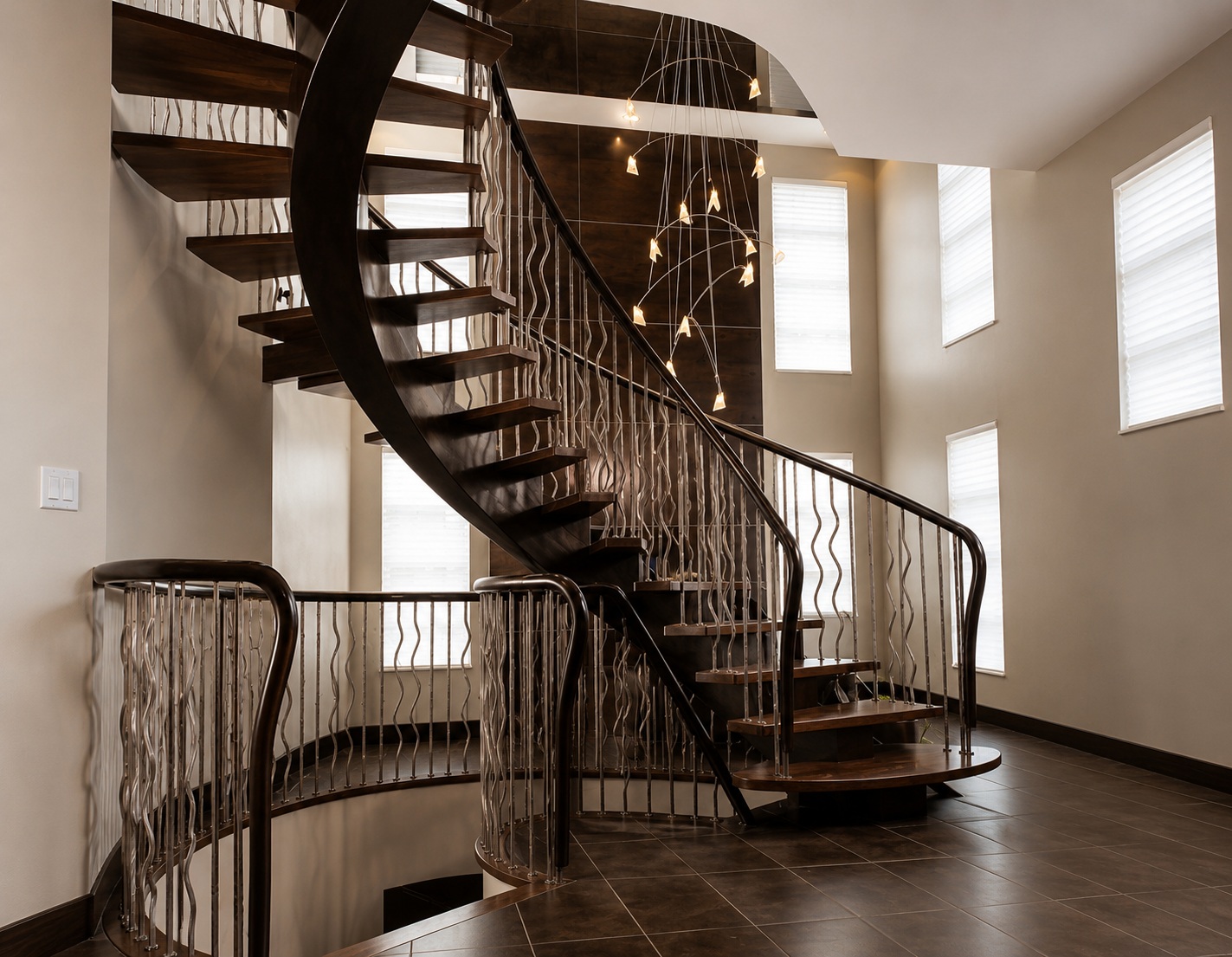
Change any one part and the railing changes its whole character: twisting the balusters adds movement, while widening the spacing opens the design up. Adding a scrolled panel turns a plain rail into an ornate one. Everything is forged to order, so you mix and match these parts freely, and that is the real gain of choosing iron over an off-the-shelf system.
Popular Wrought Iron Railing Designs
Within the three families, a few pattern styles come up again and again, and they make a handy shortlist when you start to sketch ideas. The classic scroll pattern fills each panel with matched forged curls, a timeless look for a sweeping staircase or a heritage balcony. The basket-and-vine motif weaves slimmer scrolls into a flowing repeat that suits a garden-facing terrace. Both belong to the traditional family, and both reward fine craft.
The modern family offers patterns that are just as distinct. A straight vertical-bar design gives quiet, repeating lines that frame a view without fighting it, so the style shows up often in new builds. A horizontal-rail design runs the metal sideways for a low, clean look that is popular on modern decks and mezzanines. A geometric-panel design sets flat stock into squares, diamonds, or an off-grid layout, which turns the railing into a graphic feature. The transitional family borrows from both, so it might pair plain balusters with one quiet scroll as an accent. For a room-by-room walkthrough of where each pattern lands well, our pillar guide to wrought iron railing ideas shows the full range in context.
Indoor vs Outdoor Design
Where the railing lives shapes the design as much as your taste does. An interior wrought iron railing can carry the finest detail, since it never faces the weather, so fine scrollwork, slim balusters, and an intricate panel all hold up indoors. That is why a forged stair railing or a mezzanine guard often becomes the centrepiece of an open-plan home. Detail is the indoor luxury, and a custom interior pattern reads as real craft.
An outdoor railing asks a slightly different question, because the design has to survive rain, sun, and the change of seasons. Heavier sections, simpler repeats, and a tough protective finish all extend the life of an exterior pattern, so outdoor designs tend to read a little bolder and cleaner than their indoor cousins. The motif can still be ornate; it just favours strength over the finest filigree. Coastal projects in particular gain from a generous finish and well-detailed joints. We dig into weatherproofing and styling for the garden, the porch, and the balcony in our guide to exterior wrought iron railing design.
Finishes and Colours
The finish is the last design choice, and it changes the mood of a railing as much as the pattern does. Classic matte black stays the most popular choice, because it flatters scrollwork and suits almost every interior. A satin or gloss black shifts the same pattern toward a more polished, modern feel. Beyond black, a hand-rubbed bronze or a hammered finish gives an ornate railing real depth, catching the light in a new way as you move past it.
| Finish | Character and where it suits |
|---|---|
| Matte black powder coat | The default. A durable, even coating that flatters both ornamental and modern patterns and resists chipping. |
| Satin or gloss black | A subtle sheen that reads more contemporary and reflective, a fine match for a clean geometric design. |
| Bronze or antique | A warmer, hand-finished tone that deepens scrollwork and suits a period or transitional interior. |
| Hammered texture | A tactile, artisanal surface that catches light, giving an ornamental railing genuine crafted depth. |
| Galvanised base | A protective undercoat for exterior railings, applied before the colour, that helps the finish last outdoors. |
For an outdoor railing, the finish does real work, not just decoration, because a well-prepared, coated surface helps the steel resist rust through the seasons. A galvanised base layer under a powder-coated colour is a common spec for exterior projects, mainly near the coast. Indoors, the finish is purely about mood, so you can chase the exact tone the room wants.
Designing to Code
Good-looking patterns still have to respect the safety rules, and the spacing of the balusters is where the look meets those rules most directly. Under common US references, a guard along a stair or a balcony has a minimum height, while the gaps between the bars are limited too, so a small child cannot slip through. The figures below are widely cited reference values, not a fixed standard, so treat them as a starting point for the chat with your designer.
| Design dimension | Common reference value |
|---|---|
| Guard height, residential (IRC) | Commonly cited around 36 inches |
| Guard height, commercial (IBC) | Commonly cited around 42 inches |
| Baluster opening limit | A 4-inch sphere should not pass between members |
| Graspable handrail (ADA / IBC) | A continuous, graspable top rail is typically required |
Your local adopted code edition is what really governs here. Confirm the current version with your local team before you commit to a pattern. The good news is that these rules rarely cramp the look. You can draw tighter baluster spacing or a continuous handrail into almost any style and still keep it handsome. A well-resolved pattern reads as a chosen look, not a fix forced by the rules. That is exactly what a skilled drawing pulls off.
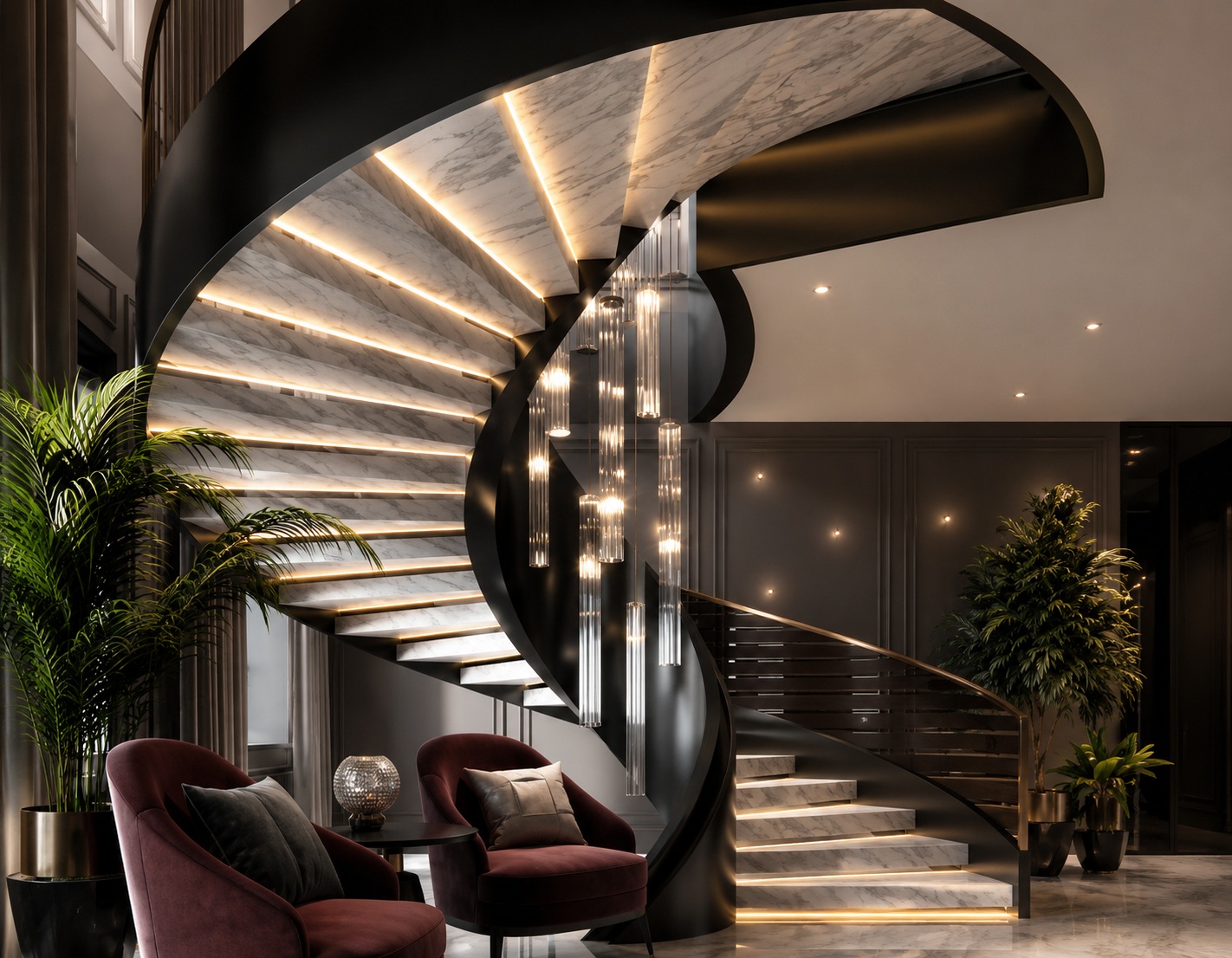
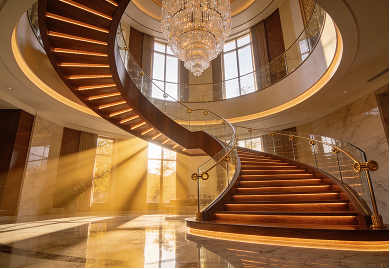
Factory showcase of a luxury forged-iron spiral staircase we built — the same ironwork craft behind our railing designs.
From Sketch to Finished Railing
A custom wrought iron railing design starts as a drawing, not a catalogue page. At Double Building Materials, we take your chosen pattern, the run of the stair or balcony, and the heights your code calls for. We turn them into a working shop drawing. That drawing fixes every baluster, every scroll, and every joint before any steel is cut. So the pattern you approve on paper is the pattern that arrives. We cut nothing until you sign off, because a forged motif leaves little room to change once the metal is hot.
From there our shop forges the parts and welds the panels. Then we trial-assemble the whole railing on our 4,500 m² Guangdong floor. There we confirm the fit and the line of every joint before anything ships. Over 25 years and 800-plus projects across 60-plus countries, that trial build is what catches a mismatch in the factory, not on your site. We then crate the railing for export in the order your installer needs. We can also help you find a local fitter where available. Your own contractor handles the on-site work and the local code sign-off. We draw, forge, trial-assemble, crate, and ship. When you are ready to spec a pattern, our custom wrought iron balustrade range is the place to start. Our wrought iron stair railing guide covers the staircase job in detail.
Wrought Iron Railing Design FAQ
What are the most popular wrought iron railing designs?
The classic scroll pattern stays the most requested traditional design, because it suits period homes and grand staircases so well. On the modern side, a straight vertical-bar design and a horizontal-rail design lead the field, since they frame a view with quiet, repeating lines. Transitional patterns pair plain balusters with one quiet scroll, so they bridge the two and stay popular year after year.
Is wrought iron railing outdated?
Not at all, because the material suits modern taste as readily as traditional taste. A clean geometric or vertical-bar pattern in matte black reads as fully modern, while a forged scroll suits a heritage interior. The design family you choose, not the iron itself, decides whether a railing feels modern or classic, and that keeps the material relevant year after year.
Can wrought iron railing designs be fully custom?
Yes, and that freedom is the main reason owners choose forged iron over an off-the-shelf system. Every baluster, scroll, and panel is made to order. So you can match a heritage front, a set motif, or a designer's modern sketch. The pattern moves from drawing to finished steel with no fixed catalogue to box you in. The railing truly belongs to your project.
What finish should you choose for a wrought iron railing?
Matte black powder coat is the common default. It flatters almost every pattern and resists chipping. Bronze and antique tones deepen ornate scrollwork, while a satin sheen leans modern. For an outdoor railing, a galvanised base under the colour helps the steel resist rust. So the finish choice often follows the spot as much as the look.
Do wrought iron railing designs have to meet code?
Yes, the pattern still has to respect guard height and baluster spacing rules. Common US references cite a guard around 36 inches at home. They also cite gaps small enough that a 4-inch sphere will not pass. Your local adopted edition governs the exact figures, so confirm them with your local team. A skilled drawing folds those limits into the design without spoiling the look.
Keep exploring the cluster: start with the pillar on wrought iron railing ideas, then see wrought iron stair railing and weatherproof exterior wrought iron railing design. Ready to spec a pattern? Browse our wrought iron balustrade range.
Double Building Materials draws, forges, trial-assembles, crates, and ships your wrought iron railing. Your own contractor or installer handles on-site installation and local code sign-off — we can help you find one where available. Dimensions and code figures above are common US reference values, not a universal standard; your local adopted edition governs, so confirm the current version with your local team.
Talk to us on WhatsApp →