

Wrought Iron Railing Cost: What Drives the Price of an Iron Balustrade -Railing Guides
Wrought Iron Railing Guides · Cost & Budgeting
Wrought Iron Railing Cost: What Actually Drives the Price of an Iron Balustrade
Wrought iron railing cost is governed by drivers rather than one fixed figure, because every iron balustrade is made to order. The major variables are the design complexity, the metalwork method, the protective finish, the railing length, and the installation difficulty. Ornate forged scrollwork concentrates the cost into skilled fabrication and hand finishing rather than raw material.
Understanding wrought iron railing cost begins with understanding what you are actually paying for, because the headline figure hides several independent decisions. This guide walks through each driver in plain language, shows where the money concentrates, and explains why a quote varies so widely between projects. We label every market band as a third-party estimate, never as our own quote, because each iron balustrade we build is priced from its drawing.
What Drives Wrought Iron Railing Cost
An iron balustrade is never a shelf product with one sticker, so the honest answer to wrought iron railing cost is a set of drivers rather than a single number. Five drivers move the figure most. They are the design complexity, the metalwork method, the protective finish, the running length, and how hard the job is to fit. Each one is a separate decision, and each one stacks on the others. That is why two railings of equal length can quote at very different totals.
Iron costs real money because the price lives in the labour, not the bar stock. The raw steel for a railing is cheap by weight. What you pay for is the skill that shapes it into balusters, scrolls, and a flowing handrail, then welds and dresses every joint by hand. A plain picket railing is quick to build. An ornate forged panel with leafwork and twisted bars takes many more hours, and those hours are the bulk of the bill. The parts below take each driver in turn.
Design Complexity and the Metalwork
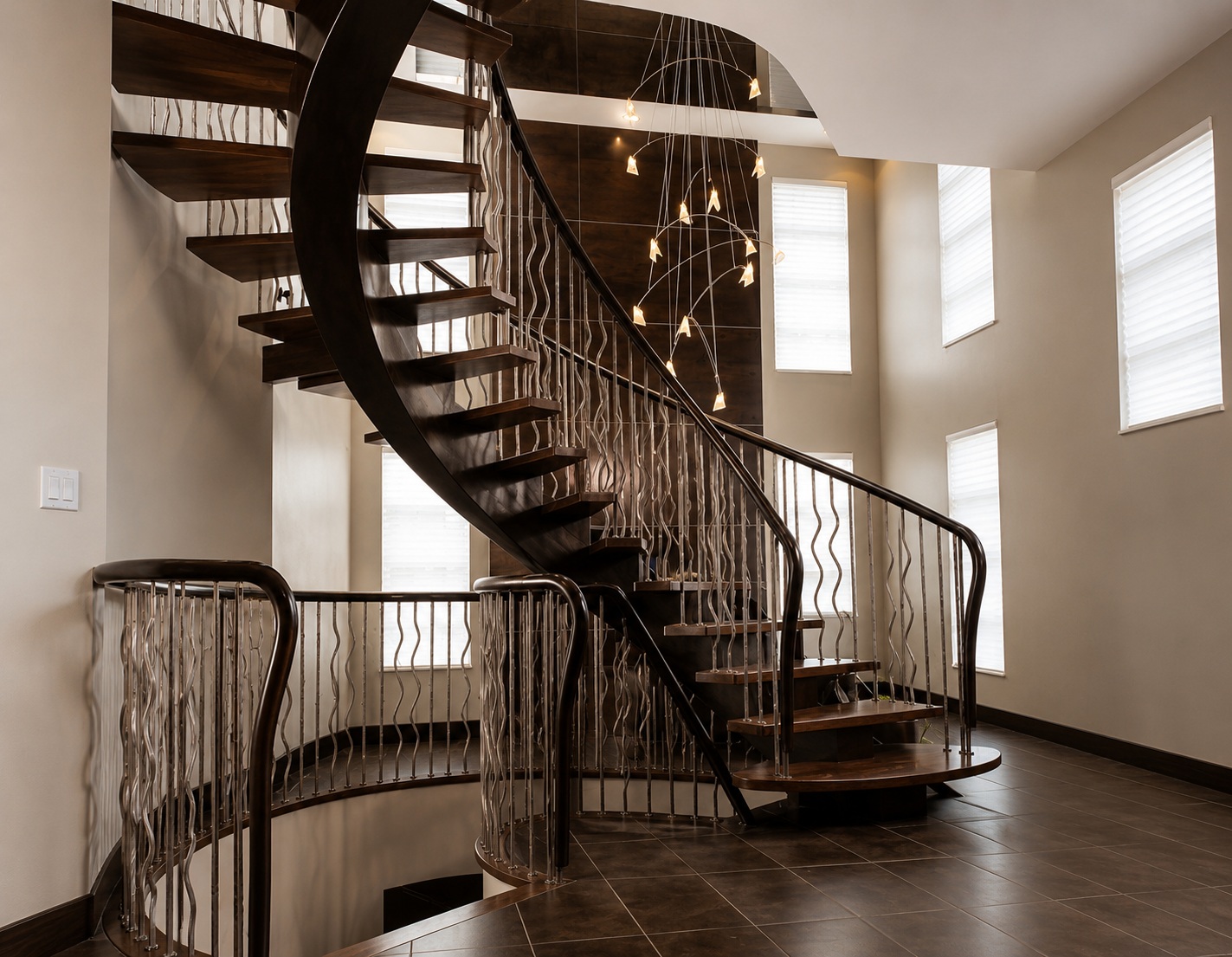
The biggest lever on wrought iron railing cost is the design, because ornament is paid for in hours. A simple railing uses straight balusters between a top and bottom rail, which is fast to cut and weld. An ornate railing adds scrollwork, twisted bars, collars, baskets, or forged leaves, and each one is shaped and fitted by a skilled hand. The more the design asks of the smith, the more the railing costs, almost whatever the length of the run.
The build method matters just as much as the pattern. Hand-forged ironwork is heated and hammered into shape, which gives the richest, most genuine character and the highest labour. Cast and machine-bent parts give a classic look at a calmer price, since the shaping is partly done by machine. Most projects today blend the two, pairing a few truly forged accents with cleanly made balusters. Fix your pattern first, because that one choice frames most of the gap between quotes.
| Design level | Relative cost and why |
|---|---|
| Plain picket | The budget iron railing. Straight balusters between two rails, quick to cut, weld, and finish. |
| Detailed traditional | Higher, because scrolls, collars, and twisted bars each add shaping and hand-fitting time. |
| Bespoke hand-forged | Highest, because every leaf and curve is heated and hammered to a one-off pattern by a metalworker. |
| Mixed forged and cast | A balanced middle, pairing a few genuinely forged accents with cleanly fabricated balusters. |
We explore the full range of patterns, from clean modern lines to period scrollwork, in our guide to wrought iron railing designs and styles. The pattern you settle on there is the same choice that moves your budget here, so it is worth fixing the design before you compare any prices.
Finish, Coating and Corrosion
The protective finish is the second big driver, and it does two jobs at once. It sets the colour and sheen you see, and it guards the iron against rust. Iron rusts when bare steel meets moisture, so the coating is not just for looks; it is what lets the railing last. A basic painted finish is the gentlest on the budget, but it asks for more upkeep over the years. A powder-coated finish is baked on for a tougher, longer-lasting surface, which costs more at the outset and saves upkeep later.
For an outdoor railing, the finish is the gap between a railing that ages well and one that streaks with rust. Hot-dip galvanising coats the steel in zinc before painting, which adds real rust protection and real cost. It is a common choice near the coast or in a wet climate. The honest trade-off is upfront spend against years of upkeep. A heavier coating costs more today and asks for less care later, while a lighter finish saves now and wants a repaint sooner.
| Finish system | Budget character |
|---|---|
| Painted finish | The lowest upfront finish. It suits interiors well and asks for occasional touch-ups outdoors. |
| Powder-coated | A baked-on coat that resists chips and weather better, so it costs more now and less in upkeep. |
| Galvanised then coated | The most protective, adding a zinc layer for coastal or wet sites, which raises the upfront cost. |
Choosing a finish is really choosing how the railing will live in its setting. An interior stair railing can run a simple painted coat and look immaculate for years. An exterior railing on a porch or balcony earns the heavier protection, because the weather never stops working on it. Our guide to exterior wrought iron railing goes deeper into matching the coating to the climate.
Interior vs Exterior Budgets
Where the railing lives quietly reshapes the budget, because an interior run and an exterior run answer different demands. An interior stair railing sits in a dry, stable setting, so the finish can be lighter and the focus falls almost entirely on the pattern and the handrail feel. An exterior railing on a porch, balcony, or terrace faces rain, sun, and temperature swings, so it carries a tougher coating and sometimes heavier sections. That protective work adds cost the indoor version never needs.
Length and layout then layer on top of the setting. A long, straight exterior run on a level deck is the calmest case, because the panels repeat and the fixings land where you expect. A staircase brings raked panels cut to the pitch of the flight, which take more shop work and more careful setting out. Curved runs, stepped levels, and balconies high up all add labour and design time. We work through the indoor side in detail in the wrought iron stair railing guide, where the pattern and the handrail matter most.
Market Ranges in Context
Owners naturally want a number, so here is the honest framing. Trade and renovation sites usually quote wrought iron railing cost per linear foot, fitted, and they place ornate hand-forged work well above plain picket runs. Those bands are third-party market estimates, not our quote, and they swing widely by region, by design complexity, and by how hard the job is to fit. Treat any single figure you read online as a rough guide, not a promise, because the drivers above can double a total without changing the length at all.
A safer way to budget is to lock your design first, then price it. Settle the pattern, choose your finish system, and confirm interior or exterior, because those three choices drive most of the gap between quotes. Once the specification is set, a drawing-based quote turns clear and easy to compare across suppliers. As a made-to-order manufacturer, we price each iron balustrade from its drawing, not from a shelf list. That is why we share drivers here and save the numbers for your own project.
Client feedback on an ornamental iron railing across an outdoor terrace and an indoor staircase — tap to play.
Installation and Site Factors
The fit is a cost driver the metalwork price never shows, yet it can move a total a lot. A straight, level run on a solid concrete deck is the simplest case, because the posts land where you expect and the panels drop into place quickly. A staircase brings raked panels cut to the slope of the flight, which take more shop work and more careful setting out. Curved runs, stepped levels, and high balconies all add labour, access gear, and design time, so the fitting share of a quote rises with how tricky the site is.
This is where it pays to know our scope clearly. Double Building Materials draws, fabricates, trial-assembles, and crates your iron balustrade, then ships it ready for your installer to fit. We do not fit on site, and we do not sign off local code, which stays with your local team. Because we trial-assemble each railing on our Guangdong floor before it ships, the panels and fixings arrive checked for fit, which often cuts the on-site fitting time and the risk of a costly remake. Where you need a fitter, we can often help you find one where local fitting is available.
Where to Save Without Losing Character
A wrought iron railing has smart saving and false saving, and the line between them is the structure and the corrosion defence. The safe place to save is the level of ornament, not the protection. You can choose a cleaner pattern with fewer scrolls, blend a few forged accents into mostly fabricated balusters, or pick a painted finish indoors where the weather never reaches. Each of these trims the budget while the railing stays strong and keeps its handsome iron character.
The place never to cut is the corrosion protection on an exterior railing and the soundness of the welds. Skipping galvanising near the coast, thinning the coating, or rushing the joints does not really save money; it borrows against the railing's life and against a future repaint or repair. A railing you can lean on for decades is worth getting right the first time. Browse the full wrought iron balustrade range to see the options, then read the cluster guide to wrought iron railing ideas and design inspiration for how every choice fits together.
Wrought Iron Railing Cost FAQ
Is wrought iron railing more expensive than aluminum or vinyl?
Wrought iron generally costs more than aluminum or vinyl, because the price reflects skilled metalwork rather than a moulded or extruded part. Iron carries weight, character, and a hand-fabricated finish that lighter materials cannot match. Aluminum trims the budget and the upkeep, while vinyl sits lower again. Our comparison of wrought iron versus aluminum versus vinyl railing weighs the three side by side.
Why is wrought iron railing so expensive?
Wrought iron railing is expensive because almost all the cost lives in the labour, not the raw steel. A skilled metalworker shapes the balusters, forms the scrolls, and welds and dresses every joint by hand, and ornate patterns multiply those hours. You are paying for craftsmanship and durability rather than a mass-produced section, which is exactly the substance and character that draws owners to iron in the first place.
What is the most budget-friendly wrought iron railing design?
A plain picket pattern trims the budget the most, with straight balusters between a top and bottom rail and a simple painted finish indoors. The clean lines are quick to fabricate and finish, so the labour stays low while the railing keeps real iron substance. You can then add a few forged accents later for character without committing to a fully ornate, hand-forged run.
Does the finish really change the price much?
Yes, the finish is a meaningful lever, especially outdoors where corrosion protection becomes essential. A painted coat is the lowest upfront option, a powder coat costs more and lasts longer, and galvanising adds a zinc layer for coastal or wet sites at the highest upfront price. The right finish is set by the setting and the climate, so it should be specified to suit the location rather than chosen on price alone.
How long does a wrought iron railing last?
A well-protected iron railing can serve for decades, which is a large part of its value, since the cost spreads across a long life. Indoors, a painted railing stays handsome with very little attention. Outdoors, longevity depends on the coating and on periodic upkeep, so a galvanised or powder-coated finish and an occasional repaint keep rust at bay. Durability, not just looks, is what the upfront spend buys.
Keep reading across the iron cluster: the complete guide to wrought iron railing ideas, wrought iron stair railing, exterior wrought iron railing, and designs and styles. Ready to specify? Browse our wrought iron balustrade systems.
Double Building Materials draws, manufactures, trial-assembles, crates, and ships your wrought iron balustrade. Your own contractor or installer handles on-site installation and local code sign-off — we can help you find one where available. Any price bands referenced above are third-party market estimates, not our quote; each balustrade is made to order and priced from its drawing. Specification and code values are common references; your local adopted edition governs, so confirm the current version with your local team.
Talk to us on WhatsApp →