

Exterior Wrought Iron Railing: Finishes, Code & Design Guide -Railing Guides
Wrought Iron Railing Guides · Outdoor Applications
Exterior Wrought Iron Railing: Finishes, Code & Design for Outdoor Spaces
An exterior wrought iron railing is an ornamental steel guard built for outdoor stairs, porches, balconies, and terraces. Forged scrollwork and slim balusters give it a classic look. A hot-dip galvanized and powder-coated finish shields the metal from rain, salt, and rust, so it lasts for decades with light care.
Few materials look as settled outdoors as iron. An exterior wrought iron railing wraps a porch, a front stoop, or a terrace in handcrafted detail that reads as permanent. This guide explains the finishes that keep it from rusting and the code rules that set its height and spacing. It also covers the design styles you can choose and the honest picture on upkeep and cost. Where a topic runs deep, we link to a focused guide.
What an Exterior Wrought Iron Railing Is
An exterior wrought iron railing is an ornamental metal guard for outdoor use. It edges a porch, a balcony, a set of front steps, or a raised terrace. The term wrought iron once meant iron worked by hand at the forge. Most railings today use mild steel, which a craftsman bends, welds, and finishes to give that same handcrafted look. The result is easy to spot: slim upright balusters, a top rail that runs the full length, and the scrolls and rosettes that give iron its period charm.
What sets an exterior railing apart from an indoor one is the protection. Outdoors, the metal faces rain, frost, sun, and on the coast a constant film of airborne salt. An indoor railing can rely on a simple painted finish, but an outdoor one needs a layered coating to last for decades. That coating, not the ironwork itself, is the part owners most often miss. It is also where the worth of a well-built railing really shows.
The appeal is the sense of permanence iron gives. An aluminum railing reads as handy and a glass railing reads as modern, but wrought iron reads as settled and old-world. That is just why it suits period homes, formal entries, and Mediterranean or Spanish-style fronts so well. A railing like this becomes part of the building's face. It frames the path to the front door and sets the tone before a guest ever steps inside.
Finishes That Beat Rust Outdoors
The finish is the most important decision on an exterior wrought iron railing, because iron and steel rust the moment moisture reaches bare metal. The toughest approach is a duplex system, which layers two kinds of protection. First we hot-dip galvanize the railing. We dip it in molten zinc that coats every surface and reaches inside hollow tubes and tight scroll gaps, where sprayed paint never could. Then we bake a powder-coated colour layer over the zinc, for looks and an extra barrier.
Galvanizing earns its name in harsh settings because the zinc gives itself up first. Scratch the surface down to the steel, and the zinc around it rusts first and shields the bare metal. So a minor knock does not start a spreading rust bloom. Powder coating alone looks great and works well in mild climates. The drawback is that a deep scratch can let water creep underneath. For coastal homes, freezing winters, or any harsh weather, we typically recommend the galvanize-then-powder-coat combination.
| Exterior finish | Protection and best use |
|---|---|
| Hot-dip galvanizing | Molten-zinc immersion coats inside and out, and protects sacrificially even where scratched. The strongest base layer, and essential for coastal or industrial exposure. |
| Powder coating | A baked, durable colour finish with a clean surface and wide colour range. Excellent in mild climates; on its own a deep scratch can expose the steel. |
| Duplex (galvanize + powder) | Zinc underneath, colour on top. The most weather-resistant combination, commonly chosen for demanding outdoor and seafront settings. |
| Painted only | Traditional and inexpensive, but the least durable outdoors and the most maintenance-hungry, needing periodic sanding and repainting. |
Industry references for hot-dip galvanized steel often cite very long service lives. Still, the real figure rests on your climate, your coating thickness, and your upkeep. Treat any single number as a guide, not a promise. The honest point is simple: ask for a galvanized base on any outdoor iron railing. Keep a paint-only finish for sheltered or decorative pieces that you are happy to clean often.
Where It Works: Porch, Balcony, Terrace
An exterior wrought iron railing adapts to almost every outdoor edge, and the setting shapes both its size and its role. On a front porch or a flight of entry steps, the railing is the first thing a visitor touches, so it works as both a graspable handrail and a piece of welcome. A pair of matching balusters along the front steps frames the door and lends a formal, finished quality to the whole approach.
On a balcony or a Juliet opening, the railing becomes a guard at height, where safety and slim sight lines matter most. Iron suits this job because thin upright balusters keep the view open and still meet the spacing rules that keep children safe. On a raised terrace or a roof deck, the same railing edges a larger outdoor room, and owners often pair it with gates and matching fence panels so the whole front reads as one family. Each spot asks for a different height and rail layout, which the code section below makes clear.
Code and Safety Outdoors
The same building rules govern outdoor guards as any other railing, and the material makes no difference to the numbers. The references below are common US figures from the International Residential Code and the International Building Code. They are a widely used starting point. Your local adopted edition is what actually governs, so confirm the current version with your local team before you finalize a design.
| Common US reference | Typical value |
|---|---|
| Residential guard height (IRC) | Around 36 inches minimum where a walking surface sits more than 30 inches above grade. |
| Commercial guard height (IBC) | Around 42 inches minimum in most occupancies; confirm the figure for your project type. |
| Baluster spacing (4-inch sphere) | Openings sized so a 4-inch sphere cannot pass, which protects small children. |
| Graspable handrail (where required) | A continuous, graspable profile along stairs; ADA references apply where accessibility is required. |
The practical upshot is simple: an exterior iron railing must be tall enough at the edge, tight enough between balusters, and continuous along any stairway. Iron handles all three with ease, since slim balusters sit close together without looking heavy and a forged top rail makes a natural, graspable handhold. We design the spacing and height into the shop drawing from the start, so the layout you approve already matches the references you give us.
Design Styles for the Exterior
The design of an exterior wrought iron railing sets the personality of the whole facade, and the range runs wider than most owners expect. A classic ornamental railing leans on scrollwork, twisted balusters, and decorative finials. That style suits a heritage home, a Victorian porch, or a Mediterranean villa. A clean modern railing strips the ornament away and lets straight, evenly spaced balusters do the work. It pairs well with a modern home or a bare terrace.
Between those poles sit countless variations. Some owners want a single signature scroll repeated along the run. Others mix iron with timber handrails for warmth underhand, or with stone piers for weight at the corners. Colour adds another layer. Powder coating opens up far more than the expected matte black, including bronze, charcoal, and deep architectural greens. We fabricate every piece to your drawing, so the style is yours to set. For a full gallery of patterns and proportions, see our guide to wrought iron railing designs and styles. For the bigger picture, browse our roundup of wrought iron railing ideas for stairs and balconies.
Maintenance and Lifespan
A well-finished outdoor iron railing asks for far less care than its name suggests. The old image of constant rust and repainting belongs to bare or paint-only ironwork. A galvanized and powder-coated railing mostly needs a wash. Wipe it down with mild soapy water two or three times a year. That clears the grime, salt film, and pollen that dull the finish. Left long enough, those can give rust a foothold in small surface scratches.
The smart habit is to inspect rather than wait for a problem. Once a year, walk the railing and look for any chip or scratch that has reached bare steel, paying attention near welds, mounting points, and the base of posts where water collects. Touch up any damage promptly with a matching coating, so moisture never gets started underneath. Done consistently, this light routine keeps an outdoor iron railing handsome and sound for decades. Coastal owners simply rinse more often, since salt is the most aggressive thing iron faces.
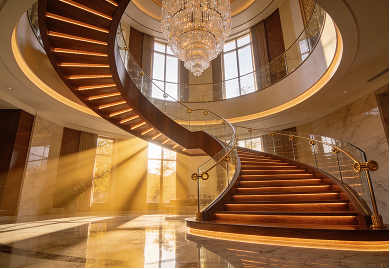
Ornamental iron railing on an outdoor terrace and an indoor staircase, with client feedback — a Double Building Materials project.
How Yours Is Made
At Double Building Materials, an exterior wrought iron railing begins as a drawing, not a catalogue item. We take your measured openings, your stair and balcony heights, and the style you want. Then we turn them into a working shop drawing that fixes every baluster, scroll, and mounting plate before we cut any steel. You approve that drawing first. Outdoor runs often wrap corners and steps, where a mistake is expensive to correct once the metal is finished.
From there our craftsmen forge and weld the parts. Then we trial-assemble the full railing on our 4,500-square-metre Guangdong floor. That step confirms every joint, every height, and the way each section meets the next. Only after the trial build do we apply the galvanized and powder-coated finish. Then we crate the railing for export, packed in the order your installer will need. Drawing-first coordination, trial assembly before packing, and export-ready crating are how we have shipped 800-plus projects across 60-plus countries in 25-plus years. Your own contractor fits the railing on site, and we can help you locate a local installer where that service is available. We do not install on site or sign off local code, which stays with your local team.
What an Exterior Wrought Iron Railing Costs
Cost is the question every owner asks. The honest answer is that an exterior iron railing has no single price, because we make each one to order. What it does have is a clear set of drivers. The biggest is the amount of ornament. A plain run of straight balusters is far quicker to make than a railing dense with hand-forged scrolls and finials. After that come the linear length, the finish, and the layout. A railing that climbs stairs and wraps corners takes more labour than a single straight section.
The finish is a cost driver worth choosing on purpose, not by default. A full duplex galvanize-and-powder-coat system costs more upfront than paint. In return it buys years of low maintenance, which usually repays the difference on an outdoor railing. Any per-foot figures you read online are third-party market estimates, not our quote, and they swing widely by region and design. As a made-to-order manufacturer, we price each project from its approved drawing. For a structured breakdown of every driver, see our wrought iron railing cost guide, and to specify an outdoor railing directly you can browse our wrought iron balustrade range for custom exterior projects.
Exterior Wrought Iron Railing FAQ
Does an exterior wrought iron railing rust?
Bare iron rusts quickly outdoors, but a properly finished railing resists it for many years. A hot-dip galvanized base coats the metal in zinc that protects sacrificially even when scratched, and a powder-coated colour layer adds a second barrier. With that duplex finish and an occasional wash, surface rust simply does not get a foothold under normal exposure.
How tall does an outdoor iron railing need to be?
Common US references put a residential guard at around 36 inches and a commercial guard at around 42 inches where the surface sits well above grade, with openings sized so a 4-inch sphere cannot pass between balusters. These are widely used starting figures only. Your local adopted code edition governs the exact numbers, so confirm them with your local team.
Is wrought iron good for a coastal or seafront home?
It can be, provided the finish is specified for salt exposure. A duplex galvanized-and-powder-coated railing handles a coastal climate well because the zinc layer is highly corrosion-resistant. The key is more frequent rinsing to clear the salt film and a prompt touch-up of any chips. In the harshest seafront settings, owners sometimes also consider stainless steel.
How much maintenance does an exterior iron railing need?
Far less than its reputation suggests. A galvanized and powder-coated railing mostly needs a wash with mild soapy water two or three times a year, plus an annual look for any chip that has reached bare steel. Touch up damage promptly and the railing stays sound for decades. Paint-only railings need much more frequent sanding and repainting.
Can an exterior wrought iron railing be made to a custom design?
Yes, and that is the usual case. Because each railing is fabricated to a shop drawing, the scrollwork, baluster pattern, height, colour, and the way it wraps stairs and corners are all set by your design. We commonly match a railing to a home's period or to existing ironwork, then trial-assemble it before finishing so the run fits together exactly as drawn.
Explore the wrought iron cluster: start with our pillar on wrought iron railing ideas, then read about wrought iron stair railing, the range of designs and styles, and a breakdown of cost drivers. Ready to specify one? Browse our wrought iron balustrade range.
Double Building Materials draws, manufactures, trial-assembles, crates, and ships your exterior wrought iron railing. Your own contractor or installer handles on-site installation and local code sign-off — we can help you find one where available. Code figures above are common US references and finish-life statements are general industry indications, not promises; your local adopted edition governs, so confirm the current version with your local team.
Talk to us on WhatsApp →