

Wrought Iron Railing on Stairs: Styles, Code & Cost -Railing Guides
Wrought Iron Railing · Staircase Guide
Wrought Iron Railing on Stairs: Styles, Code & the Honest Picture
A wrought iron railing on stairs is a metal balustrade of forged or welded iron bars that guards a flight and gives the staircase a crafted, architectural character. Owners choose it for its strength, its slim sightlines, and its scrollwork detail. It suits classic and modern interiors alike, and pairs beautifully with stone, timber, or marble treads.
A staircase is the first thing many guests notice, and the railing is what they reach for and what they read first. This guide explains how a craftsman makes a wrought iron railing on stairs, the styles you can choose, and how building code shapes the dimensions. It walks through finishes, the honest cost drivers, and the everyday care a forged stair railing asks for. Where a topic runs deep, we link to a focused guide.
What a Wrought Iron Stair Railing Is
A wrought iron railing on stairs is a metal guard built from iron bars that follow the slope of a flight and protect the open side. The term wrought iron once meant iron worked by hand at the forge, hammered into shape while hot. Today most ornamental railings start as mild steel that a maker welds, bends, and finishes to read like traditional forged iron. The name now describes the look and the method rather than one specific alloy.
The appeal is partly structural and partly visual. Iron is strong, so the balusters can stay slim while still carrying the loads a stair railing must resist. That slimness keeps the sightlines open along the flight, which matters in a hallway or an entrance where the staircase is on show. The forged detail then adds character, from a plain modern picket to a scrolled and twisted baluster that turns the railing into ornament.
A stair railing differs from a flat balcony rail because it must rake. Every baluster meets the raking handrail at an angle, and the spacing runs along the slope, not across a level run. That geometry is exactly why a stair railing rewards careful drawing before the shop cuts any metal, and it is where a made-to-order approach earns its keep.
The Anatomy of a Stair Railing
It helps to name the parts before we talk about styles, because the same words appear in every drawing and every quotation. A wrought iron railing on stairs combines a handful of components, each with a clear job. Understanding them makes it far easier to describe the look you want and to read what a manufacturer proposes.
| Component | What it does |
|---|---|
| Handrail | The graspable top member you hold while climbing. It rakes with the flight and is often capped in iron or timber. |
| Balusters | The vertical bars that fill the guard and stop a fall through the side. Their pattern carries most of the decorative character. |
| Newel post | The stout anchor post at the bottom and at each turn. It carries the railing loads down into the structure. |
| Base rail / shoe | The lower member that ties the baluster feet together and fixes the assembly to the stringer or treads. |
| Scrolls / panels | Optional forged ornament, from leaf scrolls to laser-cut infill panels, that personalises the flight. |
Together these parts form one rigid frame. When a maker draws the components as a set rather than supplying them loose, the angles resolve cleanly and the baluster spacing stays even down the slope. The railing then arrives looking like a single crafted object rather than an assembly of separate pieces.
Styles of Wrought Iron Railing on Stairs
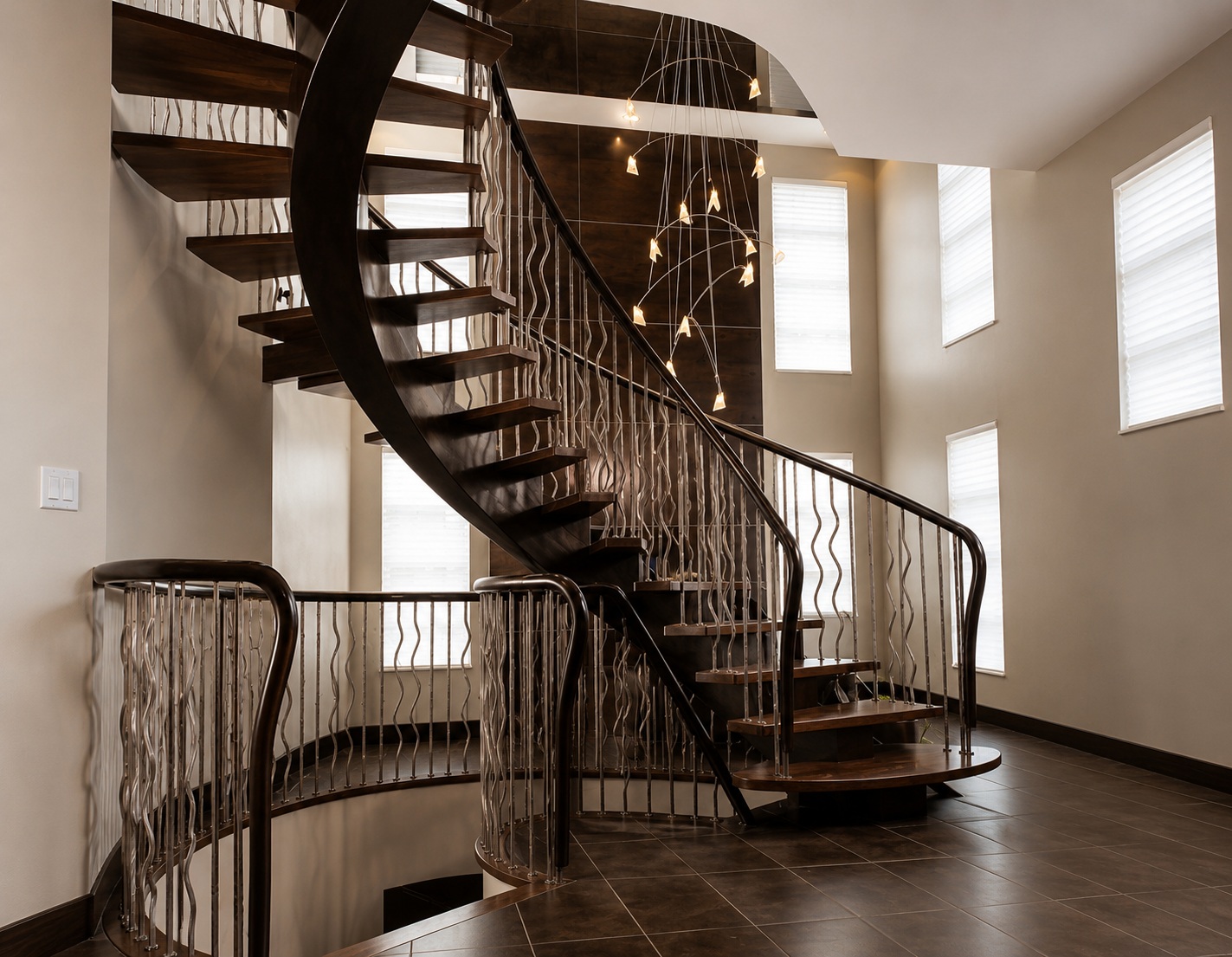
The baluster pattern is where a stair railing finds its personality, and the range is wide. A plain square or round picket reads clean and contemporary, letting the stone or timber treads do the talking. A classic scrolled baluster, with forged leaves and curls, suits a period home or a grand entrance hall. Between those poles sit twisted bars, knuckle details, and slim geometric patterns that lean modern without losing the warmth of metalwork.
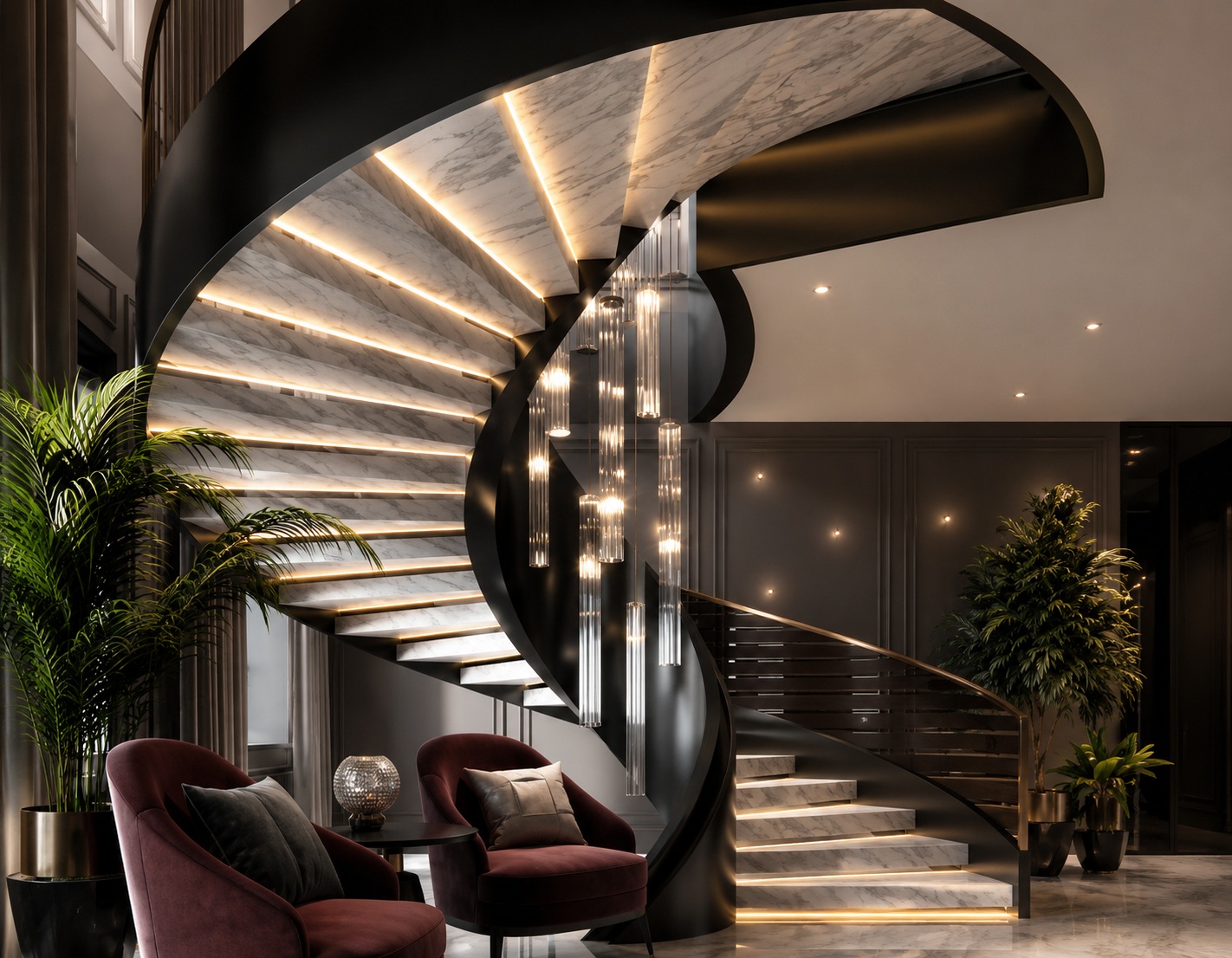
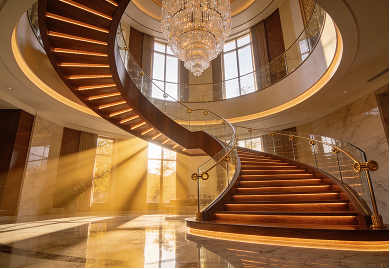
Many owners now mix wrought iron with another material to soften the look. A timber handrail over iron balusters is the most common pairing, warm to the hand and easy on the eye. Iron balusters set against a marble or stone flight read as quietly luxurious, which is the look in the curved staircase shown in our video below. For a fuller gallery of patterns and pairings, our pillar on wrought iron railing ideas walks through indoor and outdoor designs side by side.
Whatever the pattern, the railing should answer the staircase it serves. A sweeping curved flight asks for balusters that follow the curve and a handrail bent to match, while a straight flight reads best with an even, repeating rhythm. Our guide to wrought iron railing designs and styles covers the design choices that suit each shape in detail.
Code, Height, and Baluster Spacing
A stair railing is a safety component before it is an ornament, so building code governs its key dimensions. The two numbers owners ask about most are the handrail height and the baluster spacing. The values below are common United States reference figures; your local adopted edition is what actually governs, so confirm the current version with your local team before you finalise a drawing.
| Dimension | Common reference value |
|---|---|
| Handrail height (residential, IRC) | Commonly 34 to 38 inches above the tread nosing. |
| Guard height (open side, IRC) | Commonly at least 36 inches above the walking line. |
| Baluster spacing (the 4-inch sphere rule) | Gaps small enough that a 4-inch sphere cannot pass through the guard. |
| Commercial / ADA handrail (IBC, ADA) | Often 34 to 38 inches, with a graspable profile and continuous run. |
The baluster rule is the one that most shapes the design. Because the famous sphere cannot pass between the bars, the picket spacing is closer than many people expect, and that close rhythm is part of why iron balusters look so substantial. On a raking flight the spacing follows the slope, which is another reason a maker draws the railing to your exact stair before fabrication rather than cutting it from a generic length.
Finishes and Pairings
Iron must be finished, because bare steel will corrode over time. For an interior stair railing the usual choice is a durable powder coat, an oven-cured paint layer that resists chips and scuffs far better than a brushed finish. Matte black is the perennial favourite, since it reads as classic forged iron and recedes against almost any tread. Bronze, graphite, and hand-applied antique patinas give a warmer, more crafted result for a period interior.
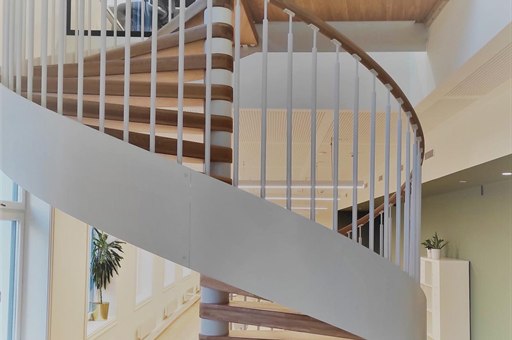
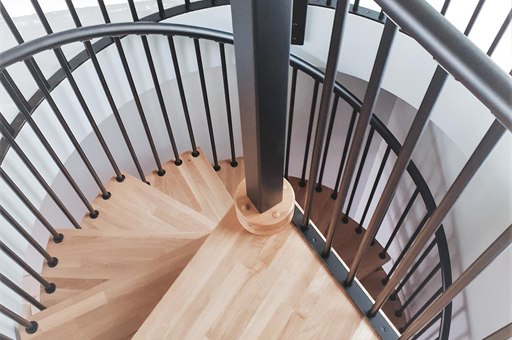
The pairing with the treads is where a staircase comes together. Black iron balusters against pale oak read clean and Scandinavian; the same balusters against a dark walnut feel rich and traditional. Iron set on a marble or natural-stone flight, as in the curved staircase in our video, gives the quietly luxurious look that high-end homes often want. A timber handrail capping the iron is a frequent finishing touch, since it is warm to grip on a cold morning.
Finish choice also depends on where the railing lives. An interior flight can take a decorative patina that an exposed deck or porch could not. If your project runs outdoors as well, our guide to exterior wrought iron railing covers the hot-dip galvanising and weatherproof coatings that an outdoor environment calls for.
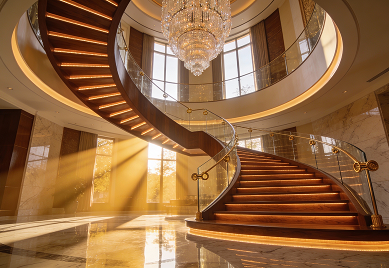
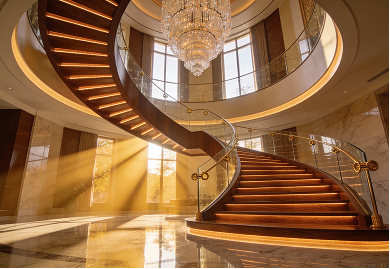
A marble and wrought iron curved staircase we fabricated — tap to play.
How We Make One
At Double Building Materials, a wrought iron stair railing starts as a drawing, not a catalogue part. We take the rise and run of your flight, the curve if there is one, and the fixing points on your stringer or treads, then turn them into a working shop drawing. That drawing fixes the handrail rake, the newel positions, and every baluster spacing along the slope before the shop cuts any metal, so the raking geometry resolves on paper rather than on site.
From there our shop in Guangdong forms the balusters, welds the frame, and grinds the joints smooth, then applies the finish you chose. Before anything ships, we trial-assemble the railing on the factory floor to confirm that the handrail follows the flight and the spacing reads even. Once it passes, we crate it for export in the order your installer will need. Your own contractor fits it on site from our drawings, and we can help you locate a local installer where that service is available. We do not install on site or sign off local code; that stays with your local team.
This drawing-first, trial-assembled approach is the reason a forged stair railing can travel across an ocean and still drop cleanly onto its flight. It is the same method behind the marble-and-iron curved staircase in the video above, and it underpins the railings on our wrought iron balustrade range.
What a Wrought Iron Stair Railing Costs
A forged stair railing covers a wide price range, and the ornament is the biggest lever. A plain square-picket railing on a straight flight sits at the affordable end of custom metalwork, because it uses simple repeating bars and a single handrail length. A scrolled, hand-forged railing on a curved flight sits much higher, since a smith shapes every scroll and bends every member to a unique radius. Because each railing is made to order, there is no fixed price tag; there are drivers.
The main drivers are the length of the flight, whether it is straight or curved, the complexity of the baluster pattern, the handrail material, and the finish. A long curved staircase with forged scrolls and a timber-capped handrail is a far larger undertaking than a short straight run of plain pickets. We break each driver down, with third-party market ranges clearly labelled as outside estimates rather than our quote, in the wrought iron railing cost guide. As a made-to-order manufacturer, we price each project from its drawing.
Care and Maintenance
An interior wrought iron stair railing asks very little once it is finished. A regular wipe with a soft, dry cloth keeps dust out of the scrollwork, and an occasional pass with a barely damp cloth handles fingerprints around the handrail and newel. Harsh abrasives are the thing to avoid, because they can scratch the powder coat and expose the steel beneath to moisture.
If a chip ever appears, the fix is straightforward. Clean the spot, then touch it in with a matching paint so bare metal never sits open to the air. A railing that owners wipe now and then, and touch up when needed, holds its finish for many years. That longevity is part of why owners treat iron as a long-term investment rather than a fitting they expect to replace.
Wrought Iron Stair Railing FAQ
Is wrought iron good for stair railings?
Yes, iron is one of the most enduring choices for a stair railing. It is strong enough to keep the balusters slim, it holds intricate forged detail, and a powder-coated interior railing lasts for decades with light care. The main trade-offs are weight and price against a plain timber rail, which a made-to-order drawing helps you plan around.
How high should a wrought iron stair railing be?
For a typical home, the handrail commonly sits 34 to 38 inches above the tread nosing, while a guard on an open side is often at least 36 inches. These are common United States reference values, and your local adopted code edition governs the final number, so confirm the current figures with your local team before a maker draws the railing.
What is the spacing between wrought iron balusters?
The widely used rule is that a 4-inch sphere must not pass between the balusters, which sets the gaps closer than many people expect. On a stair the spacing follows the slope of the flight, not a level run, which is one reason a maker draws the railing to your exact staircase before the shop cuts any metal.
Can you mix wrought iron with a wood handrail?
Mixing iron balusters with a timber handrail is one of the most popular pairings for indoor stairs. The iron carries the loads and the decorative character, while the wood gives a warm surface to grip. The two are detailed together in the drawing so the timber caps the iron cleanly along the whole flight.
Does a wrought iron railing rust indoors?
A properly finished interior railing rarely rusts, because the powder coat seals the steel away from moisture. Rust becomes a concern only where the coating is chipped and left bare in a damp spot. A quick clean of any chip and a dab of matching paint keeps an indoor railing sound for the long term.
Go deeper into the cluster with the full wrought iron railing ideas pillar. See the wrought iron railing cost drivers, exterior wrought iron railing for outdoor flights, and how iron compares in our wrought iron versus aluminum and vinyl guide. Ready to specify? Browse the wrought iron balustrade range.
Double Building Materials draws, manufactures, trial-assembles, crates, and ships your wrought iron stair railing. Your own contractor or installer handles on-site installation and local code sign-off — we can help you find one where available. Height and spacing figures above are common United States references; your local adopted edition governs, so confirm the current version with your local team.
Talk to us on WhatsApp →