




Stair Railing Safety for Kids and Pets: Stairs & Balconies -Staircase Guides
Staircase Guides · Family Safety
Stair Railing Safety for Kids and Pets: A Calm Owner Guide to Stairs and Balconies
Stair railing safety for kids comes down to a few clear details. Balusters sit close enough to block a small ball, open-riser gaps stay closed, and a sturdy handrail runs the whole flight. A taller balcony guard and safety gates finish the picture. Add non-slip treads and rounded edges, and a family home feels calmer for children and curious pets alike.
A staircase and a balcony are the two locations where a parent watches a toddler most closely, and a pet owner does the same with a young dog or cat. The reassuring news is that a handful of thoughtful design decisions settle most of that anxiety. This guide walks through each decision in practical terms, from baluster spacing to gate placement, so you can envisage a safer household before a single drawing is finished.
Why Stair and Balcony Safety Matters at Home
Young children and pets treat a household as one big playground, and a staircase is the most tempting portion of it. A toddler climbs before anyone anticipates it, and a puppy squeezes through a gap that appears far too small. So the objective of a family staircase is simple. It should invite you up and down while quietly ruling out the manoeuvres a child or animal might attempt whenever nobody watches.
The reassuring reality is that safety and beauty rarely conflict with each other. A well-drawn staircase can appear open, modern, and calm while it also closes the openings that concern a parent. You do not have to choose a cage-like railing to feel protected. The sections below cover the details that matter most, and each one blends into a design you will still treasure once the children grow.
It also helps to consider your particular home rather than a generic property. A split-level villa with a tall void reads one way; a compact townhouse stair reads another; a generous balcony over a garden reads a third. Keeping your genuine layout in mind as you read makes every decision below concrete, and it directs you toward the remedies that suit your family and your floor plan.
Baluster Spacing and Stair Railing Safety for Kids
Baluster spacing is the single detail parents ask about most, and stair railing safety for kids starts right here. The widely used guide is the 4-inch sphere rule. In plain words, the vertical bars sit close enough that a ball four inches across cannot slip between them. That gap size traces back to a child safety study, and it keeps a small head or a slim body from passing through the guard.
The same close spacing benefits pets too, since a curious cat or a small dog often investigates a gap before a child does. When we draw a baluster run, we keep every opening under that limit along the flight and around any landing. A designer can still specify slim vertical bars, warm timber spindles, or delicate metal rods, so the appearance stays light while the openings stay safe. One additional tip helps a lot with children. Vertical bars beat horizontal rails, because horizontal lines resemble a ladder that a toddler will happily climb.
Open-Riser Gaps and How to Close Them
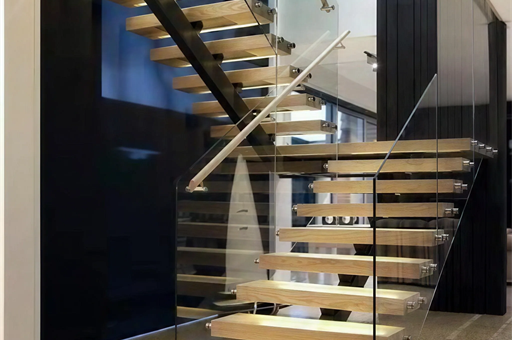
Floating and open-riser stairs look wonderful, yet the open gaps between treads worry many parents of small children. A common family reference limits that gap so a 4-inch ball cannot pass, much like the baluster rule. On a home with toddlers or small pets, a designer has a few graceful ways to honour that limit without losing the airy feel that makes open stairs so appealing.
One route sets the treads closer together so the gap shrinks below the limit. Another adds a slim sub-rail, a thin glass strip, or a clear infill panel behind each open tread, which closes the gap while the stair still reads as light and modern. A third route keeps the stair fully open for now and adds a removable child screen for the toddler years, then takes it away later. For a fuller look at open-tread designs and how they stay secure, our guide on whether floating stairs are safe walks through the options in detail.
Safety Gates for Stairs and Pets
A safety gate is the classic first line of defence for a crawling baby or a young pet. A gate at the top of the stairs stops a fall before it starts, and a gate at the bottom keeps a toddler from climbing up unsupervised. For the top of a flight, a hardware-mounted gate that screws to the wall or the newel post gives the firmest hold, since a pressure-fit gate can shift if a child leans on it.
Gates function for pets in the same manner, and many families use one gate to manage both a baby and a dog. When you plan a new staircase, it helps to notify your designer early that a gate will live there. That way the newel post, the wall, and the handrail get prepared with a clean, sturdy fixing point, so the gate looks tidy rather than tacked on. A little foresight at the drawing stage keeps the finished stair elegant and the fixing durable for years.
Glass Infill: Safe and See-Through
A glass infill panel solves the gap question in an elegant way, because a solid sheet has no bars for a child to climb and no gaps for a pet to slip through. Toughened or laminated safety glass takes a knock, and a laminated panel stays held together even if it cracks. That is why glass suits a family home so well. It keeps the guard sealed while it also keeps the view and the light wide open.
Parents often worry that little hands will smudge the glass, and yes, a family panel needs a wipe now and then. Still, many owners happily trade a quick clean for a guard with no climb points and full sightlines to a playing child. Glass pairs neatly with slim metal or timber, so the stair or balcony still feels warm rather than clinical. To weigh glass against other infill types on a balcony, our balcony railing materials and types guide lays the choices side by side.
Balcony Guard Height and Climb-Proofing
A balcony raises the stakes, because the fall height is greater, so the guard rules ask for more. Common US references put a home stair guard at around 36 inches, while a balcony or a raised deck often calls for 42 inches where the drop is larger. A taller guard sits well above a small child, and it gives a parent real peace of mind on an upper floor.
Height alone does not finish the job, though, since a determined toddler will hunt for a foothold. So climb-proofing matters just as much as raw elevation. A flat glass panel or tight vertical bars give a child nothing to grip, while wide horizontal rails, chunky mid-rails, and nearby planters resemble steps. When we draw a family balcony, we keep the surface clean and the footholds eliminated, so the guard remains a barrier rather than a climbing structure. That single principle prevents a surprising number of frightening incidents.
Non-Slip Treads and Rounded Edges
Rails and gaps receive most of the attention, yet the tread surface quietly matters just as much. A slick polished stone or a glossy timber tread becomes slippery underneath socks or small paws, and that is where a lot of little tumbles originate. A gently textured tread, a fine anti-slip strip, or a soft runner gives little feet and pet claws the traction they need on the way down.
Edges deserve a thought as well. A softly rounded or bull-nosed tread edge feels kinder to a bumped shin or a stumbling toddler than a hard square corner. On a metal or stone stair we can ease the nosing at the drawing stage, so the finished flight looks refined and treats a fall gently. None of this makes a staircase busy or clinical. It simply layers a little forgiveness into a surface the whole family uses every single day.
A Quick Family-Safety Checklist
It helps to gather every detail above into one short scan, so the table below sums up the family-safety choices at a glance. Use it as a talking point with your designer, and match each row to the ages and pets in your own home.
| Safety detail | What to aim for | Helps most with |
|---|---|---|
| Baluster gaps | 4-inch sphere cannot pass; vertical bars | Toddlers and small pets |
| Open risers | Close the gap or add a slim infill | Crawling babies and cats |
| Safety gates | Hardware-mounted at top; gate at bottom | Babies and young dogs |
| Glass infill | Toughened or laminated; no climb points | All ages, open views |
| Balcony guard | Taller guard; clean, foothold-free face | Upper-floor falls |
| Treads | Non-slip surface; rounded nosing | Slips and stumbles |
Code and Safety Basics
A staircase guard is a safety element, so it must meet the local rules for height, gap, and load. Common US references put a home guard at around 36 inches, and a balcony often calls for 42 inches above a larger drop. The infill usually follows the 4-inch sphere rule, and the guard must hold a defined load at the top rail. In Australia, AS 1288 covers the glass and the NCC sets guard heights, while ADA references shape handrail grip in public buildings.
None of this should worry an owner, since it simply means a family staircase wants proper design rather than guesswork. We draw these values into every set of shop drawings, then trial-assemble the stair before it ships, so the parts arrive true and ready. These figures are widely used reference values, and your local adopted edition is what actually governs. We always suggest you confirm the current version with your local team, since a licensed installer or building official signs off the finished guard on site, not us.
Stair and Balcony Safety FAQ
What is the safe gap between stair balusters for a child?
The widely used guide is the 4-inch sphere rule. In plain terms, the vertical bars sit close enough that a ball four inches across cannot pass between them. That gap keeps a small head or a slim body from slipping through. The same close spacing helps small pets too, so vertical bars under this limit make a stair far friendlier for a young family.
Are open-riser or floating stairs safe for toddlers?
They can work well for a family with a few tweaks. A designer sets the treads closer together, adds a slim infill or a clear panel behind each open tread, or fits a removable child screen for the toddler years. Each route keeps the open, airy look while it closes the gaps that worry a parent, so the stair stays both striking and secure.
How tall should a balcony railing be for child safety?
Common US references put a home stair guard at around 36 inches, while a balcony or a raised deck often calls for 42 inches where the drop is larger. Height alone is not enough, though. A clean, foothold-free face matters just as much, since a taller guard with wide horizontal rails can still act like a ladder for a determined toddler.
Is glass railing a good choice for a home with kids and pets?
Glass suits a family home very well. A toughened or laminated panel has no bars for a child to climb and no gaps for a pet to squeeze through, and a laminated sheet stays held together if it cracks. The trade-off is a regular wipe to clear little handprints, which many parents happily accept for a sealed guard and a clear view of a playing child.
Do I still need a safety gate if my railing is fully compliant?
A code-level guard stops a fall through the railing, but it does not stop a crawling baby from tumbling down the flight itself. A gate at the top and bottom fills that gap during the earliest years. Many families operate both a compliant guard and a hardware-mounted gate, then remove the gate once the child progresses past the climbing stage.
Keep planning a safe, beautiful home: start with our pillar on staircase design ideas, then read whether floating stairs are safe and compare balcony railing materials and types. Ready to specify a family staircase? Browse our custom staircase systems.
Double Building Materials draws, manufactures, trial-assembles, crates, and ships your staircase and balcony guard in glass, metal, timber, or a mix of these. Your own contractor or installer handles on-site installation and local code sign-off — we can help you find one where available. Safety values above are common industry and US references (IRC / IBC / ADA / OSHA; AS 1288 / AS 1657 / NCC where relevant); your local adopted edition governs, so confirm the current version with your local team. With 25+ years and 800+ projects shipped to 60+ countries from our 4,500 m² factory in Guangdong, China, we draw and trial-assemble every stair before it ships.
Talk to us on WhatsApp →