

Commercial Stair Railing: Stairwell, Code & Design Guide -Railing Guides
Commercial Railing Guides · Stairwell & Code
Commercial Stair Railing: A Plain Guide to Stairwell Rails, Code & Design
A commercial stair railing is the guard and handrail system on a stairwell in a building used by the public. Under common US code, the guard is typically 42 inches tall, with a graspable handrail near 34 to 38 inches. Most flights need a handrail on both sides. Your local adopted edition governs the final figure.
A commercial stair railing carries more rules than a home stair, because more people use it every day. This guide explains what makes a railing commercial, where the common code numbers come from, and how the parts fit together. We put the code into plain owner terms for projects like a boutique hotel or a condo corridor, then link to the deeper guides for each topic.
What Makes a Stair Railing Commercial
A commercial stair railing is the railing on a stairwell inside a building that the public occupies. Think of the open stair in a mixed-use lobby, the back-of-house flight in a boutique hotel, or the shared corridor stair in a condo development. The classification is not about appearance; it concerns who uses the stair and how frequently, which is precisely what the building code regulates most strictly.
Because many people occupy a commercial stair, the railing answers to a stricter regulation than a single-family residential stair. In the US that usually means the International Building Code, frequently interpreted alongside the accessibility requirements in the ADA. A house stair under the residential code can sit lower and run on a single side. A commercial stair is governed by taller guards, handrails on both sides, and graspable profiles a hand can genuinely grip.
For an owner, this matters at the planning stage. A villa with a small ground-floor business, a serviced apartment, or a hotel terrace can all cross into commercial territory. Knowing which rule applies before you draw the stair saves a redesign later. Where the use is mixed, your local team confirms which code edition the building official will apply on your project.
The Common Code Numbers, Side by Side
Three reference figures shape almost every commercial stair railing: the guard height, the handrail height, and the gap an object can pass through. The table below sets out the common US values so you can see how they relate. These are widely used reference numbers, not a code reading for your site, so treat them as a starting point for a conversation with your local team.
| Reference value | Common US figure |
|---|---|
| Guard height (commercial, IBC) | Commonly 42 inches, measured from the stair nosing or floor to the top of the guard. |
| Handrail height | Typically 34 to 38 inches above the nosing line, the same range the ADA uses. |
| Handrail sides | Both sides on most commercial flights, with continuous extensions at the top and bottom. |
| Opening limit | Guard infill that rejects a 4-inch sphere, so a small child cannot pass through. |
| Grip shape | A graspable profile, near 1¼ to 2 inches across, that a hand can close around. |
The pattern is easy to read. A commercial guard sits higher than a home guard, the handrail must be a shape you can truly grip, and the gaps stay small. Workplace-only stairs answer to OSHA instead, which uses its own heights. Because the adopted edition varies by city, we cover the full picture in the commercial railing height guide and the deeper commercial railing code guide.
Guard, Handrail, and the Parts That Matter
Two words do a lot of work in this topic, and they are not the same thing. The guard is the tall barrier that stops a person falling off the edge of the stair or landing. The handrail is the lower rail you actually hold as you climb. A commercial stair almost always needs both, because each one does a different safety job along the flight.
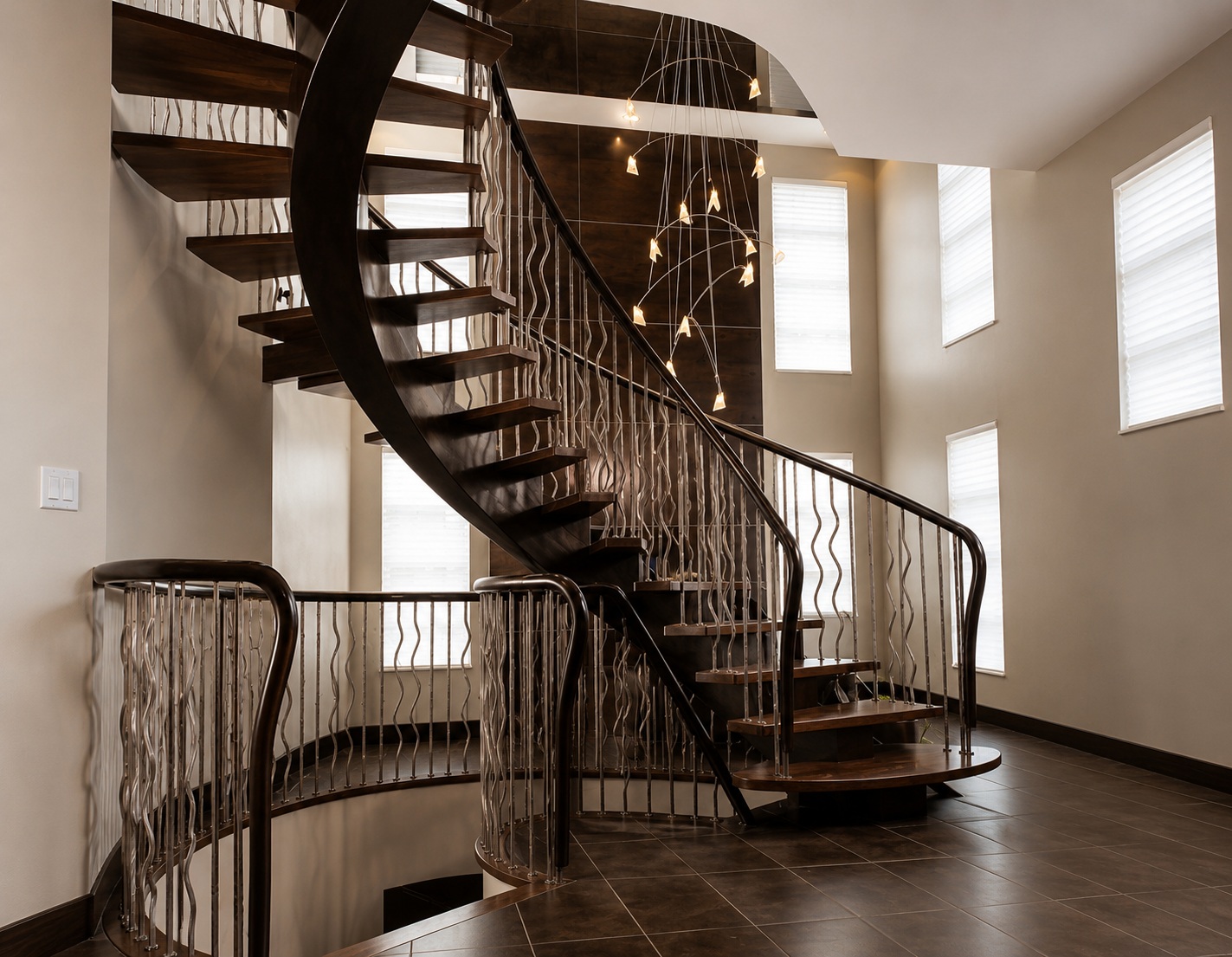
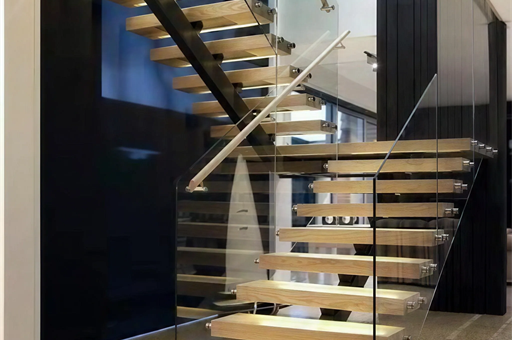
The guard fills the open side with posts and infill, such as glass panels, vertical balusters, or tensioned cables. The infill is what enforces the 4-inch gap rule, so the configuration of the infill shapes both safety and appearance. The handrail then runs along the top or along the adjacent wall at hand height, dimensioned so fingers can curl completely around it. On a wide public stair, a continuous handrail frequently sits on both sides.
Two smaller parts decide whether a railing feels solid. The first is the connection to the structure, because a guard must resist a firm push from a crowd. The second is the handrail extension, the short level return at the top and bottom of a flight that gives a steady grip as you step on or off. Get those right and a commercial stair railing reads as calm and dependable rather than busy.
Materials for a Stairwell Railing
The material sets both the look and the upkeep of a stairwell railing. A high-traffic public stair takes constant hand contact and the odd knock from luggage or a cleaning cart, so the finish has to wear well. The table below sets out the materials we build most often, with the character each one brings to a commercial setting.
| Material | Character in a stairwell |
|---|---|
| Stainless steel | A clean, modern look that resists corrosion and frequent cleaning. The default for hotel and office stairs. |
| Glass infill | Laminated panels keep a lobby open and bright while still meeting the gap rule. Striking, and easy to wipe down. |
| Powder-coated steel | Strong and well priced, with a tough colour finish. A practical choice for a back-of-house or service flight. |
| Stainless cable | Thin horizontal lines keep a view open on a terrace or atrium stair. Tension and spacing need careful detailing. |
| Wrought iron | Forged scrollwork for a traditional hotel or a heritage building. Crafted, characterful, and built to last. |
Most commercial projects land on stainless steel or a glass-and-steel mix, because both look current and shrug off heavy use. A back stair often takes powder-coated steel to keep the budget sensible. You can see the full range of systems, with the metals and infills above, on the commercial balustrade and railing systems page.
Five Project Scenarios
The same rules read differently across project types, so it helps to picture a few. A boutique-hotel terrace stair wants a railing that protects guests yet keeps the view, which points to glass or slim cable infill in a corrosion-proof metal. The look should feel warm and considered, because guests touch it on the way to a rooftop bar.
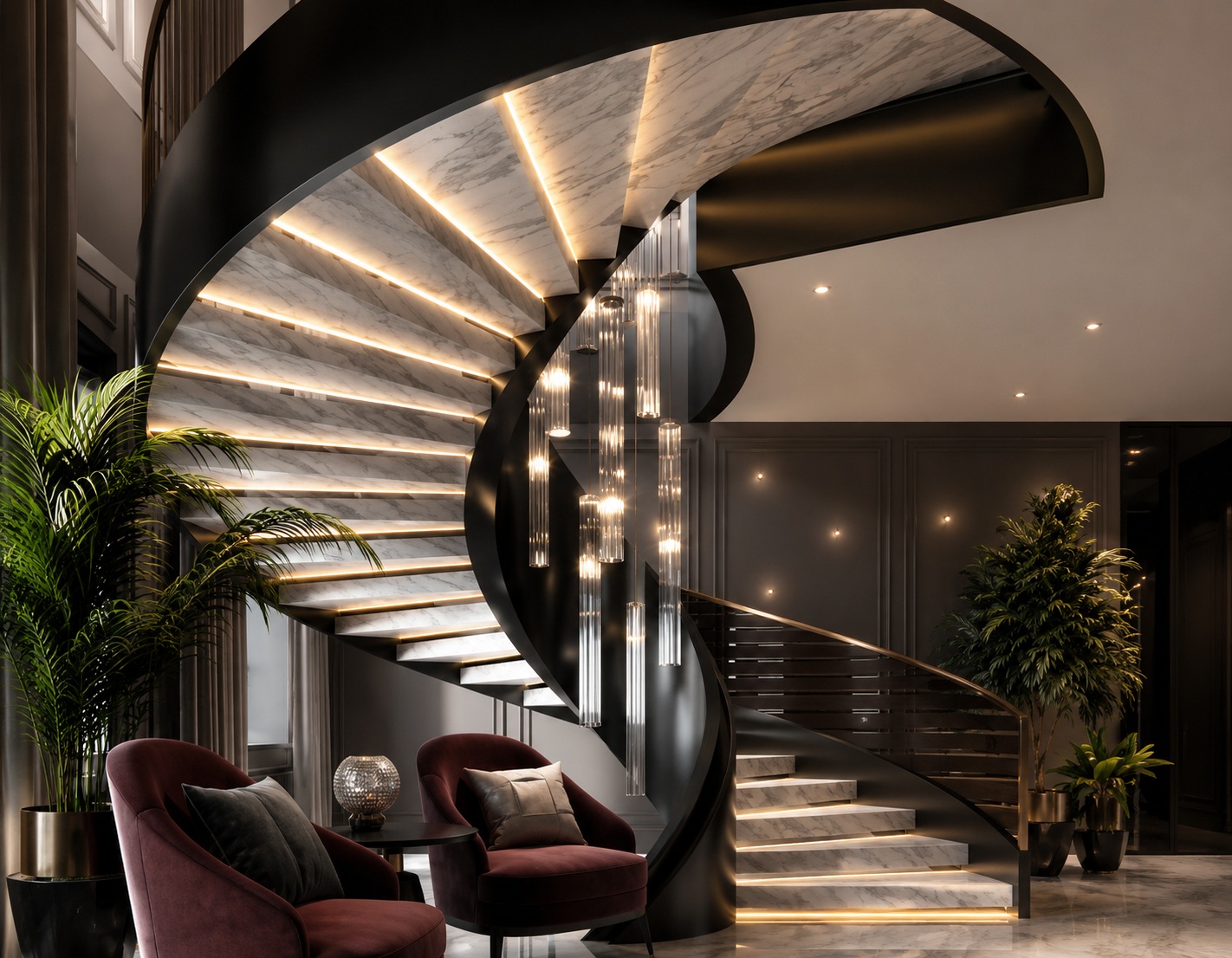
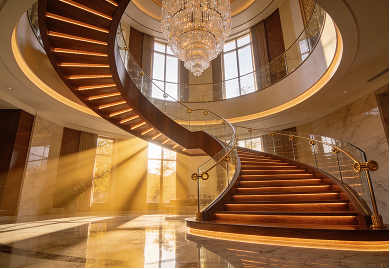
A condo corridor stair is the daily route for residents, so it favours a durable, low-fuss railing that survives years of hands and shopping bags. Powder-coated or stainless steel suits it well. A mixed-use lobby stair is the first thing visitors see, so an open glass guard with a polished metal handrail makes the space feel generous and bright while still meeting the taller commercial guard height.
A villa with street frontage that doubles as a small studio or gallery can slip into commercial rules for its public part, so the entry stair may need the higher guard and dual handrails. A back-of-house service stair, finally, can be plain powder-coated steel that simply works hard. In every case, the railing earns its keep by matching the people who use it.
A commercial spiral stair build in our factory, with a heavy-duty rod railing on the quality bench — tap to play.
Designing a Railing That Still Looks Good
A common worry is that the code makes a commercial stair railing feel like a cage. It does not have to. A taller guard reads as light when the infill is glass or thin cable rather than a wall of heavy bars. The trick is to let the safety parts do their work quietly, so the eye sees a clean line and the hand finds a rail exactly where it expects one.
Proportion is the real design lever. A slim stainless handrail on a glass guard keeps a lobby stair open and calm, even at the higher commercial height. Matching the metal to the door hardware and the lift surround ties the stair into the wider space. On a hotel terrace, warm-toned metal and a frameless glass panel let guests look out while a guard quietly does its job behind the view.
Lighting and detail finish the job. A handrail with a soft under-rail light makes a public stair feel safe at night and reads as a designed object, not a fire-stair afterthought. None of this fights the code. It simply means an owner can hit every required figure and still hand visitors a stair that feels like part of the building, not a compromise bolted onto it.
How a Stairwell Railing Is Built
At Double Building Materials, a commercial stair railing starts as a drawing, not a catalogue part. We take your stair geometry, the chosen heights, and the infill you want, then turn them into a working shop drawing. That drawing fixes every post, panel, and handrail run before any metal is cut. We cut nothing until you approve it, because a stairwell railing has to follow the flight exactly.
From there we fabricate the posts, the infill frames, and the handrails, then trial-assemble the railing on our 4,500 m² floor in Guangdong. That trial build is where we confirm the heights, the gaps, and the fit of each run before anything ships. With 25+ years and 800+ projects across 60+ countries behind us, this drawing-first, trial-assembly routine is how we keep a long stairwell run consistent panel to panel.
Once the trial build passes, we crate the railing for export in the order your installer needs it, so a long flight goes up in sequence rather than as a pile of parts. Your own contractor fits it on site from our drawings, and we can help you find a local installer where that service is available. We do not install on site or sign off local code; that stays with your local team. Browse finished systems on the balustrade and railing systems page, or read the ADA railing requirements guide for accessible stairs.
Commercial Stair Railing FAQ
How tall does a commercial stair railing need to be?
The guard on a commercial stair is commonly 42 inches tall under the IBC, measured to the top of the guard. The handrail you actually hold sits lower, usually 34 to 38 inches above the nosing line. Both are widely used reference figures, so confirm the exact number with your local adopted code edition before you build.
Do commercial stairs need a handrail on both sides?
On most commercial flights, yes. Public stairs typically need a graspable handrail on both sides, with short level extensions at the top and bottom of each run. A very narrow service stair may differ. Because the rule depends on the stair width and the use, your local team confirms what applies to your specific flight.
What is the difference between a guard and a handrail?
The guard is the tall barrier that stops a person falling off the open side of a stair or landing. The handrail is the lower rail you grip as you climb, sized so a hand can curl around it. A commercial stair almost always needs both, because each one does a separate safety job along the flight.
Which material suits a commercial stair railing?
There is no single answer, because the right material depends on the setting and the daily traffic. Stainless steel and glass infill suit hotel and office stairs that face the public, while powder-coated steel often fits a hard-working back-of-house flight. Each option trades appearance, maintenance, and budget, so the material follows the building rather than fashion.
Does the ADA apply to commercial stair railings?
Often, yes. Where a building is open to the public, ADA handrail rules typically apply alongside the building code, setting the grip shape, the height range, and the extensions. They work together rather than against each other. The ADA railing requirements guide walks through how the two fit on one stair.
Go deeper into the cluster: start with the commercial railing height pillar, then read the commercial railing code guide, the ADA railing requirements, and the commercial handrail guide. Ready to specify? Browse our commercial balustrade and railing systems.
Double Building Materials draws, manufactures, trial-assembles, crates, and ships your commercial stair railing. Your own contractor or installer handles on-site installation and local code sign-off — we can help you find one where available. Heights and figures above are common US references; your local adopted edition governs, so confirm the current version with your local team before you build.
Talk to us on WhatsApp →