

Glass Railing Spigot vs Channel: Mounting Systems Compared -Railing Guides
Glass Railing Guides · Mounting Systems
Glass Railing Spigot vs Channel: Which Mounting System Should You Choose?
A glass railing spigot is a small metal clamp, usually stainless steel, that grips the bottom edge of a glass panel and bolts to the floor, leaving the glass appearing to float on slim points. A channel instead captures the whole bottom edge in a continuous base shoe. Spigots look lighter; a channel gives a cleaner, fully frameless line.
That single choice, between a spigot and a channel, shapes how your frameless glass balustrade looks, what it costs, and how it fits on site. This guide explains each glass railing mounting system in plain language, compares spigots, base channels, standoffs, and posts side by side, and shows where each one belongs. Where a topic runs deep, we link to a focused guide so you can read further.
The Four Mounting Systems at a Glance
Every frameless glass railing has to grip its glass somehow, and there are four common ways to do it. The hardware you choose decides the entire look, because the glass itself is the same clear panel in each case. Understanding these four systems early saves a lot of confusion later, since most product pages describe them by hardware name rather than by appearance.
| System | How it holds the glass and the look it gives |
|---|---|
| Spigot | Individual clamps bolt to the floor and grip the glass at points along the bottom edge. The glass appears to float on slim posts, with visible gaps between panels. |
| Base channel | A continuous aluminum or steel shoe captures the entire bottom edge. The result is the cleanest, fully frameless line, with the channel often recessed into the floor. |
| Standoff | Disc fittings pass through the glass and fix to a wall or fascia at the side. The glass cantilevers outward, ideal where the floor cannot be drilled. |
| Post system | Metal posts carry the glass between them, with a top rail. This is technically semi-frameless and the most forgiving of an uneven substrate. |
Spigots and base channels are the two true frameless approaches, and they account for most modern glass balustrades. Standoffs and posts solve particular site problems rather than chasing the minimal look. The rest of this guide concentrates on the spigot-versus-channel decision, because that is the one most owners actually face.
What a Glass Railing Spigot Is
A glass railing spigot is a compact clamp, almost always machined from stainless steel, that grips the bottom edge of a toughened glass panel and anchors into the structure beneath. Several spigots sit along each panel, spaced to share the load, and the glass appears to hover on a row of slim, polished points. Because the hardware is small and bright, a spigot system reads as light and architectural, and it became the signature look of contemporary pool fences, balconies, and terraces.
The appeal of spigots is partly visual and partly practical. Visually, the floating effect frames a view without a heavy frame in the way. Practically, spigots tolerate more variation in the floor than a continuous channel does. Each clamp can be packed and adjusted on its own. Stainless steel also weathers a coastal or poolside setting well. That is one reason spigots rule outdoor glass balustrades in Australia and similar climates. The visible gap between panels is part of the design language; it is intended, not a fault.
Spigots do ask for thicker glass than a channel typically does, because each panel behaves as a free-standing cantilever held only at points near its base. That thicker glass is the trade-off for the airy, post-free appearance. Spacing, embedment, and the substrate all matter, which is exactly why a spigot balustrade should start as an engineered drawing rather than a guess.
What a Base Channel Is
A base channel, sometimes called a base shoe or a U-channel, is a continuous metal profile. It captures the whole bottom edge of the glass along its length. Instead of gripping at points, it clamps the panel from end to end. A wedge-and-gasket or set-screw system locks the glass and lets you dial it dead vertical. The channel can sit on top of the floor as a slim surface shoe. Or it can recess into the slab, so the glass appears to rise straight out of the ground.
That recessed, fully frameless line is why architects reach for a channel on a flagship interior staircase, a mezzanine, or a feature balcony. With no visible hardware at all, the glass becomes a pure plane of light. A channel also spreads the load along the entire edge, not at a handful of points. That often allows a thinner glass build-up than the matching spigot run. The continuous grip gives a very rigid, solid feel under the hand.
The trade-off is precision and substrate. A recessed channel needs an accurate pocket formed in the slab. It is set out before the concrete is poured, or cut afterwards. A channel is less forgiving of an uneven floor than separate spigots are. It is the harder system to coordinate. That is why a shop drawing pays off here. The drawing fixes the pocket, the glass size, and the finished floor level before anything is made.
Standoffs and Post Systems
Standoff fittings solve a different problem. Rather than anchoring into the floor, polished discs pass through holes drilled in the glass and bolt to a wall, a beam, or the side of a balcony slab. The glass then cantilevers outward from that vertical face. That is the answer when the deck surface is waterproofed and cannot be drilled, or when you simply want the floor to stay perfectly clear. Standoffs share the bright, minimal hardware language of spigots while attaching from the side instead of below.
Post systems sit at the other end of the range. Slim metal posts stand at intervals and carry the glass infill between them, usually capped by a top rail. The posts can be stainless steel or powder-coated aluminum. This is a semi-frameless balustrade, because the posts and the rail are visible. It is also the most forgiving system on site. The posts soak up a lot of floor tolerance, the glass can be thinner, and a top rail adds a familiar handhold. For long runs, stairs, and projects where the floor structure is uncertain, a post-and-rail glass system is often the most practical route. We pair these systems with stainless, aluminum, or timber handrails to suit the look you are after.
Spigot vs Channel, Compared
With both systems understood, a direct comparison makes the decision concrete. Neither is universally better; each suits a different priority. The table below summarises the practical differences that owners and their contractors weigh most often.
| Consideration | Spigot vs base channel |
|---|---|
| Appearance | Spigot shows slim, deliberate hardware points and gaps between panels. A channel hides almost everything for a continuous frameless plane. |
| Glass thickness | Spigots typically call for thicker glass because each panel cantilevers from points; a channel can often use a slightly thinner build-up over the same height. |
| Substrate tolerance | Spigots adjust individually and forgive an uneven floor. A recessed channel needs an accurate pocket and a true, level slab. |
| Best setting | Spigots excel outdoors, around pools, on terraces and balconies. Channels excel on flagship interior stairs, mezzanines, and feature edges. |
| Coordination effort | Spigots are simpler to set out. Channels demand earlier, more precise coordination of the floor pocket and finished levels. |
In short, a spigot system buys you forgiveness on site and a distinctly architectural look, while a base channel buys you the purest frameless line at the price of tighter coordination. Both are excellent when matched to the right setting, and both depend far more on accurate shop drawings than on the hardware brand.
How to Choose for Your Project
The setting usually points to the answer before any spreadsheet does. For an outdoor balcony, a pool surround, or a terrace where the slab may not be perfectly level, spigots are typically the natural fit. They forgive the substrate and weather beautifully in marine-grade stainless steel. For a showpiece interior staircase or a clean mezzanine edge in a new villa, a recessed base channel often wins, because nothing should interrupt the glass.
Two practical questions usually settle it. First, can the floor be drilled and is it level, or recessed accurately? A waterproofed deck argues for standoffs; a true, formed slab welcomes a channel; a rougher or retrofit floor leans toward spigots or a post system. Second, how much hardware do you want to see? If visible polished points read as a feature you like, choose spigots. If you want the glass to disappear into the floor, choose a channel. Where a run is long, a stair is involved, or the budget is tight, a post-and-rail system is frequently the most sensible compromise.
Whatever you lean toward, the choice belongs in an early conversation with your manufacturer, because it changes the glass thickness, the hardware, and the way your floor must be prepared. You can see the frameless and semi-frameless systems we build, and the finishes available, on our glass balustrade systems page, and read the wider picture in our complete guide to glass railing systems.
Glass, Code, and Safety
Whichever mounting system you choose, the glass itself must be a safety glass, and the code values guide both the thickness and the height. In common US references, a guard protecting a drop is generally required to be around 42 inches high in many commercial settings. Residential guards often sit near 36 inches. The infill must also resist a person leaning against it. Structural glass balustrades use either fully tempered or, more often for the safest result, heat-soaked laminated glass, so that a broken panel holds together rather than falling clear.
| Reference | What it commonly covers for glass guards |
|---|---|
| IRC / IBC (US) | Guard height, the load a guard must resist, and the use of safety glazing in a guard. Residential and commercial figures differ. |
| ADA (US) | Where a graspable handrail is required alongside a guard on an accessible route, and its height range. |
| AS 1288 / NCC (AU) | Glass selection, thickness, and installation for balustrades, plus interlinking and handrail rules for spigot systems where required. |
Treat every figure above as a common reference rather than a final specification, because your local adopted edition is what actually governs the job. Spigot balustrades in some jurisdictions need an interlinking top rail or a handrail unless the engineering shows each panel performs alone; a channel system carries its own glass-selection rules. Confirm the current requirements with your local team, and we cover the glass build-up itself in our guide to tempered glass railing thickness and safety.
How We Build and Ship It
At Double Building Materials, a glass balustrade starts as a drawing, not a box of parts. We take your run lengths, your floor levels, your substrate, and your chosen system. We turn them into a working shop drawing. That drawing fixes every spigot position, or the exact channel pocket, before any glass is cut. This is our drawing-first coordination, and it is where the spigot-versus-channel choice is locked, because it sets the glass thickness and the way your floor must be prepared.
From there we fabricate the stainless or aluminum hardware and order the toughened or laminated glass to size, then trial-assemble the run on our 4,500 m² floor in Guangdong. That trial build, our trial assembly before packing, is where we confirm that the panels, the gaps, and the fixings all line up before anything ships. Once it passes, we crate the system for export so it arrives ready for your installer, with hardware and glass protected and clearly labelled. Across 25+ years and 800+ projects in 60+ countries, that export-ready crating is what gets a frameless balustrade to site intact. Your own contractor installs it from our drawings, and we can help you find a local installer where that service is available. We do not install on site or sign off local code; that stays with your local team.
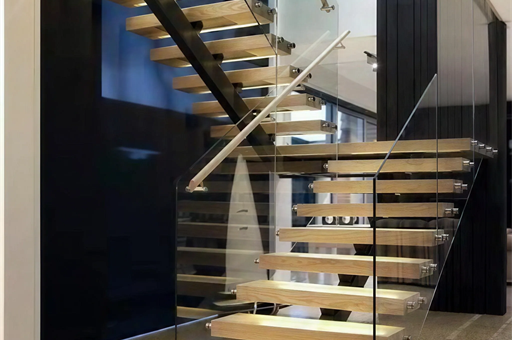
A modern mono-stringer staircase with a glass railing we built — tap to play.
What Drives the Cost
A glass balustrade covers a wide price range, and the mounting system is only one driver among several. Because every run is made to order, there is no single price tag; there are drivers, and understanding them helps you compare quotes sensibly rather than chasing a headline number.
The biggest drivers are the glass and the hardware finish. A thicker glass build-up, as spigots often require, costs more than a thinner channel-held panel over the same height. Laminated glass costs more than monolithic tempered glass, and that is usually the right place to spend for safety. Marine-grade stainless steel for a coastal spigot run costs more than a powder-coated finish inland. Recessed channels add the labour of forming an accurate slab pocket, while standoffs add drilling and side fixings. Long runs, curved glass, and stair geometry all add to the total. We treat any figure you read online as a third-party market estimate, not our quote, and as a made-to-order manufacturer we price each project from its drawing. The full breakdown lives in our glass railing cost guide, and the frameless options are detailed in our frameless glass railing guide.
Glass Railing Spigot & Mounting FAQ
What is a spigot on a glass railing?
A spigot is a small stainless steel clamp that grips the bottom edge of a glass panel and bolts into the floor or slab. Several sit along each panel, sharing the load, and the glass appears to float on slim points. Spigots give the airy, post-free look that defines modern pool fences, balconies, and terraces.
Is a spigot or a channel better for a glass balustrade?
Neither is simply better; they suit different goals. Spigots forgive an uneven floor and excel outdoors, around pools, and on terraces. A recessed base channel gives the cleanest, fully frameless line and excels on flagship interior stairs and mezzanines. The right choice depends on your setting, your substrate, and how much hardware you want to see.
Do spigot glass railings need a top rail or handrail?
It depends on the jurisdiction and the engineering. Some codes require an interlinking top rail or a separate handrail on a spigot balustrade unless each panel is shown to perform on its own. Others permit free-standing panels with adequate glass. Your local adopted edition governs this, so confirm the current requirement with your local team before you finalise the design.
How thick does the glass need to be for spigots?
Spigot panels typically use thicker glass than a channel-held panel of the same height, because each panel cantilevers from points near its base. The exact build-up depends on the height, the loading, and whether the glass is tempered or laminated. We size it from an engineered drawing rather than a rule of thumb; see our tempered glass thickness guide for the full picture.
Can a glass railing be mounted without drilling the floor?
Yes. Standoff fittings pass through the glass and fix to a wall or the side of a slab, so the floor stays unpenetrated, which suits a waterproofed deck. A post system can also fix to the side of a structure. Both avoid drilling the walking surface, while spigots and channels anchor into or onto the floor.
Keep reading the glass cluster: the complete glass railing guide, the frameless glass railing options, and tempered glass thickness and safety. Comparing materials? Read glass railing vs cable railing. Or browse the full glass balustrade range.
Double Building Materials draws, manufactures, trial-assembles, crates, and ships your glass balustrade. Your own contractor or installer handles on-site installation and local code sign-off — we can help you find one where available. Code values above are common references and the glass figures are typical; your local adopted edition governs, so confirm the current version with your local team.
Talk to us on WhatsApp →