

Glass Railing Guide: Systems, Glass, Code & Cost -Railing Guides
Glass Railing · Complete Guide
Glass Railing: The Complete Guide to Systems, Glass, Code & Cost
A glass railing is a guard or balustrade that uses tempered or laminated safety glass panels in place of solid balusters, giving a transparent protective barrier along a stair, balcony, or deck. The panels are held by a base channel, point-fixed spigots, standoff fittings, or a slim metal frame, preserving the view while meeting guard-height and load requirements.
A glass railing keeps the protection of a solid guard while almost disappearing from view, which is the whole reason owners choose it. This guide explains how the systems work, which glass to specify, and how the panels are mounted. It covers code, cost drivers, indoor and outdoor use, and maintenance, then links to focused guides where a topic runs deep.
What a Glass Railing Is
A glass railing swaps the row of upright balusters on a normal guard for panels of toughened safety glass. The glass becomes the infill that stops a person or an object from falling. A base fixing, and on many systems a top handrail, carry the structural job. Because the glass is clear, it guards the edge of a stair, balcony, or deck without blocking the view. A room keeps its light. People also call it a glass balustrade, a glass guard, or a glass balcony, and the words all mean the same thing.
The appeal is almost all visual. A glass railing lets a staircase read as a sculptural object, not a caged edge. It lets a balcony borrow the view beyond it. For a villa, a new-build home, or an apartment with a real outlook, that open feel is the whole point. The glass fades away, the architecture stays, and the guard remains where the code needs it.
It helps to set expectations early. Glass is a premium infill, not a budget one. Panels need careful handling, precise fixings, and regular cleaning to keep their clarity. None of that makes glass a hard choice. It simply explains why design and build quality matter more here than on a timber or metal guard, where small gaps are easy to hide.
The Main Glass Railing Systems
Glass railings divide into a handful of recognisable systems, and the difference is mostly about how the glass is held and whether a frame is visible. Choosing between them sets the look, the budget, and the structural approach before you ever pick a glass thickness. The table below sorts the common families so you can see where each one belongs.
| System | How it works and where it suits |
|---|---|
| Framed glass | A metal frame surrounds each panel and a top rail runs continuously. It is the most forgiving system, with thinner glass and easy installation, and it suits balconies and stairs where a slim metal line is welcome. |
| Frameless glass | No vertical posts and often no top rail; the glass spans clear between base fixings. It gives the purest, most architectural look, asks for thicker glass and tighter engineering, and suits feature stairs and view-led balconies. |
| Posted (semi-frameless) | Slim metal posts at intervals carry the glass while the panel edges stay open. It is a practical middle ground, sturdier and more economical than fully frameless, and it suits long deck runs. |
Framed and posted systems are the everyday workhorses, because they spread the load across the metal and allow a thinner, less costly glass. A frameless system removes that metal for a cleaner result, yet it transfers the entire structural job to the glass and its base fixing, which is why it demands thicker panels and careful design. We build all three, and the right choice depends on your view, your budget, and how much hardware you want to see. The dedicated frameless glass railing guide compares the look in detail.
Which Glass: Tempered, Laminated, and Thickness
The glass itself is the most important choice on the whole assembly, and two words carry most of the meaning. Tempered glass is heat-treated, so it is far stronger than plain glass. It breaks into small, blunt grains, not sharp shards. Laminated glass bonds two panes around a plastic core. If it breaks, the bits stay stuck to that core instead of falling. Many demanding jobs ask for laminated-tempered glass, which combines both traits for top safety.
Thickness follows the system and the span. Framed panels can use thinner glass because the frame shares the load. Frameless panels carry it all on their own, so they need much thicker glass. The free height of the panel, the wind on an outdoor balcony, and whether a top rail is present all push the thickness up. Rather than chase one magic number, you let the design set the figure for your exact layout. Our tempered glass railing thickness and safety guide shows how each factor moves the glass spec.
Mounting: Spigot, Channel, Standoff, and Frame
How the glass meets the structure is the other decision that shapes the look. The mounting hardware determines whether you see polished metal posts, a continuous slot, discreet round buttons, or nothing at all. Four families cover almost every glass railing on the market, and each carries the load in a different way.
| Mounting | Character |
|---|---|
| Spigot | Stainless or aluminium point clamps grip the base of each panel at intervals. Strong, popular on decks and pools, and able to leave the top edge fully open. |
| Base channel (U-channel) | A continuous aluminium slot clamps the bottom edge of the glass along its full length. The cleanest frameless line, with no visible posts; it relies on a precise, well-anchored substrate. |
| Standoff (point-fixed) | Round buttons pass through drilled holes and fix the panel to a wall or fascia. Crisp and architectural, common on stair sides and floating landings. |
| Framed / posted | A metal frame or slim posts capture the glass edges. The most forgiving and economical method, allowing thinner glass and quicker installation. |
Spigots and base channels both give a frameless look, but they suit different jobs. Spigots are quicker to set out and forgive an uneven slab. A base channel gives the cleanest, most seamless run, but only when the base is true and well prepared. Standoffs shine where the glass fixes to a wall or a stair stringer rather than a floor. The full comparison, with where each one belongs, lives in the spigot vs channel mounting guide.
Where Glass Railing Works Best
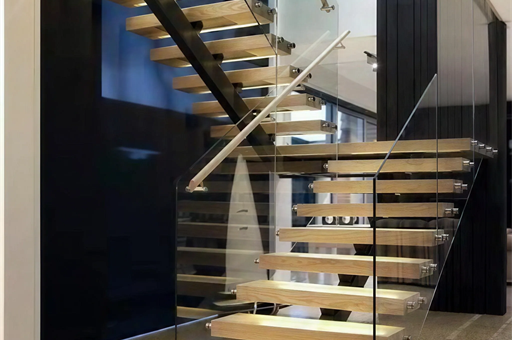
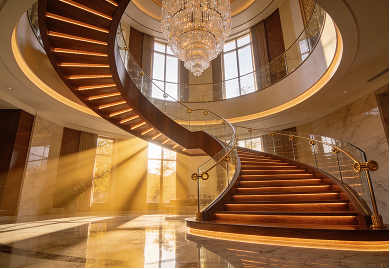
Glass railing earns its place wherever a view or an open feel is worth guarding. Indoors, it lines a feature staircase or an open landing. The architecture stays clean and the daylight travels deeper into the room. A frameless panel beside a floating stair lets the treads seem to hover. That is just why so many modern homes pick it. The glass guards the edge while the eye reads straight through it.
Outdoors, glass railing transforms a balcony, a deck, or a terrace by trading a row of pickets for an unbroken outlook. On a coastal home or a hillside villa, that uninterrupted view is often the reason the property was chosen, and a glass guard keeps it intact while shielding the edge from wind. The trade-off outdoors is maintenance, because rain, salt, and dust show on glass more than on a slatted rail. We collect indoor and outdoor schemes in the glass deck and balcony railing ideas guide, and you can browse the systems we make on our glass balustrade systems page.
Code and Safety
A glass railing is a guard, so it must satisfy the same protective rules as any other guard, plus a few that are specific to glass. Under common US references, a residential guard is typically at least 36 inches tall, while many commercial and elevated conditions call for 42 inches. The infill must resist a child passing through, which is usually expressed as a sphere that may not pass through any opening; with a continuous glass panel that requirement is met by the glass itself.
The glass-specific rules concern safety glazing and post-breakage behaviour, which is why tempered or laminated glass is required rather than ordinary glass, and why guards in many jurisdictions must stay standing if a panel breaks. Outside the US, standards such as AS 1288 in Australia and the requirements within the NCC address glass selection and the same fall protection. These are widely used reference values, and your local adopted code edition is what actually governs, so confirm the current version with your local team. The numbers below give the everyday picture.
| Common reference | Typical value (confirm locally) |
|---|---|
| Residential guard height (IRC) | Commonly a minimum of 36 inches above the walking surface. |
| Commercial guard height (IBC) | Commonly a minimum of 42 inches in occupied and elevated conditions. |
| Opening limit (infill) | A 4-inch sphere generally may not pass; a continuous glass panel satisfies this. |
| Glass type | Safety glazing required: tempered, laminated, or laminated-tempered per the condition. |
| Handrail (where required) | Stair handrails are commonly 34 to 38 inches; ADA references a 34 to 38 inch range. |
A well-specified glass railing is a safe, reassuring guard, and the rules exist simply to keep the height, the glass type, and the fall protection honest. Because these values shift between editions and jurisdictions, treat the table as orientation rather than a final specification, and let your local design professional confirm the governing figures for your project.
How a Glass Railing Is Built
At Double Building Materials, a glass railing begins as a drawing rather than a stock part. We take your sizes, your chosen system, and the base you are fixing into. We turn them into a working shop drawing. That drawing fixes every panel size, every fixing point, and the metal finish before any glass is toughened. We process nothing until you sign off the drawing. Tempered glass cannot be cut or drilled later, so the layout has to be right the first time.
From there we fabricate the hardware, toughen or laminate the glass to the approved sizes, and trial-assemble representative sections on our 4,500 square metre Guangdong floor. That trial build is where we confirm the fit of the panels, the spigots or channels, and the handrail before anything is packed. Once it passes, we crate the order for export, protecting the glass edges and labelling each panel for the sequence your installer will follow. With more than 25 years of manufacturing and 800-plus projects across 60-plus countries behind it, that drawing-first method is how we keep tolerances tight across a long shipping route. Your own contractor or installer fits the railing on site, and we can help you find one where local installation is available; we do not install on site or sign off local code.
A glass railing fit-up on an open-riser stair — reviewing fit and site coordination. Tap to play.
What a Glass Railing Costs
A glass railing covers a wide price range, and the system you choose is the single biggest reason. A framed or posted railing sits at the more affordable end, because the metal shares the load and lets you specify thinner glass. A fully frameless run with a base channel and a top-edge-open finish sits considerably higher, because it needs thicker glass and more precise hardware. Since every railing is made to order, there is no single price tag; there are drivers.
The main drivers are the system, the glass specification, the hardware finish, and the run length. Frameless glass and laminated-tempered panels add cost; a polished stainless or a special powder-coat finish adds cost; a long, curved, or stepped run with many panels adds cost again. An outdoor installation adds weather-grade hardware and, often, thicker glass for wind. We break each driver down, with attributed third-party market ranges rather than a quote, in the glass railing cost guide. As a made-to-order manufacturer, we price each project from its drawing.
Cleaning and Maintenance
The one ongoing job a glass railing asks for is cleaning, because its appeal rests on clarity. Fingerprints indoors and rain spots outdoors show up fast on a clear panel. So a glass guard needs wiping more often than a slatted or solid one. The good news is that the routine is simple. A soft cloth, warm water, and a mild glass cleaner keep the panels clear, and a microfibre cloth stops streaks. On coastal sites, rinse salt off often to protect both the glass and the metal.
Beyond the glass, the maintenance is mostly about the metal. Stainless and aluminium fittings are chosen precisely because they resist corrosion, yet they still benefit from an occasional wipe to remove salt and grime, especially near the coast. A periodic check of the fixings keeps everything sound over the years. Choosing the right glass coating, such as an easy-clean treatment, and the right hardware finish at specification time is the simplest way to reduce how often you reach for the cloth later.
Glass Railing FAQ
Is a glass railing safe?
Yes, when it is specified and built correctly. A glass railing uses tempered or laminated safety glass, which is far stronger than ordinary glass and behaves safely if it ever breaks. Tempered glass crumbles into blunt granules, while laminated glass holds its fragments on an interlayer. The system also has to meet the same guard height and load rules as any other guard, so a well-engineered glass railing is a genuinely safe barrier.
How thick should glass railing glass be?
It depends on the system and the span rather than a single number. Framed panels can use thinner glass because the frame shares the load, while frameless panels carry the load themselves and need substantially thicker glass. The unsupported height, the wind exposure outdoors, and whether a top rail is present all raise the figure. Let the engineering set the thickness for your exact geometry rather than copying a generic value.
Does a frameless glass railing need a top rail?
Not always, and that open top edge is the look many owners want. A frameless panel can be designed to stand without a top rail when the glass and the base fixing are specified for the full structural load, which generally means thicker glass. Where a continuous handrail is required by code or simply preferred, a slim cap rail can be added without spoiling the clean line. The design decides it.
Is glass railing more expensive than metal or cable?
Glass usually sits at the premium end among common railing infills, particularly in a frameless system with thick laminated panels. A framed glass railing narrows that gap, while cable and standard metal balusters tend to cost less for the same run. Price tracks the system, the glass specification, and the hardware rather than the material name alone, so compare like-for-like systems before deciding.
Can glass railing be used outdoors?
Yes, and it is one of the most popular choices for decks, balconies, and pool surrounds because it preserves the view while sheltering the edge from wind. Outdoors you specify weather-grade hardware, often a thicker or laminated glass for wind load, and you accept more frequent cleaning to manage rain spotting and, near the coast, salt. With the right specification, a glass railing performs well outside for many years.
Go deeper into the cluster: glass railing cost, tempered glass thickness and safety, frameless glass railing, spigot vs channel mounting, deck and balcony ideas, and glass vs cable railing. Or browse the full glass balustrade range.
Double Building Materials draws, manufactures, trial-assembles, crates, and ships your glass railing. Your own contractor or installer handles on-site installation and local code sign-off — we can help you find one where available. Code and dimension values above are common US references (IRC / IBC / ADA; AS 1288 / NCC where relevant) and are typical figures only; your local adopted edition governs, so confirm the current version with your local team.
Talk to us on WhatsApp →