

Glass Railing vs Cable Railing: Which to Choose? -Railing Guides
Glass Railing Guides · Material Comparison
Glass Railing vs Cable Railing: Which Suits Your Project?
In the glass railing vs cable railing question, glass gives a sealed, view-filling panel that blocks wind and sound, while cable offers a slim, near-invisible line of horizontal wires at a lower material cost. Glass suits polished interiors and exposed balconies; cable suits decks, stairs, and an airy outdoor look.
Both systems chase the same goal, a barrier you can see straight through, yet they reach it in opposite ways. This guide walks through how each one looks, performs, cleans, and prices, so you can match the right system to your villa, deck, or apartment. Where a topic runs deep, we link to a focused guide so you can read on.
The Two Systems at a Glance
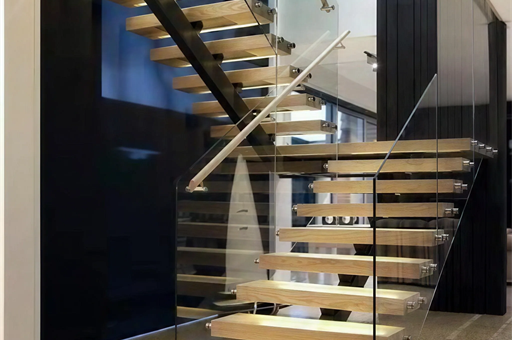
A glass railing fills the guard zone with solid panels of toughened glass. The panels mount into a continuous base channel, or clamp onto discreet floor spigots, and the result is a clear wall that you look straight through. Many owners pick a frameless version, where the glass appears to float with no top rail interrupting the view. The panel becomes the barrier and the design statement at the same time.
A cable railing keeps the structure and replaces the infill with a series of horizontal stainless steel cables. Slim posts hold the cables under tension, and the wires read as faint lines rather than a surface, so the scenery shows through the gaps. The look is open, industrial, and weightless, which is why cable became a favourite for decks, stairs, and modern porches across the United States and Australia.
So the core trade in the glass railing vs cable railing decision is surface against line. Glass gives you a sealed transparent plane that stops wind and noise; cable gives you a barely-there grid that lets air move freely. Everything that follows, from cleaning to cost to code, grows out of that one structural difference.
Look and Feel
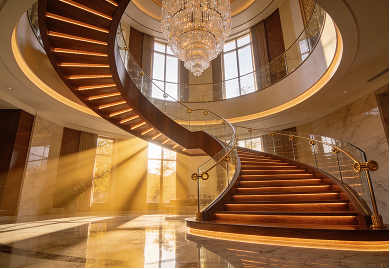
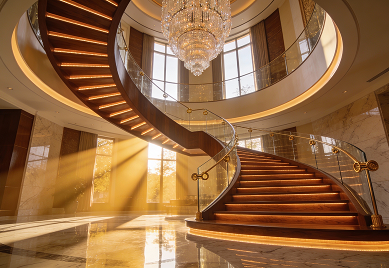
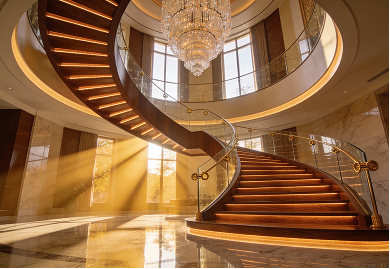
Glass and cable suit different design languages, and that is usually where owners feel the difference first. Glass reads as polished, architectural, and quietly luxurious. A frameless panel reflects light, mirrors the sky on a balcony, and frames a view like a picture window without a frame. It feels deliberate and finished, which is why it appears in upscale villas, hotel lobbies, and feature staircases where the railing is meant to be admired.
Cable feels lighter and more relaxed. The thin horizontal lines almost dissolve against a landscape, so a hillside deck or a coastal porch keeps its connection to the view. Cable carries a contemporary, slightly nautical character that pairs naturally with timber decking and metal accents. It tends to recede rather than announce itself, which appeals to owners who want the surroundings, not the railing, to be the centrepiece.
There is also a textural contrast. Glass is a smooth, continuous plane that you can lean against and that children cannot slip through. Cable is a tactile grid of taut wires with open gaps between them. Neither look is superior; they simply speak to different homes. A clean modern apartment often leans toward glass, while a relaxed outdoor deck often leans toward cable. Your complete glass railing guide walks through the framed and frameless looks in more depth.
Performance and Weather
Performance is where the two systems diverge sharply, and a glance at the qualities side by side makes the pattern clear. Glass works as a windbreak because the solid panel stops moving air, which keeps an exposed balcony or rooftop comfortable on a breezy day. It also dampens sound, so a busy street feels a little quieter behind a glass barrier. The trade is that glass shows fingerprints, water spots, and dust, so it asks for regular cleaning to stay crisp.
| Quality | Glass railing | Cable railing |
|---|---|---|
| Wind and sound | Blocks wind, dampens noise | Lets air and sound pass through |
| View | Uninterrupted through clear glass | Faint horizontal lines, near invisible |
| Visible dirt | Shows spots and prints readily | Hides dirt, little surface to mark |
| Coastal exposure | Glass inert; hardware needs marine grade | Use 316 grade cable and fittings |
Cable takes the opposite path. Open gaps let wind move straight through, which can be welcome on a calm deck or a problem on an exposed clifftop. The steel wires shrug off rain and resist rust, above all in marine-grade 316 stainless for salty coastal air. Cables do need their tension checked over the years, so the lines stay taut and the gaps stay right. Both systems last for decades when the right grade of metal meets the right setting.
Safety and Code
Both systems can satisfy guardrail rules, but they answer the code in different ways. The governing principle in common US references such as the IRC and IBC is the four-inch sphere rule, which says a four-inch ball must not pass through any opening in a residential guard. A solid glass panel clears this automatically, because there is no gap to begin with. Glass for a guard is typically tempered, or laminated for overhead and high-exposure spots, so a break stays held together.
Cable meets the same opening rule through tight spacing and firm tension. Closely set wires, held taut between sturdy posts, keep the gaps below the limit so the ball cannot pass. The catch is that cable can flex when pushed. So the posts must be spaced and braced well to hold tension over a long run. Commercial jobs under the IBC, ADA, and OSHA add their own handrail and loading rules, and Australian projects look to AS 1170 and the NCC instead.
These figures are widely used reference values, not a substitute for your own approval. Your local adopted code edition is what actually governs, so confirm the current version and any guard-height and loading numbers with your local team before you build. Double Building Materials draws each panel layout and post spacing to the brief you supply, but we do not certify local code; that sign-off stays with the licensed professional on your project.
Cost Drivers
Because both systems are made to order, there is no single price to compare; there are drivers that move the figure. For glass, the main drivers are the panel thickness, whether you choose tempered or laminated glass, the mounting method, and whether the design is framed or frameless. A frameless, low-iron, ultra-clear panel sits at the upper end, while a standard tempered panel in a base channel sits lower. Larger panels and curved runs add to both glass and fabrication.
For cable, the drivers are the stainless grade, the number of cable runs, the post material and spacing, and the tensioning hardware. Long straight runs are economical on infill, since cable itself is relatively inexpensive, yet the posts and the precision fittings carry much of the cost. As a rough industry pattern reported by third-party market sources, and not our quote, cable infill often costs less per linear foot than glass, while the posts narrow that gap. We price each project from its drawing rather than a list. The glass railing cost breakdown details every driver.
Our broader railing materials compared for coastal homes — helpful background to the glass-against-cable choice.
Cleaning and Upkeep
Day-to-day upkeep is honestly the deciding factor for a lot of owners, so it deserves a clear look. Glass demands regular cleaning to stay at its best, since its smooth surface reveals water spots, sea spray, fingerprints, and dust. A balcony glass panel facing the weather may want a wipe-down every week or two to keep it crystal clear, and that maintenance rhythm is simply part of owning a glass railing. The upside is that the cleaning itself is quick, a squeegee and a mild solution, with no moving parts to service.
Cable hides dirt far better, because the thin wires offer almost no surface to mark. You rarely notice dust on a cable run from a normal viewing distance, so the railing looks tidy with little effort. In exchange, cable asks for an occasional tension check, since wires can loosen slightly over years of seasonal movement. Retensioning is straightforward and infrequent, but it is the one routine task that glass never needs. Choose the upkeep style that matches how much attention you want to give the railing.
How to Choose Between Them
The right system follows the setting and the feeling you want, not a fixed rule. Lean toward glass when the railing is meant to be seen and admired. Glass also wins as a windbreak on an exposed balcony or rooftop, and when you want to keep wind and noise out. Many parents like that a solid panel gives small children nothing to climb. Glass pairs well with a polished interior stair, where a frameless panel keeps the look clean and open.
Lean toward cable when the railing should melt into a long view. Cable also suits a sheltered deck where air flow is welcome, and a budget that favours an economical infill over a long run. Its relaxed, modern character fits an easy-going home. Many owners actually mix the two across one property. They use glass on the street-facing balcony and cable on the rear deck, so each elevation gets the treatment that suits it. To see the panel systems we make, browse our glass balustrade and railing systems.
Whichever way you go, the build sequence at Double Building Materials stays the same. We start from a drawing, fabricate the panels or posts and cables in our 4,500 square metre Guangdong factory, trial-assemble the run before packing, then crate it for export. Across more than 800 projects in over 60 countries, that drawing-first habit is what keeps a railing fitting on the first attempt. Your own contractor installs it on site, and we can help you find one where available.
Glass Railing vs Cable Railing FAQ
Is glass railing or cable railing cheaper?
Cable infill is often the more economical choice per linear foot, because stainless wire costs less than toughened glass panels. The gap narrows once you add the posts and precision tensioning hardware that cable needs. Both are made to order, so the real figure tracks the materials, the run length, and the design rather than the system name. Ask for a project quote rather than a list price.
Which lasts longer outdoors, glass or cable?
Both last for decades when the right grade meets the setting. Tempered glass is chemically inert and ignores salt and rain, though its supporting hardware should be marine grade near the coast. Cable performs best in 316 stainless for coastal air, and it needs an occasional tension check over the years. Neither material is fragile; the durability difference comes down to upkeep style, not lifespan.
Does cable railing block the view less than glass?
In practice they read very differently. Cable shows only faint horizontal lines that the eye skips over, so a distant view feels almost unobstructed. Clear glass is fully transparent yet adds reflections and shows dirt, which can interrupt a view until it is cleaned. For pure openness people often favour cable; for a sealed, windproof, picture-window effect they favour glass.
Is cable railing safe for young children?
Cable can satisfy guard rules when the wires are spaced and tensioned correctly so a four-inch sphere will not pass between them. Some parents still prefer a solid glass panel, because curious children cannot use a smooth surface as a foothold the way a horizontal grid might tempt them. Your local adopted code governs the spacing, so confirm the current figures with your local team.
Can I combine glass and cable railing in one home?
Yes, and many owners do exactly that. A common pattern uses glass on the front, view-facing, or wind-exposed elevations, then cable on a sheltered rear deck or a relaxed outdoor stair. Sharing one metal post finish across both keeps the look coherent. We draw and fabricate mixed runs as a single coordinated package, so the two systems meet cleanly where they join.
Keep reading across the glass cluster: the complete glass railing guide, frameless glass railing, tempered glass thickness and safety, and the glass railing cost drivers. Ready to specify? Browse our glass balustrade and railing systems.
Double Building Materials draws, manufactures, trial-assembles, crates, and ships your glass or cable railing. Your own contractor or installer handles on-site installation and local code sign-off — we can help you find one where available. Code values above are common US references (IRC / IBC / ADA / OSHA; AS 1170 / NCC where relevant). Any cost figures are third-party market patterns, not our quote. Your local adopted edition governs, so confirm the current version with your local team.
Talk to us on WhatsApp →